

 by
by Leaving Australia
It has been roughly seven years since I made the bold decision to quit my job in Australia, electing to become unemployed and to take a chance at life on the other side of the world. At the time, it was one of the toughest decisions I had to make, not least because I couldn’t imagine how I could move for all of the personal possessions my twenty-something self had acquired.
I have never been one to travel lightly, so the idea of packing my life into one suitcase with a limit of 20 kg was going to be unlikely. I made my move from the land Down Under to the land of milk and honey with a half container full of cookbooks and treasured kitchen paraphernalia, all amassed during my years as a poor student and, later, a poor graduate with a ridiculously high student loan.

What little spare income I had was inevitably spent at Wheel & Barrow on high-priced tableware, The Essential Ingredient for French-imported pots and pans, or even Country Road for their classy teatowels. I couldn’t imagine a future without my kitchenalia and I was prepared to pay whatever the cost to have them accompany me to my new homeland.
Upon arrival in Switzerland, the removalists unpacked all of my boxes and queried if I had forgotten to pack the rest of the apartment. Even I couldn’t believe how a lone single woman like myself had accumulated kitchen accoutrements that would be excessive for a family of six. It was ridiculous that I had even shipped my eight-seater dining table. With chairs. And with a complete dining set for eight!!
My friends might recall my “living room sale” (as opposed to a garage sale) where I was attempting to reduce my belongings (to save on shipping costs) but with the secret intention of re-purchasing later.
When it came the time to re-purchase some of these items, I made the unfortunate discovery that nearly everything was triple the cost in Switzerland, that muffin tins on this side of the world were a different size, and that some baking tins were just simply irreplaceable.
The friand tin was one such example.
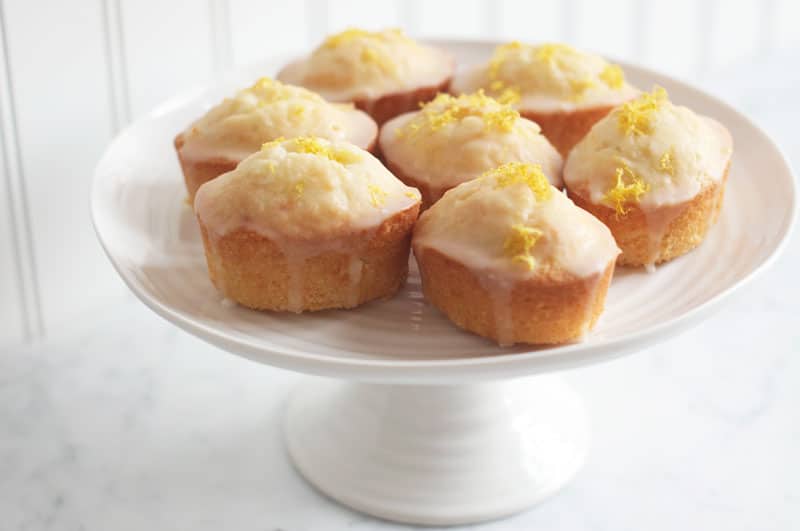
What is a Friand?
A friand is a French term for a little cake eaten with the fingers.
A friand recipe in Australia is quite similar to that for a financier recipe in France, namely that the batter is made from beaten egg whites and contains ground almonds. However, the French don’t know about the Australian friands, so you won’t find these cakes sold anywhere in France.
Friands were, however, created by a French chef working in Australia in the 1990s, who decided to bake the traditional French financiers in an aspic mould to produce a much larger cake, almost the size of a muffin. And, hence, the friand was born.
These little cakes are usually quite sweet and moist and are more substantial than your usual muffins.
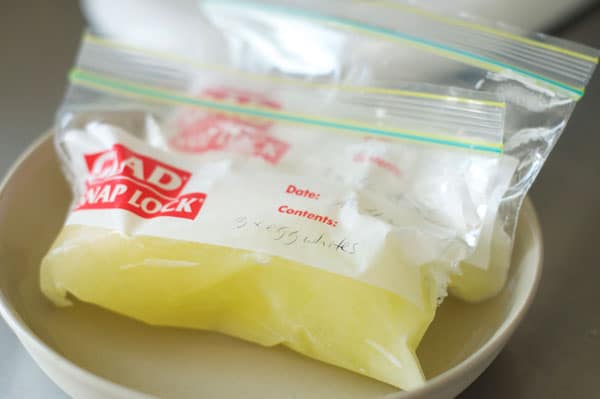
And given the large amount of egg whites required to make friands, this recipe is a great way to use up any frozen egg whites you might have stashed away in the freezer.
After reading many years ago about Nigella Lawson’s recommendation to freeze unused egg whites – a tip which has been most welcome for someone who makes custard and ice-cream quite often – my freezer has since been overtaken by little freezer bags, waiting for their moment to be turned into meringues or pavlovas. But these friands are a welcome alternative.
What is a Friand Tin or Friand Mould?
In France, there is no particular mould for a friand, something which I discovered the hard way when I went in search of one. The mere elusiveness of this friand tin suddenly made me want one desperately, even if I hadn’t baked a friand in nearly a decade.
After seeing the recipe below in a recent edition of Delicious magazine, I sent a despondent email to my good friend, Shez, who promptly went to the stores and, before the week was over, there in my mailbox was a shiny, new friand tin all the way from Australia. I am so grateful to my friends who understand my foodie obsessions 😉
I have since discovered that, because the Australian friends are baked in what is originally known as an aspic mould, you can certainly find such individual moulds in France and online.
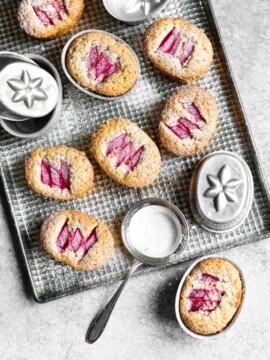
Aspic moulds are intended to be used for oeufs en gelée, or eggs in aspic. In France, they are sold in individual oval-shaped moulds which have either a star or diamond embossed at the bottom, but you can also find plain ones.

Where to Buy Friand Tins or Friand Moulds
Aspic moulds are sold in most specialty kitchenware stores in France, such as at E. Dehillerin. I recommend buying the non-stick variety so that your cakes can be removed easily from the tins.
These individual moulds are great for storage as they stack easily and take up almost no space.
In Australia, you can find a 6 or 12-hole friand tin wherever cake and muffin tins are sold.
If you can’t get your hands on a friand mould, don’t fret – a normal muffin tin will work just as well. See below for my tips on using other shapes to make these delicious cakes.
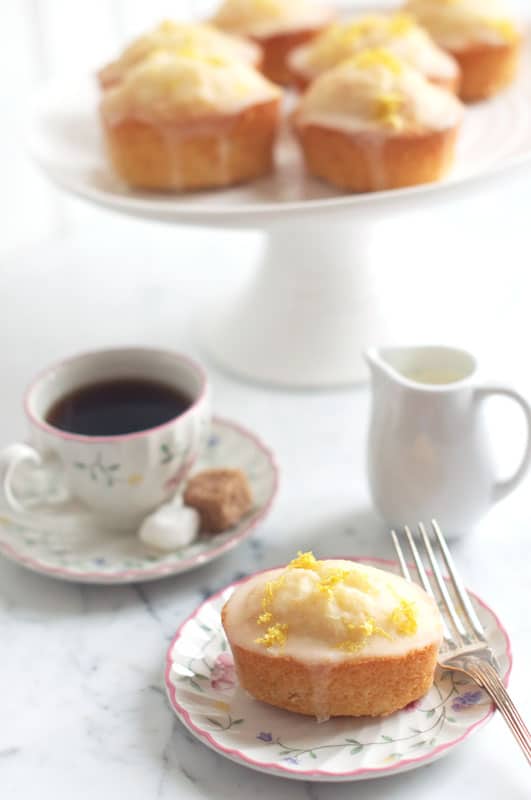
Recipe for Friands
The friand recipe below comes from Katie Quinn Davies. Not only is she a fabulous food photographer and food stylist, but she also has a knack for some pretty good recipes.
Whilst my husband may have rolled his eyes with the addition of yet another baking tin to my bulging collection, he later declared these Lemon Friands to be the best lemon cake he had ever eaten. A big compliment from a man who rarely gives compliments. Many thanks to you, Shez! (P.S. I still owe you!!)
How to Make Friands
For a printable recipe, please scroll down.

Lemon Drizzle Friands

Ingredients
For the friands
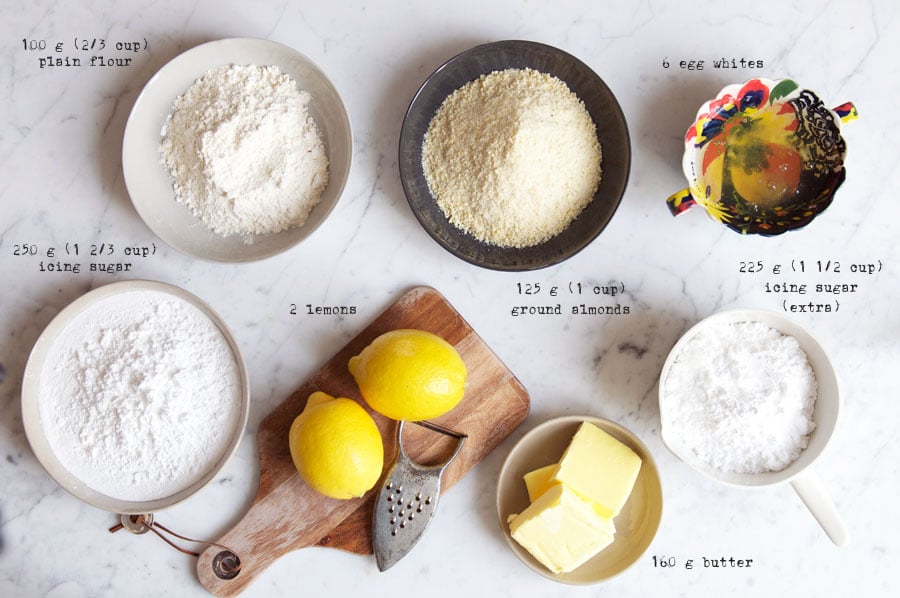
- 160 g (1 ½ sticks) unsalted butter
- 100 g (⅔ cup) plain flour, (all-purpose flour)
- 250 g (1 ⅔ cup) icing sugar, (powdered sugar)
- 125 g (1 cup) ground almonds
- 6 egg whites
- 1 lemon, zested
For the lemon icing
- 1 lemon, zested and juiced
- 225 g (1 ⅔ cup) icing sugar, (powdered sugar)
Instructions
To Make the Friands
- Preheat the oven to 180°C/355°F (without fan).
- Melt the butter in a small saucepan and use some of the butter to lightly grease the friand tin. Let the butter cool slightly for later in the recipe.
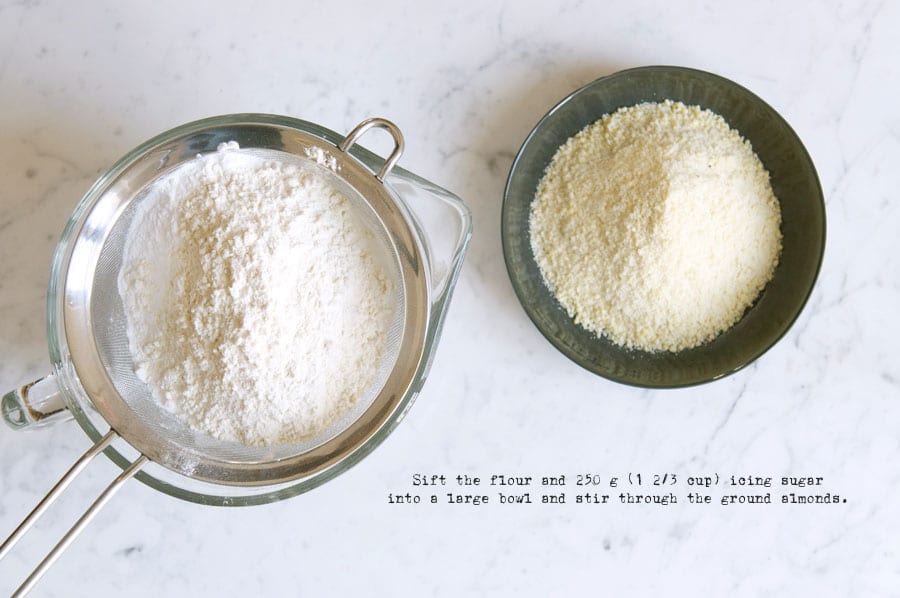
- Sift the flour and icing sugar (powdered) into a large bowl, and stir through the ground almonds.
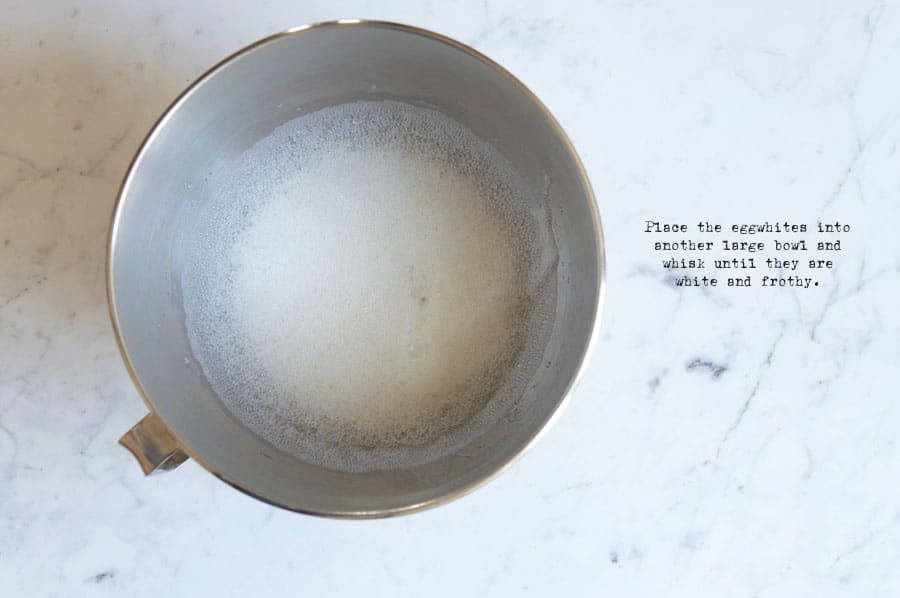
- Place the eggwhites into another large bowl and whisk until they are white and frothy.
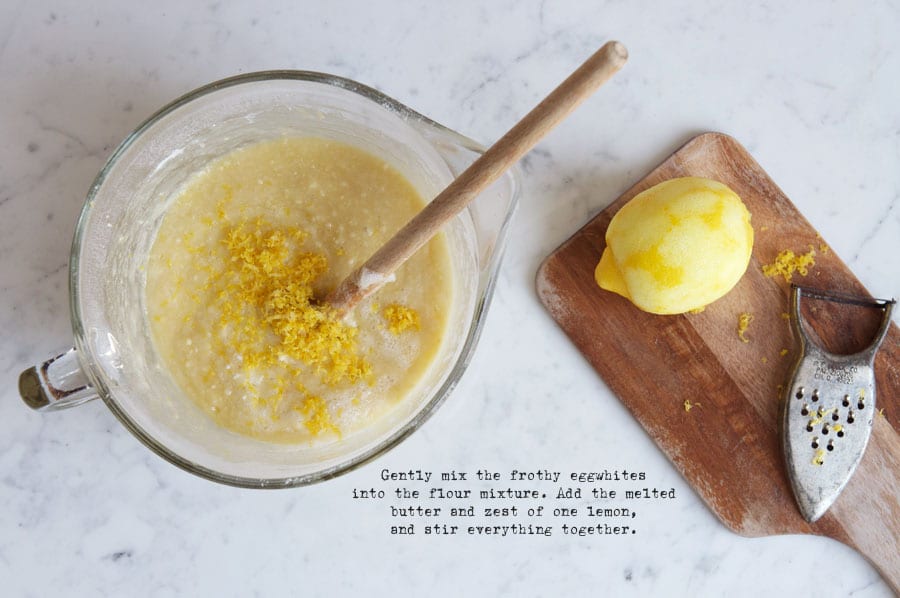
- Gently mix the frothy eggwhites into the flour mixture.
- Add the melted butter and zest of one lemon, and stir everything together.
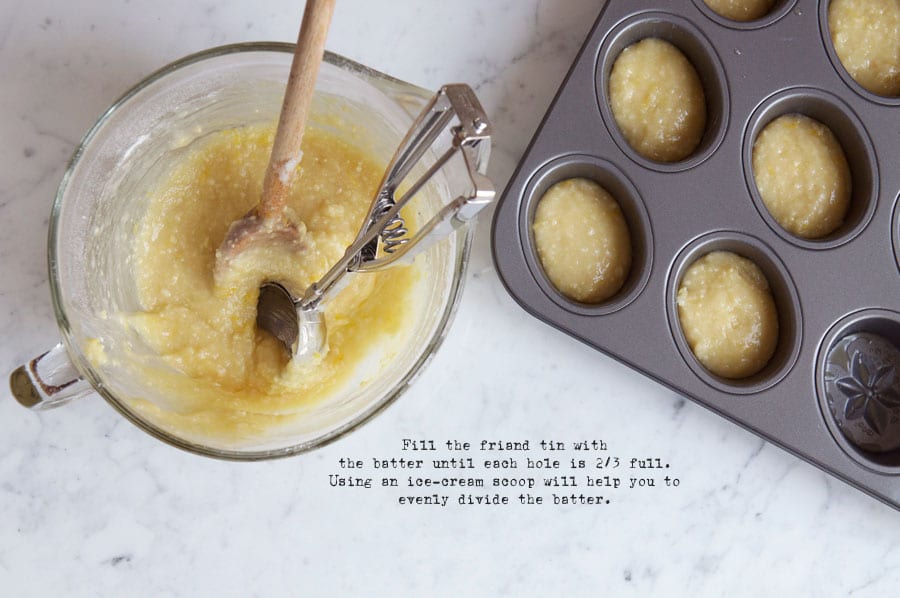
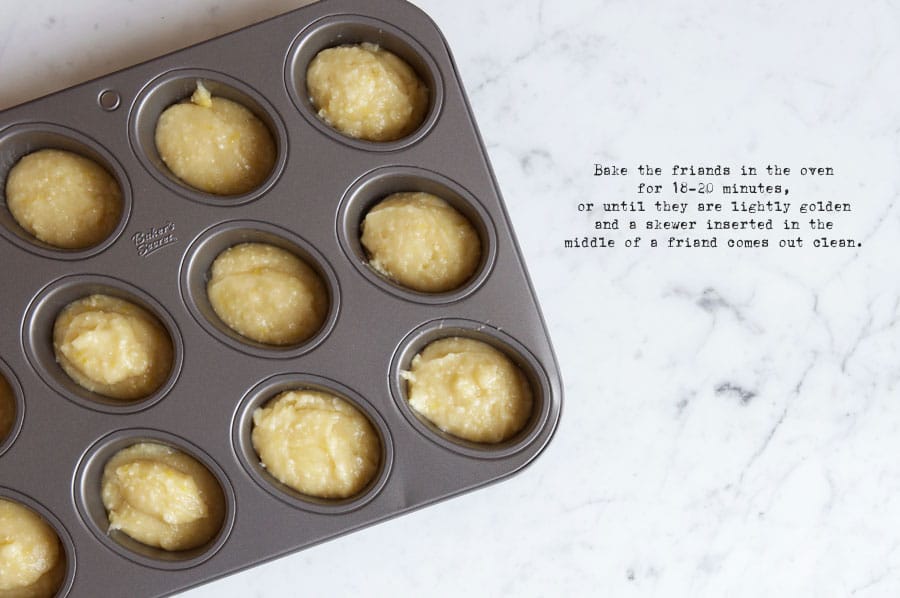
- Fill the friand tin with the batter until each hole is ⅔ full. Using an ice-cream scoop will help you to evenly divide the batter.
- Bake the friands in the oven for 18-20 minutes, or until they are lightly golden and a skewer inserted in the middle of a friand comes out clean.
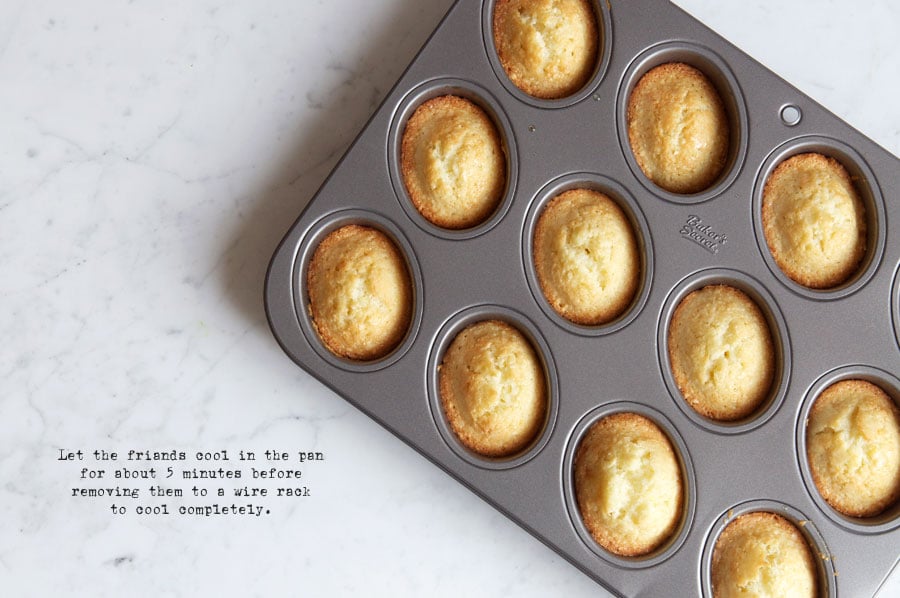
- Let the friands cool in the pan for about 5 minutes before removing them to a wire rack to cool completely.
To Make the Lemon Drizzle Icing
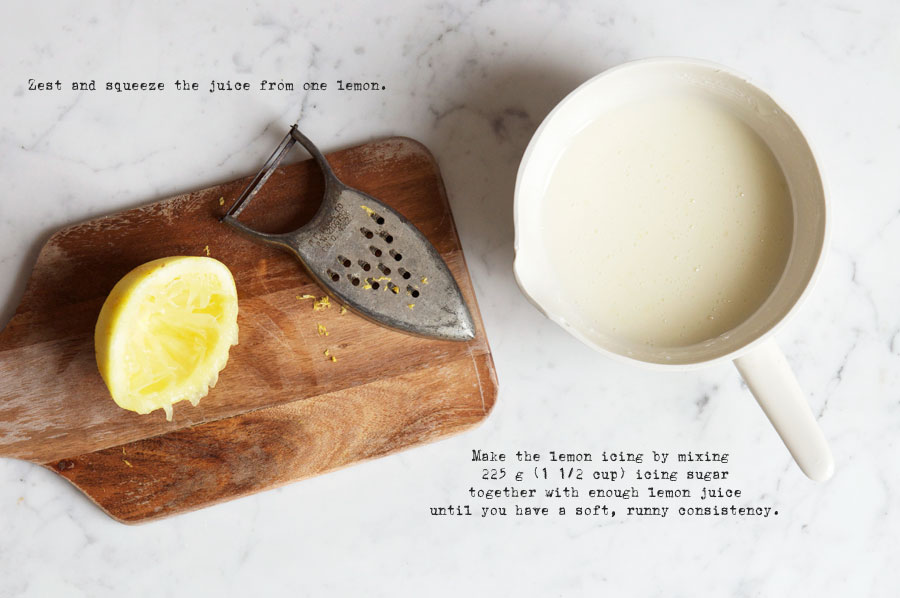
- Zest and squeeze the juice from one lemon.
- Mix the icing sugar (powdered sugar) together with enough lemon juice until you have a soft, runny consistency.
To Decorate the Friands
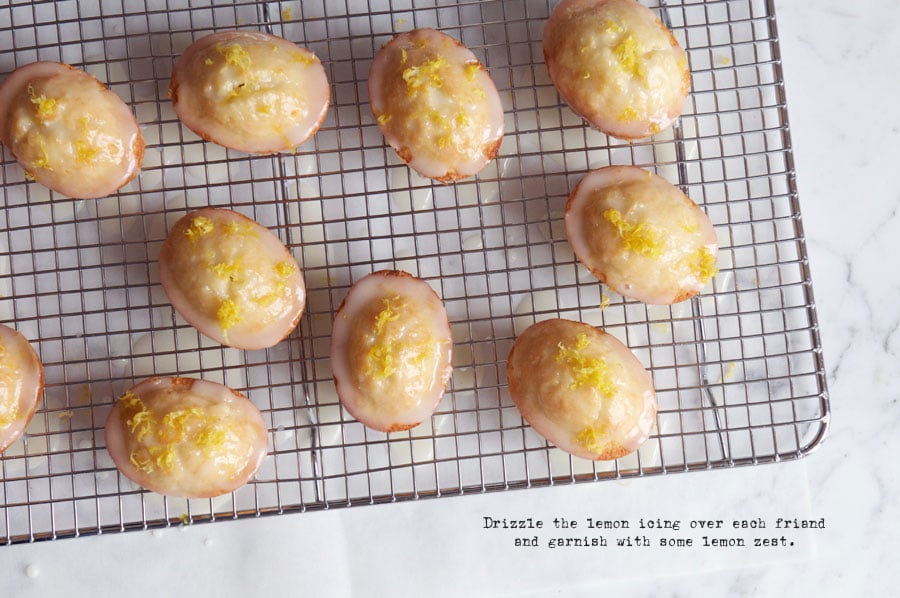
- Drizzle the lemon icing over each friand.
- Garnish with some lemon zest.
Kitchen Notes
- RECIPE CREDIT
Recipe adapted from Katie Quinn Davies, Delicious Magazine (Australian edition), February 2013, page 80. - OVEN TEMPERATURES
All recipes on this website state temperatures for a regular oven (i.e. a conventional oven without fan). If you have a convection oven with a fan, please consult the manufacturer’s handbook on how to adjust the temperature and baking time accordingly. - CONVERSIONS
To convert from cups to grams, and vice-versa, please see this handy Conversion Chart for Basic Ingredients.

Wow, these look good! Think I’ll give these a go this weekend! I obviously need one of those tins now 😉
Ha ha 🙂 I would be curious to know if you can find these tins where you live. I don’t think you need to restrict their use to just friands – I used to make muffins in these tins. Or perhaps I was trying to justify owning them 😉
Silicone friand moulds can be bought in England – but they don’t have the flower embossment 🙁
I can taste them half way around the world, and now I am craving one! I have a wonderful recipe for steamed lemon pudding with lemon glaze that acquired from a B&B in Scotland that loosely resembles this, but is baked in a casserole as one cake. I think I will need to break out that recipe this weekend and let me tastebuds thank me!
Ooh lemon pudding sounds delicious!! And old-fashioned recipes are always so lovely to have. If you do get around to making it, please post some photos on Facebook. I’m curious about this Scottish recipe!
Thanh – do you have a new lens or something as these photos look even more spectacular than usual! I just want to reach out and grasp myself a friand right now, they look “real” as in, I really could lift one off the screen and sink my teeth in! What a stunning post :D. I love the recipe as well as the sentiment – you know my life is similar to yours in the starting over somewhere (relatively) far away. And I totally get your kitchenalia obsession and inability to part with even lesser used items ;). The tin is especially beautiful with the flower in the base. Sigh, so much beauty everywhere… 😀
Hi Jodie,
Oh you’re so sweet 🙂 With a little one constantly attached to me at the moment, it’s been a bit tricky finding a decent amount of time where I can focus on blogging, and these photos were all taken while he was napping one day. Needless to say, I hurried about my work and only managed a few snaps of the final product, so I’m happy to read your comments! 🙂
I think any collector would find it difficult to part with their belongings and, for me, if something was worth paying for in the first place, it’s worth paying extra to move it around with you … or it should be 😉 Seven years on, I still have about 90% of what I shipped over from Australia. But I parted with the giant dining table a few years ago – thank goodness!
These look fabulous Thanh! I’m now on a mission to find that beautiful tin or something similar here in France, there must be one in some small corner!
Hi Hannah,
I’m guessing the tin originated from France so it must exist somewhere! Please let me know if you do find something similar. Each time we are in France, I am always on the lookout for a friand tin, although I can probably call off that search now 🙂
Thanh,
Your blog is so well done. The photography, layout, copy, and design is stunning yet simple. My wife and I enjoy it very much. Your talents are great.
Thank you,
Mark & Shell
Hello Mark and Shell,
Thank you so much for your lovely words! It means a lot to me when readers like yourselves leave such encouraging comments. It is always nice to know that the time and effort I put into this blog is appreciated by someone 🙂 I hope you will both continue to enjoy your visits to my blog.
That baking tin is sweet, I love the little flower it has embedded into it. I’ll have to keep an eye out for one somewhere. I love lemon and these look perfect for spring, lovely and light.
Please do keep a lookout for this friand tin! As I’ve mentioned above, I’m sure you could use it for cakes other than friands. In fact, I happen to think they make a great alternative to your usual muffin tin 🙂
MMKM Thanh I. Love anything lemon – and I think I need to make these soon! Better buy myself a friand tray. ❤
Hi Louise!
Ah well at least you will be able to easily find one near you 🙂 Hope you have been well!
What a lovely tin! And the friands look just gorgeous.
Thanks, Luchair! Now that I have my hands on a friand tin again, I’m definitely not letting this one go 😉
Thanh, I know for a fact that I’ll be searching for a friand tin in France too and failing that I’m going to worry hubby to take a trip to Australia just so I can get one 😀 I think I have a terrible kitchenalia obsession too, well I had to leave most my collection with my mom when I moved here and I’m still bringing back pieces. Hubby wasn’t too happy when I suggested we ship all the stuff, lol.
Anyway these lemon drizzle friands look perfect, I must make ’em over the weekend. They’re the perfect springtime/summertime treet 🙂
xx
Good luck in your hunt for this friand tin … I hope you will find something similar in France. If you have a kitchenalia obsession, my guess is that you won’t stop until you find it 😉 Enjoy this recipe!
Nice to read you again!!
I have to move (only… 10 kilometres!), and the idea terrifies me!! So imagine having to take everything overseas, and not counting the sentimental. Sounds hard even if you tell funny 😛
I understand you so much, sometimes our needs are fads, but we can’t help it!! I go to my parents house to spend ten days, and I miss my muffin pan, my mixer, my spatulas… God!!
I’ve never seen that mold in stores, only by web, and well, a financiers pan could work, but… not the same, I guess!! jajajaja
I love Katie Qunn, but Thanh, you have nothing to envy, have you seen what photos?? I love them!! I enjoy financiers, so I should try these (with a financier of muffin pan, please!).
Hi Paula,
So lovely to hear from you! You are always so sweet 🙂 A few years ago, we moved to another apartment in the same building, and even that short move terrified me! I spent days just packing the kitchen in order to move it upstairs! I also miss my kitchen a bit when we are away on holidays … but I think that’s good sign because it means that my purchases have been worthwhile 😉
I hope you will enjoy this recipe. I can assure you that they will taste just as great in a financier or muffin pan 🙂
These look so delcious. I am going to make them this weekend.
Lovely story too. It’s so hard not to get too attached to ‘stuff’.
An occasional living room sale or overseas move is just the ticket.
Makes you realise just how little you really need 🙂
Very true! I don’t think I “need” most of what I have in my kitchen and I am always reminding myself that it is a luxury to have anything more than a good knife and a wooden spoon. But once I start cooking without all of my gadgets, I do miss them 🙂
Those friands look absolutely gorgeous Thanh, I particularly love that photo with the cup of tea. The lighting is beautiful!
If you ever need any cake tins, or Alannah Hill items ;), I’m more than happy to be another Australian source of supplies for you. 😀
Oh thanks, Jennifer! That’s very sweet of you 🙂 Speaking of Alannah Hill, I must check out her latest items … I could do with some new clothes! 🙂
What a gorgeous variation on a classic lemon drizzle! I adore friands and Katie’s recipes are always fab so I know these would be a winner.
These are perhaps one of the best friand recipes I’ve tried, but I could be biased because I happen to love anything with lemon. And yes, another winner of a recipe from Katie!
Love your kitchenalia tale! I much prefer friands to muffins – the latter are hugely over-rated, if you ask me. Never made a friand in my life … but you have such an inspirational way about (naughty) you! Tempted to go buy me a friand tin. The words ‘lemon’ and ‘drizzle’ were made to be said together … wouldn’t you agree?!
At least you won’t have to look too hard to find a friand tin near you 🙂 Now that I’ve been reunited with the friand, I think my muffin tin might retire for a bit 😉
oh you muffins is so lovely..
now I know what to bake this weekend. Don’t think I will be able to find a friand tray here in Delhi, but shall try! Thanks to you and your blog I went ahead and purchased ‘ Tea with Bea’. I am so thankful that you mentioned this book in your blog!! All her recipes are so so good and easy!! thank you so much!!!
I will be curious to know if you are able to find a friand pan in Delhi. And lucky you to have “Tea with Bea”! It’s still on my wish-list … Please let me know which recipes you have tried and can recommend 🙂
I had no idea there was a specail tray for friands. I am gona try and find it in Mumbai!!! These look delicious and so cute!!!
Fingers crossed you will find this friand tin in Mumbai … it will be worth the search 🙂
Hello – a new fan here, very excited to see that you are an Aussie in Switzerland, as I am one too! We arrived here in January. I may need to pick your brain some time about where to buy certain ingredients. 🙂
Hoi Jody! How lovely to hear from another Aussie 🙂 You are more than welcome to ask me if you need help finding anything here in Switzerland. Luckily for you, the increase in expats in recent years has meant that there is more variety available now compared to just a few years ago. Only last week did I discover clotted cream in Zurich!
Beautiful lemon cakes. Drool!
Hope you and your baby are doing well.
Thanks, Anita 🙂 Hope you are your family are well also!
Why? Oh why do you do this to me? I have no more room for bake ware – even in my huge pantry.
But I have copied the pic of the Friand tin and it is on its merry e-mail way to my Sister in law in Australia. They will be visiting in July and I now know that I NEED a Friand tin.
LOL!! I do hope they will bring you a friand tin … what could be a better gift for a great baker like you? 🙂
Thanks for sharing your story about friands! Didn’t know they were called that. I have a mould which has a similar flower at the bottom, but it is bigger and deeper, so the cakes do not come out as dainty as these friands! I have been wanting to try David Lebovitz’s financier recipe for a while, and I must try this one along with it. I am loving everything lemon at the moment, so these are on my list! Hope you are enjoying motherhood 🙂
These friands are essentially financiers but in a different shape. Now that you have mentioned David Lebovitz’s recipe, I’m also interested in trying it! I am really enjoying being a mother, although it has meant very little time in front of the computer … I’m still trying to find the right balance but hopefully you will see some more posts soon!
These were just the excuse I needed to buy the friand tin have just made them they smell divine the only problem I have is they rose quite a bit so don’t sit very well on the cake stand any idea what I did wrong?
Hi Debra,
I’m not too sure why they may have rose too much. Does your friand tin also have a flower embossed at the bottom? This may prevent the friands from sitting flat on a cake stand. I wonder if you may have beaten the egg whites too much, causing the batter to rise more than expected? It’s just a guess but I hope they still tasted delicious.
Yes it’s the same tin but if I put them flower side down they sit fine. Next time I will try not beating egg whites as much and they were absolutely delish thanks for a great blog
These look delish but I think I’ll stick to a normal muffin tin for now. There might be divorce on the cards if I buy any more at the moment, the kitchen is already massively overflowing ha ha
Oh I hear you! Any kitchen purchase I make these days is filled with trepidation. But I think my husband finally understands 😉
I am searching for a good cupcake recipe, could I use this? Would it work for cupcakes
You could certainly make this recipe using a cupcake or muffin tin (just remember to adjust the baking time accordingly) but the texture of a friand is quite different to your normal cupcake.
These look amazing! I love your writing style as well, what a great story – I’ve just discovered this blog and I am bookmarking it to come back to regularly!!
Where did your friend source the friand tin from? I’m in Australia and my baking obsession is only just kicking into gear so I’m always keen to add to my assortment of kitchen tools!
Oh thank you! I hope you will enjoy your visits here 🙂
I’m not too sure where my friend bought the friand tin but they are widely available in Australia, such as at kitchenware stores like House and in the major department stores. My original tin only had 6 holes but apparently they are hard to find now as the 12-hole tins are more popular.
Lucky you to be at a stage where you are starting your baking collection. I recall those days fondly where every new purchase felt like Christmas. These days, I have to refrain from buying anything because my kitchen is just overflowing!
Only last week I made financiers to use up egg whites!
I wish I had this cute tin with the flower shape at the bottom!!
Next time I will definitely try your recipe! 🙂
Hi… I have lots ig egg whites after baking thousands layer cake which used 40 egg yolks.
I have the same tin. Definitely will do it today. Thanks for the recipe….
40 egg yolks! Wow! I see lots of pavlovas, meringues and friands in your future 😉 I hope you will enjoy this recipe.
Hahaha…yep. So far I only managed to make your friands and macarons. I still have about
30ish egg whites to go. Thanks for the recipe, my kids loved it.
Oh macarons are also a great way to use up egg whites. I’ve only attempted them once or twice … but Ladurée make much better macarons than I do so I am happy to buy them 😉 And I’m happy to hear that your kids loved these friands.
Where do you live? We don’t have Laduree here in Perth. But I tasted once in Spore. I must say I can’t taste the difference….cheap or expensive macarons. 🙂
I live in Zurich. Ladurée opened a store here a few years ago and I believe the macarons are flown in daily from Paris. Their salted caramel macarons are my absolute favourite. I’m also not sure if one can taste much difference between a cheap or expensive macaron. Maybe there is a difference but, for me, much depends on freshness and the filling. The local pâtisserie, Sprüngli, also sells macarons which are called Luxemburgeli and they are very delicious too 🙂
Yes…they are just sweet and everything fresh is always the best. But what can I say… I love them 🙂 I heard about Sprüngli. Well if I travel to Luxemberg, I will sure try those. It is very nice to meet you and share the passion of baking and cooking.
If i do t try this recipe soon I think I might have a heart attack! It looks so delicious. In fact I am hotting footing it to the stores TODAY for some almonds! Thank you! Will let you know how it goes. I found this recipe through Caroline Smith’s post on The Patterned Plate! I love you guys and you inspired immensely over time (although you may not have know it) 🙂
Hi Nkem!
I hope you will get to try this recipe soon. It’s such a beautiful recipe, as are most of the recipes from Katie Quinn Davies.
And I’m happy to hear that you found my blog through Caroline. She’s been a wonderful friend to me and she has also been a frequent source of inspiration for me as well 🙂
Hi Thanh! I did it! Made Lemon drizzle friands! I woke up at 4.45am today just to make them! I couldn’t wait any longer! Thank you! Thank you! The recipe is amazing! Will email you pics!
I now have a friand tin (a basic silicone one for starters!) Don’t know how it will perform, but I’m hopeful.
I really need to try these today, can’t believe I have no eggs in the house! 🙁 xx
Yay! So glad you finally got your hands on a friand tin. I’m sure the silicone ones will be fine, but do let me know how they turn out. Hope you will enjoy this recipe – it’s been a favourite of many so far! xx
Yummy! These friands were absolutely delicious. My three year old and I polished the first two off while they were still warm! The other ten were iced and enjoyed over the next few days. I found them to be a delicious treat with Botrytis for dessert – a great end to the day. Now whenever I spell citrus, I think of them. I will definitely be using this recipe again.
I’m so happy to hear that you and your little one enjoyed this recipe 🙂 I’ve been trying lots of different friand recipes now that I have a friand pan again, but I think these Lemon Drizzle Friands remain my favourite. I hope to post more friand recipes soon though!
Hi
I’ve been looking for a friand tin for many years in the uk – and finally found a gorgeous heavy duty non stick one last Saturday in Steamer Trading. Excited is an understatement, they’d only been in the store for 1 week and even the staff didn’t know what it was for. Just researching which recipe to bake first, love your blog x
Oh what a lovely surprise it must have been to find a friand tin in the UK! Happy baking and I hope you will enjoy this recipe 🙂
I bought a friand pan this week in Dunedin New Zealand… They are found in many cafe etc here.. I was eating them thinking they were made of almond flour only, so would be within the paleo diet!!
Hi I could help but I must let you know that I bought a friand pan from Melbourne Australia. I bought it home and do not know how to use it until I read your article.
I will make use of the friand pan to try our your recipe. Wish me luck! ; )
Good luck! You won’t regret this purchase I hope to post more recipes for friands soon.
What is the name of the store in Australia that sells the friend pan? My husbands cousin lives there and comes to the states frequently. She might have to bring me a few! Thank you!
Friand pans are quite popular in Australia, so you will find them at most department stores, kitchenware shops and even supermarkets. A few places I would recommend trying are:
David Jones: http://shop.davidjones.com.au/djs/en/davidjones
House: https://www.house.com.au
Robins Kitchen: https://www.robinskitchen.com.au
Hopefully you will get your hands on one of these pans soon!
Hi Thanh,
Thank you for posting this recipe! I had never even heard of friands until I saw your post!
I looked it up and it turns out to be an Australian and New Zealand thing with a French name. A friand in French is something in puff pastry, often a sausage, like a sausage roll. That’s why you were having trouble finding the tin in Europe!
https://en.m.wikipedia.org/wiki/Friand
This is where I got that from.
Going to try your recipe soon, thanks again!
Hi Linda,
I did some more research and you can read more about friands in my recipe for Rhubarb & Vanilla Friands: https://eatlittlebird.com/rhubarb-vanilla-friands/
I think the French have caught on to the Australians … when I was last in Paris, I saw friand moulds sold in quite a few places alongside the other cake tins. Previously, you had to search high and low in specialty stores to find them, and they are originally intended to be used to make terrines in aspic.
Hope you will enjoy the recipe!
I have made these and they are wonderful, the amount of comments I received about the taste and texture. Thank you.
This time I tried to make them gluten free and Also with egg replacer (a few of my colleagues have these dietary requirements)., but the mixture was too thick and they were very dense. I did add some gantham powder.
How could I make them better?
Thanks again,
I Love your blog. Sam
Hi Sam,
Thank you for your lovely words! To make these friands gluten-free, I would suggest replacing the flour with a gluten-free flour, or even cornflour (cornstarch). But I’m not familiar with substituting egg whites. As egg whites form the major ingredient in this recipe, I think substituting it would make a big difference to the flavour and texture of the cakes. I hope you will find a suitable recipe for your colleagues!
Beautiful recipe! I will definitely be making these again and again!
Looks beautiful and tasty! Scrumptious!
Can I use gluten free flour in this recipe? Thank you
Yes, you can use gluten-free flour in this recipe. I have done this a few times and there is no effect on the taste or texture. Hope you will enjoy the recipe!
I’ve made these a few times using a friand tin (I live in Australia) and everyone in my family love them including our 6 & 8 year old kids. They call it Lemon Cake! Thank you Thanh! Your a star!
Hi Frances,
Thank you for your lovely words! These friands are a hit with my family too 🙂 They also happen to by my husband’s favourite cake! Thanks for popping by 🙂
Hi managed to track down a tin not cheap though £20 however I think is going to be a good investment as I can make so many different flavours my lemon ones are in the oven as we speak they smell so lovely ☺️ cannot wait for them to cool a d such a simple recipe and so easy to follow ty
Hi Marichu,
Hope you enjoyed this friand recipe! If you make them as often as I do, the pans will definitely be worth the investment ☺️
hi
I have made these friands sooo many times and they are always perfect.
Thank you for an amazing recipie
Hi Cristabelle,
Thank you for your wonderful feedback! So glad you enjoyed this friand recipe 🙂
Sensational WOW such a wonderful mixture of flavours. I certainly will be making them again. Thanks for a great recipe. Regards Tony
Simple and yum! I make these most fortnights, and my family devours them.
Hi Karen,
I’m so happy to hear that your family loves these friands!