

 by
by 
Spaghetti Carbonara
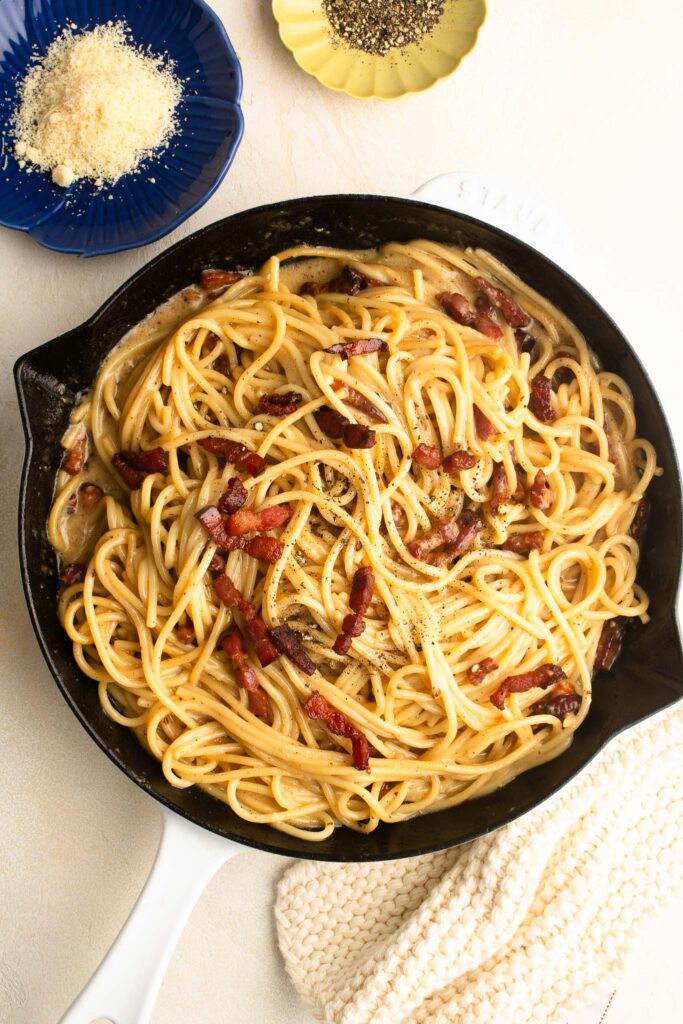
One of my go-to recipes when I need to get dinner on the table pronto, or even when I don’t feel like cooking, is Pasta with Pancetta. It requires a mere three ingredients (pasta, pancetta and olive oil), and I make sure I am in constant supply of all three.
But on those days when we are wanting something a bit more substantial, a bit more comforting and even luxurious, I add two more ingredients to transform the dish into a Spaghetti Carbonara. It is a dish which can be made in under 30 minutes, which means it is a recipe I frequently turn to.
Carbonara vs Alfredo
- Carbonara is made with guanciale, cheese and eggs.
- On the other hand, Alfredo is made using butter and cream.
- Both sauces can look and taste similar, but they are prepared in a totally different way and with different ingredients.
I grew up eating Spaghetti Carbonara made with cream, and I loved it! Growing up in Australia, I think Italian restaurants there made carbonara dishes with an Alfredo sauce; I wasn’t even aware of “Alfredo” until I spent a few years working in the US and found Fettucine Alfredo on the menu of every Italian restaurant. And the reason why I think Italian restaurants in Australia were serving Alfredo dishes disguised as carbonara is because an Alfredo sauce can be made in advance and reheated to order, whereas a true carbonara should be made to order and served immediately.
Whilst I think there is a place for both types of sauces, if you intend to make a carbonara, then I think it should be made the “proper” way 🙂

Spaghetti Carbonara Recipe
A traditional recipe for carbonara calls for:
- guanciale (or pancetta or bacon)
- Parmigiano Reggiano (or Pecorino Romano)
- eggs
Guanciale is Italian cured pork jowl or cheeks. It is more fatty than pancetta or bacon, so you will find that it will render a lot more fat upon cooking. It also has a distinctly different flavour and aroma to pancetta and bacon.
Pancetta is Italian cured pork belly, whilst bacon is cured and smoked pork belly.
I prefer to use pancetta when making carbonara because it is more readily available where I live, plus I prefer the flavour to guanciale.
Whether you choose to use guanciale, pancetta or bacon, I recommend using a thick cut which you can slice into thick batons or dice for this recipe, which will give you nice, crispy and meaty bits throughout the sauce. At a pinch, you can also use the pre-cut variety, but they tend to be cut on the thin side and are uneven in shape, which means they will not cook evenly.
How to Make a Carbonara Sauce
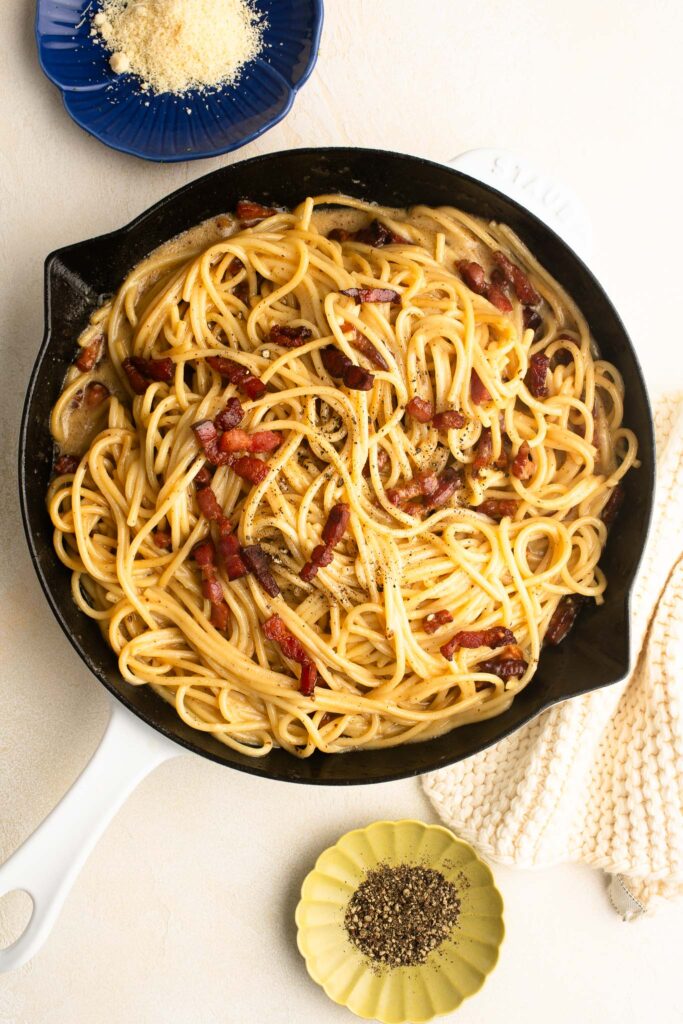
What is special about carbonara is that there is no cream in a carbonara sauce – the “creaminess” comes from the emulsion of eggs, cheese and pasta cooking water.
But what is tricky about making a carbonara sauce is bringing all of the ingredients together at the right time and in the right manner to create a smooth and rich sauce.
Where a carbonara often goes wrong is when the eggs start to scramble and, instead of a lovely creamy sauce, you have a not-so-appealing pasta with curdled eggs.
There are countless recipes for carbonara, but I think what is crucial is the actual method for making the carbonara sauce. You might need more than one attempt, and you might need to have a few failures to understand how this sauce works. Eventually, you will get a feel for when you need to add more oil or more water.
I hope my step-by-step photos below will help you to make the perfect carbonara each and every time!
How to Make Spaghetti Carbonara
Step 1
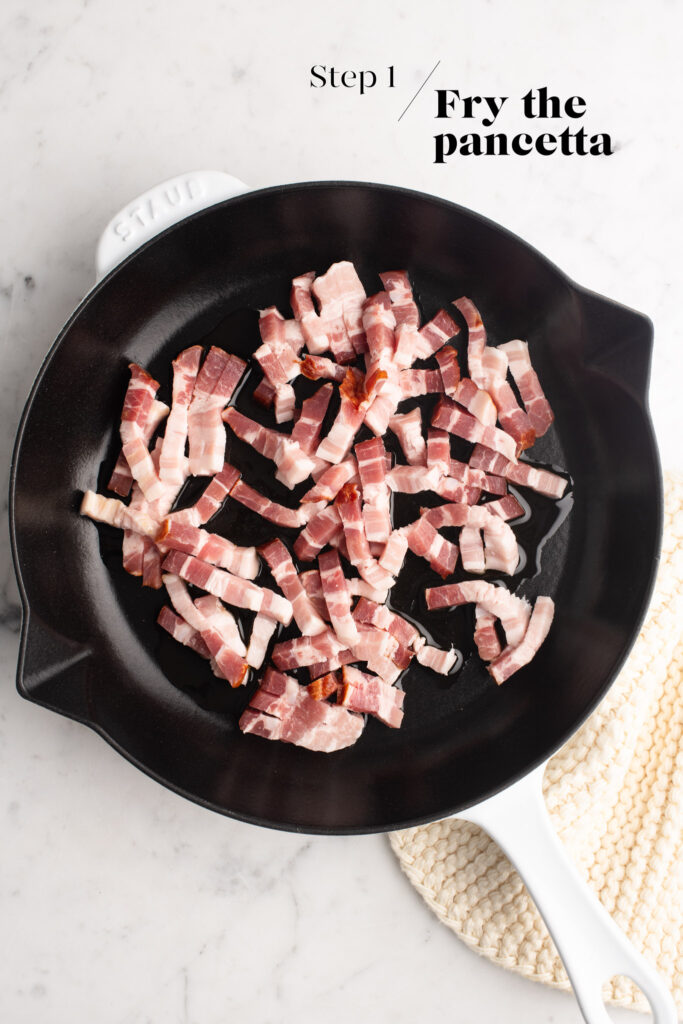
Remove the rind from the pancetta, and slice the pancetta into batons.
Place the oil and chopped pancetta into a large pan. Place the pan on medium-high heat and start cooking, i.e. start cooking the pancetta in cold oil to help render more fat.
Step 2
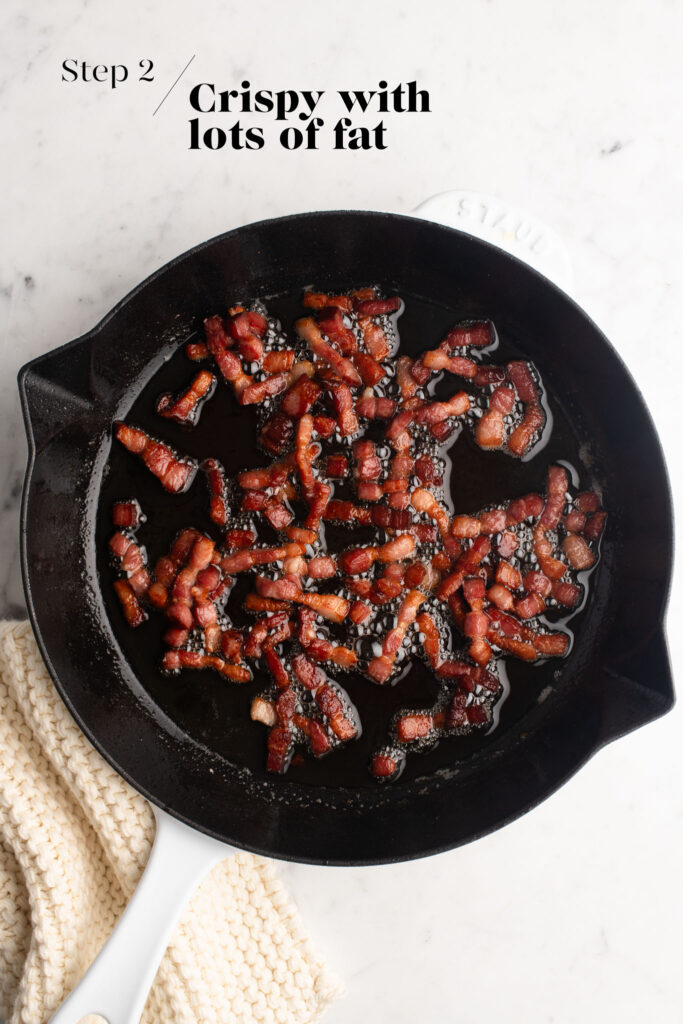
Fry the pancetta until it is golden and crispy. If your pan is small, you may need to do this in batches.
As the pancetta cooks, it will render some fat into the oil. Once you have finished cooking the pancetta, you should ideally have about 4-6 tablespoons of fat in the pan. This might sound like a lot of fat, but there is a lot of flavour in the fat, and the fat is also essential for emulsifying the sauce later.
Depending on the cut of pancetta you have used (or if you are using bacon or guanciale), you may have too much or too little fat in the pan. If there is too much fat, simply remove some fat to a bowl. If there is too little fat, top up with some olive oil.
Note for US readers: Bacon and similarly smoked meats made in the US tend to have a high water content, so you will likely end up with a lot of water in the pan. After cooking, leave about 3-5 tablespoons of fat/liquid in the pan. Alternatively, try to source pancetta or guanciale produced in Italy.
Step 3
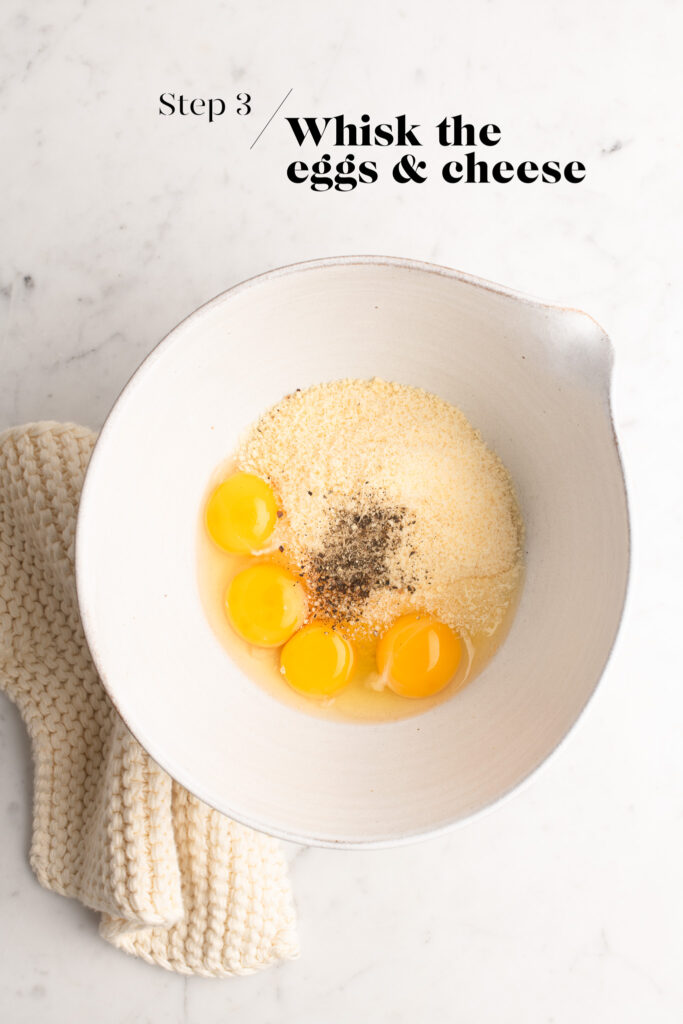
Whisk the eggs and cheese in a mixing bowl, together with a generous pinch of freshly ground black pepper (I like to add a lot).
Step 4
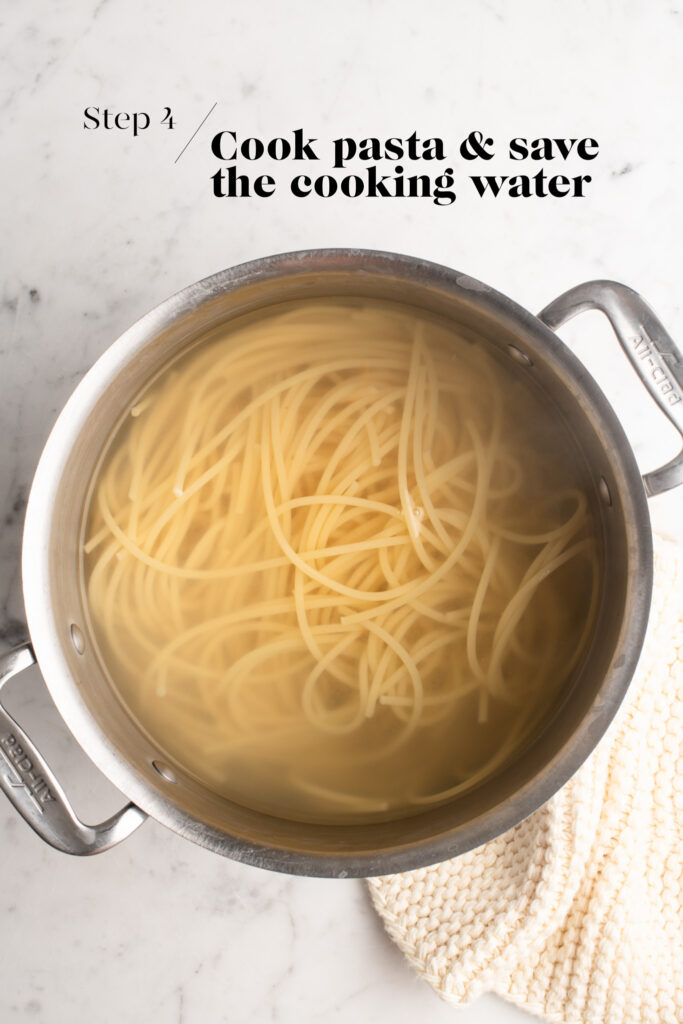
While the pancetta is cooking, bring a large pot of water to the boil and cook the spaghetti according to the packet instructions. Add about a teaspoon of fine salt to the boiling water to flavour the pasta.
Once the pasta is cooked, take the pot off the heat. Do not discard the pasta cooking water. Transfer some of the pasta cooking water to a large jug.
Step 5
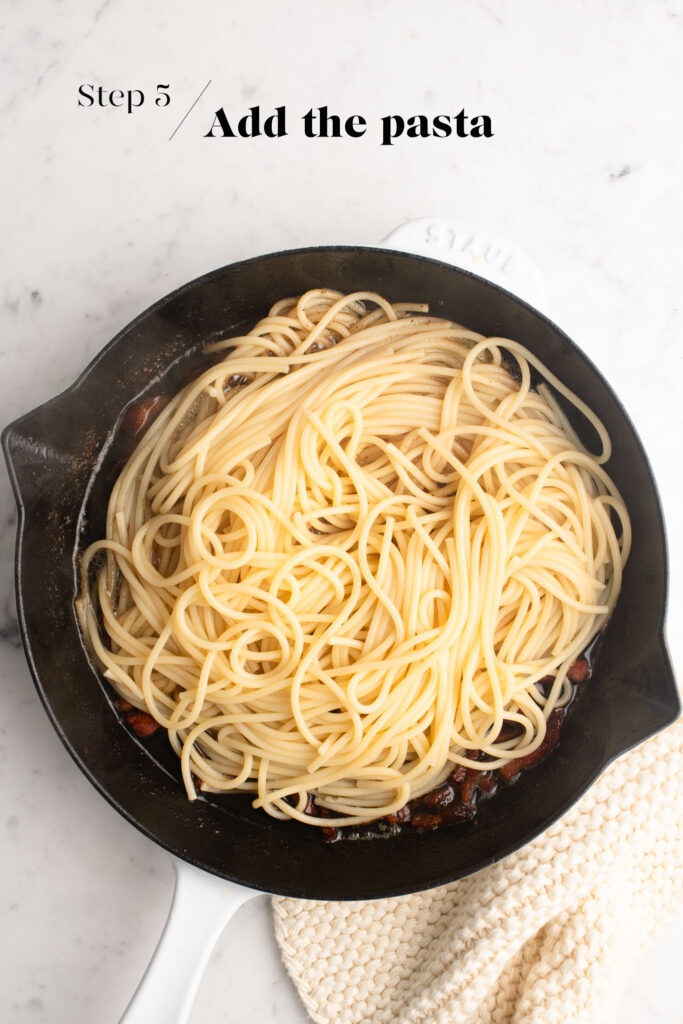
Use a large pair of tongs to transfer the spaghetti directly from the cooking water to the pan with the pancetta.
Step 6
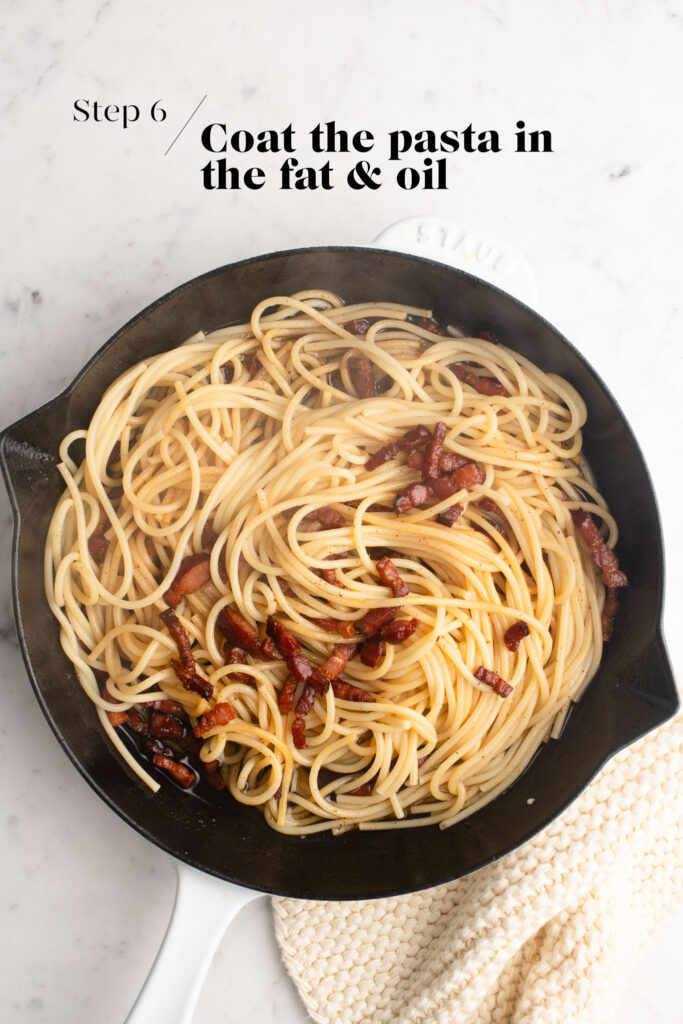
With the pan still on medium-high heat, turn the spaghetti in the fat and oil until all of the strands are nicely coated. As you do so, the liquid on the pasta will help to deglaze the pan, so all of the bacony juices on the pan will colour and flavour the pasta.
Step 7
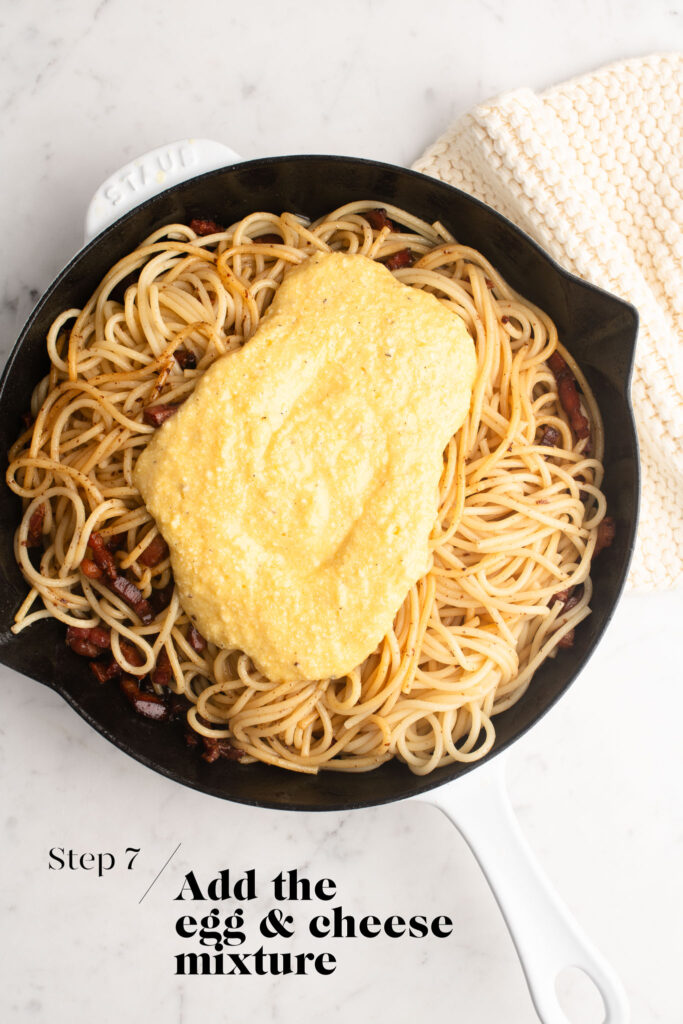
Take the pan off the heat.
Add the egg and cheese mixture, and quickly mix it through the pasta with a pair of large tongs. If the egg mixture is evenly dispersed through the pasta, there is less chance of it scrambling later.
Step 8
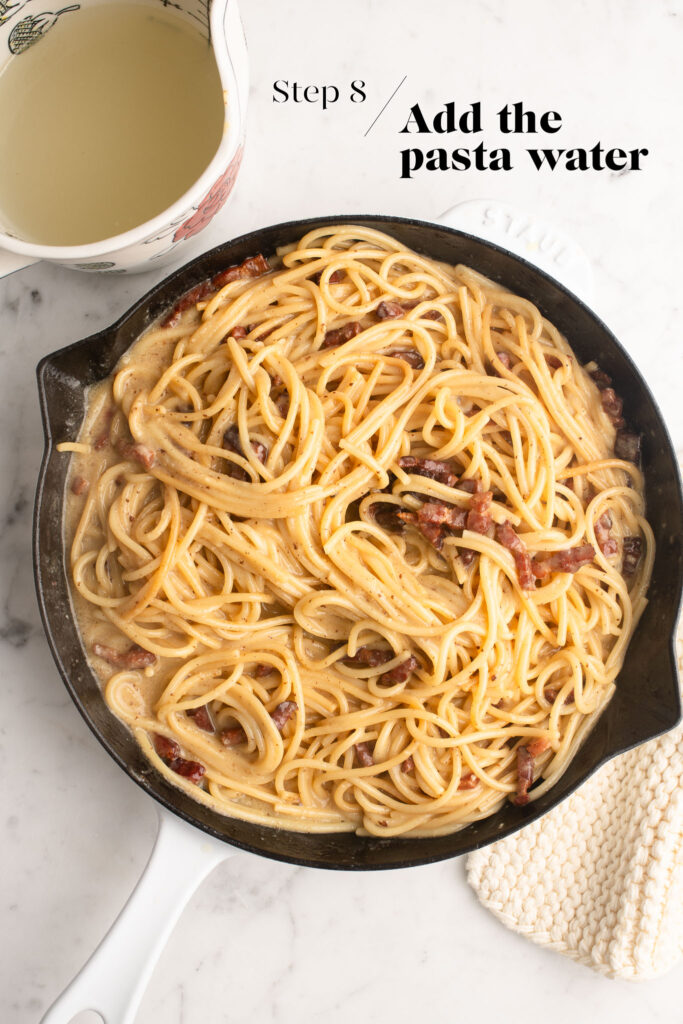
Slowly pour in some pasta cooking water, but quickly mixing it through the pasta as you do so to create a sauce. Keep adding more water and keep mixing until you have a thick and luscious sauce which is smooth and emulsified. Add enough water until you have the consistency that you like, taking note that the pasta will continue to absorb the water as it sits. If you add too much water, you might end up with a soupy/runny sauce.
Keep in mind that the pasta was not drained, so there is already some water in the pan. I generally only need about 60 ml (1/4 cup) of water, but this can depend on how much oil was in the pan or how long I have cooked the pasta.
What is also key is to mix continuously to prevent any hotspots from forming which might scramble the eggs.
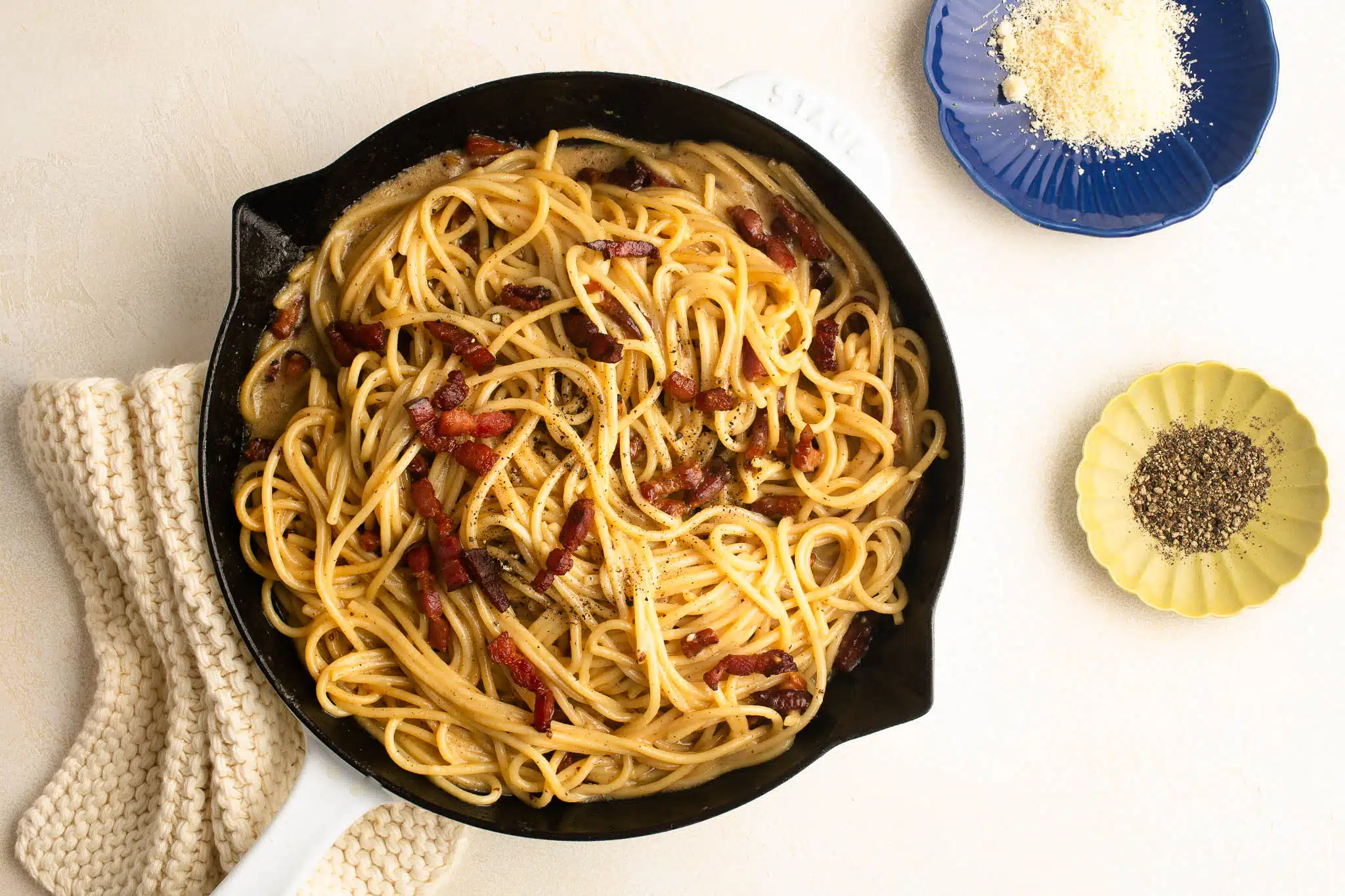
Serve immediately.
Tips for Making Carbonara
- Use a lot of fat. You need to cook a lot of pancetta to render enough fat to add flavour, as well as to help emulsify the sauce. Alternatively, top up with some olive oil.
- First step: coat the pasta in fat. I like to coat the pasta in the cooking fat to help the sauce adhere better afterwards.
- Second step: coat the pasta in egg and cheese. Evenly distribute the egg and cheese through the pasta to minimise the chances of it scrambling. In addition, take the pan off the heat before you add the egg mixture.
- Third step: coat the pasta in cooking water. The pasta cooking water is full of starch which will help to thicken the sauce. Add a little at a time until the sauce is the consistency that you like. If the pasta strands have been evenly coated in fat, egg and cheese, once you add the starchy water, the sauce should form quickly and easily.
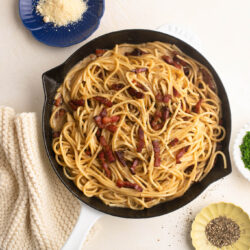
Spaghetti Carbonara

Ingredients
For the Carbonara Sauce
- 1-2 tablespoons olive oil
- 300-400 g (11-14 oz) pancetta, guanciale or bacon, sliced into batons
- 2 eggs
- 2 egg yolks
- 80 g (3 oz) parmesan, finely grated
- 1 teaspoon black peppercorns
For the Pasta
- 400 g (14 oz) dried spaghetti
- 1 teaspoon fine salt
To Serve
- black peppercorns
- parsley, finely chopped
Instructions
- Add the oil and pancetta to a large pan or cast-iron skillet (i.e. start cooking the pancetta in cold oil).
- Place the pan on medium-high heat.
- Cook the pancetta until it is golden and crispy all over. Depending on how much pancetta you are cooking and the size of your pan, you may need to cook the pancetta in batches.
- While the pancetta is cooking, bring a large pot of water to the boil.
- Once the water starts boiling, add the pasta and salt.
- Cook the pasta according to the packet instructions.
- In a medium bowl, whisk together the eggs, egg yolks, parmesan and pepper.
- The pancetta is usually ready by the time the pasta is cooked. If not, simply remove the pan of pancetta from the heat until the pasta has finished cooking.
- Once the pancetta has finished cooking, you should have about 4-6 tablespoons of fat in the pan. If you have too much, remove the excess. Alternatively, top up with some olive oil if you don’t have enough fat.
- Once the pasta is cooked to your liking, ladle some of the pasta cooking water into a jug.
- Use large tongs to transfer the cooked spaghetti directly from the pot of water to the pan with the pancetta, which should be on medium heat.
- Toss the spaghetti through the pancetta until all of the strands are coated in the fat and oil. As you do so, the water on the pasta will deglaze the pan, which will colour and flavour the pasta.
- Now remove the pan from the heat completely, i.e. place it on a potholder on the kitchen counter.
- Add the egg and cheese mixture.
- Quickly stir the egg and cheese mixture through the spaghetti until it is evenly distributed. This step will help to minimise the eggs from scrambling later.
- Then pour a little of the pasta cooking water into the pan, and quickly stir the water through the pasta to create a sauce.
- Keep adding some water, a bit at a time, and mix continuously until the sauce is the consistency that you like. Once you have added enough water, you should have a thick, smooth and creamy sauce. I generally only need to add about 60 ml (1/4 cup) pasta cooking water, but this can vary.
- Serve immediately.
Kitchen Notes
- ADDING SALT WHEN COOKING PASTA
You may have heard of some chefs who say that the pasta cooking water should be “salty like the Mediterranean” as they add a cupful of salt to the boiling water. Personally, I find that a good teaspoon of salt is generally enough to season the pasta as it is cooking. Also, it means that, if I need to use the pasta cooking water to finish the accompanying sauce, it will not be too salty. - OVEN & STOVE TEMPERATURES
All recipes on this website have been tested on an induction stove and/or with a conventional oven (i.e. an oven without fan). All recipes on this website use temperatures for a conventional oven, unless otherwise mentioned. Convection ovens (i.e. fan-forced ovens) are typically 20°C/70°F hotter than conventional ovens, but please check your manufacturer’s handbook. - CONVERSIONS
To convert from cups to grams, and vice-versa, please see this handy Conversion Chart for Basic Ingredients.


Your photos and recipes are always very helpful – thank you! I followed your steps carefully and the carbonara was perfect. But I was very nervous the whole time because this dish usually becomes a disaster for me. I like your steps – basically add everything separately but work fast. I’m very happy!