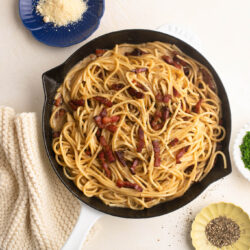
Spaghetti Carbonara

Serves: 4
Creamy and luscious Spaghetti Carbonara, made the traditional way with eggs and cheese. Recipe with step-by-step photos.
Ingredients
For the Carbonara Sauce
- 1-2 tablespoons olive oil
- 300-400 g (11-14 oz) pancetta, guanciale or bacon, sliced into batons
- 2 eggs
- 2 egg yolks
- 80 g (3 oz) parmesan, finely grated
- 1 teaspoon black peppercorns
For the Pasta
- 400 g (14 oz) dried spaghetti
- 1 teaspoon fine salt
To Serve
- black peppercorns
- parsley, finely chopped
Instructions
- Add the oil and pancetta to a large pan or cast-iron skillet (i.e. start cooking the pancetta in cold oil).
- Place the pan on medium-high heat.
- Cook the pancetta until it is golden and crispy all over. Depending on how much pancetta you are cooking and the size of your pan, you may need to cook the pancetta in batches.
- While the pancetta is cooking, bring a large pot of water to the boil.
- Once the water starts boiling, add the pasta and salt.
- Cook the pasta according to the packet instructions.
- In a medium bowl, whisk together the eggs, egg yolks, parmesan and pepper.
- The pancetta is usually ready by the time the pasta is cooked. If not, simply remove the pan of pancetta from the heat until the pasta has finished cooking.
- Once the pancetta has finished cooking, you should have about 4-6 tablespoons of fat in the pan. If you have too much, remove the excess. Alternatively, top up with some olive oil if you don't have enough fat.
- Once the pasta is cooked to your liking, ladle some of the pasta cooking water into a jug.
- Use large tongs to transfer the cooked spaghetti directly from the pot of water to the pan with the pancetta, which should be on medium heat.
- Toss the spaghetti through the pancetta until all of the strands are coated in the fat and oil. As you do so, the water on the pasta will deglaze the pan, which will colour and flavour the pasta.
- Now remove the pan from the heat completely, i.e. place it on a potholder on the kitchen counter.
- Add the egg and cheese mixture.
- Quickly stir the egg and cheese mixture through the spaghetti until it is evenly distributed. This step will help to minimise the eggs from scrambling later.
- Then pour a little of the pasta cooking water into the pan, and quickly stir the water through the pasta to create a sauce.
- Keep adding some water, a bit at a time, and mix continuously until the sauce is the consistency that you like. Once you have added enough water, you should have a thick, smooth and creamy sauce. I generally only need to add about 60 ml (1/4 cup) pasta cooking water, but this can vary.
- Serve immediately.
Kitchen Notes
- ADDING SALT WHEN COOKING PASTA
You may have heard of some chefs who say that the pasta cooking water should be "salty like the Mediterranean" as they add a cupful of salt to the boiling water. Personally, I find that a good teaspoon of salt is generally enough to season the pasta as it is cooking. Also, it means that, if I need to use the pasta cooking water to finish the accompanying sauce, it will not be too salty. - OVEN & STOVE TEMPERATURES
All recipes on this website have been tested on an induction stove and/or with a conventional oven (i.e. an oven without fan). All recipes on this website use temperatures for a conventional oven, unless otherwise mentioned. Convection ovens (i.e. fan-forced ovens) are typically 20°C/70°F hotter than conventional ovens, but please check your manufacturer’s handbook. - CONVERSIONS
To convert from cups to grams, and vice-versa, please see this handy Conversion Chart for Basic Ingredients.