

 by
by 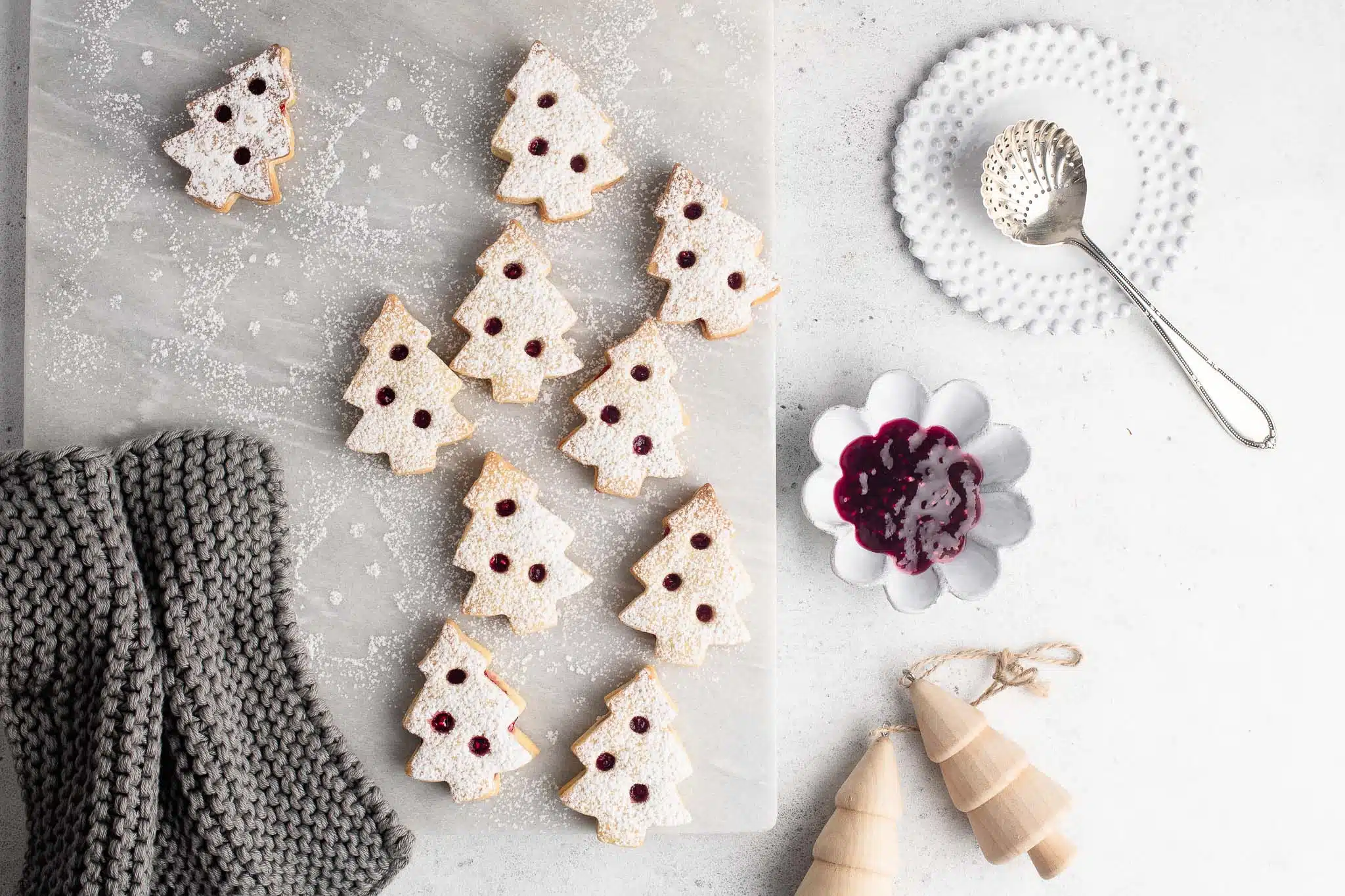
Christmas Tree Linzer Cookies
We eat Linzer Cookies all year round, but they make a frequent appearance at Christmas time as our kids love to make them to give as Christmas gifts to their teachers and classmates.
For Christmas, we like to gift small bags of homemade cookies, which are typically a mix of French Sablé Cookies (shortbread cookies), Gingerbread Cookies, and some Linzer Cookies. We usually spend a good afternoon rolling out dough, cutting out cookies, and baking trays and trays of cookies, one after the other. It’s the one time of the year when the kids get to go through my extensive cookie cutter collection and choose which ones they want to use, and we are all very hands-on with the cookie production process.
Linzer Cookies require a bit more effort than other Christmas cookies, but they always look so pretty once they have been sandwiched with jam and dusted with icing sugar, that the time and effort is always worth it!
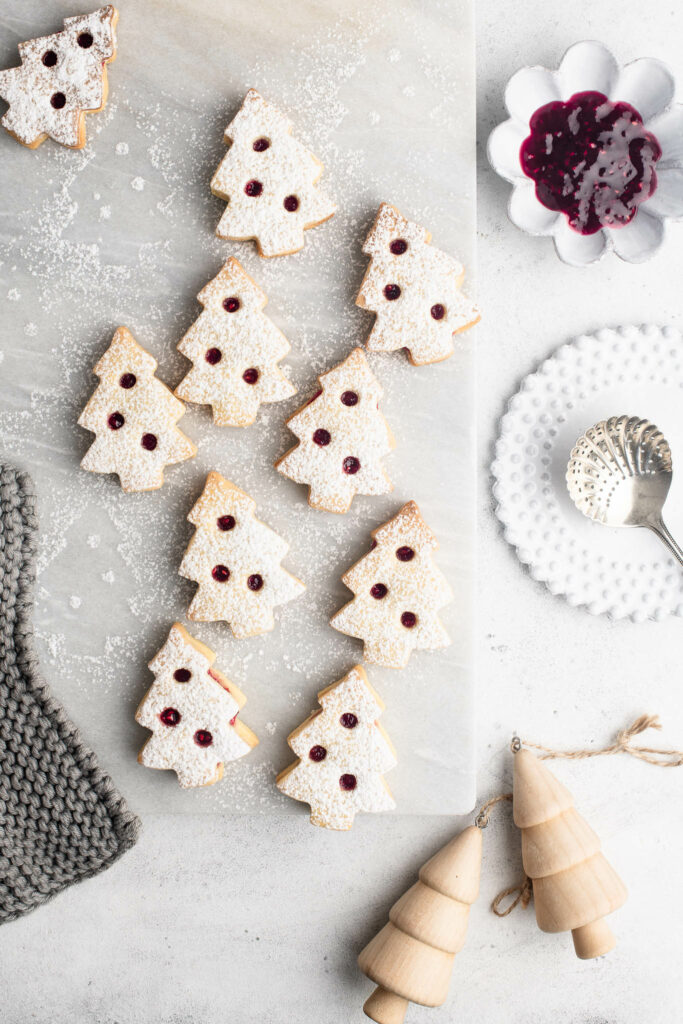
Christmas Tree Linzer Cookie Recipe
This Linzer Cookie recipe is inspired by a similar recipe for Linzer Trees in the New York Times. I loved the idea of making holes in a Christmas tree biscuit to resemble Christmas baubles, so I thought I would give this idea a try, but using my own recipe for Linzer Cookies. As much as we love to make the usual Christmas Linzer Cookies, this Christmas tree version is a nice deviation. Also, as you have to cut each hole from the Christmas trees, each cookie will look slightly different, which I love.

Linzer Cookie Recipe
My recipe for Linzer Cookies is a “kid-friendly” version, namely that it omits the spice which is more often found in a traditional Linzer Cookie which is said to originate from Austria. In fact, many European Christmas cookies are spiced cookies – they are often heady with cinnamon, cardamom, cloves or a combination of these three spices and more.
Here in Europe, Linzer Cookies traditionally contain ground cinnamon and maybe even ground cloves, and both spices happen to work really well with a sweet jam filling. However, if you are making these cookies with mostly children in mind, it is not uncommon to find many recipes for Linzer Cookies without any spice added.
As my family love cinnamon in all cakes and bakes, I typically add about 1/2 teaspoon of ground cinnamon to the dough. But if we are giving the cookies as gifts, I often omit the spice. You can do as you please!
Linzer Cookie Cutters
For these Christmas Tree Linzer Cookies, you will need a Christmas tree cookie cutter, as well as something to make holes in the Christmas tree, such as the tip of a piping nozzle or a straw (a metal straw would be good). Keep in mind the size of whatever you choose to use – too big and the holes will look disproportionate to the tree, and too small and the jam will not be visible.

How to Make Christmas Tree Linzer Cookies
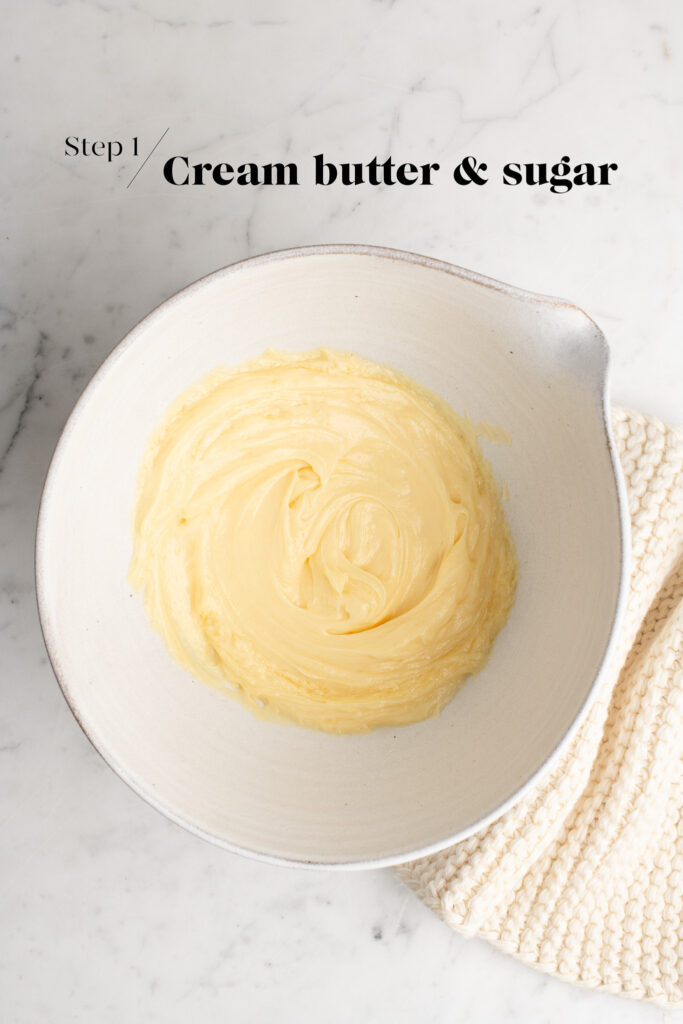
Step 1
Cream the butter and sugar until the mixture is pale and fluffy. I like to use my electric stand mixer with the flat paddle attachment.
Then lightly beat through the egg yolks and vanilla.
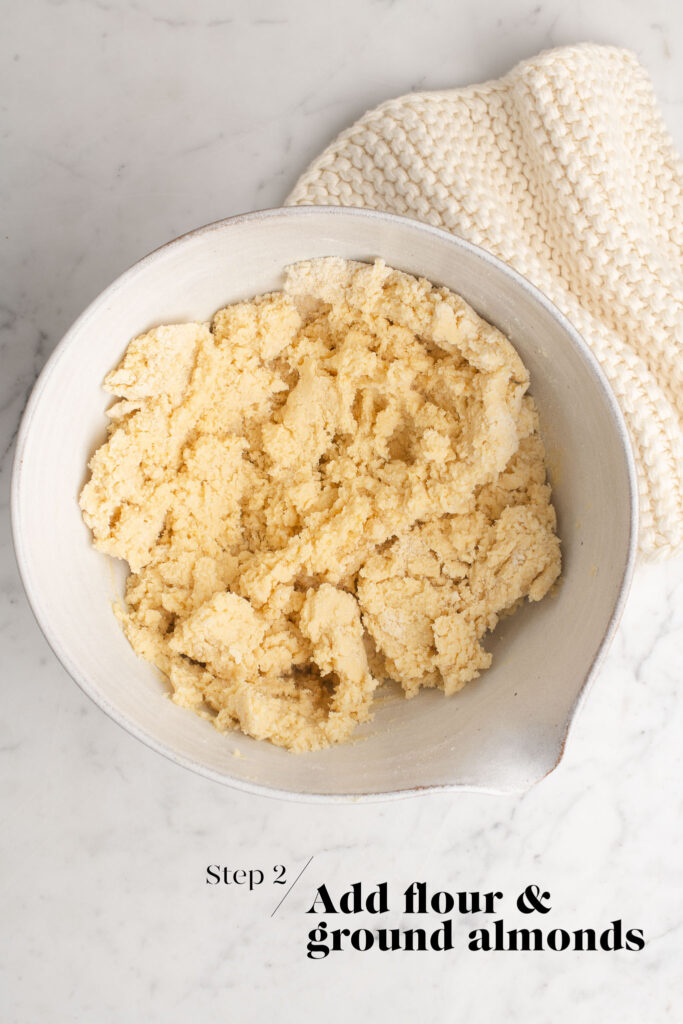
Step 2
Measure the flour, almond meal (ground almonds) and salt into a large bowl.
Gradually beat in the flour mixture, one tablespoon at a time. Once all of the flour has been added, the mixture should form into a soft dough.
Step 3
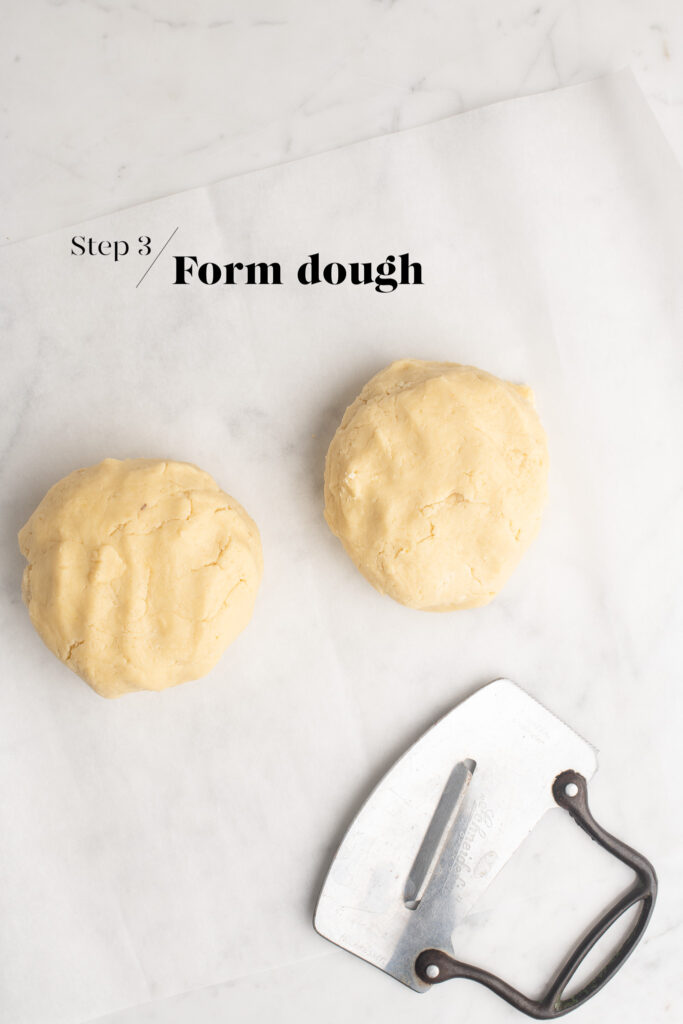
Gently knead the dough into a soft ball, and then divide the dough into two pieces.
Step 4
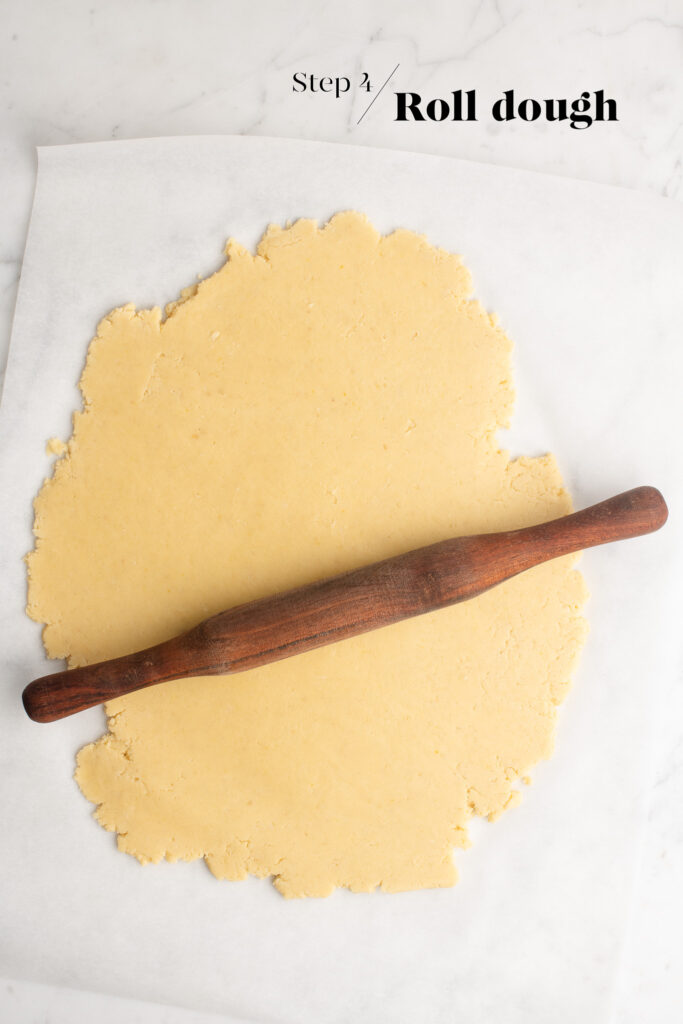
Place one piece of dough between two sheets of baking paper. Roll out the dough until it is 2-3 mm thick. Repeat with the other piece of dough.
Place both sheets of dough on a large baking tray, and place them into the fridge to chill for at least 1 hour. At this stage, you can keep the dough in the fridge for 2-3 days.
Step 5
Use a cookie cutter to cut out shapes from the dough. You will need an even number of cookies – half of the cookies will be plain to form the “cookie bottoms”, and the other half will have a decorative shape cut out to form the top of the cookies.
To cut out holes from the Christmas tree, I use the tip of a round piping nozzle, but anything similar would work well, such as a metal straw.
Place the cut out cookies onto a large baking tray lined with baking paper.
Place the tray in the fridge for at least 1 hour for the dough to chill. It is best to bake the cookies when the dough is very firm and cold, so as to ensure that the cookies will keep their shape upon baking. Otherwise, if you bake the cookies when the dough is soft and warm, you may end up with some cookies which are larger than others, which will be obvious when you later sandwich them together.

Step 6
Preheat the oven to 180°C/356°F (without fan). Place a metal tray on the middle shelf of the oven.
Bake the cookies for 8-10 minutes, or until the edges of the cookies just start to colour. You want these cookies to be quite pale in colour. The baking time will depend on the size of your cookies, as well as your oven. If you prefer to have more crisp or crunchy cookies, you can bake them for a touch longer until they are lightly golden.
Leave the cookies to rest on the hot baking tray for about 5 minutes, before removing them to a wire rack to cool completely.
Step 7
Place the Christmas tree cookies with holes on a large sheet of baking paper. Dust them with icing sugar (powdered sugar), as little or as much as you like.
Step 8
Place a scant teaspoon of jam in the centre of the cookie bottoms. You need enough jam to spread to the edges of the cookies when sandwiched together, as well as enough to push through the holes of the Christmas tree cookies.
Sandwich the cookies together gently.
Tips For Making Christmas Tree Linzer Cookies
- Chill the dough. The dough needs to be chilled so that it is easy to handle. If you have a warm kitchen, work with a fan or the air-conditioning turned on.
- Re-roll. Any dough scraps can be re-rolled and re-chilled.
- Make time. Making sandwich cookies takes time, so set aside a good 2-3 hours to make them (especially if your kids are “helping”). You can get a head start by making and rolling the dough the night before.
- Use your favourite jam. My favourite jam for Linzer Cookies is apricot jam or quince jelly, but raspberry jam or strawberry jam looks very festive. The jam doesn’t need to be homemade, but it’s worth using a good-quality jam.
- Crisp vs soft cookies. I like to eat Linzer Cookies on the day they are made when the cookies are a little crisp. But they also taste great after a few days when the cookies have softened and the jam has dried out and become chewy. Yum!

Recipes Using Egg Whites
This Linzer Cookie recipe uses egg yolks to bind the dough together. The egg whites can be frozen and later defrosted to use in other recipes, which is helpful to know because, if you end up making 3 batches of Linzer Cookies to give away as gifts at Christmas, you will end up with a lot of leftover egg whites.
I like to freeze egg whites in pairs for quick defrosting, and my favourite recipes for using egg whites include:
- Classic Pavlova – uses 3 to 4 egg whites
- Chocolate Pavlova – uses 3 to 4 egg whites
- Lemon Drizzle Friands – uses 6 egg whites
- Raspberry Friands – uses 6 egg whites
- Blueberry Financiers – uses 6 egg whites
- Angel Food Cake – uses 12 egg whites

Christmas Tree Linzer Cookies

Ingredients
For the Cookies
- 200 g (2 sticks minus 1 tablespoon) unsalted butter, softened
- 150 g (1 cup plus 1 tablespoon) icing sugar, (powdered sugar)
- 2 egg yolks
- 1 teaspoon vanilla extract
- 300 g (2 cups) plain flour, (all-purpose flour)
- 100 g (¾ cup) almond meal, (ground almonds)
- 3 g (½ teaspoon) fine salt
To Decorate
- Raspberry Jam
- icing sugar, (powdered sugar) for dusting
Instructions
To Make the Cookie Dough
- Cream the butter and icing sugar (powdered sugar) until the mixture is light and fluffy.
- Add the egg yolks and vanilla.
- Beat lightly until the egg yolks are incorporated.
- Measure the flour, almond meal and salt into a large bowl.
- Add the flour mixture, one tablespoon at a time, to the egg mixture.
- Keep beating the mixture as you add the flour.
- Once all of the ingredients have been added, the mixture should form a soft dough.
- Gently knead the dough together on the kitchen bench until if forms a soft ball.
- Divide the ball of dough into two.
- Place one ball of dough between two sheets of baking paper.
- Roll until the dough is about 2-3 mm thick.
- Repeat with the other ball of dough.
- Place both rolled out sheets of dough onto a large baking tray.
- Place the tray into the fridge and leave the dough to chill for 1-2 hours. At this stage, the dough can be kept in the fridge for 2-3 days.
To Cut Out the Cookies
- Use a small Christmas tree cookie cutter to cut out shapes from the dough. You will need to cut out an even number of cookies.
- Transfer the cut out cookies to a large baking tray lined with baking paper.
- Any unused dough can be re-rolled. As the dough will be quite soft, I recommend re-rolling the dough between two sheets of baking paper, and chilling the dough in the fridge again if necessary.
- For half of the cookies, cut out small holes to resemble Christmas decorations. For this task, use the tip of a piping nozzle, a straw or similar.
- Place the tray of cut out cookies in the fridge for the dough to chill. It is best to bake the cookies when the dough is very firm and cold, so as to ensure that the cookies will keep their shape upon baking. I recommend chilling the cut out cookies for at least 1 hour.
To Bake the Cookies
- Preheat the oven to 180°C/356°F (without fan).
- Place a metal tray on the middle shelf of the oven.
- Place the tray of cut out cookies on the pre-heated metal tray.
- Bake the cookies for about 8-10 minutes, or until the cookies are just starting to turn golden at the edges. The cookies should otherwise be quite pale. The baking time will depend on the size of your cookies, as well as your oven. If you prefer your cookies more crisp or crunchy, bake them for slightly longer until they are lightly golden.
- Once the cookies are baked, leave them to rest on the hot baking tray for 5 minutes before removing them to a wire rack to cool completely.
To Decorate the Cookies
- Place the cookies with holes cut out on a large sheet of baking paper.
- Dust these cookies with icing sugar (powdered sugar), as little or as much as you like.
- For the cookie bottoms, dollop a small teaspoon of jam in the centre.
- Sandwich the cookies together gently with the dusted cookie on top.
Kitchen Notes
- VARIATION
For a lightly spiced cookie, I recommend adding 1/4 to 1/2 teaspoon of ground cinnamon to the dry ingredients. - OVEN & STOVE TEMPERATURES
All recipes on this website have been tested on an induction stove and/or with a conventional oven (i.e. an oven without fan). All recipes on this website use temperatures for a conventional oven, unless otherwise mentioned. Convection ovens (i.e. fan-forced ovens) are typically 20°C/70°F hotter than conventional ovens, but please check your manufacturer’s handbook. - CONVERSIONS
To convert from cups to grams, and vice-versa, please see this handy Conversion Chart for Basic Ingredients.



Such beautiful cookies!
Hi Emily,
Thank you!