

 by
by 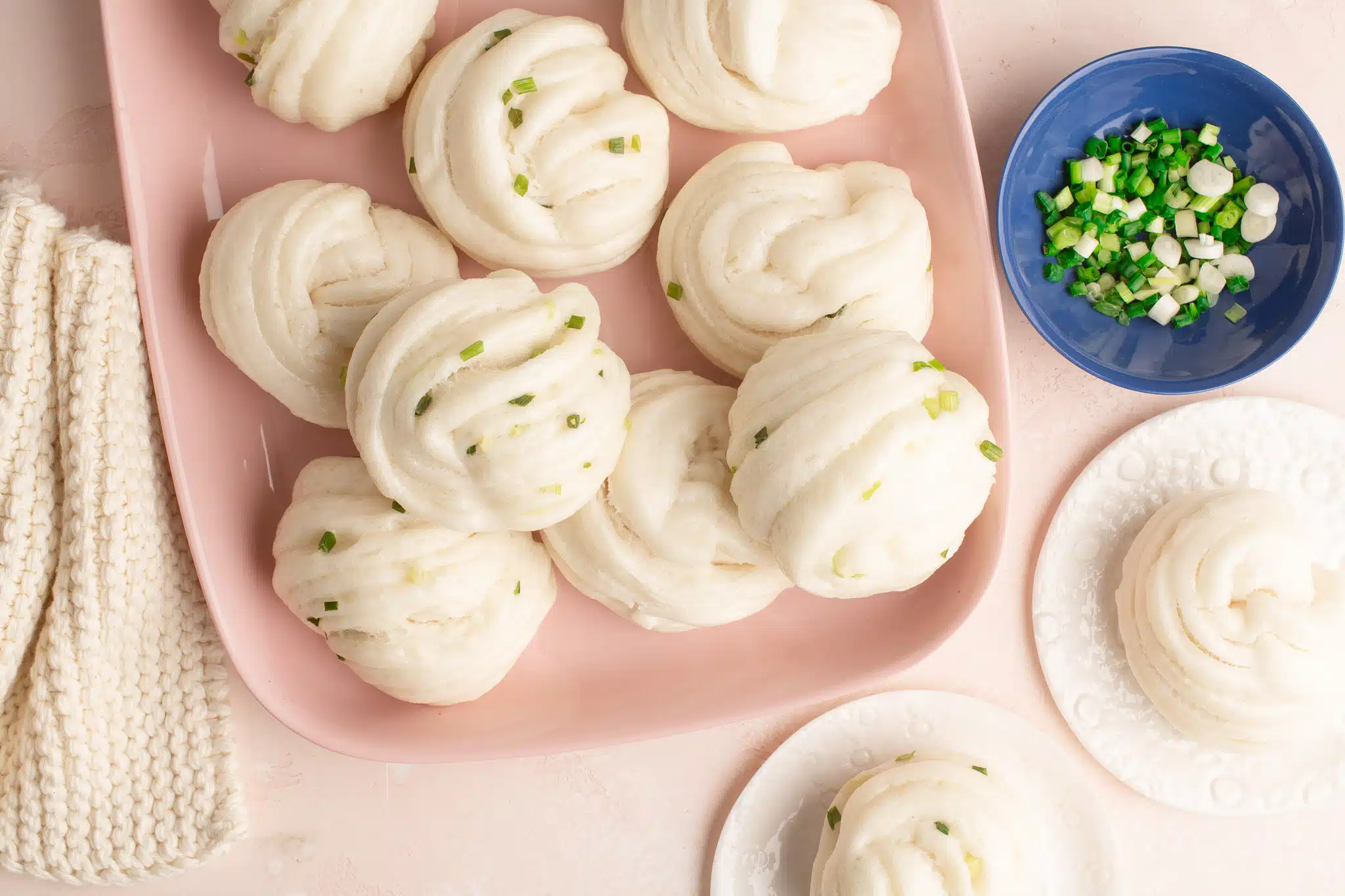
Spring Onion Flower Buns
If you love bao buns, you probably already know that they come in a variety of shapes, and often with a myriad of options for fillings. But sometimes, you just want a plain bao 😊
In Chinese and Vietnamese cultures, plain bao buns often serve as an accompaniment to roast meat, such as Crispy Pork Belly or Peking-style roast duck, much like how bread rolls might accompany a western meal.
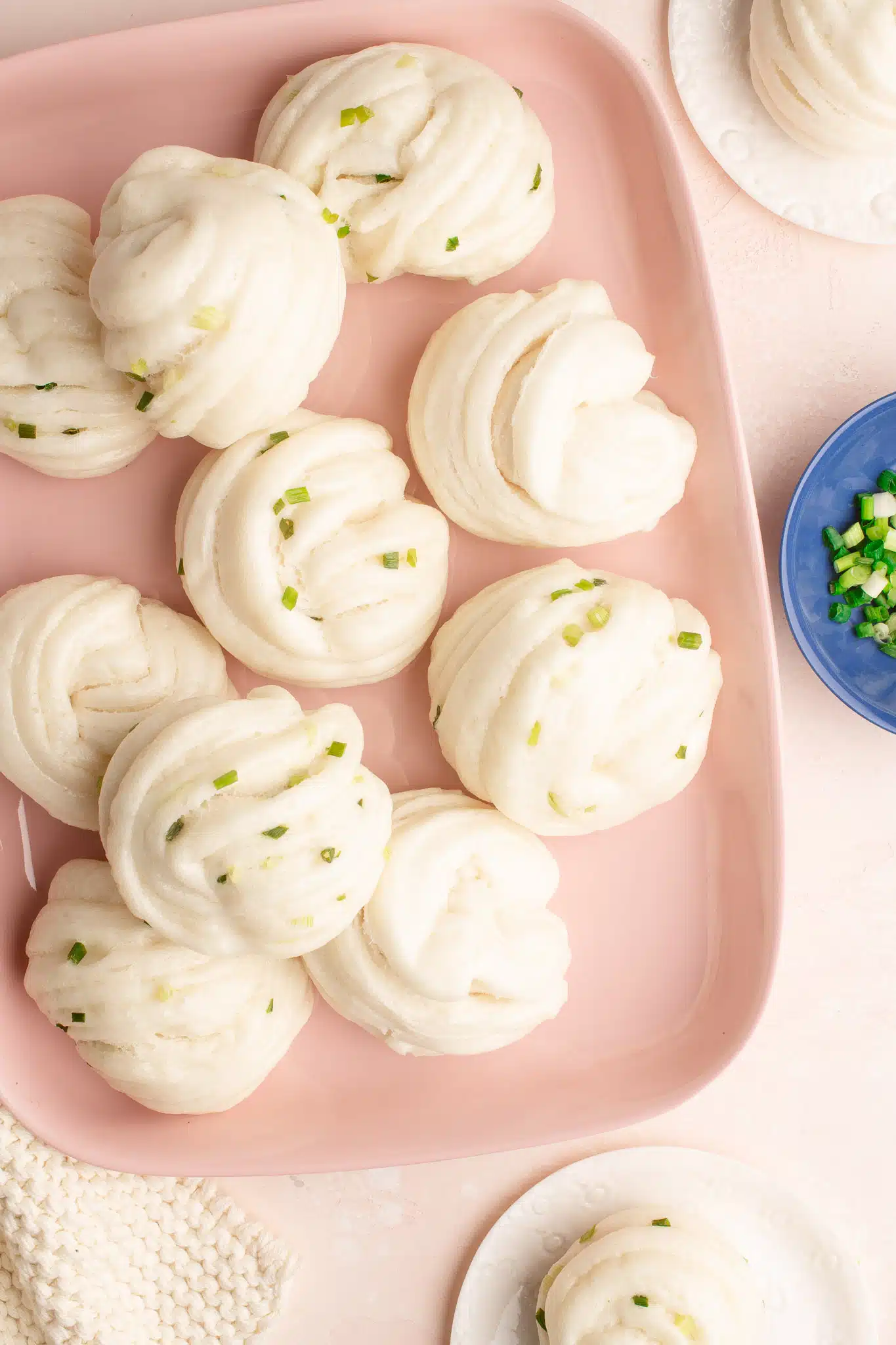
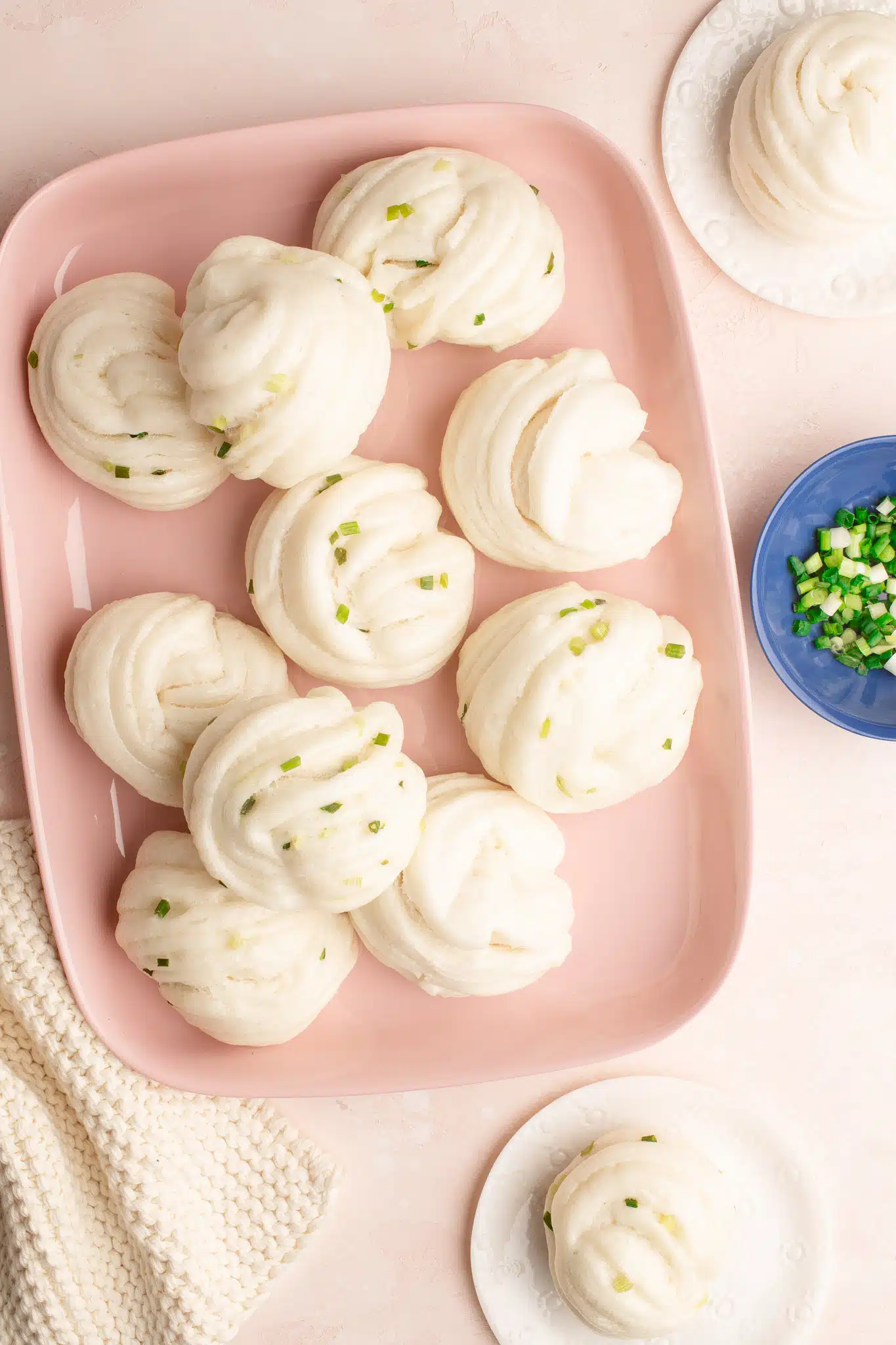
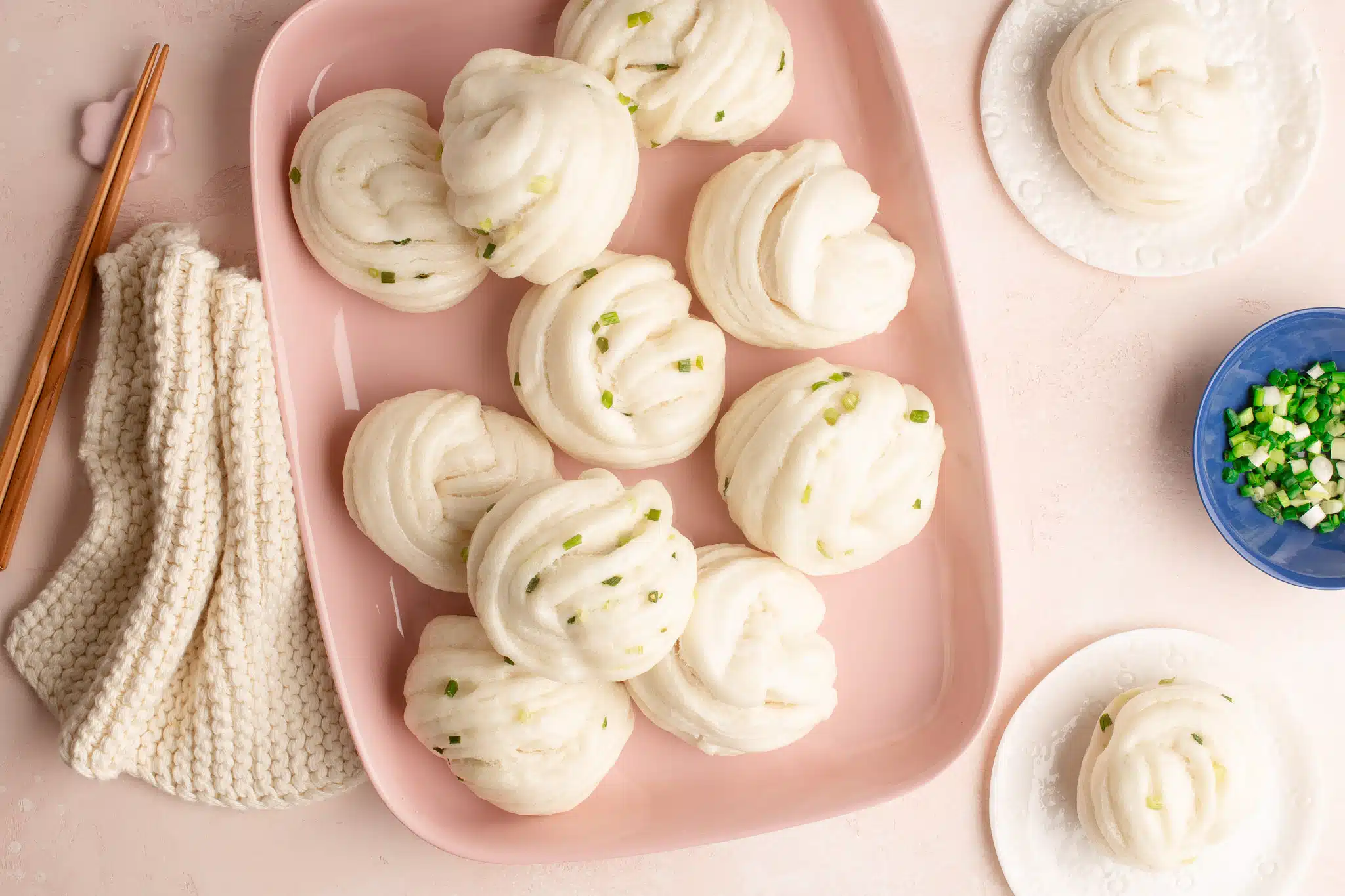
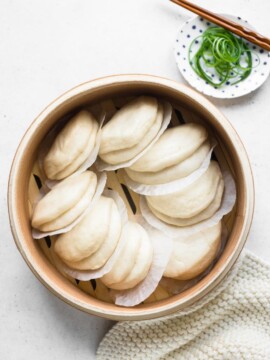
One slight variation to a traditional plain bao are these Spring Onion Flower Buns, also called Scallion Buns or Scallion Flower Buns.
What are Scallion Buns?
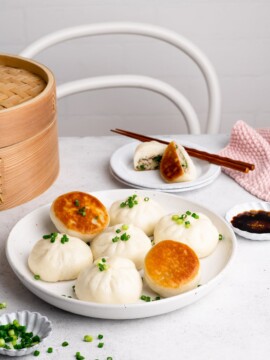
Spring Onion Flower Buns, or Scallion Buns, are mostly a plain bun but with spring onions (scallions) scattered through the dough for a mild, onion flavour. They are delicious eaten as an accompaniment to Chinese-style stews and braises, or with roast pork or roast duck.
Spring Onion Flower Bun Recipe
My recipe for Spring Onion Flower Buns uses my tried-and-trusted Steamed Bao Buns recipe. And to make this as close as possible to a plain bao, I don’t add any other ingredients, except for a bit of salt and oil between the layers.
You might see that other recipes for Scallion Buns use more ingredients between the layers, such as sesame oil and Chinese 5 spice powder, so depending on how you plan to serve these buns, you could add additional flavours.
Plain Flower Buns
Alternatively, you might decide to add nothing at all to these buns! My daughter has an aversion to herbs (which I hope is a temporary phase which will end very soon), so I often reserve a portion of the dough to make plain flower buns with nothing at all between the layers, except for some oil to help retain the layers.
What is nice about making plain bao in this flower shape, as opposed to a normal round bun shape, is that the layers help to give the buns more volume, which in turn results in a fluffier bun.
How to Make Spring Onion Flower Buns
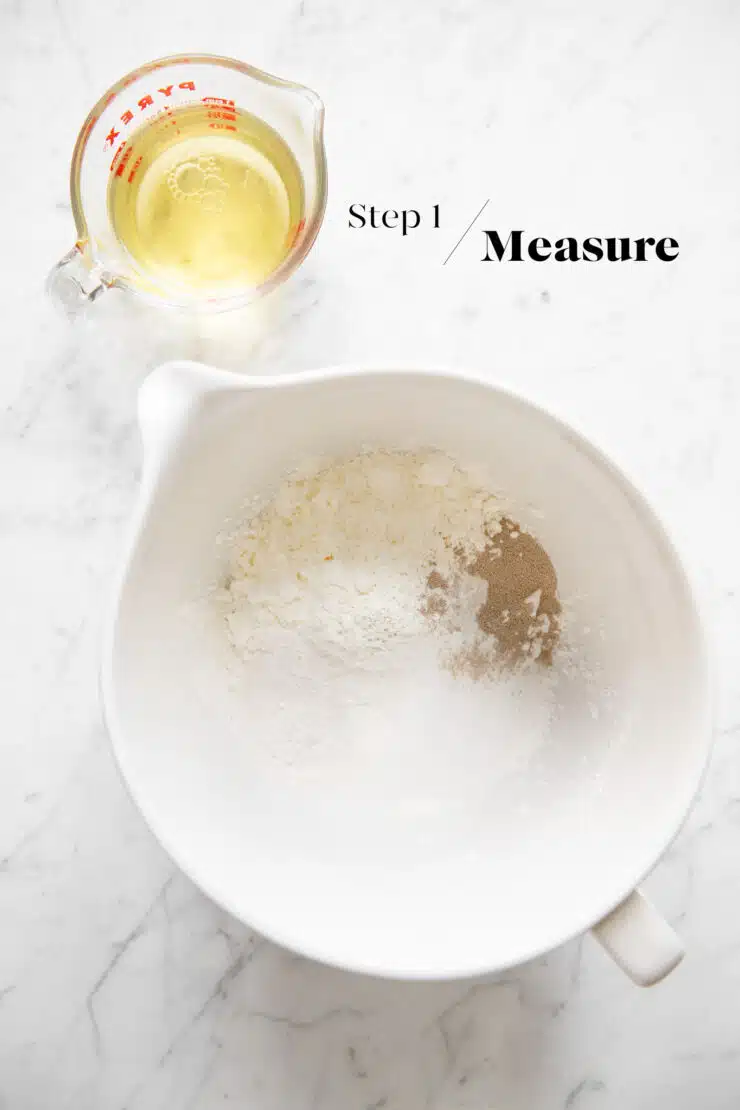
Step 1
Start by measuring all of the dry ingredients into a large mixing bowl. Then measure the warm water and oil into a measuring jug. The water needs to be a bit more than lukewarm to help activate the yeast, but it shouldn’t be boiling hot.
Step 2
I prefer to make my bao bun dough using my electric stand-mixer, but you can, of course, do everything by hand.
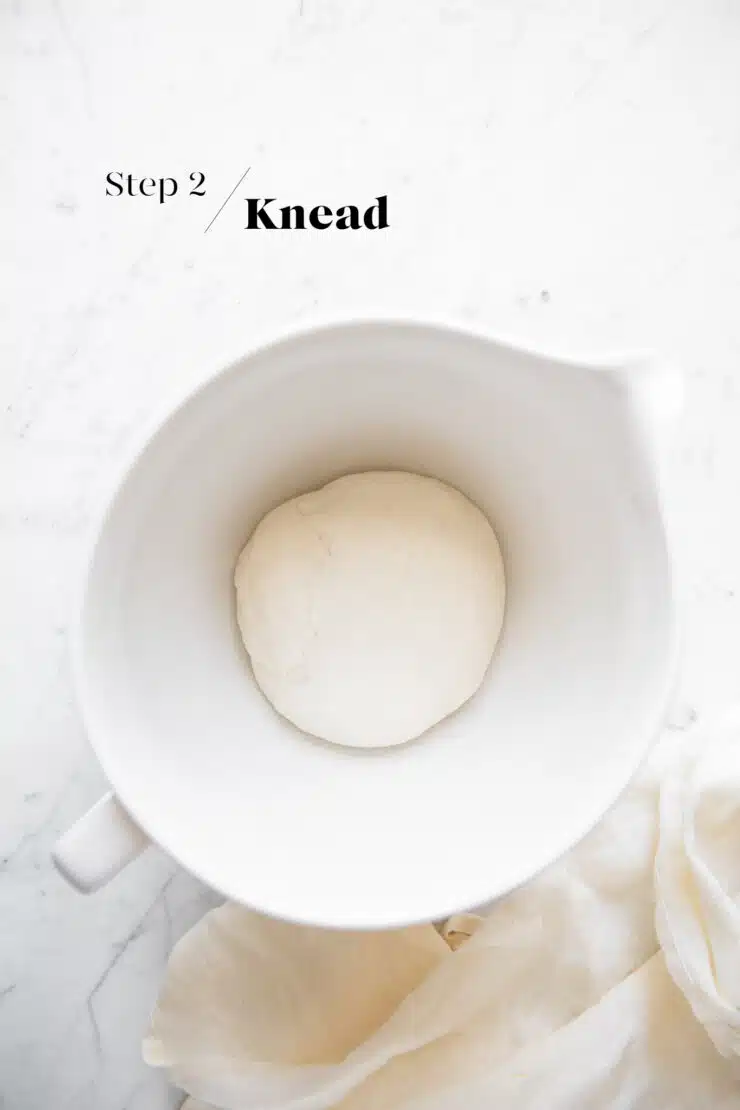
Using a dough hook on medium speed, mixing the liquid into the dry ingredients. Depending on the type of flour which you have used, you might need more or less liquid that than stated in the recipe. You want just enough liquid to bring everything together into a sticky dough.
Then, continuing on medium speed, knead the dough until it becomes soft and smooth to touch. This should take about 10 minutes using the stand-mixer on the lowest speed, or about 5 minutes by hand.
Step 3
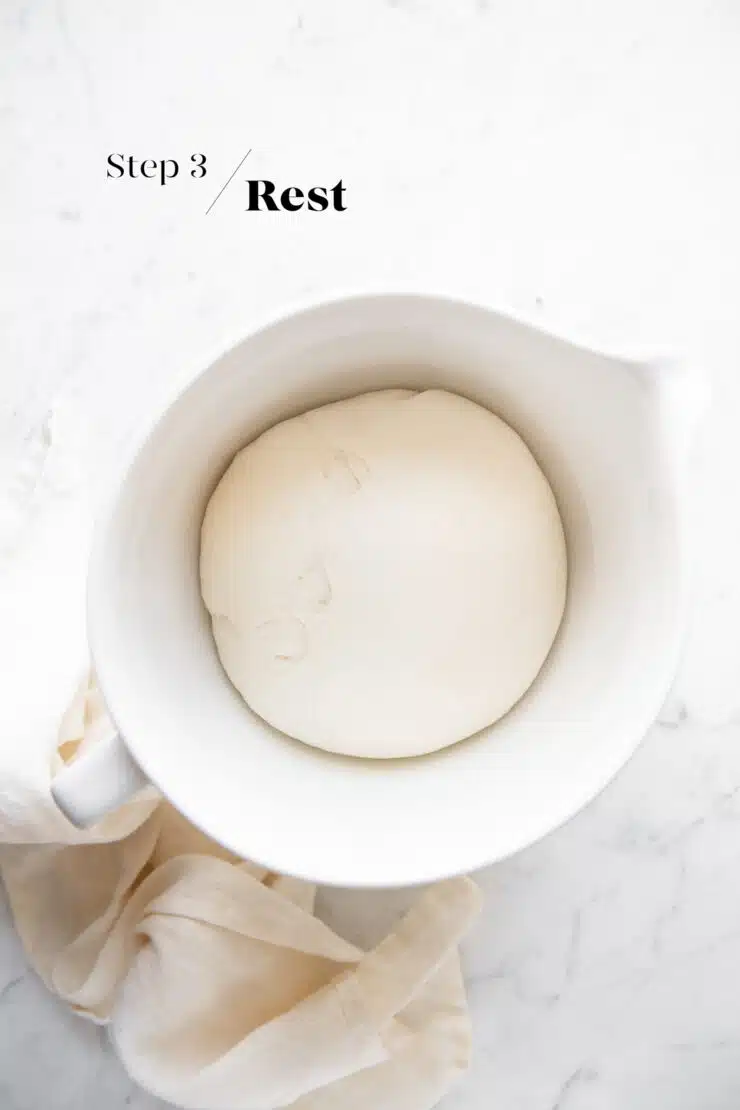
Once the dough is soft and smooth, shape the dough into a smooth ball, and place it back into the mixing bowl. Place the bowl somewhere warm for about 60 to 90 minutes for the dough to rise and double in size.
Step 4
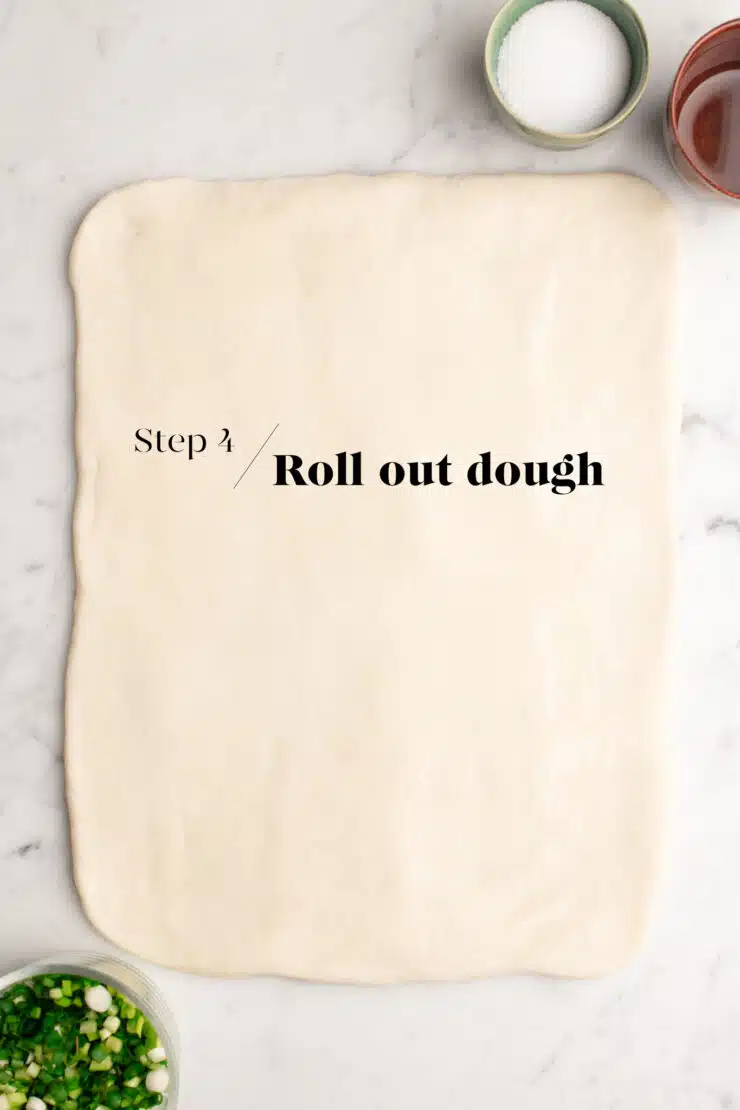
Once the dough has doubled in size, gently remove it from the bowl and place it on the counter. Then roll out the dough into a rectangle measuring about 20 x 30 cm (8 x 12 inches).
Step 5
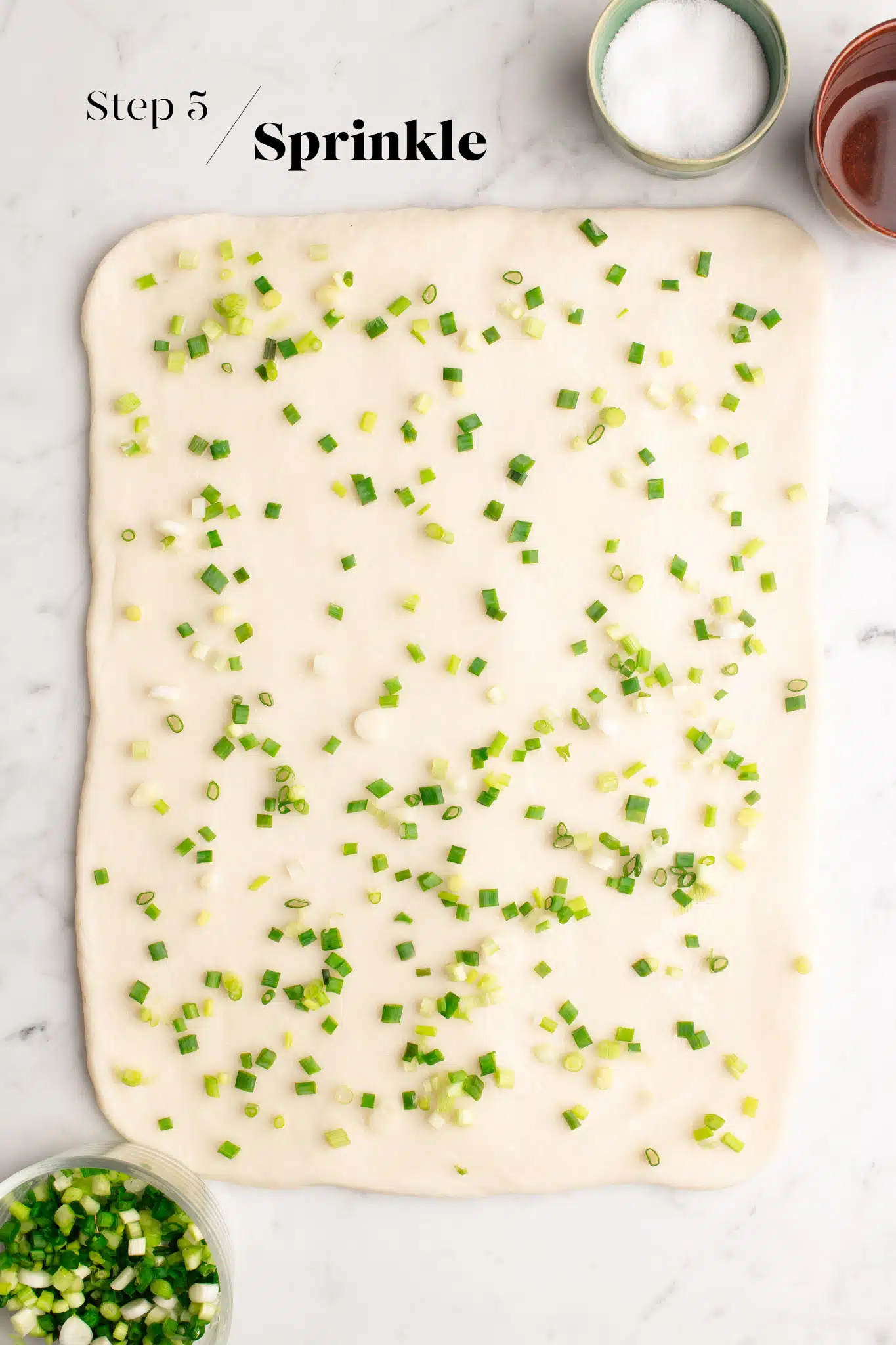
Lightly brush some oil all over the dough, followed by a light sprinkle of fine salt, and a generous sprinkle of spring onions (scallions).
Step 6
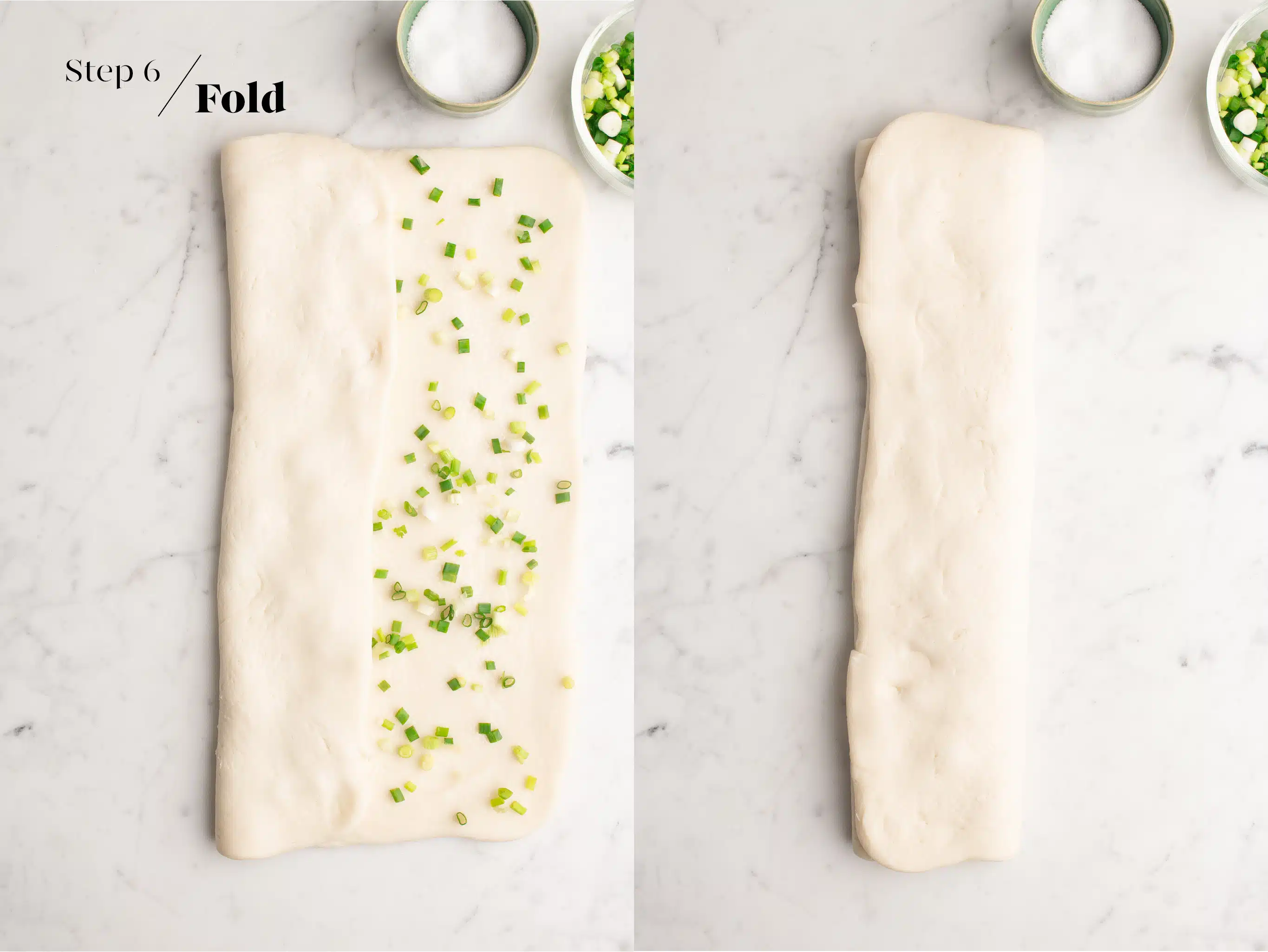
Fold one-third of the dough towards the centre, and cover with the remaining third of the dough.
Step 7
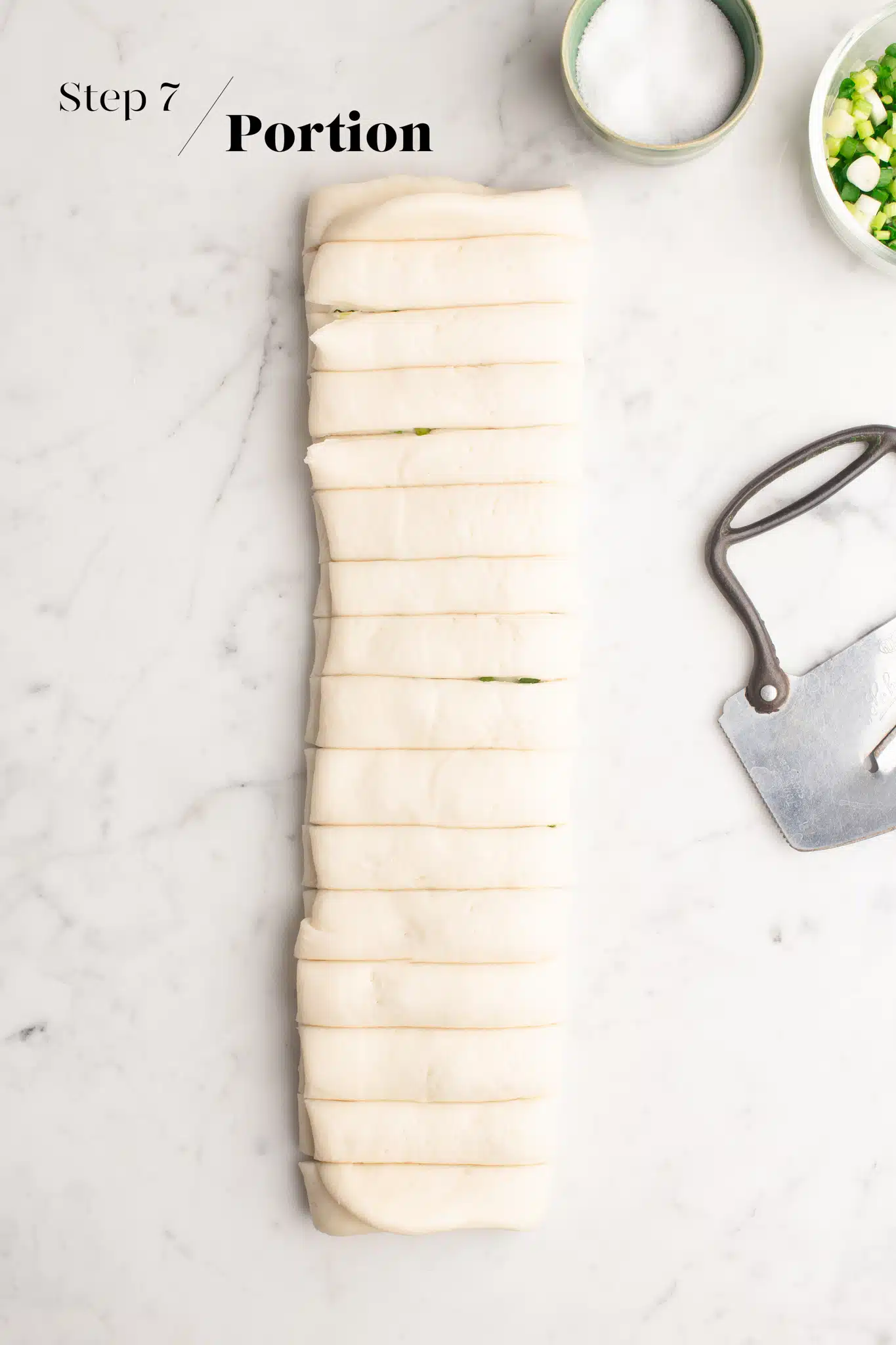
Using a knife or dough cutter, divide the dough into 16 equal pieces to make 8 buns. If you wish to make smaller buns, divide the dough into 18 or 20 pieces (you need to have an even number of pieces).
Step 8
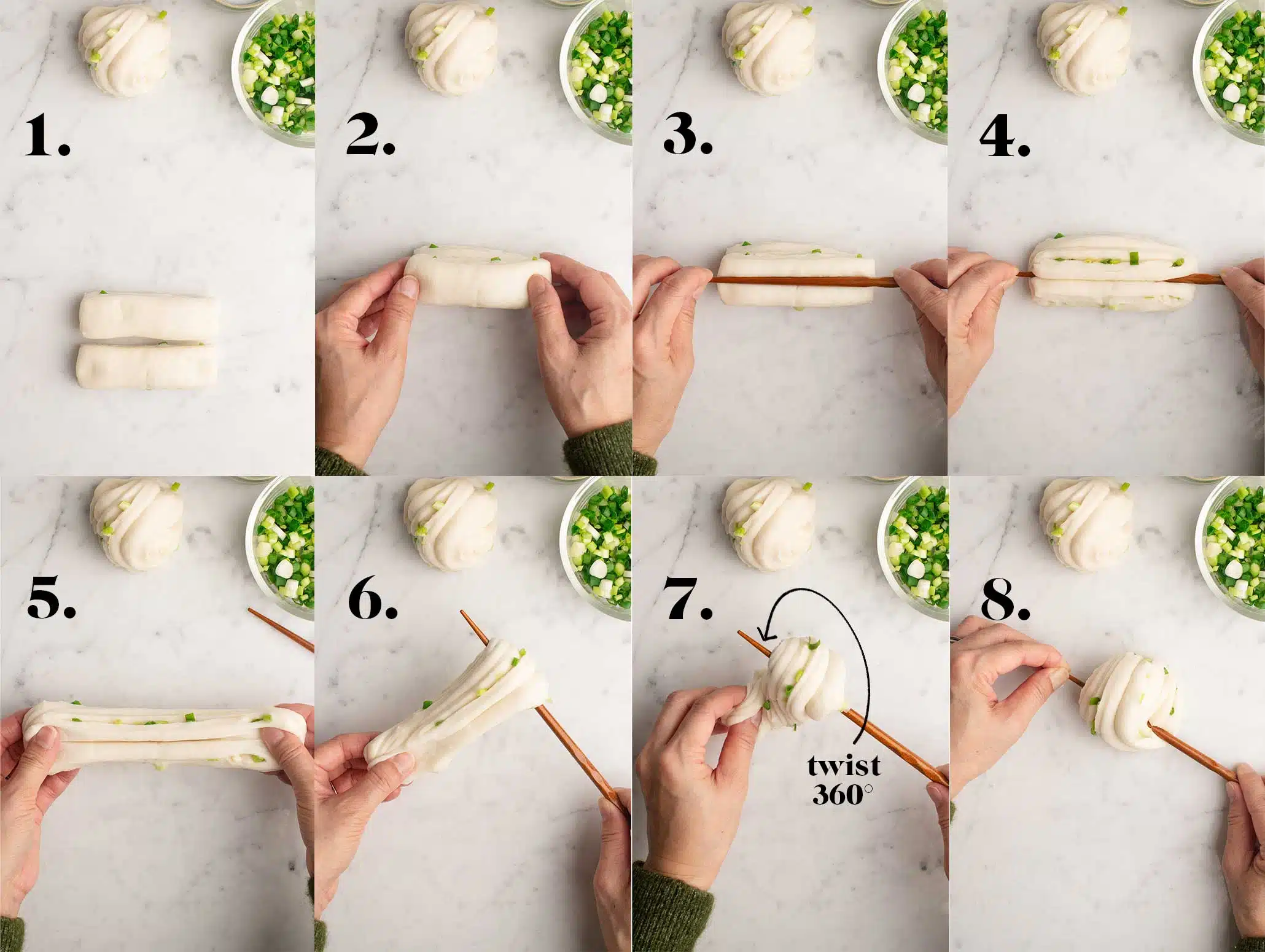
There are several methods for shaping these flower buns, and I recommend that you have a look at other recipes to see which method takes your fancy. Please see my tips below for shaping these flower buns.
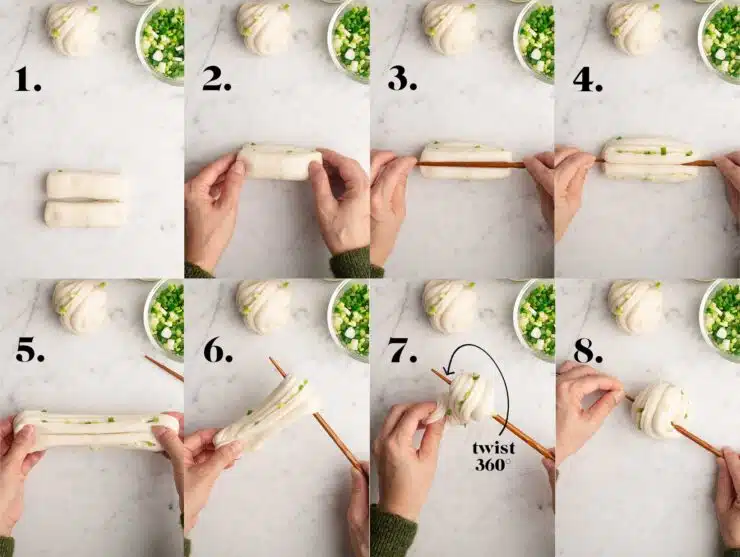
Having experimented with this recipe many times, I like the following method because the many exposed layers help to create a really fluffy bun. It might look fiddly at first glance, but I promise that you will very quickly get the hang of it!
To shape the flower buns:
- Take 2 pieces of dough.
- Place one piece of dough on top of the other.
- Place a chopstick across the middle of the dough lengthwise.
- Push the chopstick down to press the dough pieces together. Remove the chopstick.
- Use your hands to gently stretch the piece of dough to about 20 cm/8 inches.
- Drape the dough over the chopstick and pinch the ends of the dough together.
- Rotate the chopstick with the dough anti-clockwise by 360°, in an under-and-over movement.
- Place the dough onto the counter. Push the dough wrapped around the chopstick onto the pinched ends. Slide out the chopstick.
Step 9
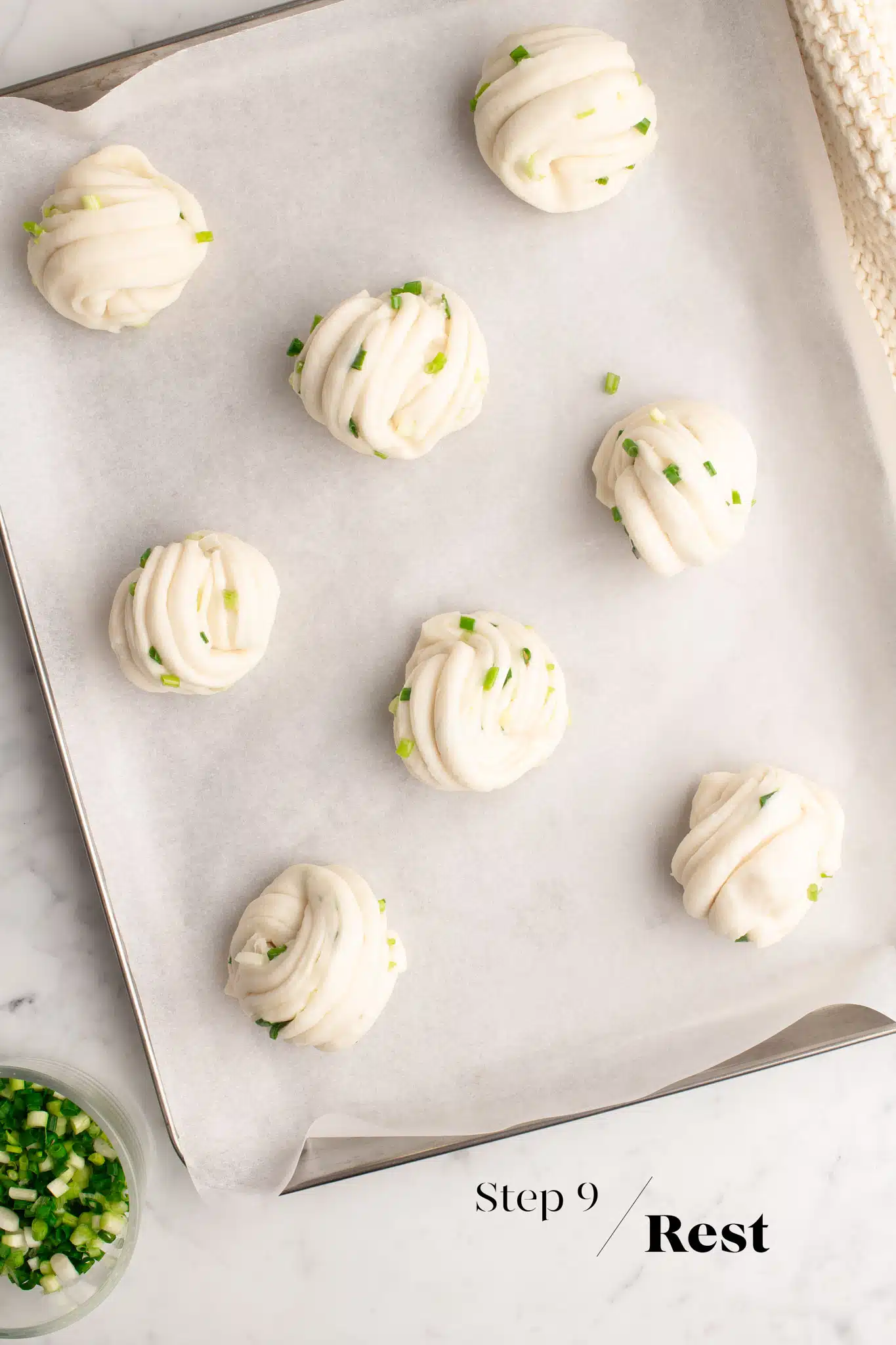
Place the shaped flower buns onto a large tray lined with baking paper, or onto a prepared steamer basket lined with perforated baking paper.
Place the tray of buns in a warm place for about 15-30 minutes, or until the buns have puffed up slightly.
Step 10
Steam the buns for 10-12 minutes, or until they have puffed up and are cooked through.
You can steam the buns using one of the following methods:
- On the stove. Bring a pan of water to the boil, and then reduce the heat to medium-high. Line a steamer basket with perforated baking paper, or a reusable perforated silicone liner. The steamer basket should be the same width as the pan. Fill the steamer with the buns, allowing some space for them to expand as they cook. Place the lid on the steamer basket and steam for 10-12 minutes.
- In a steamer oven. Line a large tray with baking paper. Place the buns on the tray, allowing some space for them to expand as they cook. Steam at 100°C/212°F for 10-12 minutes.
- In a non-stick frying pan. You can cook these buns like you would with potstickers or Crispy Pan-Fried Pork Buns, i.e. steam them in a non-stick pan before frying the buns to get a lovely, golden bottom.
Tips For Making Spring Onion Flower Buns
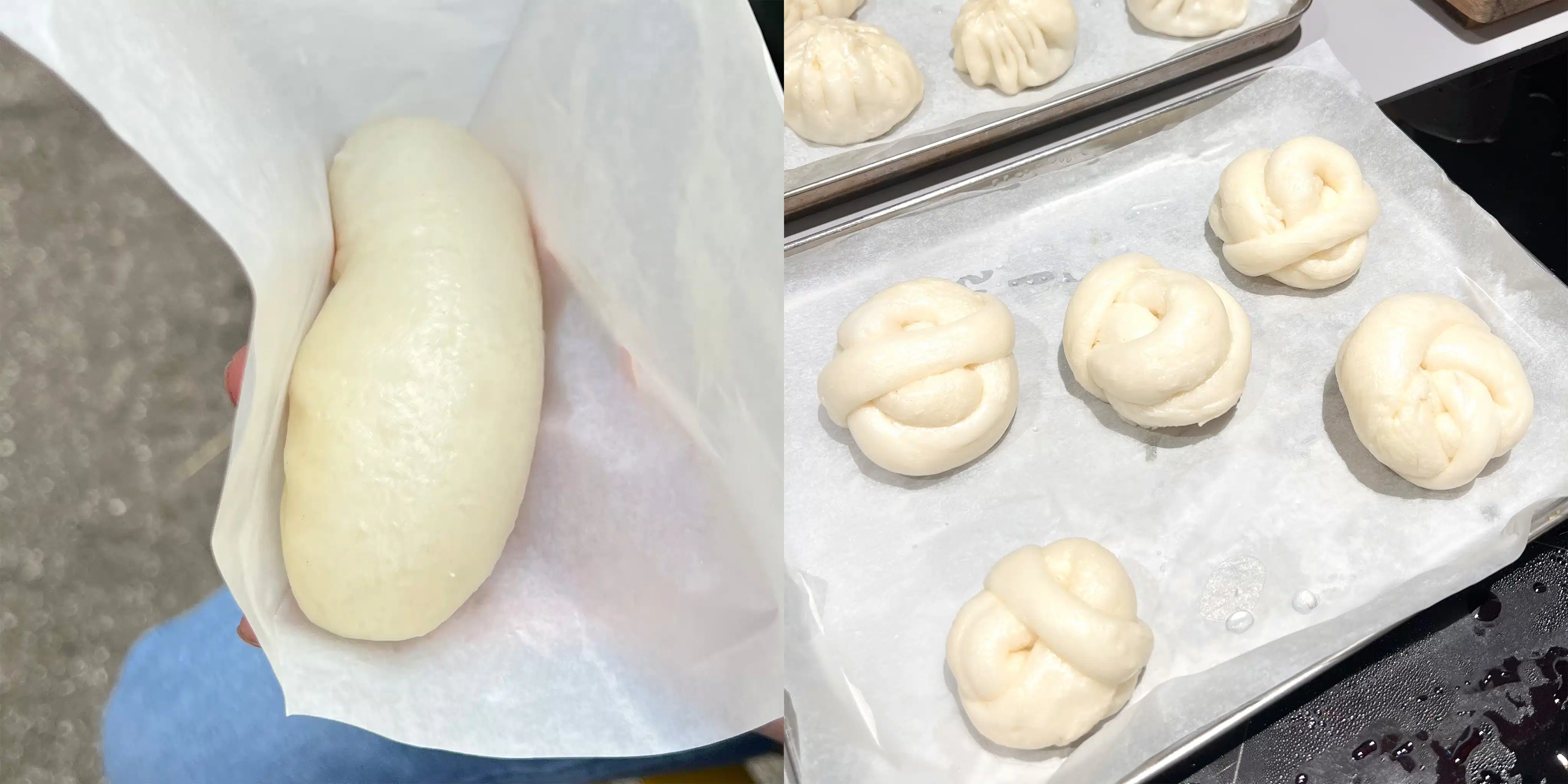
- Experiment with shapes. The method I have used here is just one example of how you can shape these buns. Other methods which work well are similar to that which I have used to make Cardamom Buns or Swedish Cinnamon Buns. We recently found a stand at a Japanese food festival which sold plain bao buns in the shape of mini hot dog rolls. The options are endless!
- Experiment with flavours. Depending on how I plan to serve these buns, I often substitute the vegetable oil for sesame oil, or swap the spring onions (scallions) for chives or even coriander (cilantro).
- Freeze leftovers. Any leftover buns can be frozen in ziplock freezer bags, and steamed back to freshness in about 8 minutes.
Spring Onion Flower Buns

Ingredients
For the Bao Buns
- 300 g (2 cups) plain flour , (all-purpose flour) or bleached flour
- 125 g (1 cup) cornflour , (US: cornstarch)
- 60 g (5 tablespoons) caster sugar , (superfine sugar)
- 3 ½ g (1 teaspoon) instant dried yeast, also called instant dried yeast or fast-action dried yeast (see Kitchen Notes)
- 12 g (2 ½ teaspoons) baking powder
- 180 ml (¾ cup) warm water
- 60 ml (¼ cup) vegetable oil, plus extra
For the Filling
- 1 tablespoon vegetable oil, or sesame oil
- ½ teaspoon fine salt
- ¼ cup spring onions, (scallions) finely chopped
Instructions
To Prepare the Bao Buns
- Measure all of the dry ingredients into a large mixing bowl or the bowl of an electric stand-mixer (if using).
- Measure the warm water and oil into a measuring jug. The water needs to be a bit more than lukewarm to help activate the yeast, but it shouldn’t be boiling hot.
- Using the dough hook on medium speed, mixing the liquid ingredients into the dry ingredients. Depending on the type of flour which you have used, you might need more or less liquid that than stated in the recipe.
- Once you have a sticky dough, continue kneading the dough on medium speed until it becomes soft and smooth to touch. This should take about 10 minutes using the stand-mixer on medium speed, or about 5 minutes by hand.
- Once the dough is soft and smooth, I recommend kneading it by hand for a few more minutes on the kitchen benchtop.
- Place the ball of dough back into the (clean) mixing bowl.
- Cover the bowl with some cling film or a re-usable bowl cover.
- Place the bowl somewhere warm for about 60 to 90 minutes for the dough to rise and double in size.
To Prepare the Flower Buns
- Once the dough has doubled in size, gently remove it from the bowl.
- Roll out the dough into a rectangle, measuring approximately 20 cm x 30 cm (8 x 12 inches).
- Brush some oil all over the dough.
- Lightly sprinkle some salt onto the dough.
- Generously sprinkle over the spring onions (scallions).
- Fold ⅓ of the dough towards the centre, and cover with the remaining ⅓ of the dough.
- Using a sharp knife or dough cutter, portion the dough into 16 equal pieces. If you wish to make smaller buns, divide the dough into 18 or 20 pieces (you need to have an even number of pieces).
To Shape the Flower Buns
- Take 2 pieces of dough.
- Place one piece of dough on top of the other.
- Place a chopstick across the middle of the dough lengthwise.
- Push the chopstick down to press the dough pieces together. Remove the chopstick.
- Use your hands to gently stretch the piece of dough to about 20 cm/8 inches.
- Drape the dough over the chopstick and pinch the ends of the dough together.
- Rotate the chopstick with the dough anti-clockwise by 360°, in an under-and-over movement.
- Place the dough onto the counter. Push the dough wrapped around the chopstick onto the pinched ends. Slide out the chopstick.

- Place all of the shaped buns onto a large tray, cover with a tea towel, and place in a warm place for about 30 minutes for the buns to rise again. After this time, the bao buns should have puffed up slightly.
To Steam the Flower Buns
- Meanwhile, prepare the steamer on the stove (see Kitchen Notes below).
- Steam the buns in batches for 10 to 12 minutes, or until they are puffy and soft, and cooked all the way through.
- Serve the buns immediately.
Kitchen Notes
- DIFFERENT TYPES OF YEAST
* Please note that there is a difference between instant yeast (also called instant dried yeast or fast-action dried yeast) and dried yeast (also called active dry yeast). If you are not sure what type of yeast you have, please check the packaging for instructions on how to use the yeast.
* With instant yeast, you can add it directly to the flour mixture without having to activate it first.
* With dried yeast, you will need to activate it first (usually in some warm liquid). - WHAT TYPE OF FLOUR TO USE
* Plain flour (all-purpose flour) works well in this recipe as the cornflour (cornstarch) helps to give the buns a light and fluffy texture. However, the resulting buns will be a pale yellow in colour.
* For snowy white buns like those sold in Chinese restaurants, you can use bleached flour found in Asian grocery stores. - HOW TO STEAM BAO BUNS
* The steamer basket (whether bamboo or otherwise) should sit directly on top of a saucepan of the same dimension.
* Fill the saucepan with boiling water until about one-third full.
* Place the steamer basket on top of the saucepan.
* Place the bao buns in the steamer basket, leaving a bit of room for each to rise and puff up during cooking.
* Place the lid on top of the steamer basket.
* Steam over low-medium heat for 10 to 12 minutes. - HOW TO MAKE BAO BUNS WITH A STEAM OVEN
* First Proof: Cover the bowl with some cling film or a re-usable bowl cover. Proof the dough in the steam oven/combi-steam oven at 40°C/104°F for about 1.5 hours, or until the dough has doubled in size.
* Second Proof: Once you have shaped the bao buns and placed them onto a small sheet of baking paper each, place them onto a large tray that will fit inside your steam oven/combi-steam oven. For my steam oven, I can fit a large sheet pan, which will comfortably fit 12 bao buns. There is no need to cover the buns. Proof the shaped bao buns at 40°C/104°F for about 15-30 minutes, or until the buns have puffed up slightly.
* Steaming the Bao Buns: Remove the tray of bao buns from the steam oven/combi-steam oven. Increase the temperature to 100°C/212°F. Once the steam oven/combi-steam oven has come to temperature, place the tray of bao buns back inside and steam them for 10-12 minutes. - HOW TO FREEZE BAO BUNS
Any leftover buns can be frozen in zip-lock bags for 1-2 months. Reheat the frozen steamed buns in a stovetop steamer for about 5 minutes, or until they are warmed all the way through. - CONVERSIONS
To convert from cups to grams, and vice-versa, please see this handy Conversion Chart for Basic Ingredients.


I’ve always wanted to make these buns and your step by step photos were so helpful. Really delicious, soft and fluffy buns – they tasted great.
Hi Michelle,
So glad you found this recipe helpful 🙂