

 by
by Chestnut Desserts
As soon as the weather in Switzerland starts to take a dip, the roasted chestnut carts magically appear and I know that my favourite dessert will soon be in all of the pâtisserie shops.
Roasted chestnuts alone are a gorgeous treat, especially since they also perform a double function as lovely hand warmers, but one of my favourite ways of enjoying chestnuts is in a simple Mont Blanc dessert.

Mont Blanc Dessert
A Mont Blanc dessert, in its simplest form, is a bed of sweetened chestnut purée topped with whipped cream and crushed meringue. It is sometimes served in small pastry tarts or even with a scoop of vanilla ice-cream on the side.
In countries like Switzerland, Germany and Austria, a Mont Blanc dessert is often called Vermicelles, referring to the noodle-like strands which the chestnuts typically resemble.
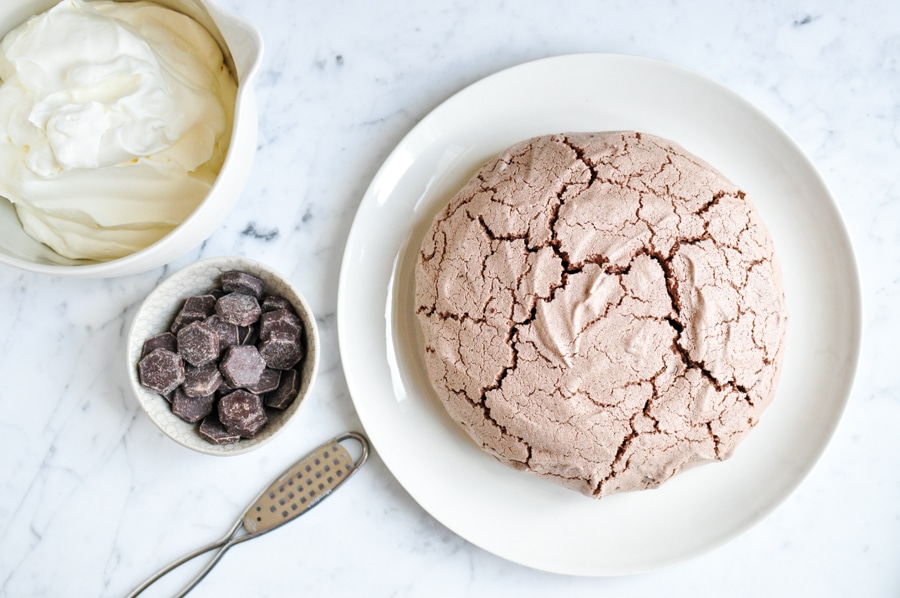
Chocolate Pavlova with Sweetened Chestnut Purée
My favourite version of the Mont Blanc dessert, which I buy from my local bakery, is served with a chocolate meringue.
So being a French-Australian family, it felt only natural to combine my love of this dessert with an Aussie pavlova to create a Mont Blanc Chocolate Pavlova.
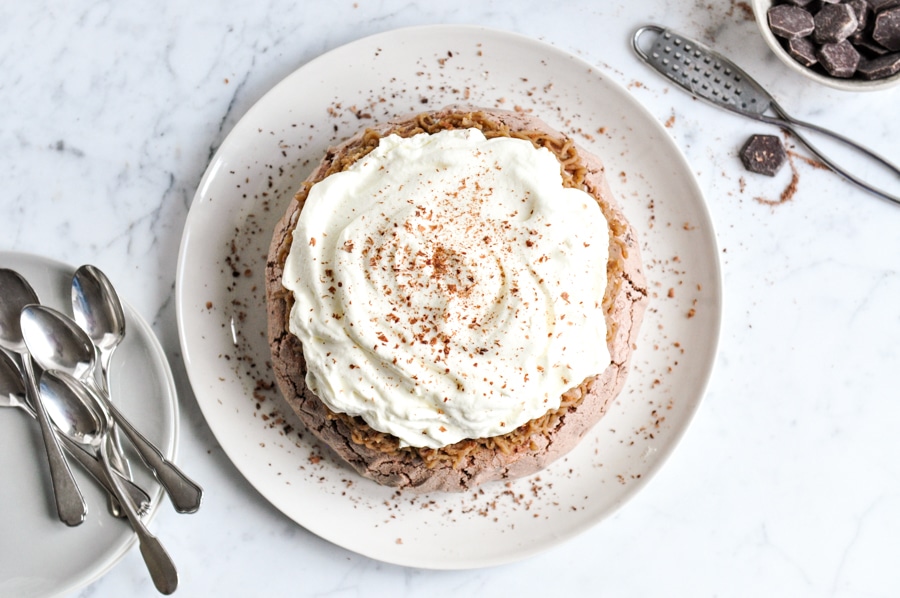
Here, I have made a large chocolate pavlova, topped it with a generous mound of sweetened chestnut purée, before covering it with a duvet of softly whipped cream.
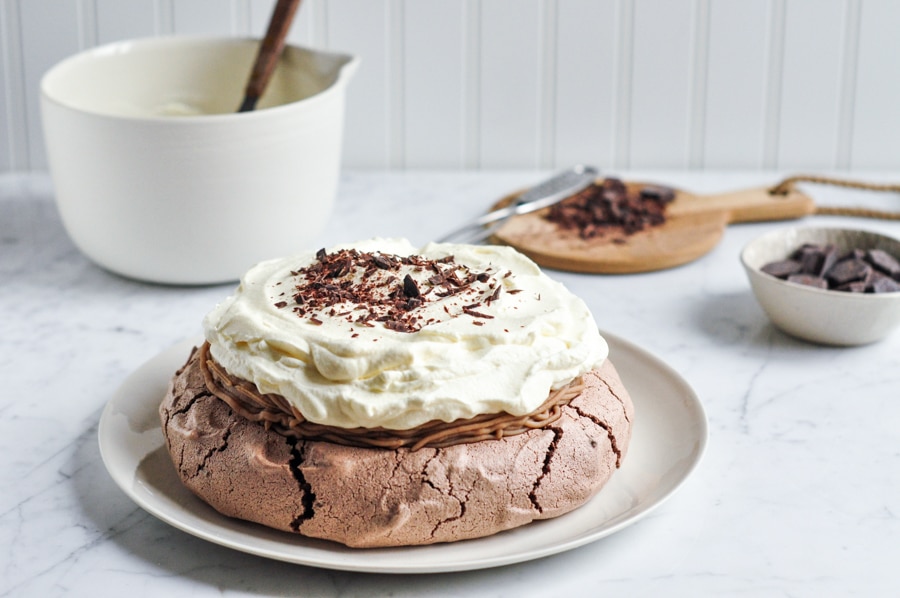
Easy Chocolate Pavlova Recipe
My chocolate pavlova recipe is inspired by Nigella Lawson’s Chocolate Raspberry Pavlova, which I make faithfully and regularly whenever I have the opportunity.
As much as I love normal, plain pavlovas, there is something decadent about a chocolate pavlova, and who can resist chocolate anyway?
Chestnut Purée Recipe
If sweetened chestnut purée is not readily available where you live, please find below my chestnut purée recipe which you can make from scratch using frozen, tinned or vacuum-packed chestnuts.
For a short-cut version using shop-bought sweetened chestnut purée, please see my recipe for Chocolate Pavlova with Chestnut Purée.
How to Make Chocolate Pavlova
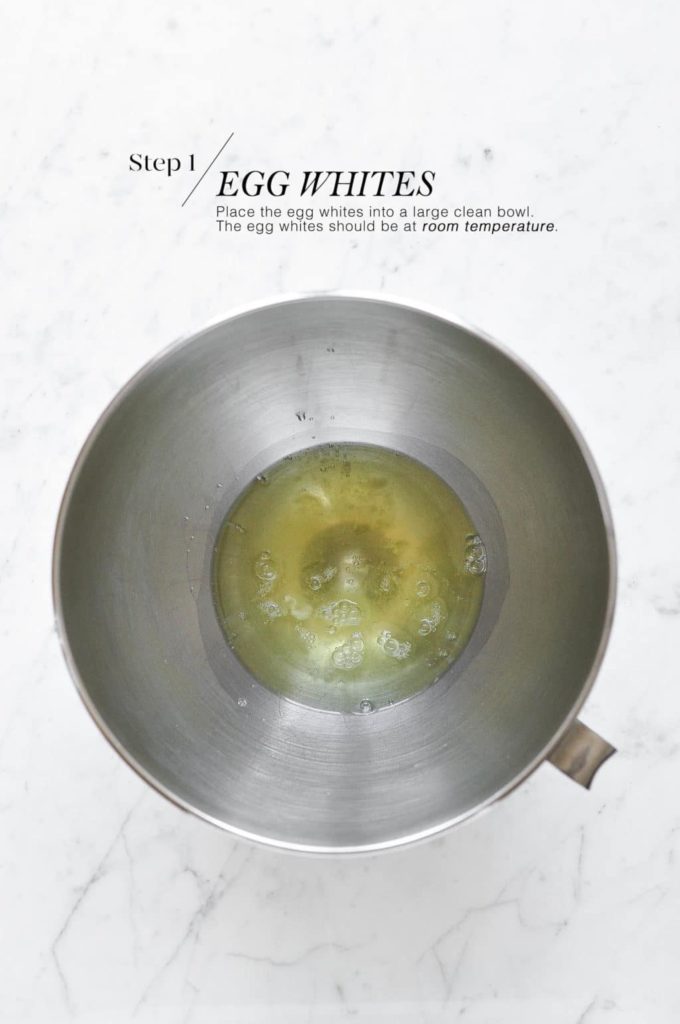
Step 1
Unless you really want to have a heavy duty upper arm workout, an electric stand mixer or an electric hand-held beater is an essential equipment when making a pavlova.
Place the egg whites into a large, clean bowl that is free from any grease.
To ensure that the egg whites whip up nicely, make sure that they are at room temperature.
Step 2
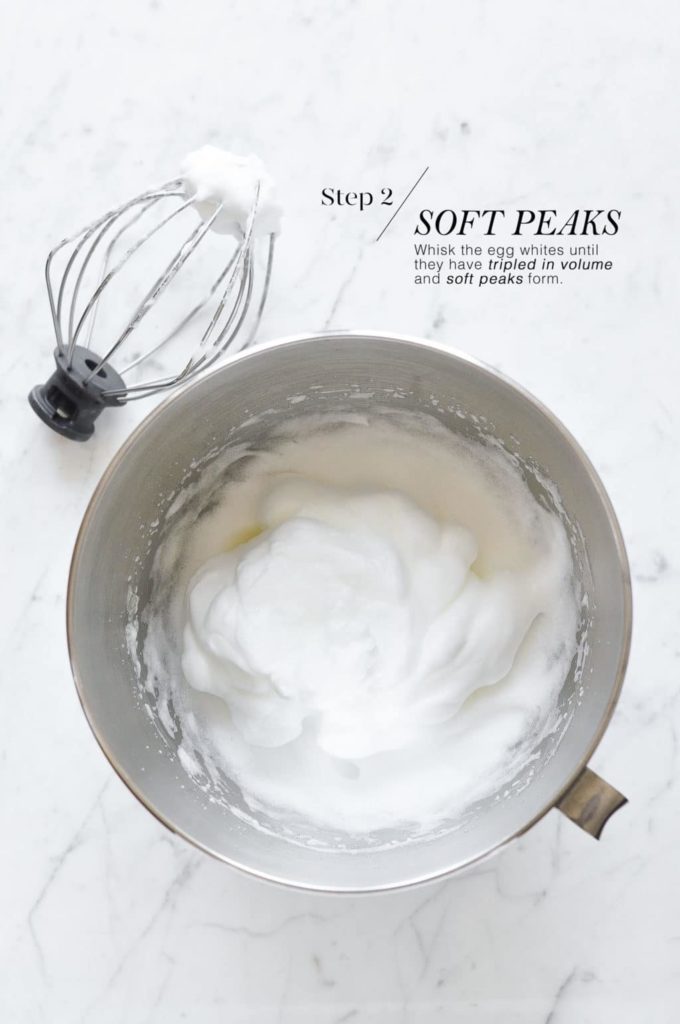
Whisk the egg whites until they have tripled in volume and form soft peaks when you lift the beaters.
Soft peaks mean that, when you lift the beaters, the mixture forms a peak which falls over or which does not stand.
At this stage, the beaten egg whites should look very soft and foamy.
Step 3
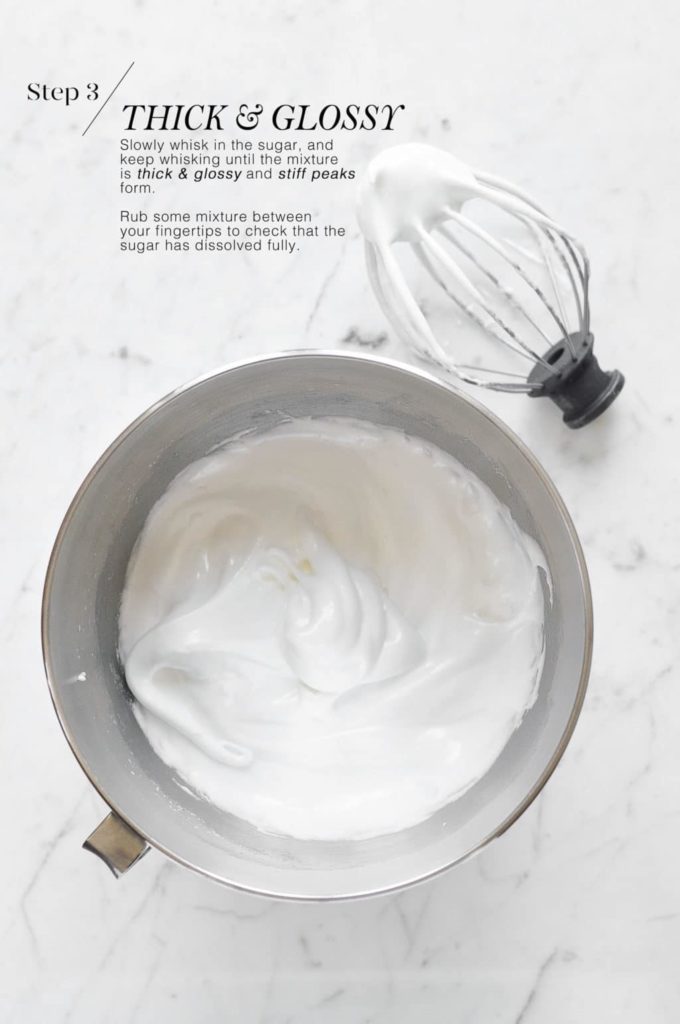
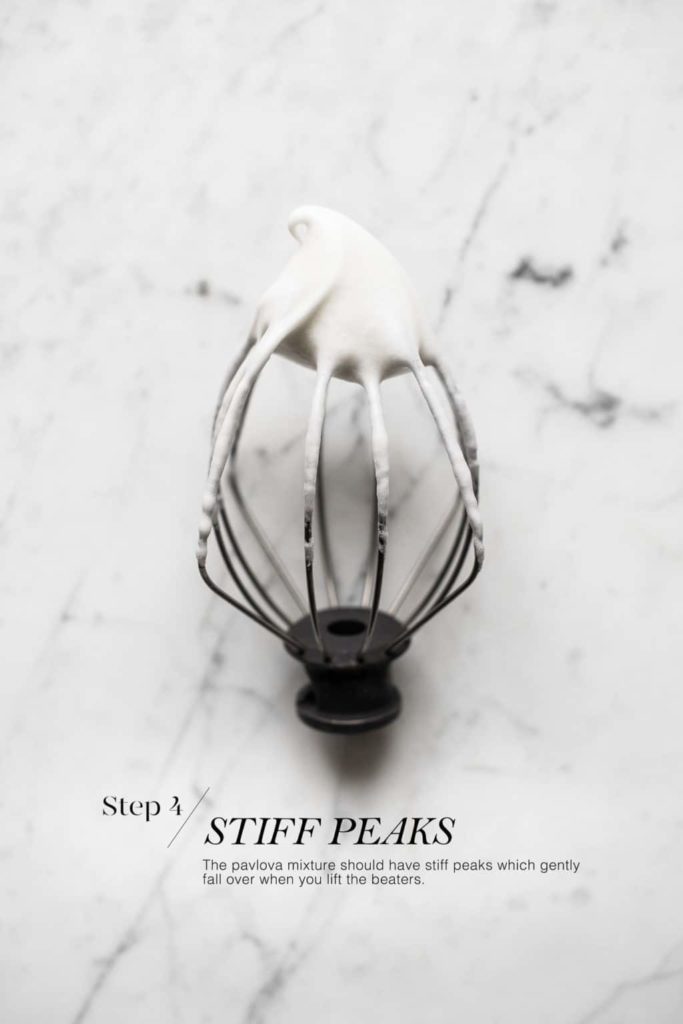
Next, add the sugar, one spoon at a time, until the egg whites transform into a thick and glossy mixture, and stiff peaks form when you lift the beaters.
Stiff peaks mean that, when you lift the beaters, the mixture forms a peak which holds its shape.
It is important to make sure that the sugar has been completely dissolved in the egg white mixture, but it is also important to not over-beat the mixture once you start adding the sugar.
To test that the sugar has been completely dissolved, simply rub a bit of mixture in between your finger tips.
Step 4
Add the cornflour, vinegar, vanilla and cocoa powder. A few rotations of the stand mixer should be enough to mix in these ingredients.
Fold through the chopped chocolate.
The resulting pavlova mixture should be thick and firm, and it should hold its shape when you start piling it on the baking tray.
If the pavlova mixture is soft and runny, and you are unable to shape it into a high pavlova because the mixture keeps sliding, it means that you may have overbeaten the eggwhites or that you added the sugar too soon. Please see the FAQs on this page.
Step 5
Shape the pavlova on a baking tray lined with baking paper.
I recommend that you smooth the top of the pavlova so that it is relatively flat. This is so the whipping cream and any toppings which you add later can sit nicely on the pavlova.
If your pavlova is domed in shape, any cream and toppings which you add later will quickly slide off.
Step 6
Place the pavlova into the oven at 180°C/350°F (without fan).
Immediately turn down the temperature to 150°C/300°F.
Let the pavlova bake for 1 hour and 15 minutes, and do not open the oven door during this time.
After the baking time, turn off the oven, and leave the pavlova to cool inside the closed oven for at least 2-3 hours, or preferably overnight.
Step 7
Decorate the pavlova just before serving, otherwise the pavlova will soften and collapse.
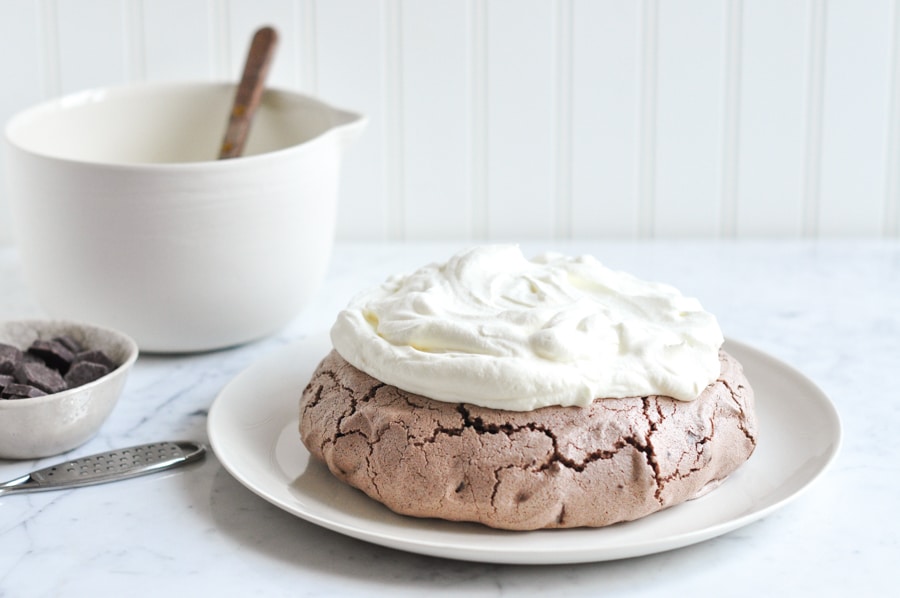
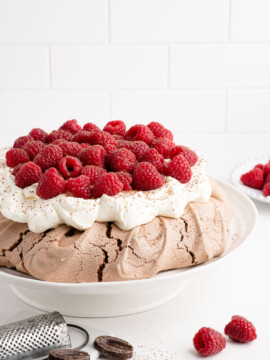
Whip the cream until it is thick and soft. Dollop the cream onto the pavlova, top with fresh raspberries, and coarsely grate over some dark chocolate.
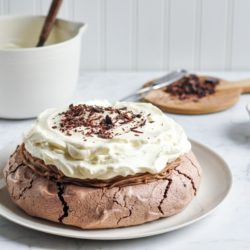
Mont Blanc Chocolate Pavlova

Ingredients
For the Chocolate Pavlova
- 3 egg whites
- 180 g (½ cup plus ⅓ cup) caster sugar, (superfine sugar)
- 1 ½ teaspoons cornflour, (US: cornstarch)
- 1 teaspoon white wine vinegar
- 1 ½ tablespoons cocoa powder, sifted
- 50 g (2 oz) dark chocolate, 70% cocoa, roughly chopped
For the Chestnut Purée
- 375 g (13 oz) cooked chestnuts, canned or vacuum-packed
- 200 ml (1 cup minus 3 tablespoons) milk, plus extra
- 1 teaspoon vanilla extract
- 2 tablespoons rum or kirsch
- 100 g (½ cup) caster sugar, (superfine sugar)
For the Cream Topping
- 250 ml (1 cup) double cream, (heavy whipping cream)
- dark chocolate, 70% cocoa, for decorating
Instructions
To Make the Chocolate Pavlova
- Preheat the oven to 180°C/350°F (without fan).
- Using a standmixer or electric beaters, whisk the egg whites in a large, clean bowl until they have tripled in volume and soft peaks form.
- Turn the speed down to low and slowly add the caster sugar, one spoon at a time until the sugar is well incorporated. As you add the sugar, the mixture will start to become thick and glossy, and stiff peaks will form when you lift the beaters.
- Remember to scrape down the sides of the bowl.
- Rub a bit of the mixture between your fingertips to test if the sugar has been fully dissolved; if you don’t feel any grains of sugar, move onto the next step.
- Add the cornflour, white wine vinegar, vanilla extract and cocoa powder. I do this on low speed with the stand mixer for only 2 to 3 rotations (about 1 second).
- Fold through the chopped chocolate.
- Line a baking tray with baking paper and spoon the pavlova mixture onto the tray into a round shape. I like to dollop the mixture on top of each other into a high pile, and to then shape the pavlova from there – using this method ensures that your pavlova will have some height.
- Use a palette knife to shape the sides of the pavlova and to slightly flatten the top. The pavlova will expand and rise once cooked, so shape it to be on the slightly smaller side.
- Place the pavlova in the oven and immediately turn the temperature down to 150°C/300°F (without fan).
- Bake for 1 hour and 15 minutes. Do not open the oven door during this time.
- After 1 hour and 15 minutes, turn off the oven and leave the oven door closed so the pavlova can cool down completely. You should leave the pavlova in the oven for at least 2-3 hours, but overnight (12-18 hours) is best.
To Make the Chestnut Purée
- Place the chestnuts, milk, vanilla extract and rum into a medium saucepan.
- Simmer gently until the chestnuts have softened and can be mashed easily with a wooden spoon, and most of the milk has been absorbed.
- Take the pan off the heat and mash the chestnuts with a potato masher until you have a smooth purée – you might need to add some more milk if the mixture is too thick.
- Return the pan to the heat, stir through the sugar, and cook for a few minutes until the mixture binds together. Set aside to cool.
To Assemble
- Just before serving, whip the cream until soft peaks form.
- Place a generous layer of the chestnut purée on top of the pavlova. To achieve the characteristic noodle strands, you will need to pipe the mixture using a spaghetti or grass nozzle (some countries sell a nozzle specifically for chestnut purée), or you can achieve a similar effect by pushing the chestnut purée through a potato ricer. If the chestnut purée is too thick or too firm, stir through some milk to soften the mixture. If you don’t have a special nozzle or potato ricer, simply spread the chestnut purée over the pavlova using a palette knife.
- Dollop the whipped cream on top of the chestnut purée, and grate over some chocolate to decorate.
Kitchen Notes
- CHESTNUT PURÉE
If you don’t have time to make your own chestnut purée, you can find sweetened chestnut purée in supermarkets or specialty stores, such as this one by Clement Faugier. I also frequently make a version of this pavlova using shop-bought sweetened chestnut purée – please see my recipe for Chestnut Cream Pavlova. - MAKE-AHEAD TIPS
I like to make the pavlova first thing in the morning so that it can slowly cool and dry in the oven until I need to serve it later in the evening. You could even make the pavlova 1-2 days in advance and keep it in an air-tight container. The chestnut purée can be made a couple of days in advance and kept in an airtight container in the fridge. - PAVLOVA FOR 4 TO 6 PEOPLE
To make a slightly larger pavlova, I recommend the following recipe:
4 egg whites
240 g (1 cup plus 1 tablespoon) caster sugar (superfine sugar)
2 teaspoons cornflour (cornstarch)
1 1/4 teaspoon white wine vinegar
1 1/4 teaspoon vanilla extract
2 tablespoons cocoa powder
60 g (2 oz) dark chocolate - OVEN TEMPERATURES
All recipes on this website state temperatures for a regular oven (i.e. a conventional oven without fan). If you have a convection oven with a fan, please consult the manufacturer’s handbook on how to adjust the temperature and baking time accordingly. - CONVERSIONS
To convert from cups to grams, and vice-versa, please see this handy Conversion Chart for Basic Ingredients.
Did you make this recipe?
Please leave a comment below and share your photos by tagging @eatlittlebird on social media and using #eatlittlebirdUpdate
This recipe was first published on 17 December 2015. It has been updated with more comprehensive recipe notes.


This is such a stunning dessert! I absolutely love the layers on this – so delicious!
Thank you! I think a pavlova always looks impressive and this one also tastes delicious 🙂
This looks amazing, I have a can of chestnut puree in the fridge waiting to be ‘Mont Blanced’! I love how this is like a pavlova – it looks so delicious.
I’ve also added some chestnuts to the shopping list as I love roasting them and peeling them when they’re hot and delicious!
Have a fabulous Christmas and New Year!
Ooh, roasted chestnuts are just heavenly! Hope you had a lovely Christmas and a wonderful start to 2016!
There are countless versions of Mont Blanc, and I think this is one of the best I’ve ever seen!!!
You leave me speechless!!
When I go to Switzerland, I buy in the supermarkt!! Call me lazy!
Thanks, Paula! I often buy Mont Blanc from the bakeries, but I love to make this pavlova when we have guests 🙂 It’s easier than it looks!
Beautiful! Just beautiful!
Thank you! 🙂
This looks delicious! A lovely winter variety of the traditional summery pav that you get here on Christmas day! You have me thinking of all different types now… like maybe a banoffee pav!? YUM
Yes, I also think of this as a winter pav, which is a nice change from my usual cream and passionfruit. I’m loving the sound of a banoffee pav! I always thought a pavlova needed a sour element to balance out the sweetness, but I now know that that isn’t always the case.
Absolutely stunningly elegant looking. Good job!
Thank you, Debbie! The piping of the chestnut puree can be a bit tricky but I tried my best for these photos 🙂
Happy New Year Thanh, it looks like you are having a wonderful time skiing! Pavlova is one of my favourite desserts and this is just perfect for the festive season (and beyond). x
Happy New Year, Louise! Yes, we had a great time skiing in the mountains this past week 🙂 But I’m looking forward to going home and getting back into my kitchen with my many many tools and gadgets … the kitchen in our holiday apartment was a bit bare and proved quite challenging when it came to cooking most nights!
I’ve made this pavlova three times now and it is simply delicious! It’s not easy to buy sweetened chestnut purée where I live so this is a great recipe to have. Thank you!
Wow, this Mont Blanc Chocolate Pavlova so cute! I would love to eat this for breakfast, lunch and dinner! Thank you for sharing this great recipe!
Exquisite! I have made your regular pavlova many times so I wanted to finally try your chocolate pavlova recipe. It was amazing! The chestnut cream was also very delicious and worked so well with the chocolate pavlova.
You mention full-cream milk for the puree is that heavy whipping cream or whole milk?
Hi Sherry,
The recipe uses whole milk in the chestnut purée. I will update the recipe to show this. Hope you will enjoy this recipe!