

 by
by 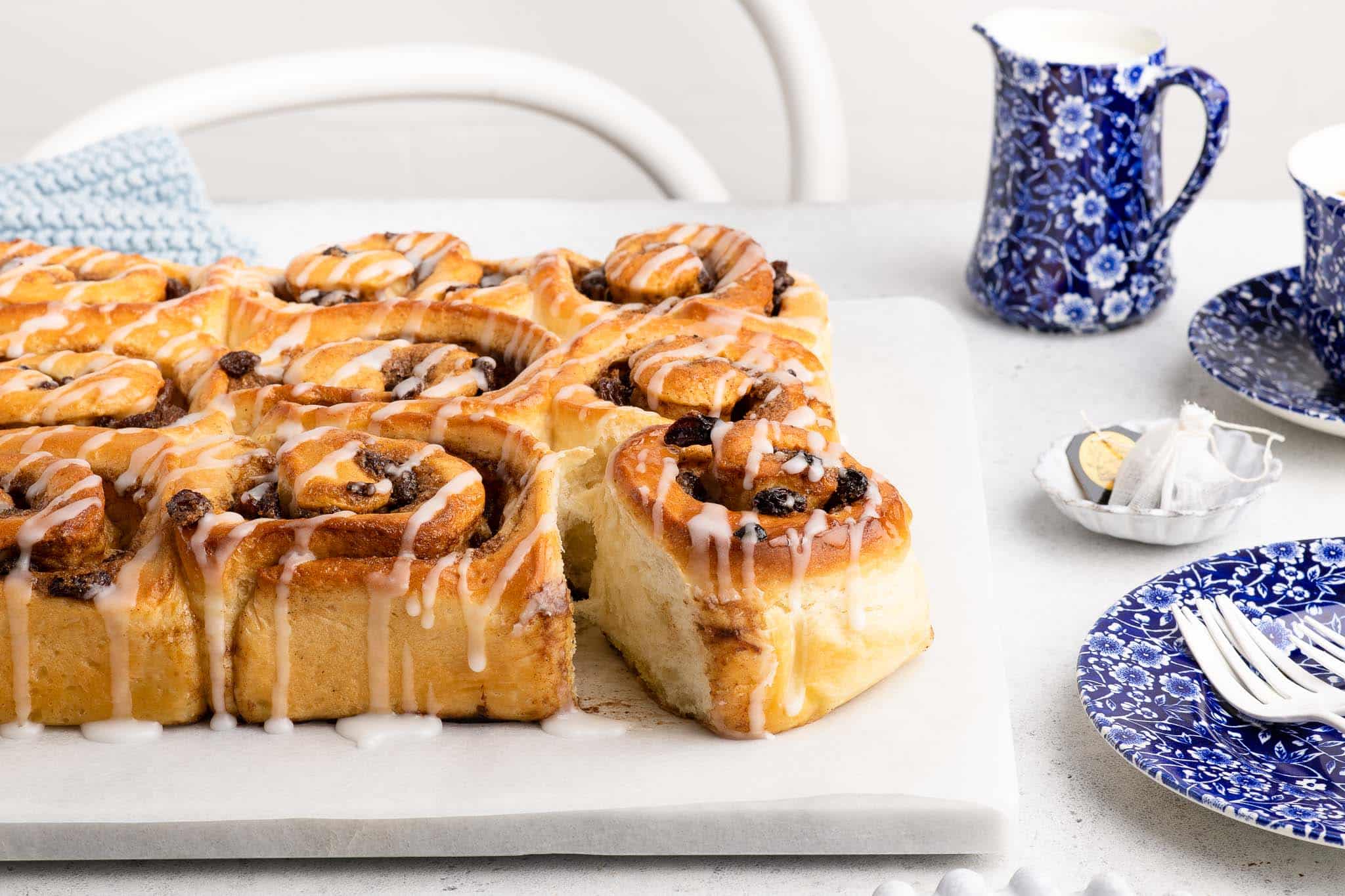
Chelsea Buns
If you love American-style Cinnamon Rolls, chances are that you will also love the British counterpart, aka Chelsea Buns. Both are made from a sweet yeasted dough and covered in a sticky glaze, but that is where the similarities end.
What are Chelsea Buns?
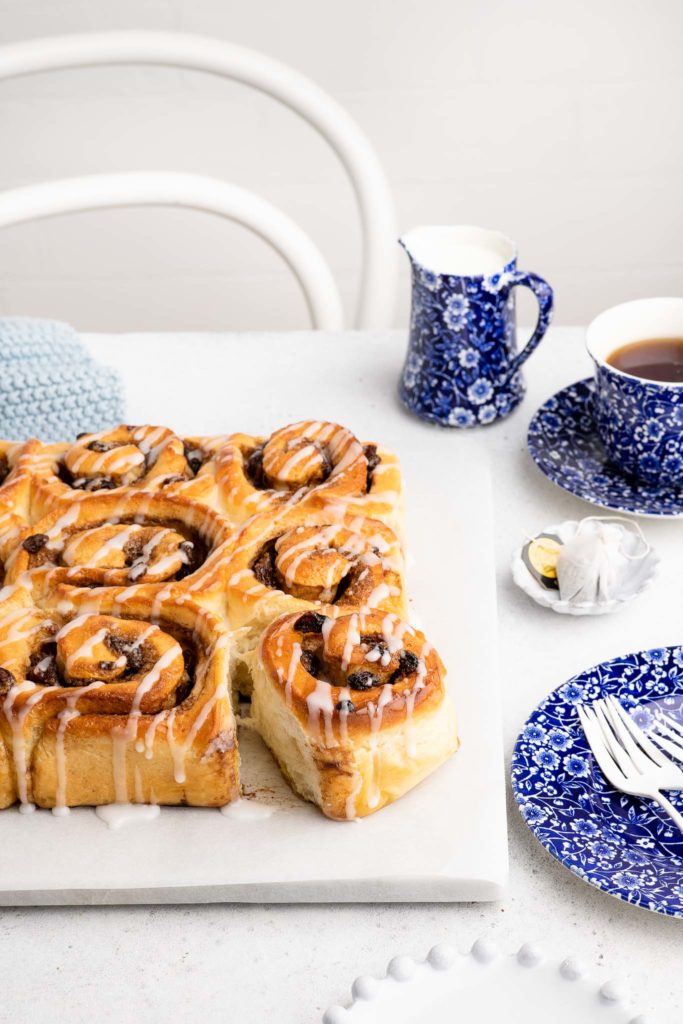
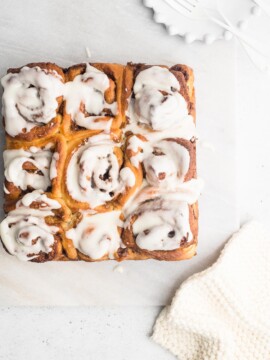
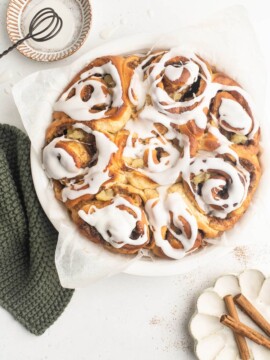
Chelsea Buns are yeasted breads which are baked in a scroll and filled with currants and/or raisins. They are traditionally glazed simply with a simple syrup, but many British bakeries now make them with a plain icing drizzled over the buns for extra sweetness.
And unlike American-style Cinnamon Rolls which are heavy on the cinnamon, Chelsea Buns instead contain mixed spice to give a more Easter Hot Cross Bun vibe.
Chelsea Bun Recipe
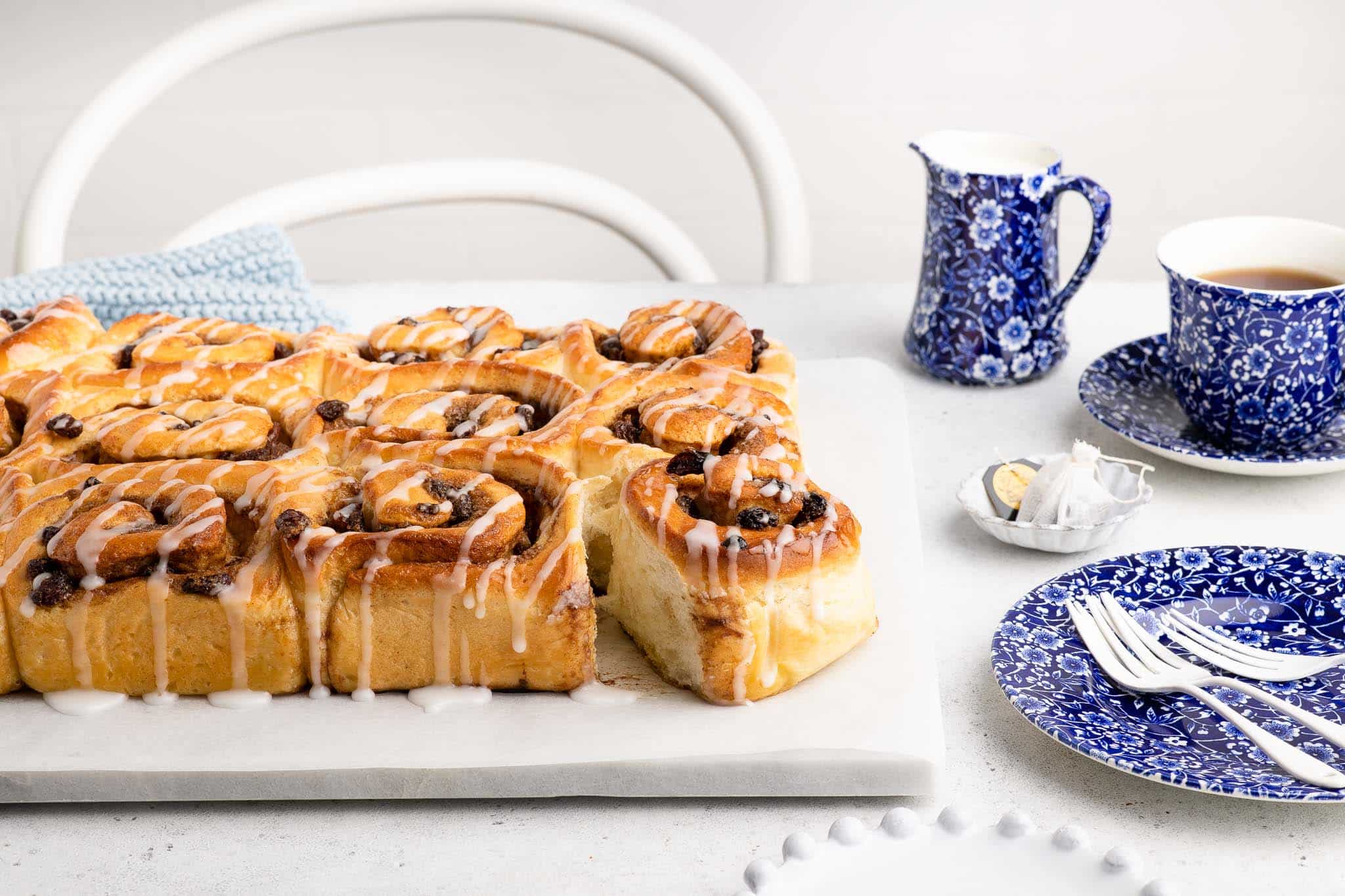
My recipe for Chelsea Buns is very similar to that which I use for Cinnamon Rolls. I start with my favourite enriched dough recipe which I use for many sweet buns, such as Iced Finger Buns and Cream Buns.
Although I am not usually a fan of raisins or sultanas, they happen to be one of the key ingredients in this recipe. But feel free to halve the amount of raisins or even substitute them with other dried fruits, such as dried apricots or cranberries.
Like you would for Hot Cross Buns, you need to glaze the Chelsea Buns with a sugar syrup as soon as they come out of the oven, which will give them some shine and stickiness as they cool.
Something which might be controversial about this Chelsea Bun recipe is the icing (frosting) at the end, which is not very “traditional”, i.e. many early recipes don’t feature any icing, but many recent versions have everything from a dainty drizzle of icing to a serious slather of cream-cheese frosting.
As my kids are quite used to eating any scroll which is iced, I’m afraid omitting the icing in my home would amount to much disappointment!
How to Make Chelsea Buns
Step 1
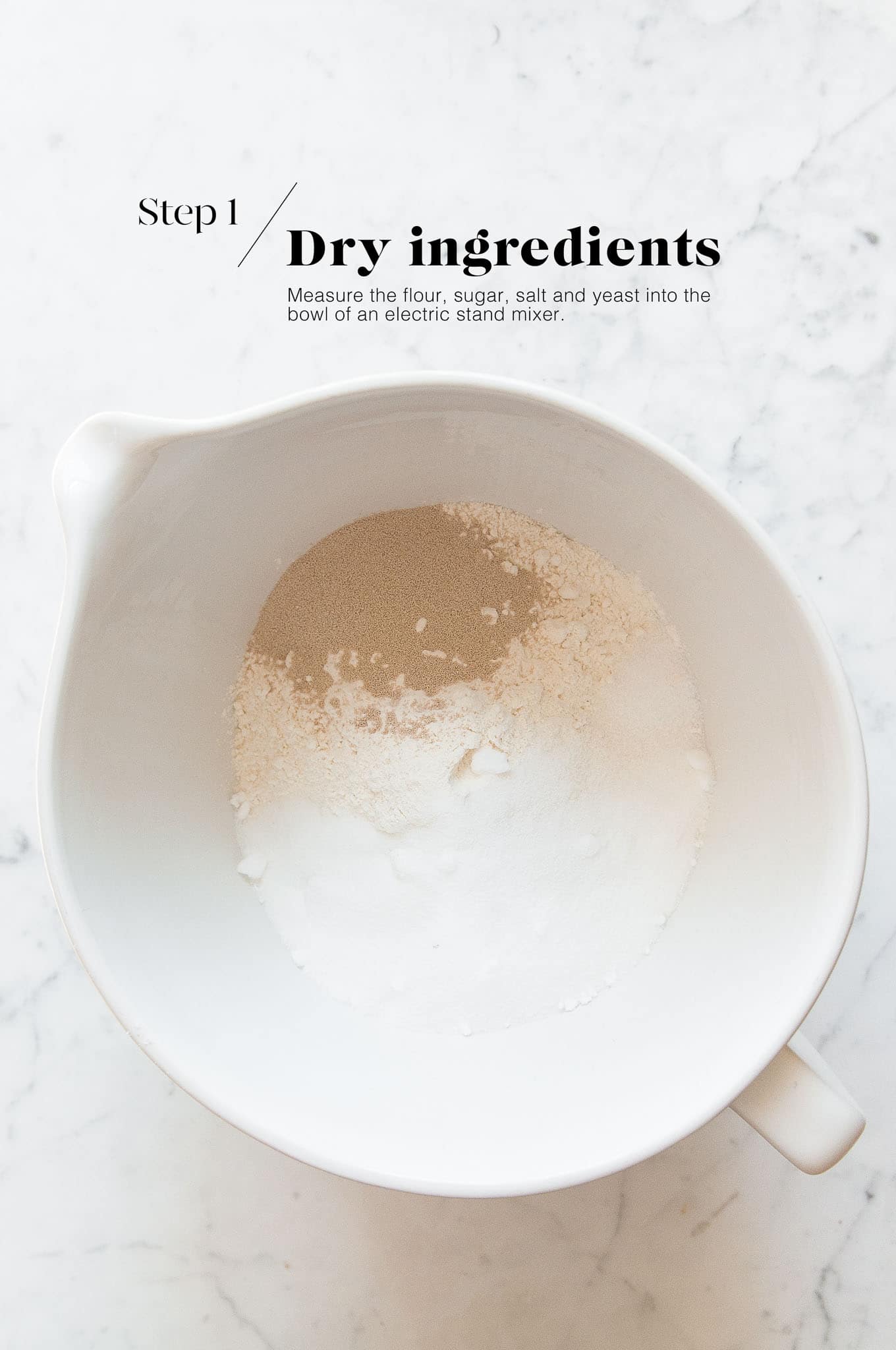
Measure the flour, sugar, yeast and salt into the bowl of an electric stand mixer. Lightly mix the ingredients together.
Step 2
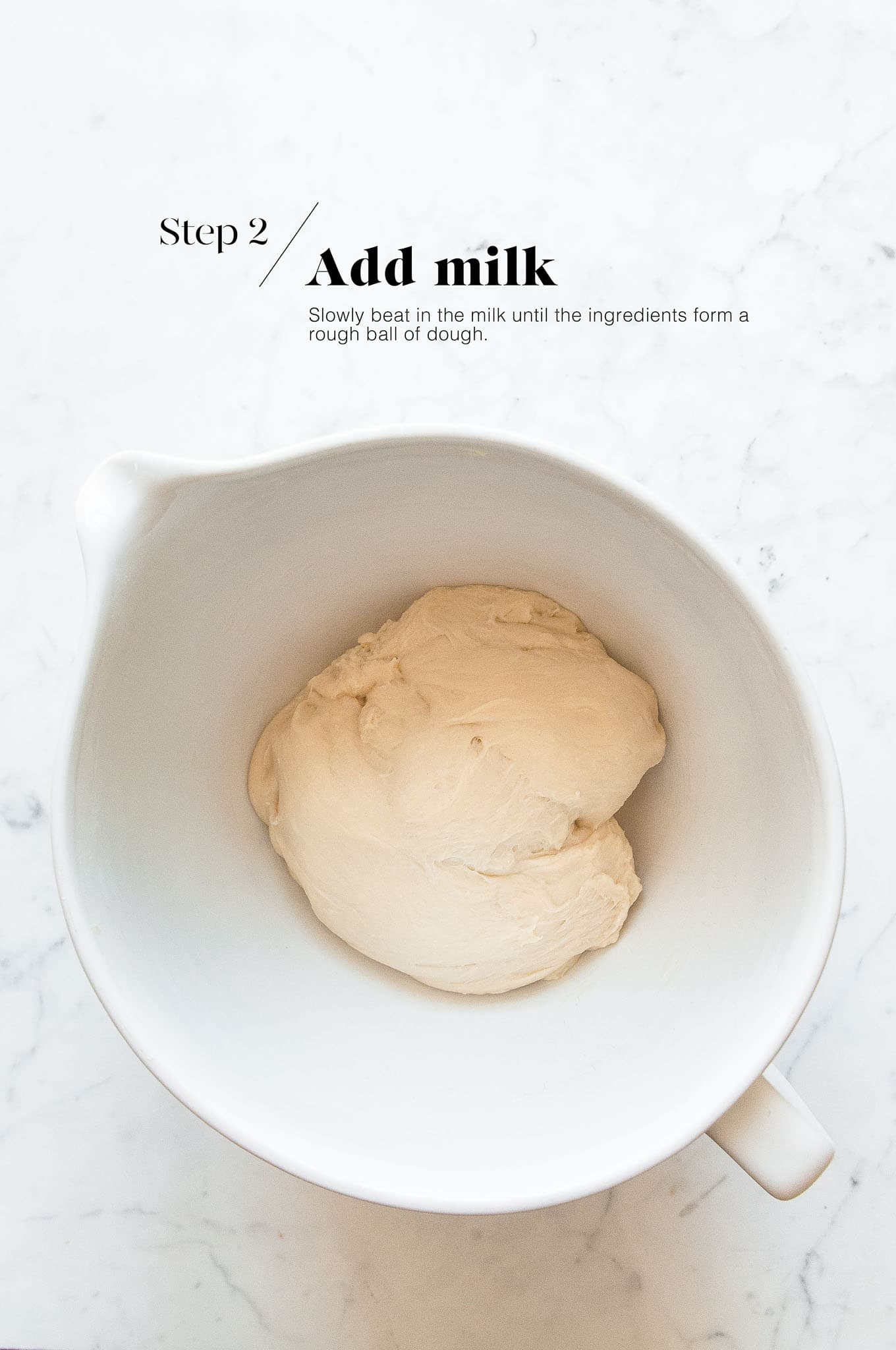
Add the egg to the bowl. Slowly add the warm milk (you may not need all of it), and lightly beat everything with the dough hook until it comes together into a large ball of dough. Only add as much milk as you need to bring the ingredients together into a dough.
Step 3
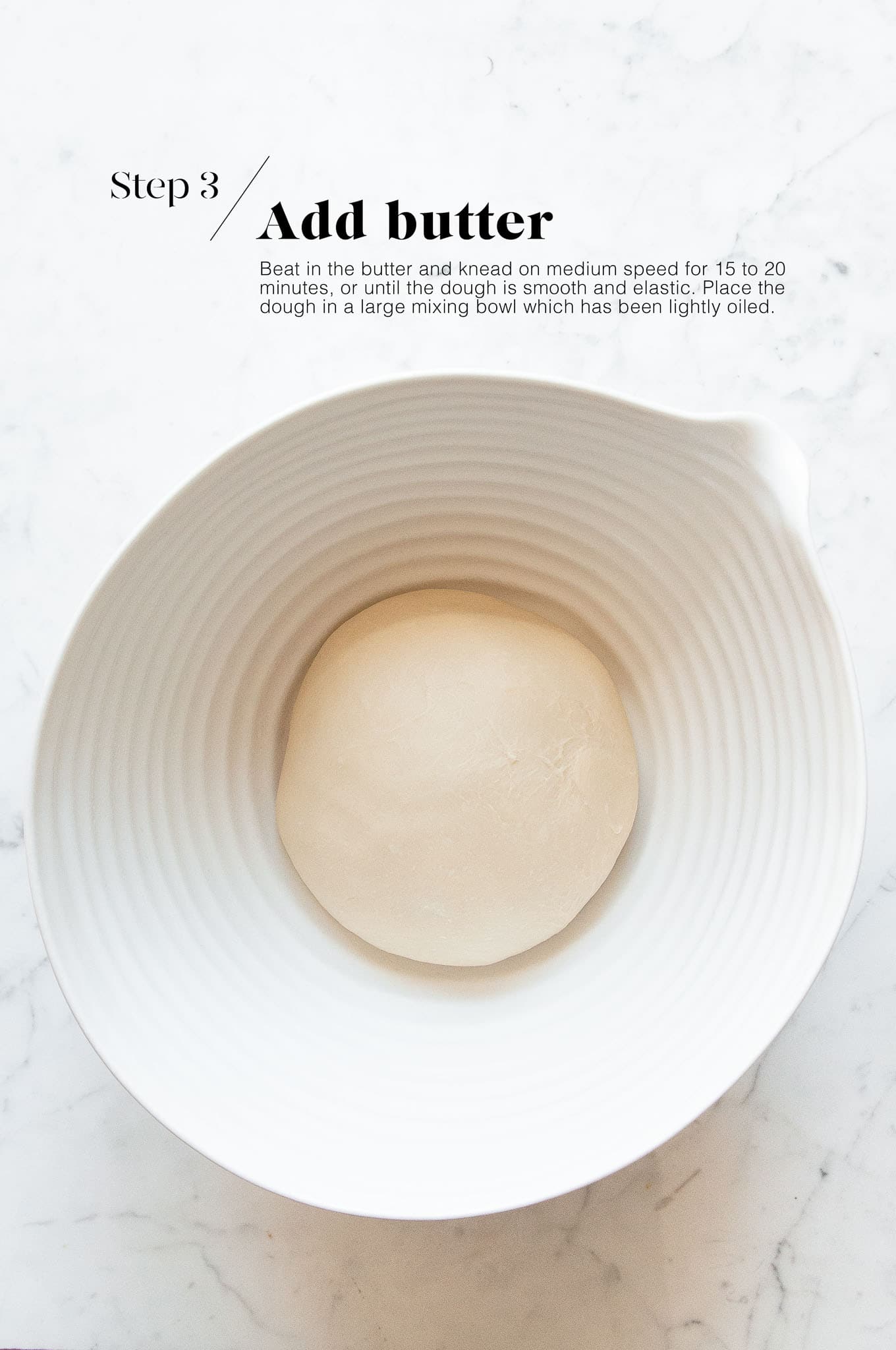
Slowly incorporate the butter, one tablespoon at a time, until all of the butter has been used.
Then increase the speed to medium and continue kneading with the dough hook for 15 to 20 minutes, or until the dough is smooth and elastic.
Step 4
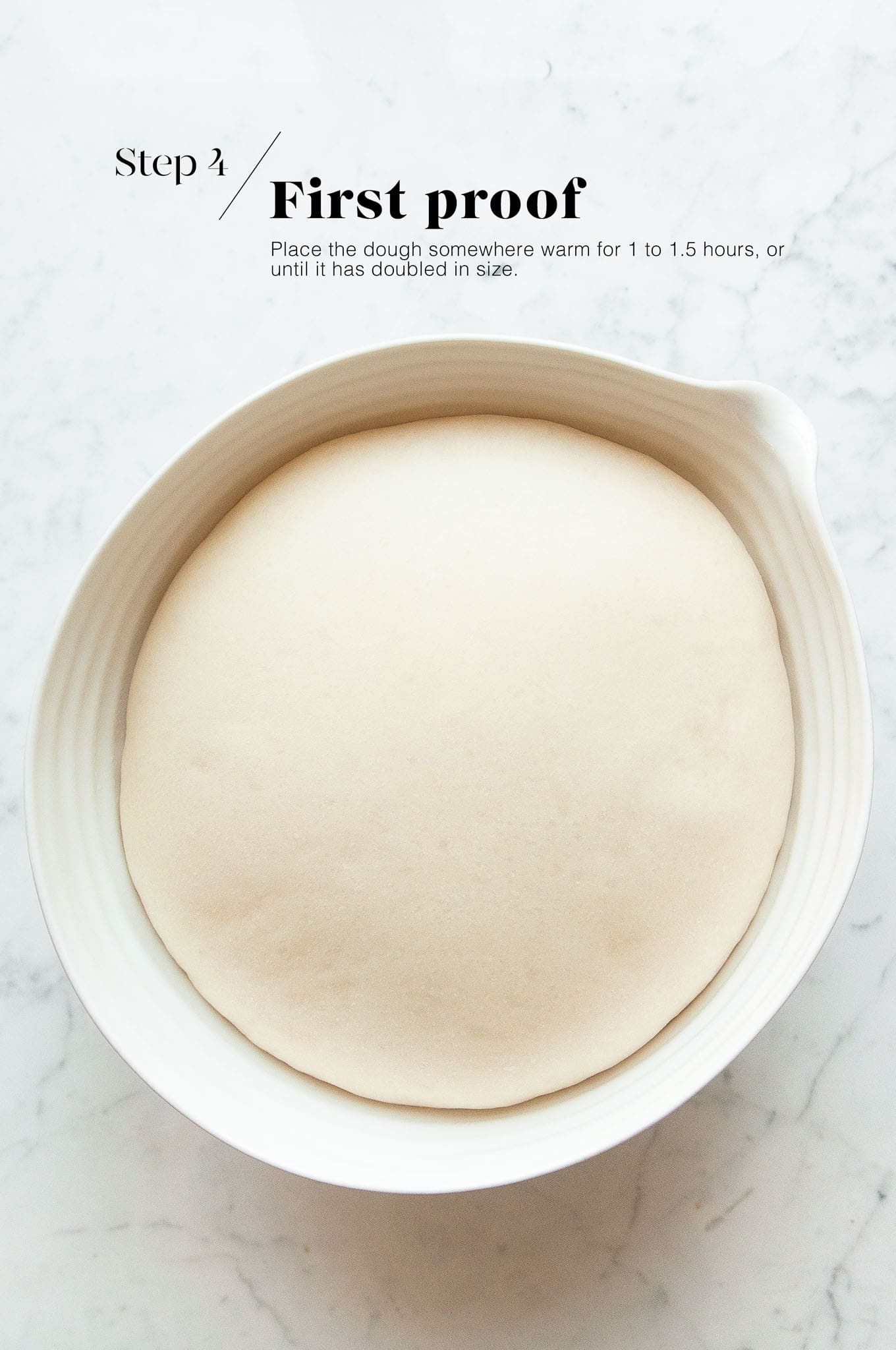
Lightly oil a large mixing bowl, and place the dough into the bowl. Cover the bowl with a clean tea towel and leave it somewhere warm for 1 to 1.5 hours, or until the dough has doubled in size.
Step 5
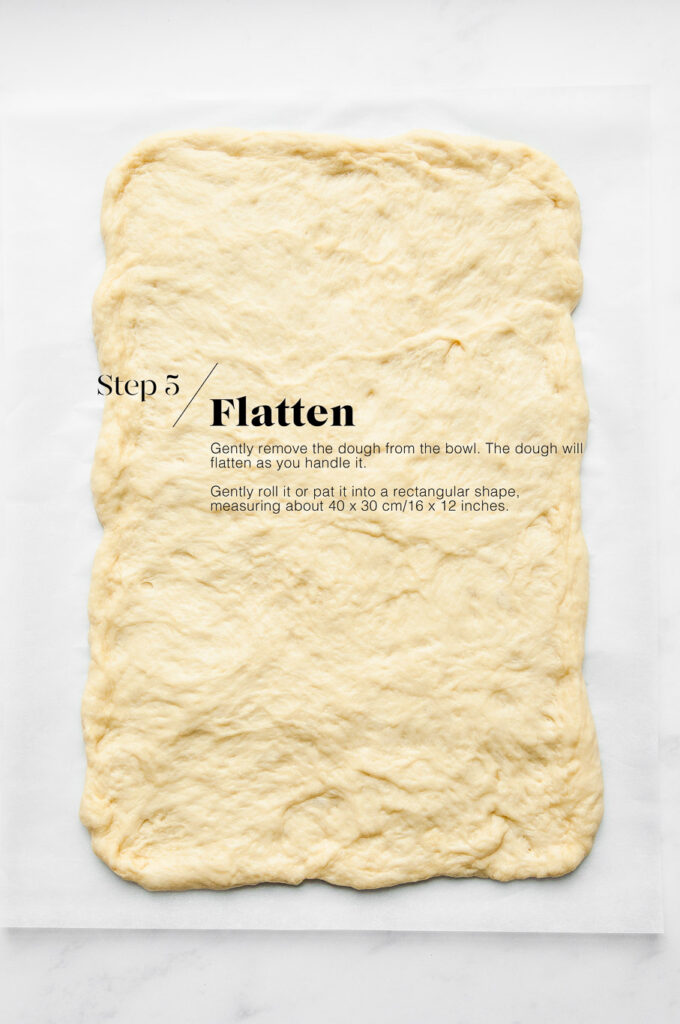
Once the dough has doubled in size, gently remove the dough from the bowl. The dough will deflate as you handle it.
Roll out the dough into a rectangle shape measuring approximately 50 x 30 cm/20 x 12 inches.
Step 6
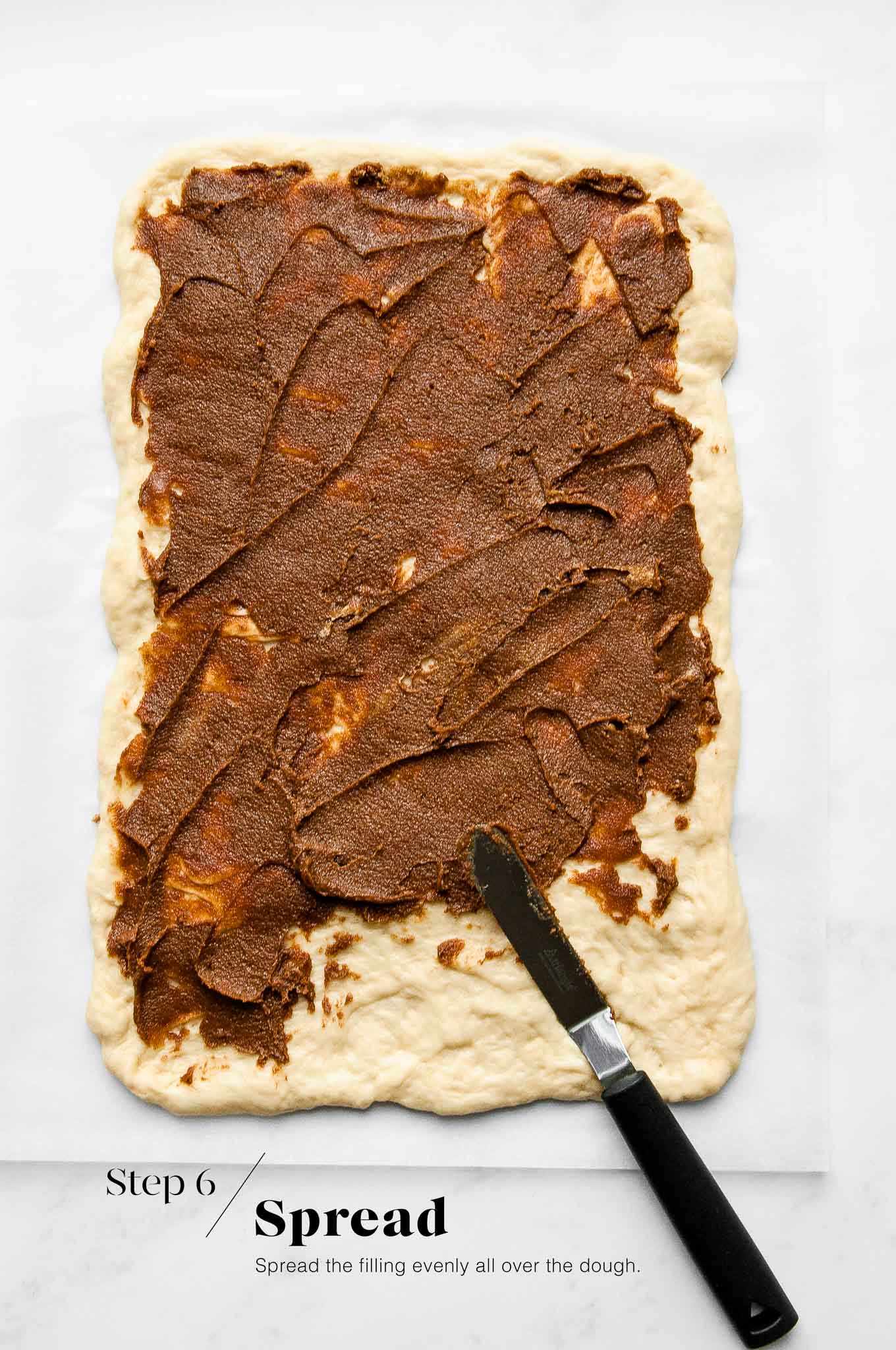
Make the spiced butter filling by beating together the ingredients, except for the raisins. Use a small palette knife to evenly spread the spiced butter all over the dough.
Sprinkle the raisins on top of the filling.
Step 7
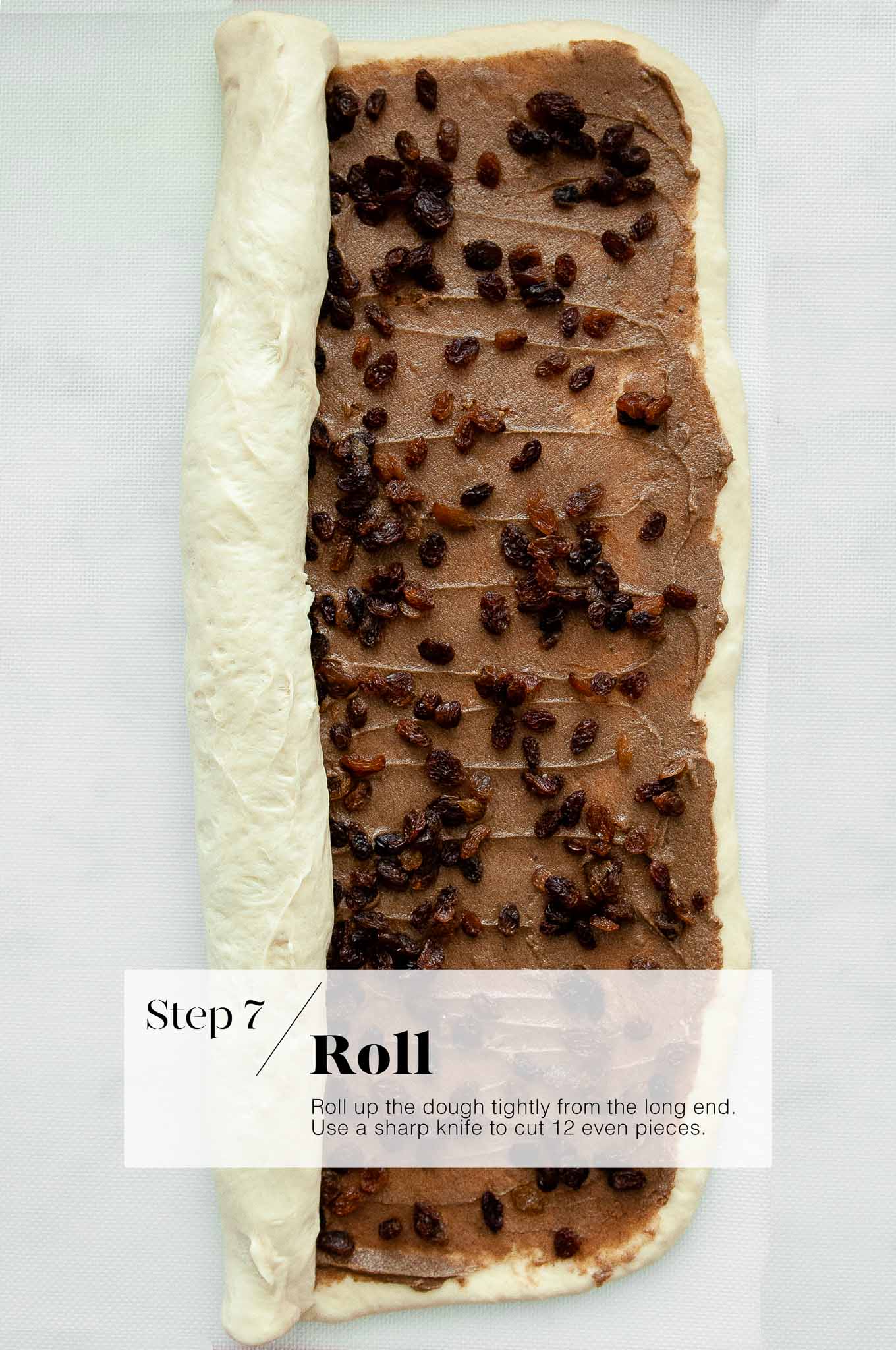
Roll up the dough tightly from the long end, so that you have a log which is approximately 50 cm/20 inches long.
Cut the dough into 12 even pieces. I find it easiest to do so using a long piece of unflavoured dental floss, which will allow you to slice through the dough cleanly and sharply, and without flattening the dough. Simply slide the floss under the dough, then pull both ends of the floss across each other, which will cut through the dough as you pull.
Step 8
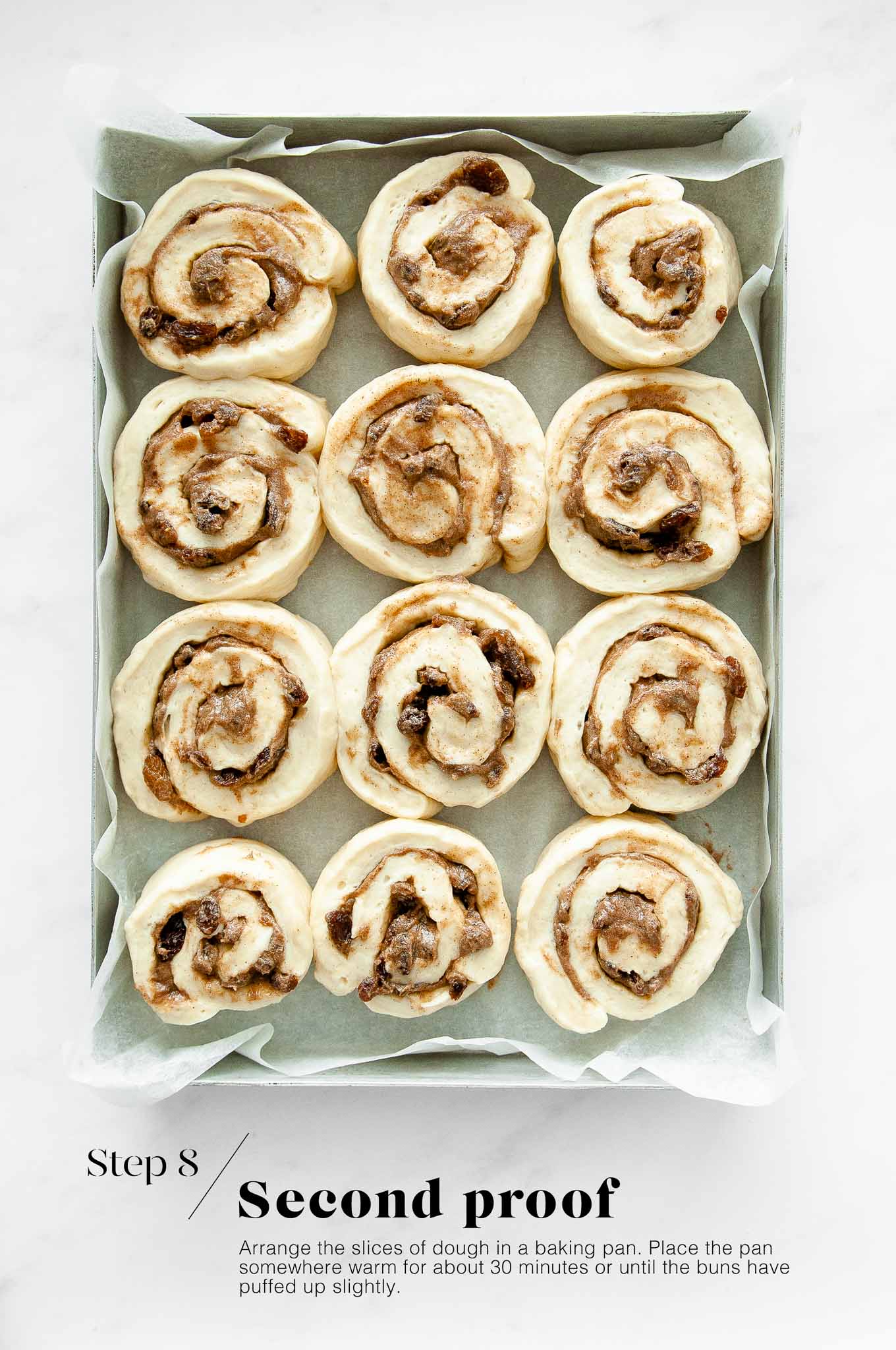
Line a baking pan measuring 35 x 25 cm/14 x 10 inches with baking paper.
Arrange the slices of dough in the baking pan.
If you plan to make these Chelsea Buns the night before, stop here, cover the pan with some plastic wrap, and leave the pan overnight in the fridge.
Otherwise, place the pan somewhere warm for about 30 minutes, or until the buns have risen and puffed up slightly.
Step 9
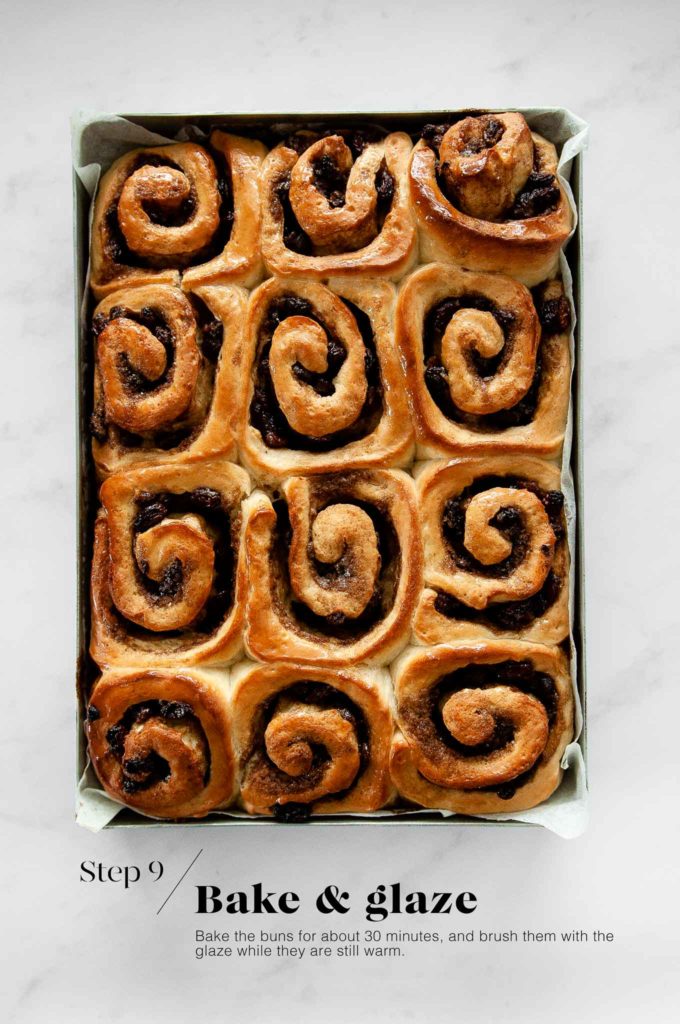
Preheat the oven to 200°C/390°F with a metal baking tray on the middle shelf. Bake the buns for 10 minutes.
Reduce the heat to 180°C/356°F and bake for another 20 minutes, or until the buns are lightly golden. Check the buns at about 10 minutes, and if they are browning too quickly, cover them with a loose sheet of foil for the rest of the baking time. The buns are cooked if an internal thermometer reads 85°C (185°F).
Brush the buns immediately with the sugar syrup.
Gently remove the buns (intact) to a wire rack, and leave them to cool completely.
Step 10
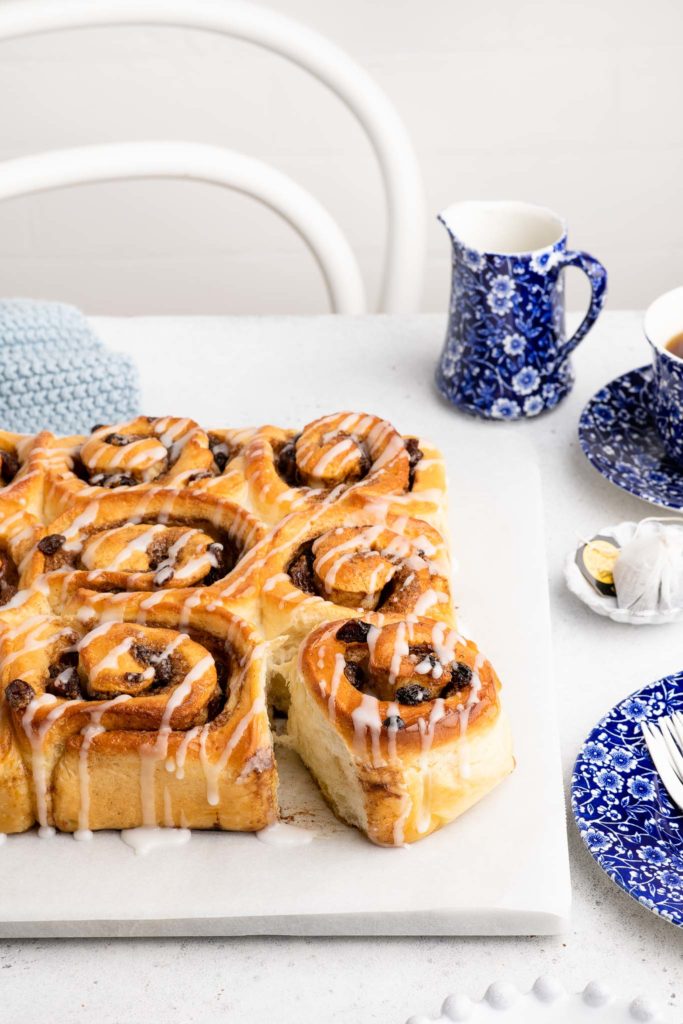
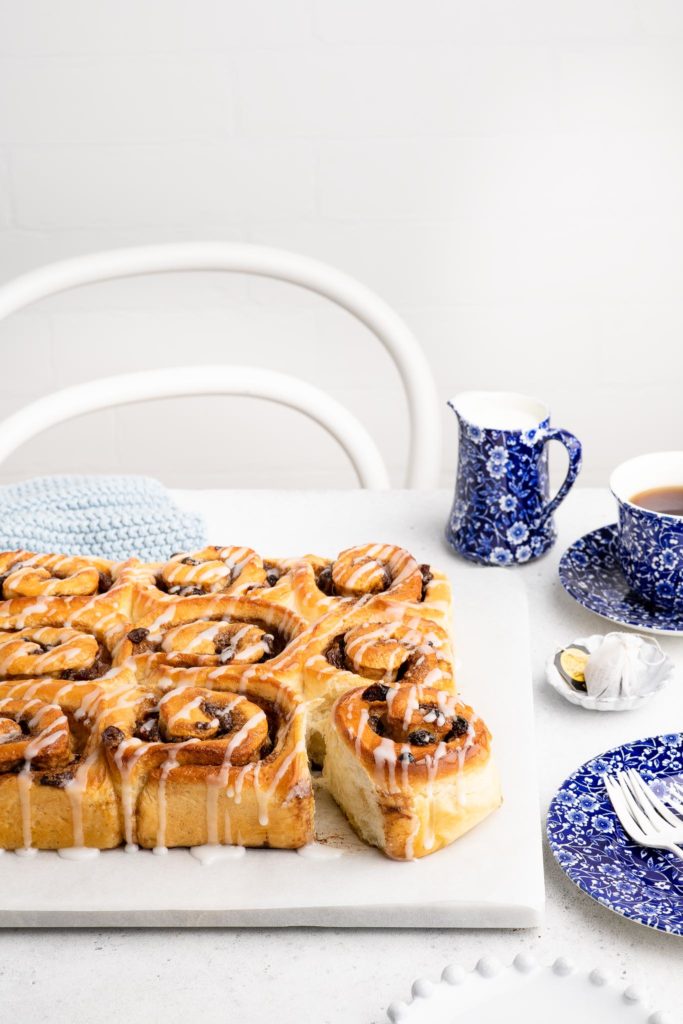
Make the icing by whisking together the ingredients until you have a thick, but runny, consistency.
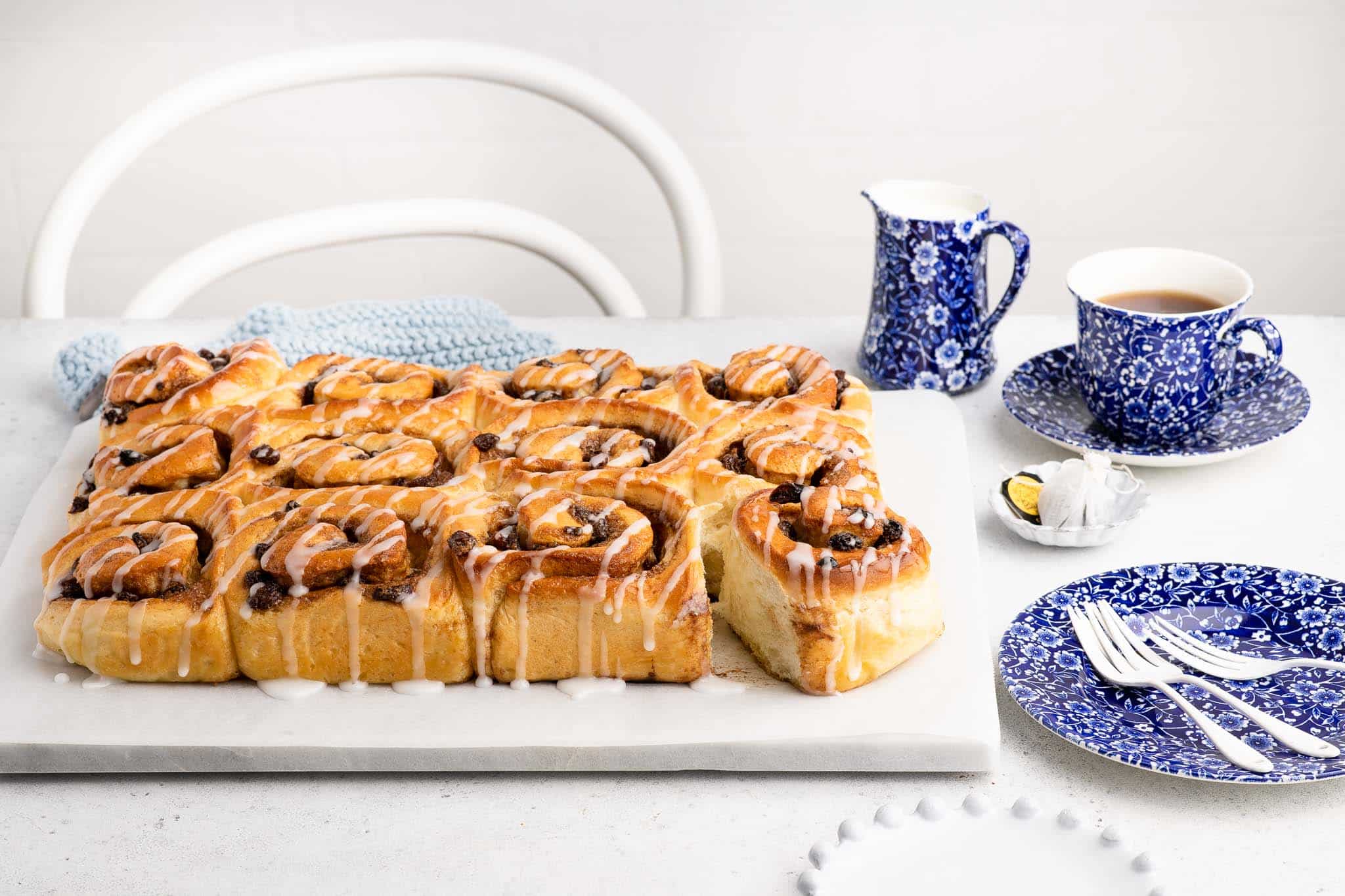
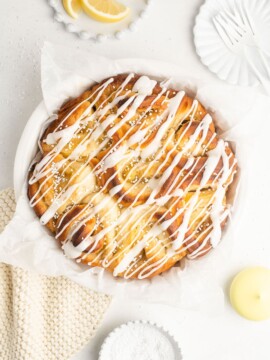
Generously drizzle the icing over the buns, as much or as little as you like.
Tips for Making Bread Dough Ahead of Time
I love baking bread, but I don’t love getting up extra early to get started on the dough. So I typically make the dough the night before and allow it to rise slowly in the fridge overnight. The longer proofing time has the added benefit of allowing the dough to develop more flavour and a better texture. Come the morning, the dough will have at least doubled in size, and it will be ready for shaping as per the recipe.
To make the dough the night before:
- Make the dough as per the recipe.
- Place the dough into a large oiled bowl.
- Cover the bowl with plastic wrap or a reusable bowl cover.
- Place the bowl into the fridge.
- Let the dough rise overnight, or for at least 8-10 hours.
- The next morning, the dough should have at least doubled in size.
- Gently remove the dough from the bowl.
- The dough is ready for shaping and the second proof as per the recipe.
- As the dough will be cold from the fridge, the second proof may take slightly longer.
Chelsea Buns

Ingredients
For the Dough
- 600 g (4 cups) white bread flour
- 110 g (½ cup) caster sugar, (superfine sugar)
- 6 g (1 teaspoon) fine salt
- 14 g (4 teaspoons) instant dried yeast, see Kitchen Notes
- 1 egg, at room temperature
- 375 ml (1 ½ cup) milk, warmed to 37°C/98°F
- 60 g (4 tablespoons) unsalted butter, softened
For the Spiced-Butter Filling
- 125 g (1 ¼ stick) unsalted butter, softened
- 125 g (¾ cup) light muscovado sugar, or light brown sugar
- 3 teaspoons mixed spice
- 1/4 teaspoon fine salt
- 150 g (1 cup) raisins, sultanas, currants, or a mix
For the Sugar Syrup
- 55 g (¼ cup) caster sugar, (superfine sugar)
- 3 tablespoons water
For the Icing
- 135 g (1 cup) icing sugar, (powdered sugar)
- 1-2 tablespoons water
Instructions
For the Dough
- Measure the flour, sugar, salt and yeast into the bowl of an electric stand mixer.
- Lightly mix the ingredients together using the dough hook.
- Add the egg to the bowl.
- Slowly pour in the warm milk, and continue mixing until everything comes together into a rough dough.
- Add the butter, one tablespoon at a time. Once the butter has been fully incorporated into the dough, add the next tablespoon of butter.
- Once all of the butter has been added, continue kneading the dough on medium speed for about 15 to 20 minutes.
- The dough is ready when it is soft and smooth, and no longer sticks to the side of the bowl. The dough will be somewhat sticky from the butter and egg.
For the First Proofing Session
- Lightly oil a large mixing bowl.
- Place the dough inside the bowl.
- Cover the dough with a clean tea towel, plastic wrap, or a reusable bowl cover.
- Leave the dough somewhere warm for 1 to 1.5 hours, or until the dough has doubled in size (see Kitchen Notes below).
For the Spiced Butter Filling
- Just before the dough is ready, make the filling by beating together the ingredients, except for the raisins or dried fruit.
To Shape the Chelsea Buns
- Line a baking pan measuring 35 x 25 cm/14 x 10 inches with baking paper.
- Once the dough has doubled in size, gently remove the dough from the bowl. The dough will deflate as you handle it.
- Roll out the dough into a rectangle shape measuring approximately 50 x 30 cm/20 x 12 inches.
- Use a small palette knife to evenly spread the filling all over the dough.
- Roll up the dough tightly from the long end, i.e. to produce a log that is 50 cm/16 inches long.
- Cut the dough into 12 even pieces. I find it easiest to do so using a long piece of unflavoured dental floss, which will allow you to slice through the dough cleanly and sharply, and without flattening the dough. Simply slide the floss under the dough, then pull both ends of the floss across each other, which will cut through the dough as you pull.
- Arrange the slices of dough in the baking pan.
For the Second Proofing Session
- Place the pan somewhere warm for about 30 minutes, or until the buns have risen and puffed up slightly.
To Bake the Chelsea Buns
- Preheat the oven to 200°C/390°F (without fan) with a metal baking tray on the middle shelf.
- Place the pan of buns on the preheated baking tray.
- Bake the buns for 10 minutes.
- Reduce the heat to 180°C/356°F and bake for another 20 minutes, or until the buns are lightly golden. Check the buns at about 10 minutes, and if they are browning too quickly, cover them with a loose sheet of foil for the rest of the baking time.
- The buns are cooked if an internal thermometer reads 85°C/185°F.
To Glaze the Chelsea Buns
- While the buns are baking, make the sugar syrup by dissolving the sugar and water in a small saucepan, and bringing it to the boil for 1 minute.
- As soon as the buns have finished baking, brush them generously with the sugar syrup.
- Carefully remove the Chelsea Buns to a wire rack (intact) and let them cool completely.
To Ice the Chelsea Buns
- Make the icing by whisking together the ingredients until you have a thick, but runny, consistency.
- Drizzle the icing all over the cooled Chelsea Buns.
- The Chelsea Buns can be served immediately or once the icing has set. They are best eaten the same day they are baked.
Kitchen Notes
- MAKE A SMALLER BATCH
To adjust the recipe to make 9 buns, use the following quantities:
For the Dough:
400 g (2 2/3 cups) strong white bread flour
75 g (1/3 cup) caster sugar
1/2 teaspoon fine salt
9 g instant dried yeast
1 egg
250 ml (1 cup) milk
45 g (3 tablespoons) unsalted butter
For the Cinnamon-Sugar Filling:
100 g (1 stick) unsalted butter
100 g (1/2 cup plus 1 tablespoon) light brown sugar
2 teaspoons ground cinnamon
1/4 teaspoon fine salt
Instructions
Roll the dough into a rectangle shape, measuring approx 40 x 30 cm/16 x 12 inches. Roll up the dough tightly from the short end, i.e. to produce a log that is 40 cm/16 inches long. Cut the dough into 9 even pieces. - MAKE AHEAD TIPS
To start the dough the night before:
* Make the dough as per the recipe.
* Place the bowl of dough (covered) in the fridge to proof overnight, or for at least 8 to 10 hours. During this time, it should have at least doubled in size.
* The next day, proceed with the rest of the recipe. As the dough will be cold, it may require a bit more time for the second proofing period. - DIFFERENT TYPES OF FLOUR
For Swiss readers: I use Zopfmehl (or farine pour tresse) when making bread and enriched dough. - DIFFERENT TYPES OF YEAST
* Please note that there is a difference between instant yeast (also called instant dried yeast or fast-action dried yeast) and dried yeast (also called active dry yeast). If you are not sure what type of yeast you have, please check the packaging for instructions on how to use the yeast.
* With instant yeast, you can add it directly to the flour mixture without having to activate it first.
* With dried yeast, you will need to activate it first (usually in some warm liquid).
* If you are using fresh yeast, you will need about 1 block (40 g fresh yeast = 14 g instant dried yeast). Crumble the fresh yeast into the warm milk, and stir to dissolve the yeast. - PROOFING THE DOUGH
Dough needs a warm environment for the yeast to activate and cause the dough to rise. If you don’t have a warm place in your home, try one of the following ideas:
* In the oven with the oven light switched on (works only for some ovens).
* In the oven with a tray of boiling water on the bottom shelf.
* In the oven or a steamer oven at a low temperature of about 25-40°C (77-104°F). - OVEN TEMPERATURES
All recipes on this website state temperatures for a regular oven (i.e. a conventional oven without fan). If you have a convection oven with a fan, please consult the manufacturer’s handbook on how to adjust the temperature and baking time accordingly. - CONVERSIONS
To convert from cups to grams, and vice-versa, please see this handy Conversion Chart for Basic Ingredients.

I made these buns for brunch today and they were perfection!!
Lovely recipe. My buns turned out wonderfully. I prefer my Chelsea Buns un-iced but my kids are like yours – they like them more with the icing!
Hey Thanh, appreciate the recipe. Great pictures. There’s a bakery nearby that’s been doing a form of chelsea bun with raspberry jam and sultanas for filling, and thick pink icing on top. Your buns looked most similar to theirs, so decided to adapt it.
Some notes for comparison. I covered them over with tin foil after the first 10 minutes at 200C as they were already browning on the high points. What I really appreciated about your recipe was the smaller ingredient sizing for a smaller batch and the internal temperature to check for doneness. In the distant past I made some and they didn’t cook in the center, so glad to avoid that fear eventuating!
They came out having risen great (might be due to the fresh instant yeast) and tasting very similar to the bakeries product. The recipe worked great when adapted! Although to be fair, they hadn’t cooled and I’ve been eating them hot. Will try and leave the remaining ones until they are cool and properly iced 🙂
Hi Richard,
Thanks for your great feedback! So glad you enjoyed this recipe. I love the sound of adding raspberry jam – I’m going to try that next time 🙂 I also enjoy these buns warm and fresh from the oven. In fact, we often eat most of the batch warm, and I will add icing to whatever is left over.
How do I make smaller Chelsea buns,
Hi Julia,
To make smaller buns from the same dough, I would split the dough in half, and roll each half into a large rectangle, and then proceed with the remaining instructions in the recipe. This method produces thinner logs of dough, which will produce smaller buns. Hope this helps!