

 by
by 
Steamed Rice with Corn
If you live in an Asian household, chances are that you are eating rice every second day, if not every day. One of my favourite ways of getting vegetables into a meal is to steam the vegetables with the rice – it feels like a 2 for 1 deal! And a popular combination in our home is rice with corn.
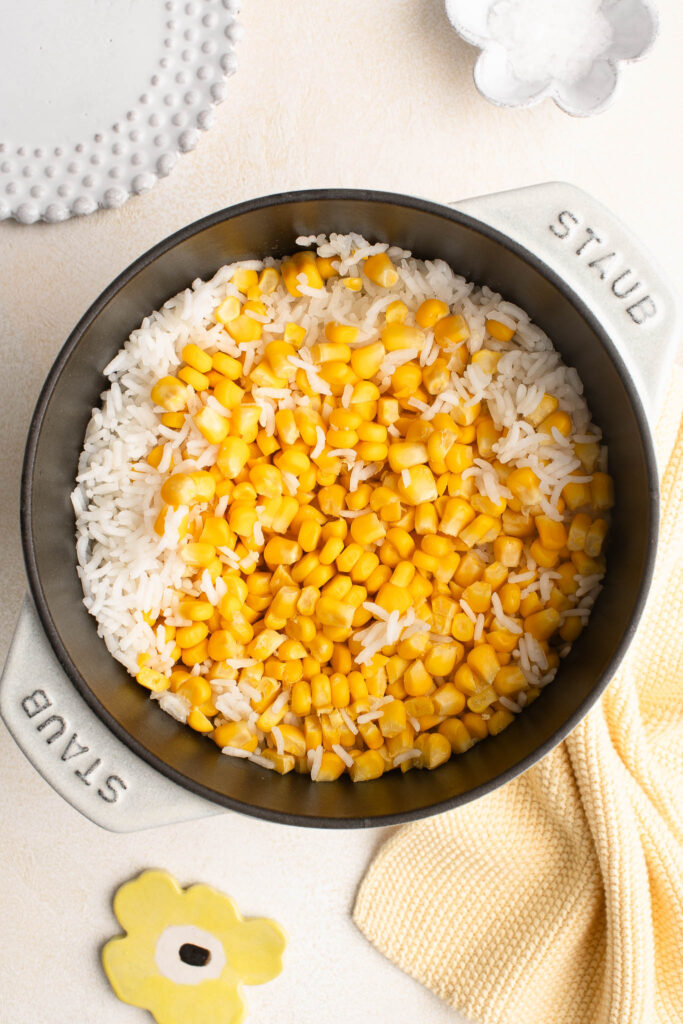
Corn Rice Recipe
Whether you cook rice on the stove or with a rice cooker, you can easily add other ingredients to make a more interesting rice dish.
When I was a child, my mother often placed small sweet potatoes into the rice cooker to steam directly in the rice. Once cooked, the sweet potatoes would either be served whole, or mashed directly into the rice.
Here, I have taken the same concept but I have instead used fresh corn kernels which you can then mix directly into the rice, together with any flavourings like butter and soy sauce.

How to Steam Vegetables with Rice
As a general rule, when steaming vegetables with your rice:
- the vegetables should be cut to a size that would cook tender within 30 minutes
- add just enough vegetables to lightly cover the washed rice
- reduce the water by 10% (because the vegetables will release some liquid during steaming)
In the recipe below, I have added fresh corn, but you can also add other types of vegetables, or even a combination of vegetables, such as:
- carrots, thinly sliced
- peas, fresh or frozen
- sweet potato, diced small or use small whole sweet potatoes
- broccoli, finely chopped or cut into small florets
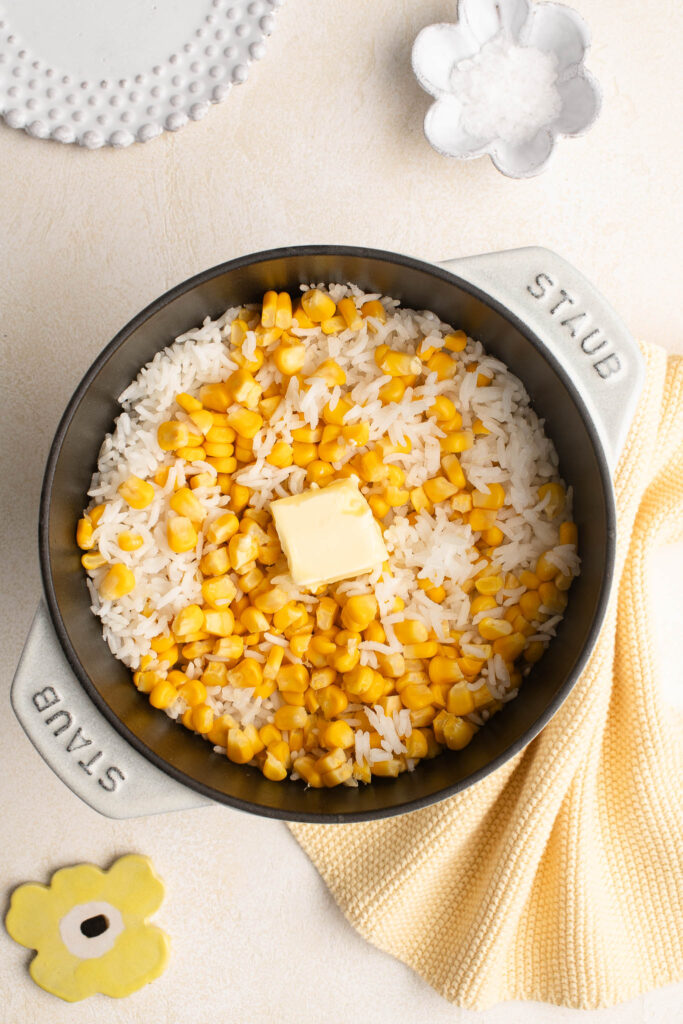
How to Make Corn Rice
The steps below are how I cook Jasmine rice on the stove. Many recipes for cooking rice will instruct you to bring the pot of rice to a boil before turning the heat all the way down for the remainder of the cooking time. This method requires less time to cook the rice. However, it also requires you to be hovering by the stove to keep an eye on the pot. Also, if you’re a busy cook, it’s also easy to forget about the rice and only be reminded when you are hit with the unpleasant aroma of burnt rice.
Which is why I came up with my method below; once you put the pot on the stove, you can set a timer and not worry about the rice while you get on with other things.
I taught my 8 year old daughter how to cook rice on the stove using the recipe below, and she is always so happy and proud to reveal the pot of perfectly cooked rice each time!
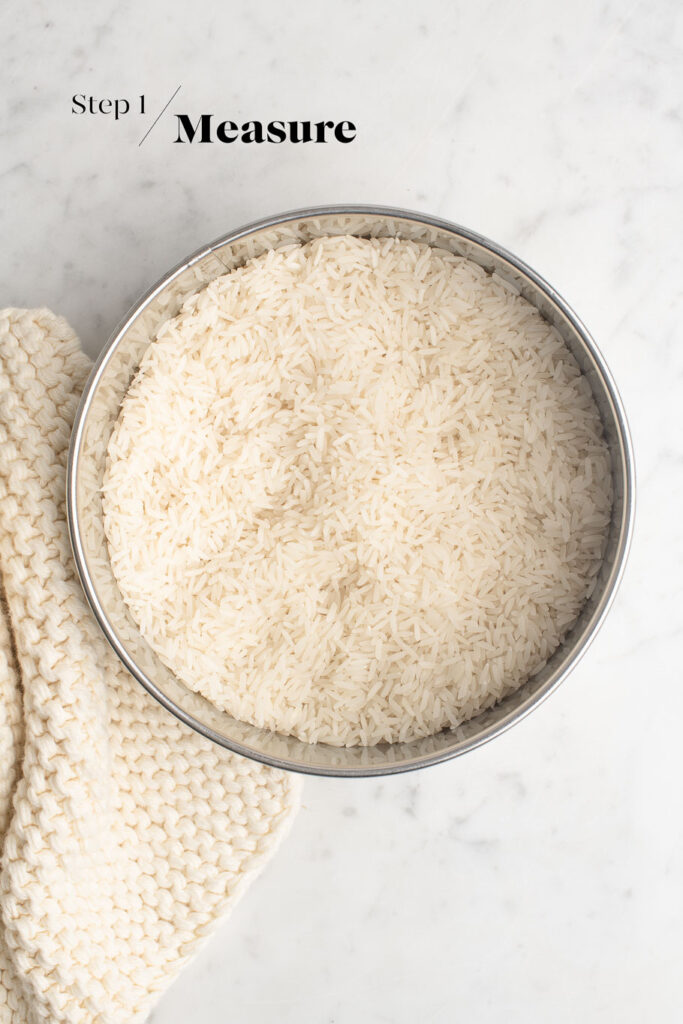
Step 1
Measure the rice and place it into a fine sieve. If the sieve is too big, the grains of rice might fall out.
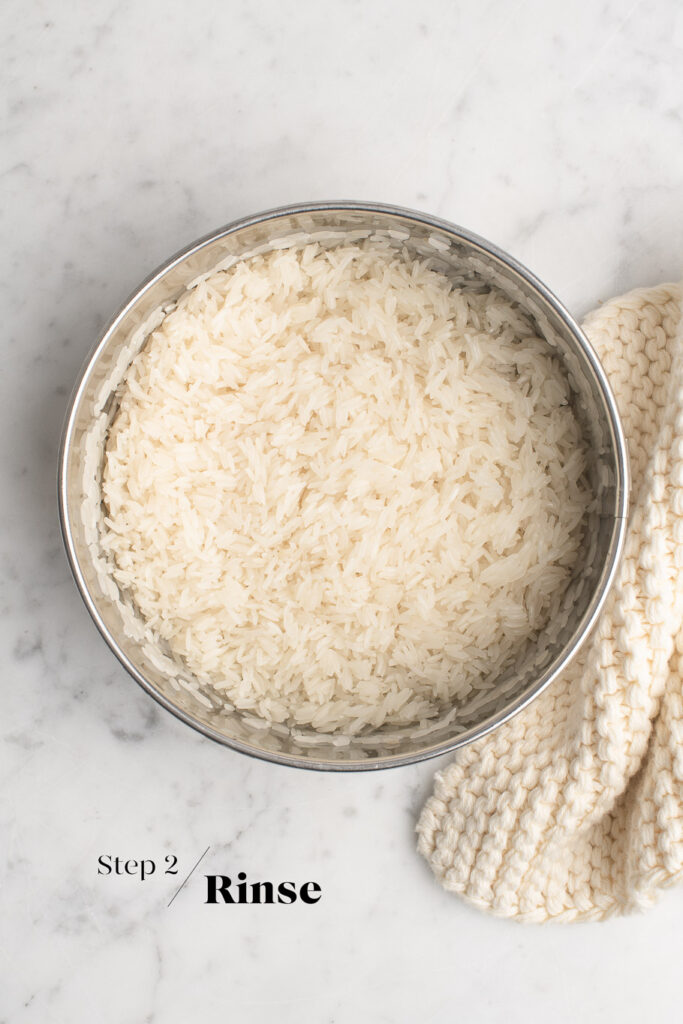
Step 2
Rinse the rice in the sieve under cold running water. Use your hands to move the grains around in the sieve. As the starch is being washed away, the water will appear milky and cloudy. Once the water starts looking clear, you can stop. This step should only take 1-2 minutes.
Step 3
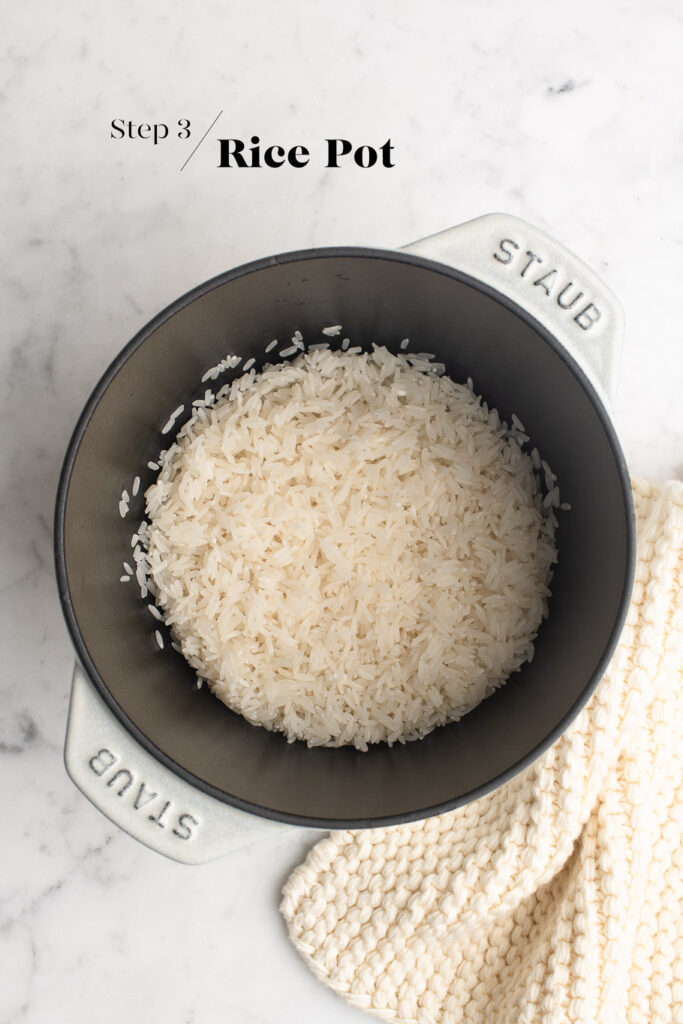
Transfer the rinsed rice to a saucepan which has a tight-fitting lid.
Step 4
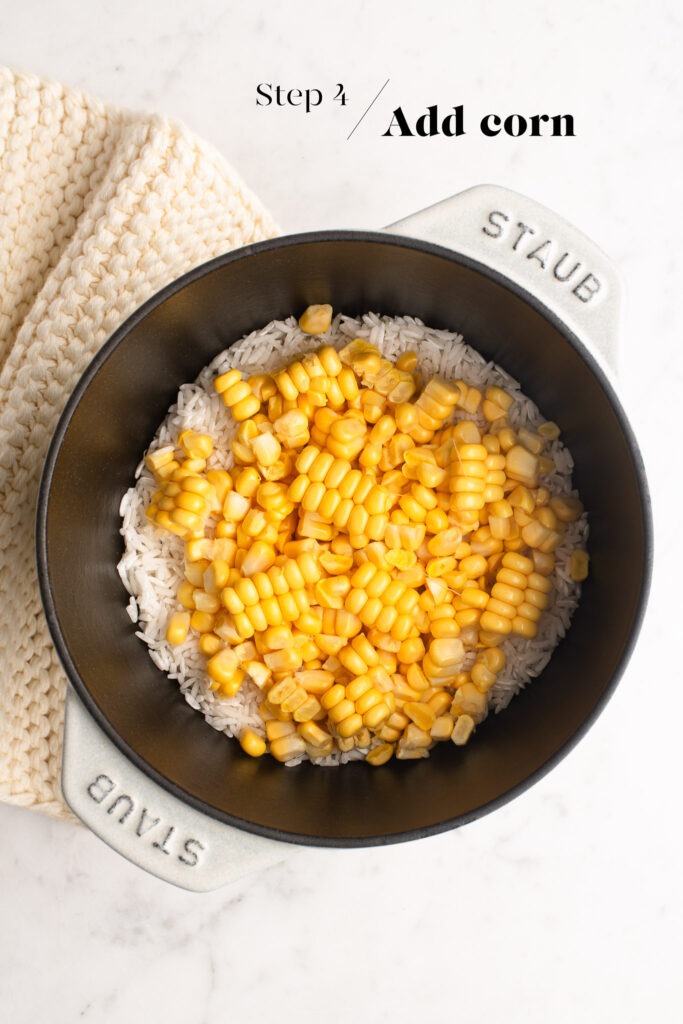
Use a sharp knife to slice the kernels off the corn cob, and place the kernels directly on top of the washed rice. You can also use frozen corn kernels instead of fresh corn; it’s important that you are using uncooked corn.
Step 5
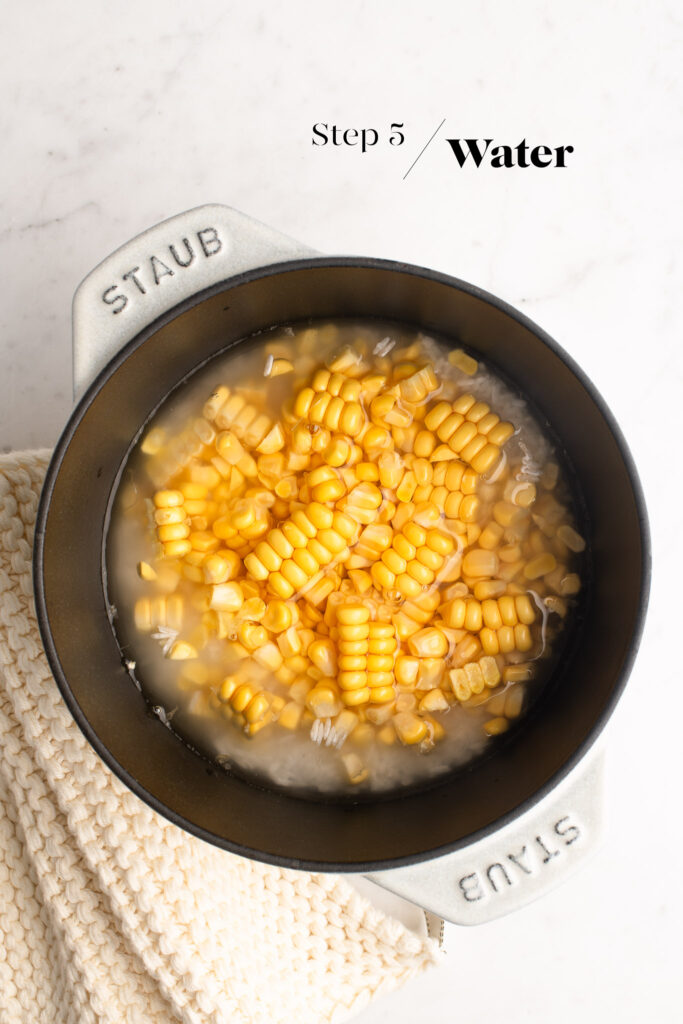
Measure the water and pour this over the rice in the saucepan. However much water you would normally use to cook rice (whether on the stove or in a rice cooker), reduce this amount by 10%.
Step 6
Place the lid on the saucepan. Cook the rice over low to medium heat for 30 minutes. The water should not boil; it should just simmer gently.
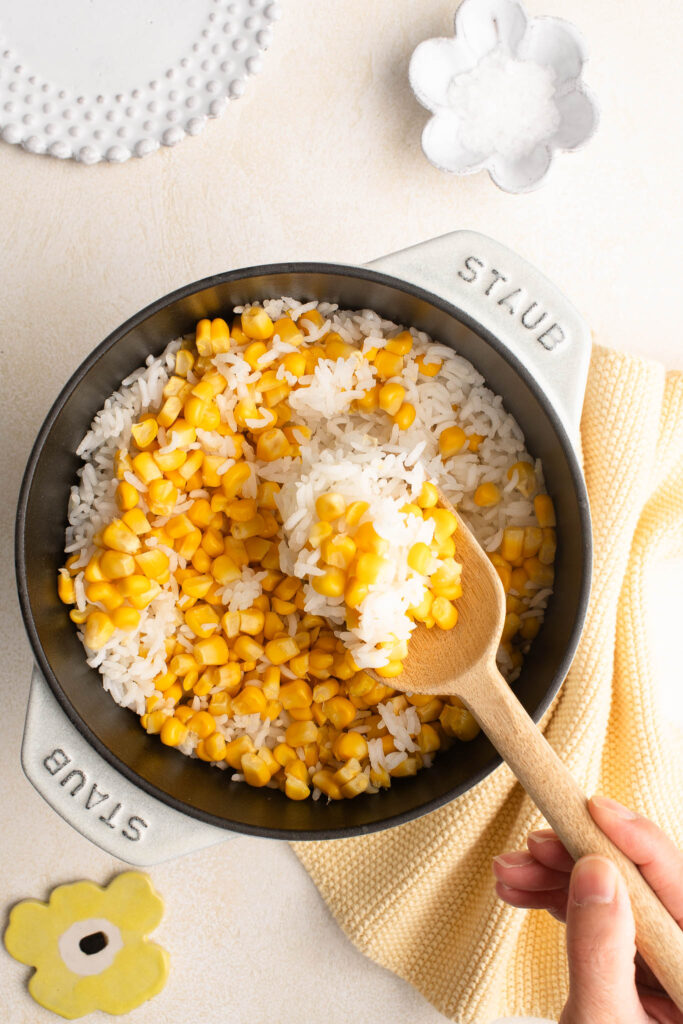
After 30 minutes, remove the saucepan from the heat and allow the rice to continue resting and steaming for about 10 minutes. Fluff the rice before serving.

Tips for Cooking Rice on the Stove
- Rinse the rice. This step removes the excess starch and impurities on the grains of rice. If you don’t rinse the rice, you might end up with claggy rice. Some recipes tell you to skip this step, and they claim that it makes no difference to the finished dish. I disagree – rice connoiseurs (aka Asian mamas) will know 😉
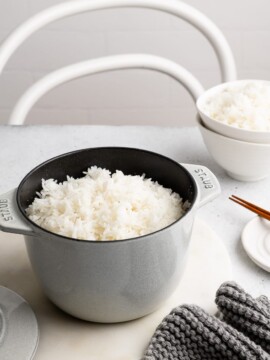
- Use a cast-iron pan. Cast-iron distributes the heat evenly, and it also retains heat better and for longer. With my method for cooking rice below, I have never had burnt rice when using a cast-iron pan.
- Use a stainless steel pan with a tight-fitting lid. Before I converted to a cast-iron pan for cooking rice, I used an everyday stainless steel pan which did the job perfectly. Make sure you use one with a tight-fitting lid so that the steam does not escape. If your lid has a small vent to let the steam out, cover this vent with a damp cloth during cooking.
- Use a glass lid. A glass lid will help you to see what is going on in the pan without having to remove the lid and let the steam escape. This is particularly helpful if you are new to making rice on the stove. Once you have cooked rice this way many times, you will begin to trust the process and a glass lid will not always be necessary.
- Do not peek. If you don’t have a glass lid, resist the temptation to lift the lid to see how the rice is cooking. If you allow too much steam to escape, the rice can end up dry.
- Experiment with the heat settings. Every stove is different! Also, what type of saucepan you use may also affect your cooking time. You may need to adjust your heat settings to find out what works best for you and your equipment. For cooking rice, aim for a setting where the water will gently simmer.
- Experiment with the amount of water. The recommended ratio of rice to water is 1:1.25. However, this can change depending on your personal preference, as well as the type of rice that you are using. If you follow the recipe below and find that the rice is too moist or too dry for your liking, increase or decrease the water by 1 tablespoon the next time, and keep adjusting until you find the perfect ratio.
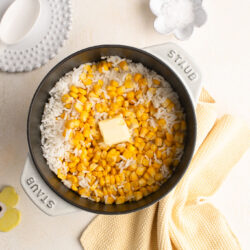
Steamed Rice with Corn

Ingredients
- 350 g (1 ½ cups) Jasmine rice
- 450 ml (1 ¾ cups plus 2 teaspoons) cold water
- 1 fresh corn cob, or 1 cup frozen corn kernels
- ½ to 1 tablespoon unsalted butter, optional
Instructions
- Measure the rice into a bowl.
- Transfer the rice into a fine sieve through which the rice grains cannot escape.
- Wash and rinse the rice under a cold tap until the water runs clear. Use your hands to gently move the rice around the sieve. At first, the water will appear milky and cloudy, but as the starch rinses away, the water will start to look clear.
- Shake the sieve to remove as much excess water as possible.
- Transfer the rinsed rice to a medium-sized saucepan with a tight-fitting lid. I like to use a cast-iron pot to cook my rice, but any stainless steel pan will work as well.
- Slice the kernels off the corn cob.
- Place the corn kernels on top of the rice in the pot.
- Measure the water.
- Pour the water over the rice in the saucepan.
- Cover the saucepan with a lid.
- Place the saucepan on the stove.
- Cook the rice on low to medium heat for 30 minutes. The water should not come to a boil; it should just gently simmer so that the rice will cook slowly and gently. A glass lid will help you to see how the rice is cooking.
- After 30 minutes, turn off the stove and remove the saucepan from the heat source.
- If you wish to add butter, quickly place the butter on top of the cooked corn and immediately return the lid to the pot.
- Let the rice continue to steam for about 10 minutes, and the butter will melt during this time (if using).
- Fluff the rice before serving to evenly distribute the butter and corn.
Kitchen Notes
- WHAT TEMPERATURE TO COOK RICE
Each stove is different, so you will have to experiment with your stove a bit. But generally speaking, you want a low to medium heat so that the water comes to a gentle simmer. The rice will cook slowly and gently. For my Bora induction stove, I use setting 5 out of 9. - HOW MUCH WATER TO USE WHEN STEAMING VEGES WITH RICE
Once you have worked out your ratio of rice to water (see below), to add any vegetables to the rice, simply reduce the water by 10%. - RATIO OF RICE TO WATER
For Jasmine rice, you generally need a ratio of 1:1.25 of rice to water. My recipe uses a ratio of approximately 1:1.4. I think the ratio can vary slightly according to personal preference, as well as the rice you are using. Sometimes when I change brands of rice, I find that my usual recipe yields cooked rice which is too moist or too dry. I recommend experimenting by increasing or decreasing the amount of water by 1 tablespoon at a time. - MY FAMILY’S RICE RECIPE
For my family of 2 adults and 2 kids, we use 280 g rice (2 rice cups) : 400 ml water. I’m putting this note here because my daughter cooks the rice for our family ???? - FREEZING LEFTOVER RICE
Leftover rice can be frozen in small portions in vacuum-sealed bags or ziplock freezer bags. - OVEN & STOVE TEMPERATURES
All recipes on this website have been tested on an induction stove and/or with a conventional oven (i.e. an oven without fan). All recipes on this website use temperatures for a conventional oven, unless otherwise mentioned. Convection ovens (i.e. fan-forced ovens) are typically 20°C/70°F hotter than conventional ovens, but please check your manufacturer’s handbook. - CONVERSIONS
To convert from cups to grams, and vice-versa, please see this handy Conversion Chart for Basic Ingredients.

I love this recipe! I just made it tonight and it was so easy and delicious. Can’t wait to try your suggestions for other veggies but my kids love corn, so this was great.
Very easy and delicious. Thank you for the recipe!