

 by
by 
Japanese Milk Bread
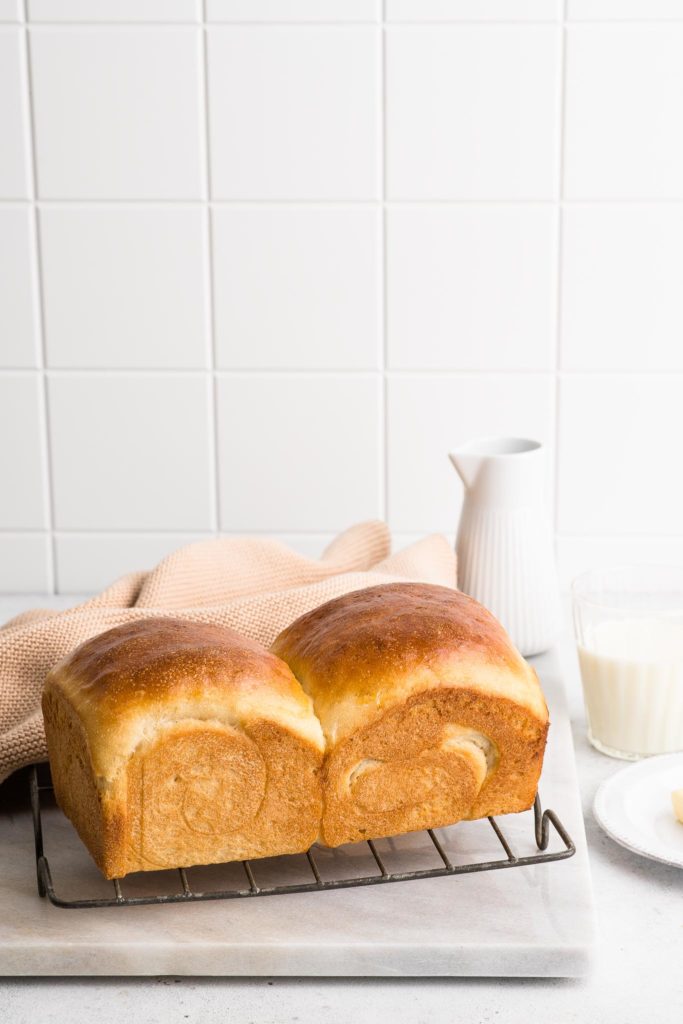
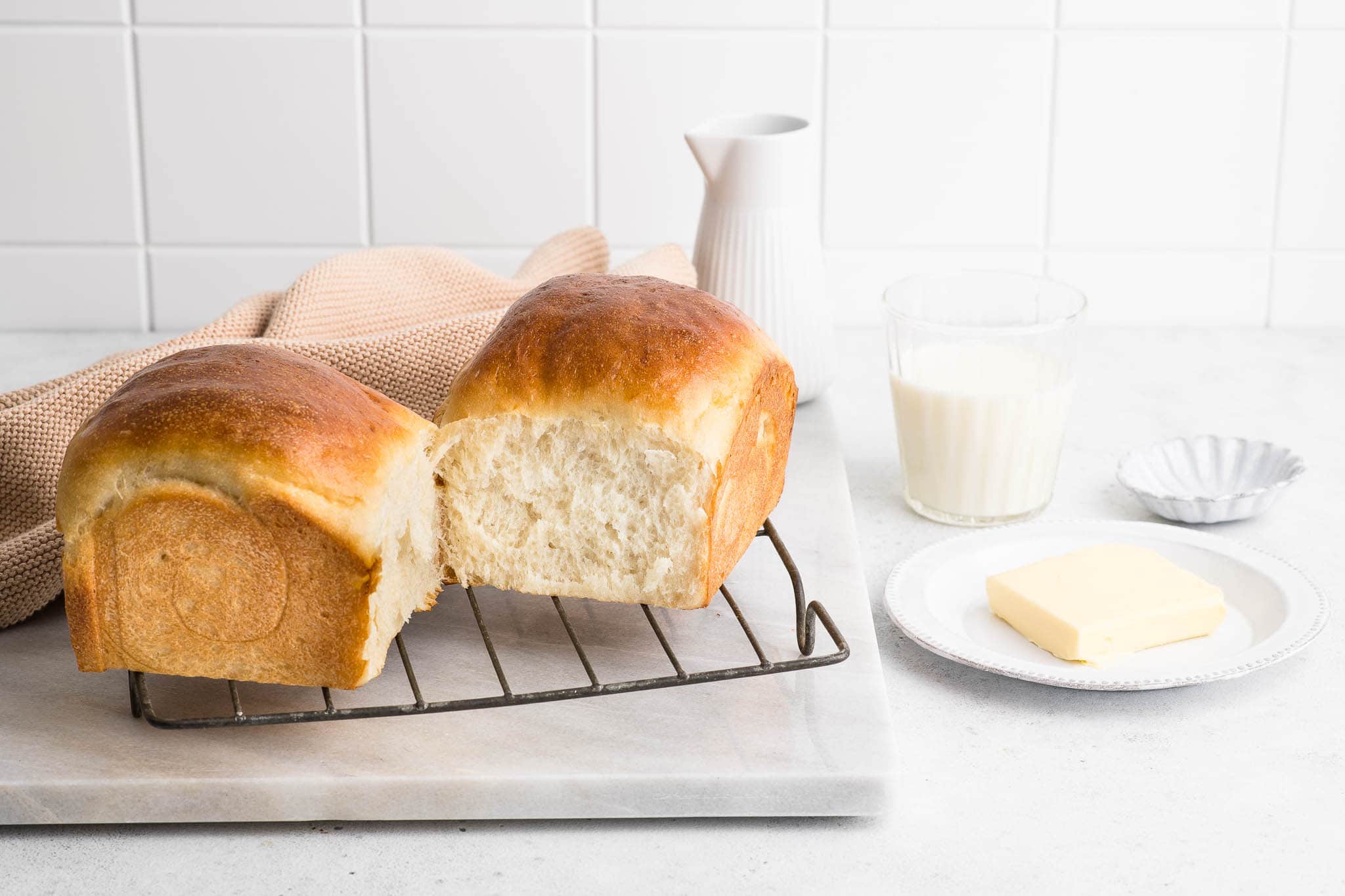
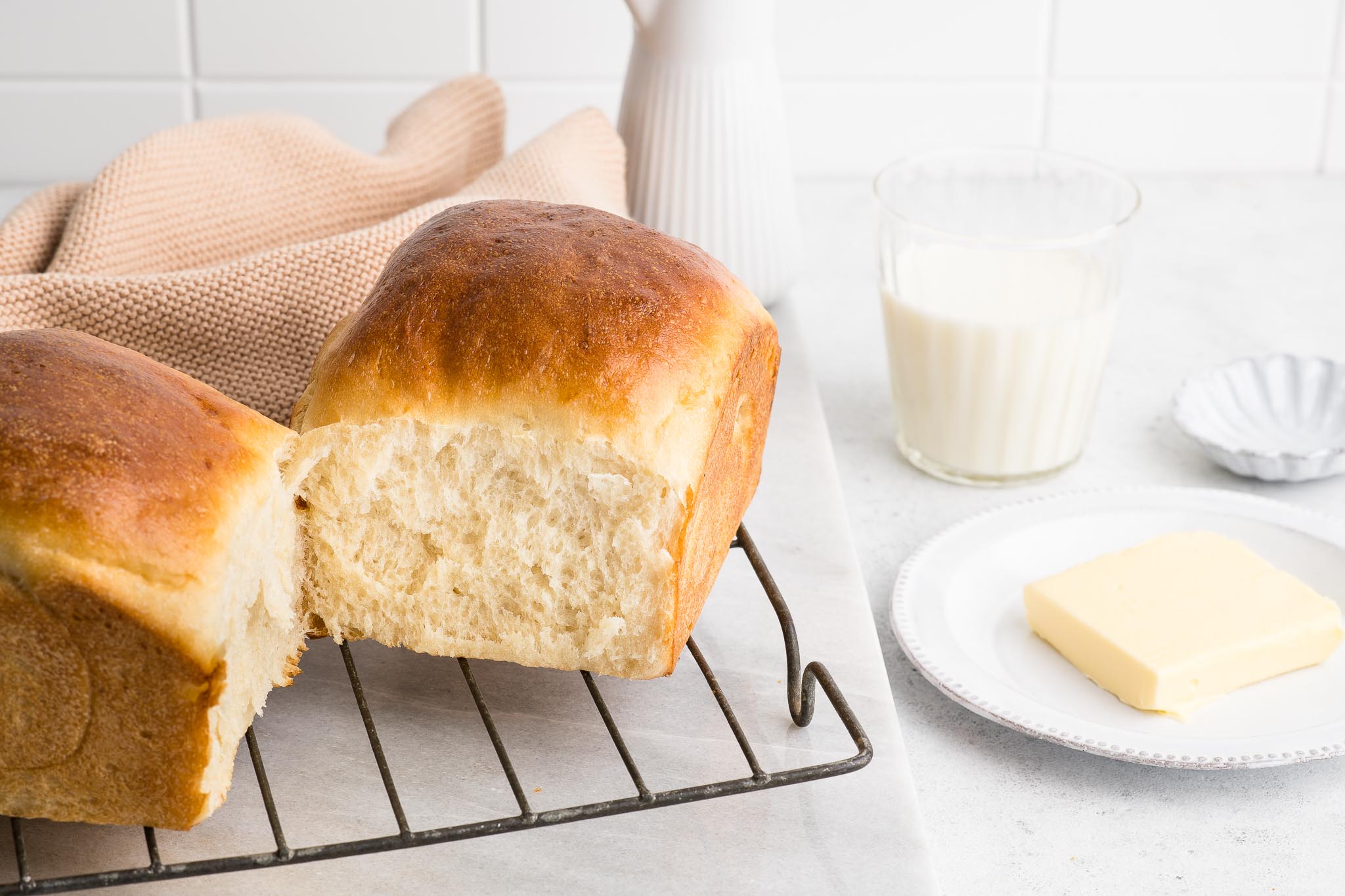
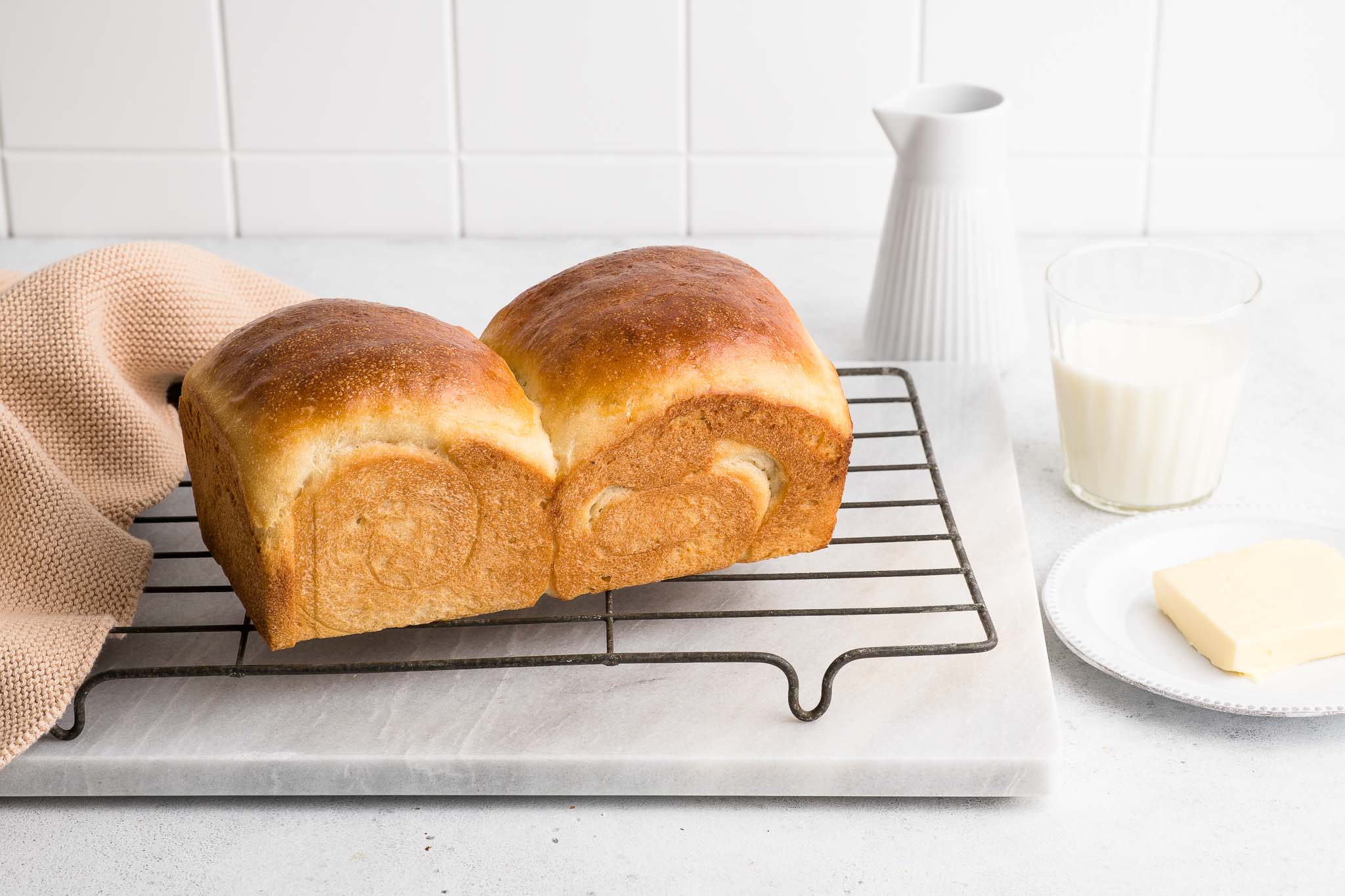
If you are a fan of Japanese bakery treats, you might already be familiar with Japanese Milk Bread, also called Hokkaido Milk Bread or Shokupan. This fluffy and pillowy-soft white loaf is a bread-lover’s dream, perfect for slicing to use in sandwiches, or lightly toasted to serve at breakfast.
What is Japanese Milk Bread?
- Japanese Milk Bread contains milk to add a bit of sweetness and richness to the dough.
- The taste and texture is quite similar to a French brioche, but with less butter.
- Making a Japanese Milk Bread is like making an enriched dough, but with the addition of a paste or starter called a Yudane or Tangzhong.
Yudane or Tangzhong
When making a Milk Bread, you either need to make a Yudane or Tangzhong. Both names refer to a paste or roux made from flour and a hot liquid (either water and/or milk).
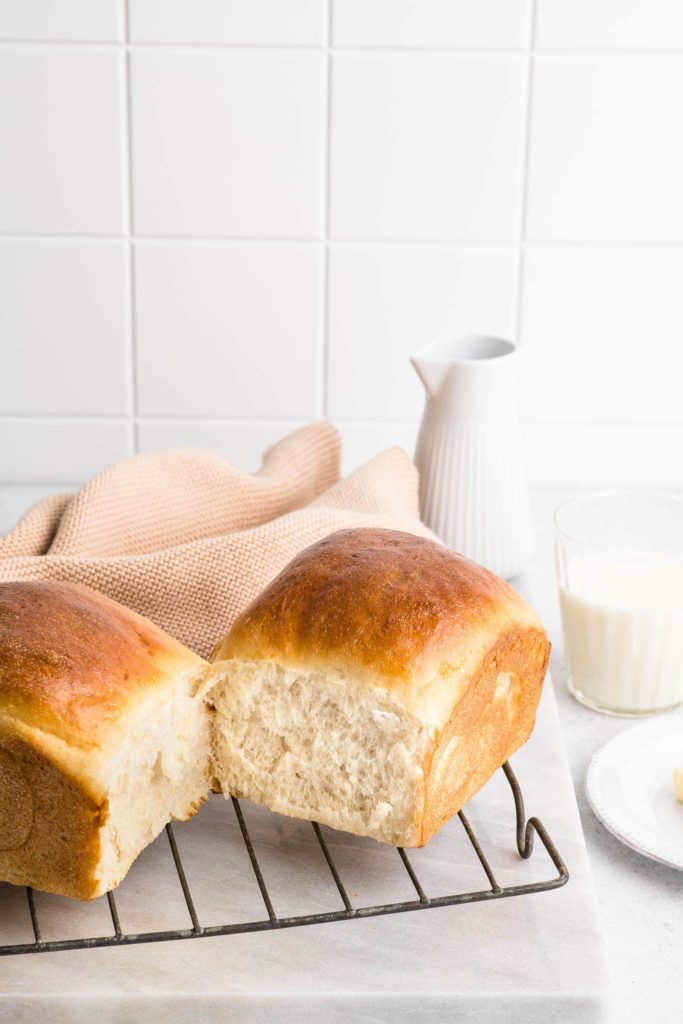
The cooled paste is mixed into an otherwise common enriched bread dough, but because the paste has a high liquid content, it adds moisture to the dough, which creates more air pockets in the dough, which in turn results in a soft and fluffy bread.
How to Make Milk Bread
Making a Japanese Milk Bread is very similar to making any other loaf of bread, except that you also add a floury paste to the dough. This paste, called a Yudane or Tangzhong, takes only a few minutes to make, but it makes all the difference to the finished loaf of bread.
Once you get started, you will quickly see that this milk bread recipe is quite similar to a brioche recipe, both in terms of ingredients, as well as texture of the dough.
Step 1
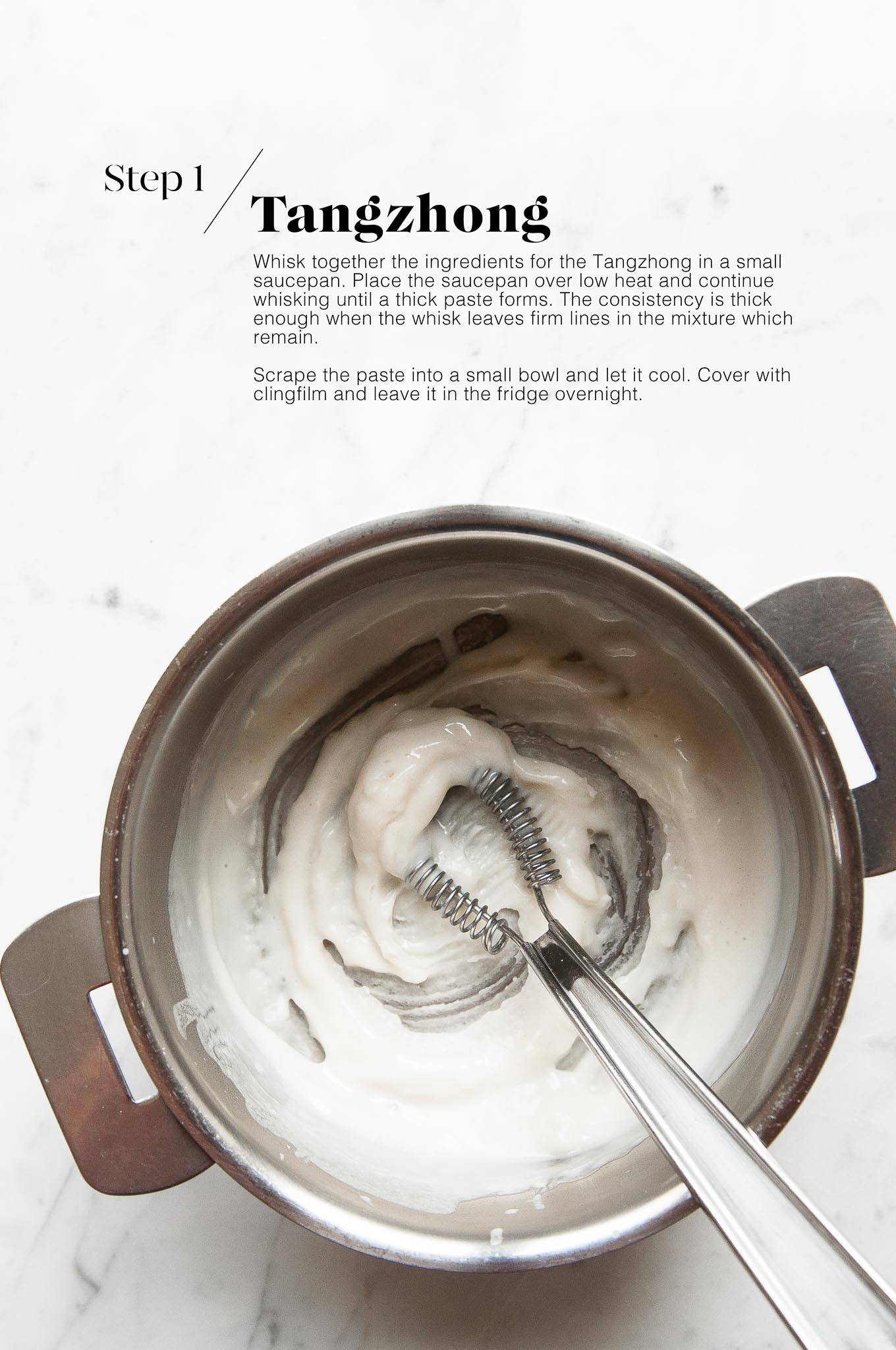
Make the Tangzhong by whisking together the ingredients in a small saucepan. Place the saucepan over low heat, and continue whisking until the mixture forms a thick paste. You want a thick enough consistency so that, as you whisk the mixture, the whisk leaves lines which do not move.
Scrape the Tangzhong into a small bowl and set it aside to cool. Once cooled, cover the bowl with clingfilm and place it in the fridge overnight.
If you are in a hurry, you can use the Tangzhong as soon as it has cooled to room temperature. But leaving the Tangzhong overnight allows it to develop more flavour.
Step 2
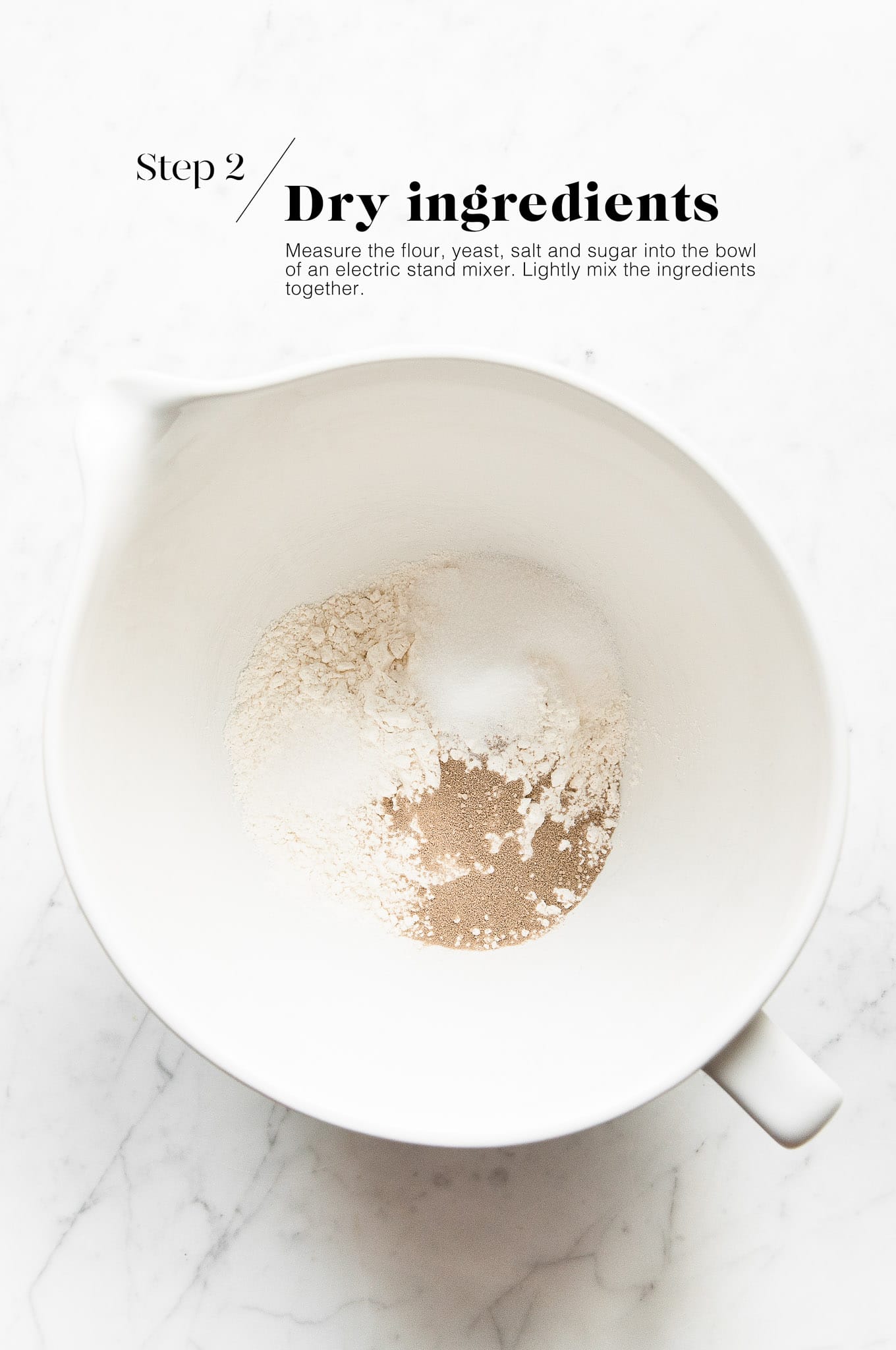
Measure the flour, yeast, salt and sugar into the bowl of an electric stand mixer. Lightly mix the ingredients together.
Step 3
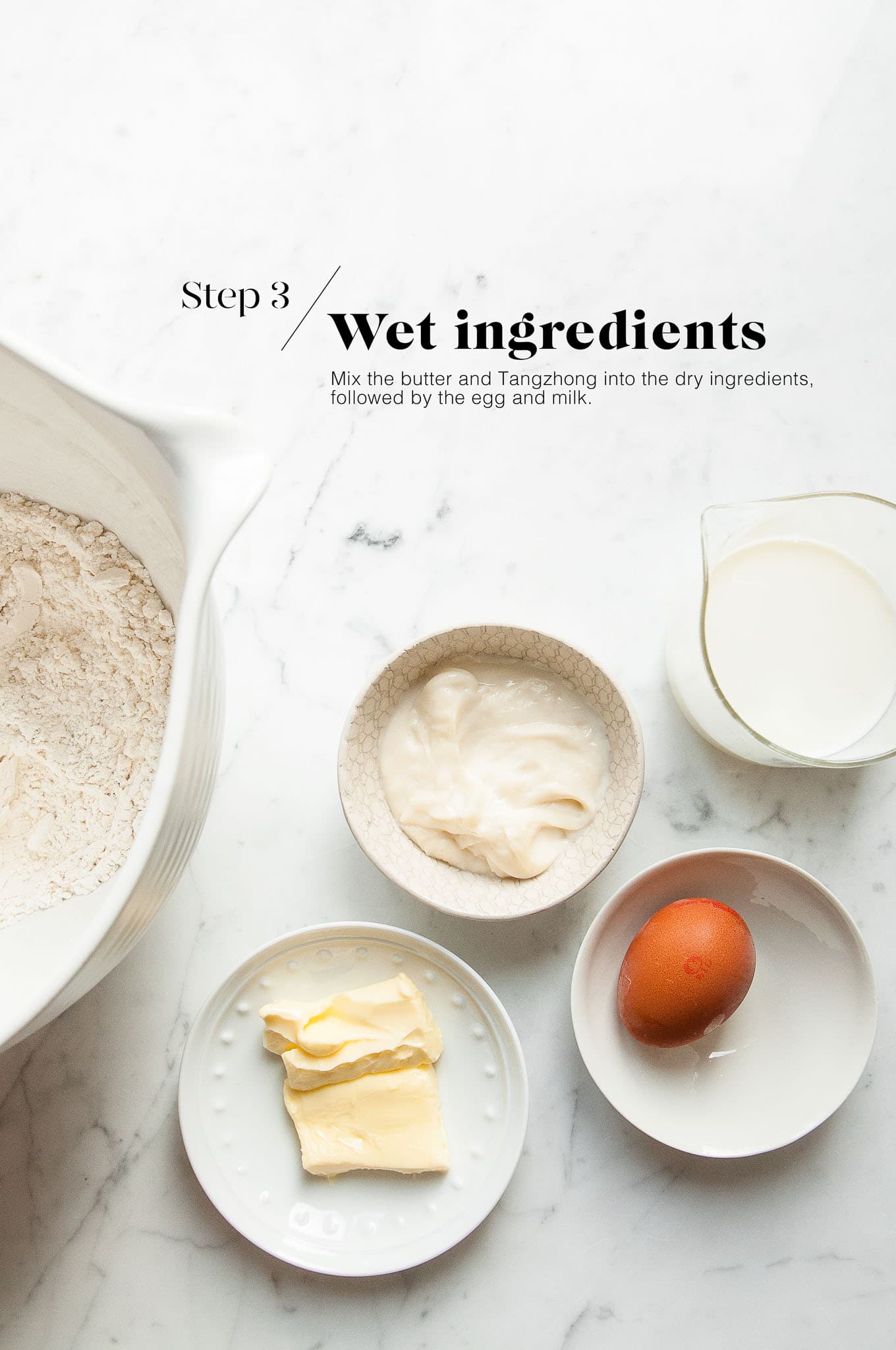
Add the egg and Tangzhong. Use the dough hook to start to incorporate everything together. Slowly add the milk until a sticky dough starts to form. Then add the butter, one tablespoon at a time.
Step 4
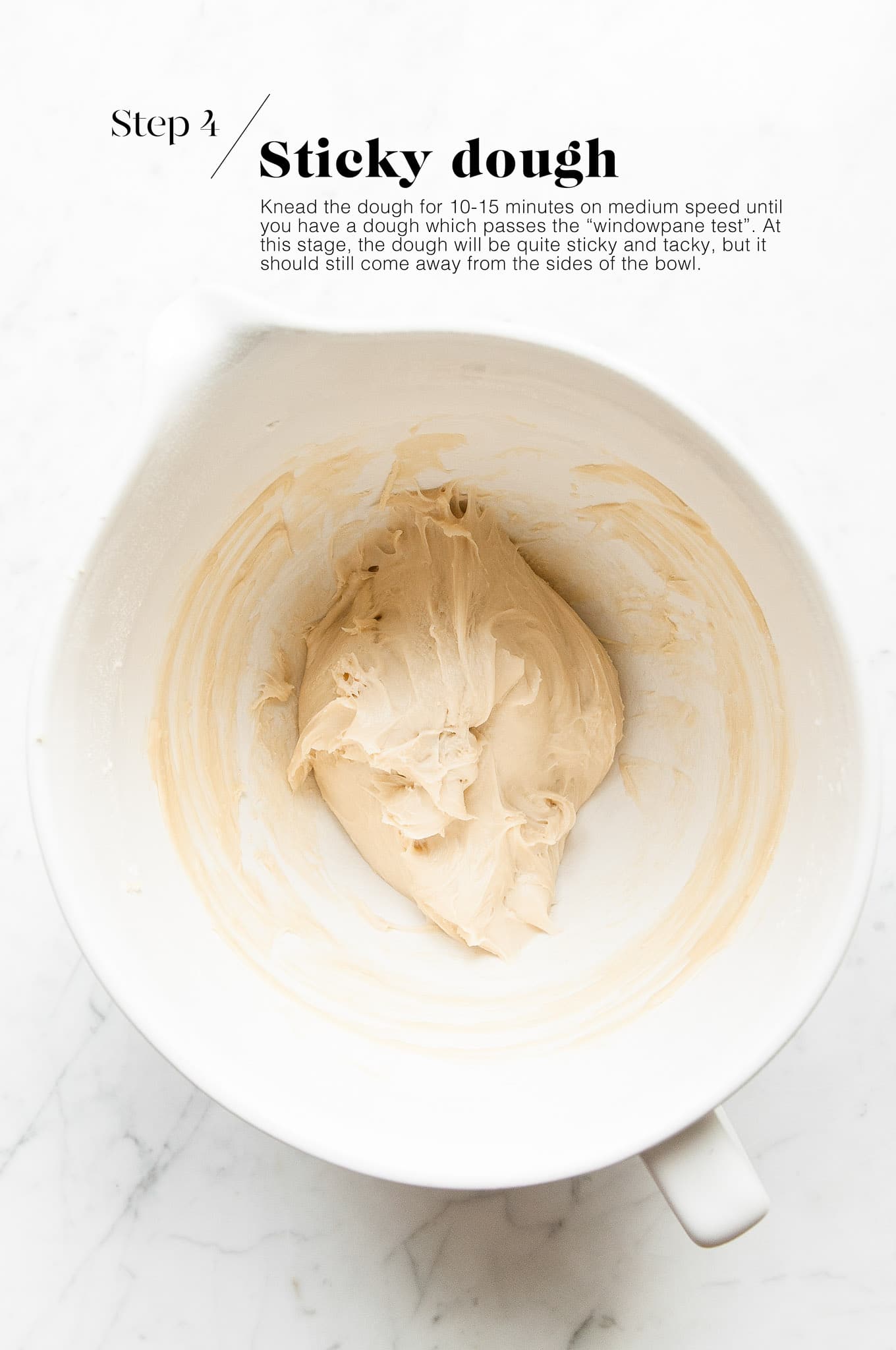
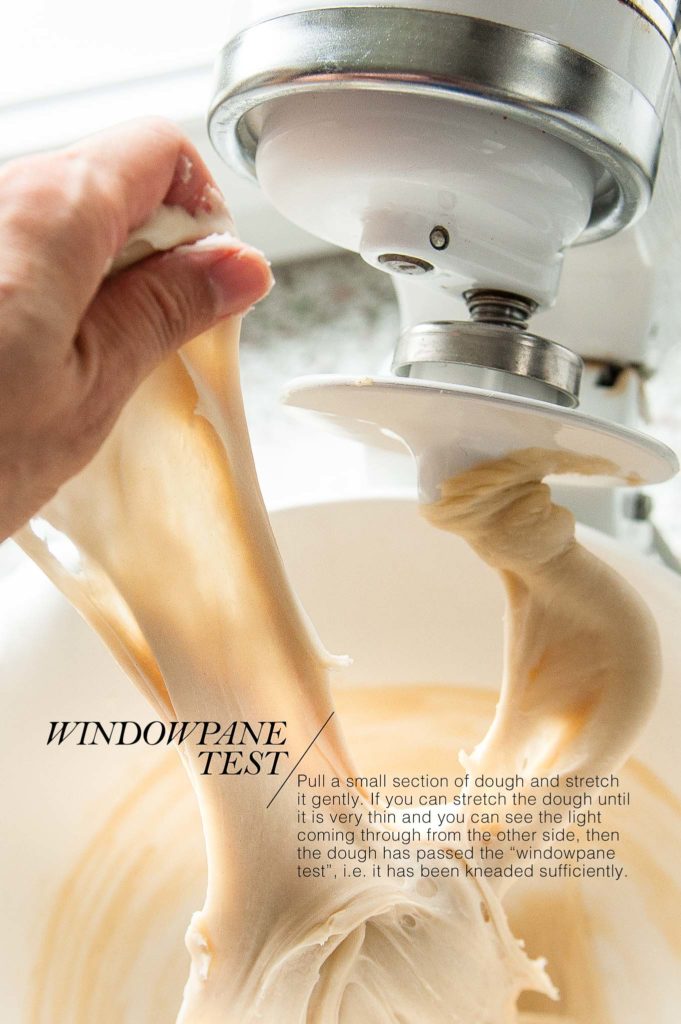
Knead the dough on medium speed for 10-15 minutes until you have a dough which passes the windowpane test.
To perform the “windowpane test”, pinch off a small piece of dough, roll it into a ball and use your hands to gently stretch the dough. If the dough can stretch to form a thin sheet and be almost translucent so that you can see the light through it, your dough has passed the “windowpane test”. This means that you have kneaded the dough sufficiently and that the dough is ready to be proofed.
At this stage, the dough will be somewhat sticky and tacky, mostly because of the butter and high liquid content. But the dough should be coming away from the sides of the bowl during the mixing. Once the dough has had its first proofing, it will be less sticky to the touch and easier to handle.
At this stage, the dough will be somewhat sticky and tacky, mostly because of the butter and high liquid content. But the dough should be coming away from the sides of the bowl during the mixing. Once the dough has had its first proofing, it will be less sticky to the touch and easier to handle.
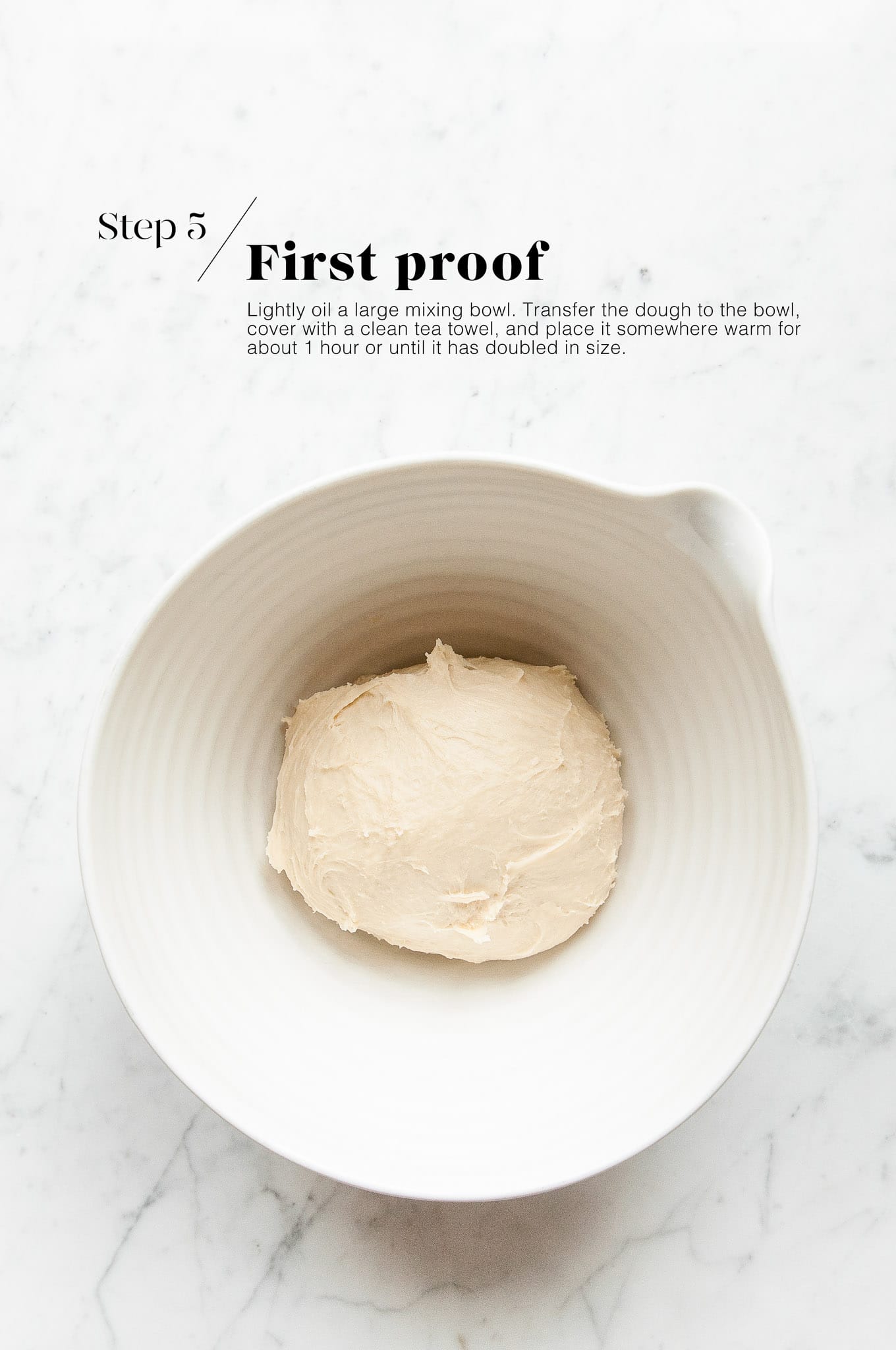
Step 5
Lightly oil a large mixing bowl. Roll the dough into a smooth-ish ball and place it inside the bowl.
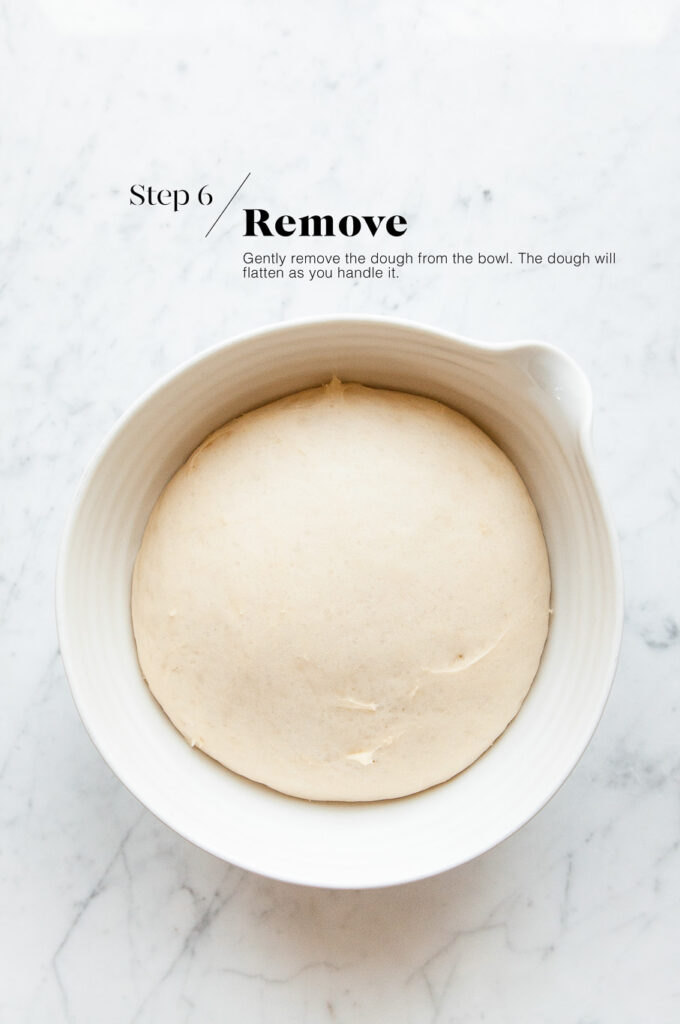
Cover with a clean tea towel, and set it aside somewhere warm for about 1 hour, or until it has doubled in size.
Step 6
Once the dough has doubled in size, gently remove the dough from the bowl. The dough will deflate as you handle it.
Step 7
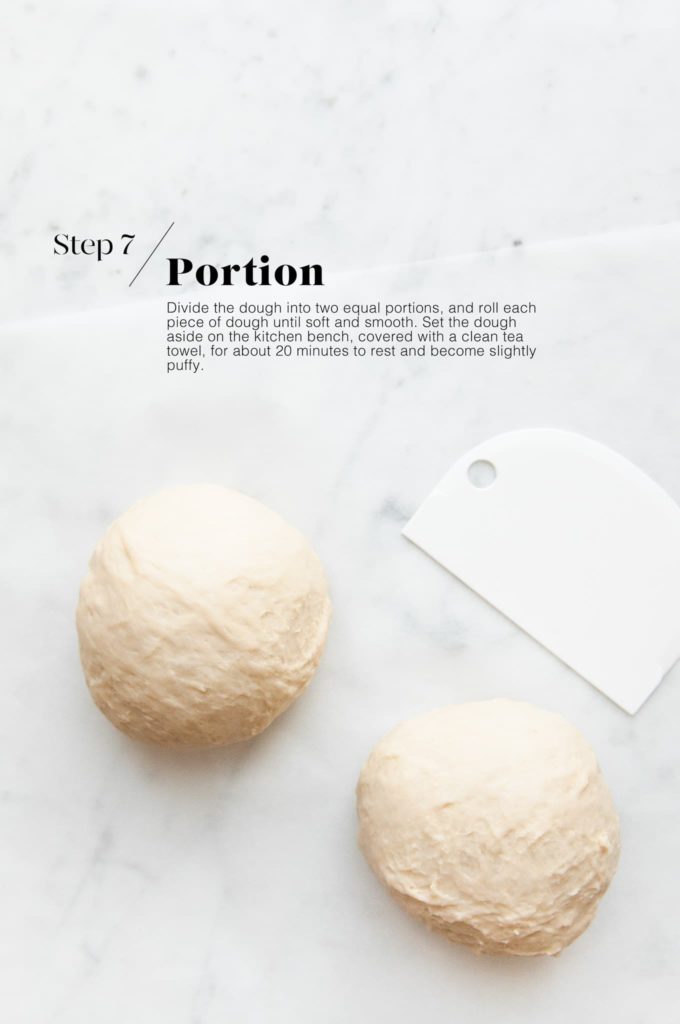
Divide the dough into two even portions (I recommend using a digital kitchen scale). Roll each portion into a smooth ball.
Place the balls of dough aside on the kitchen bench, covered in a clean tea towel, for about 20 minutes on until they are slightly puffy.
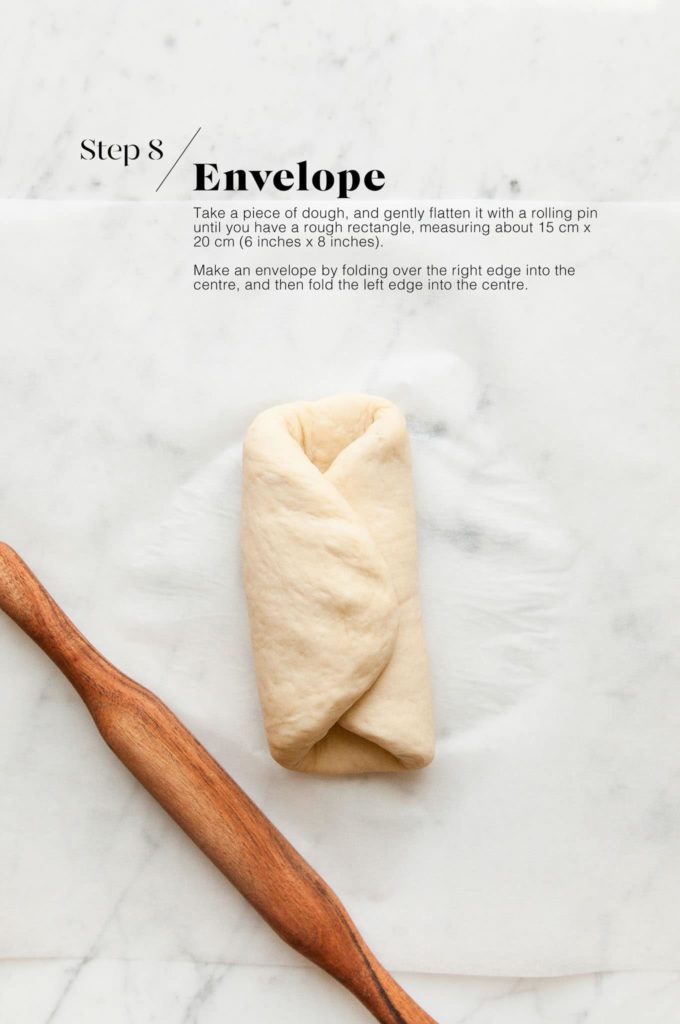
Step 8
Use a rolling pin to roll out a ball of dough to about 15 cm x 20 cm. Make an envelope fold by folding over the right edge into the centre, and then fold the left edge into the centre.
Step 9
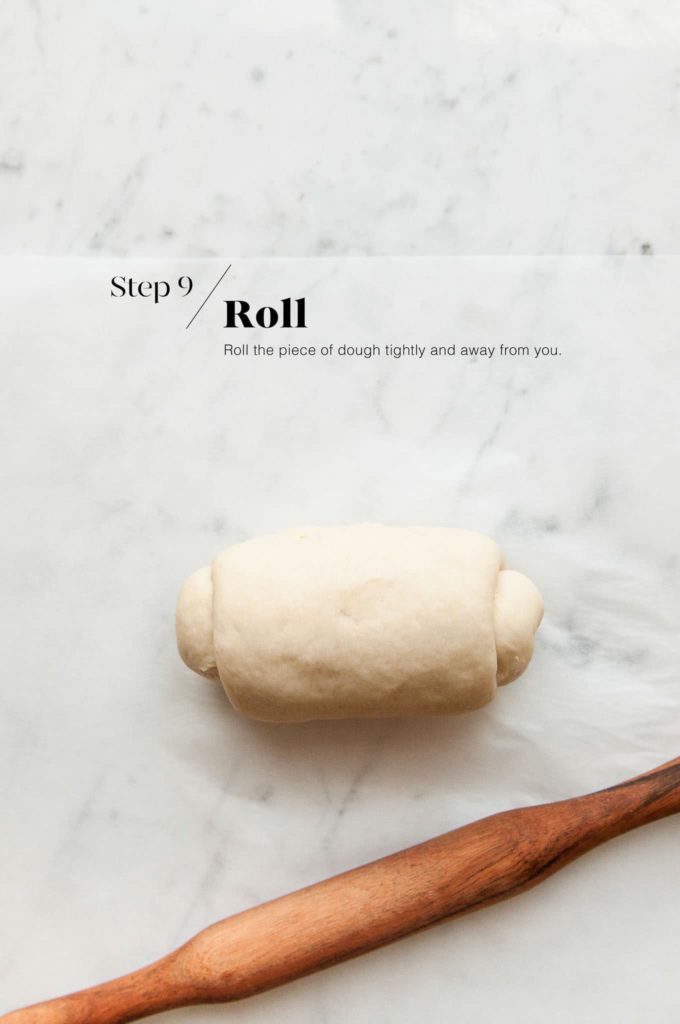
With the short side of the envelope facing you, roll the dough tightly and away from you.
Step 10
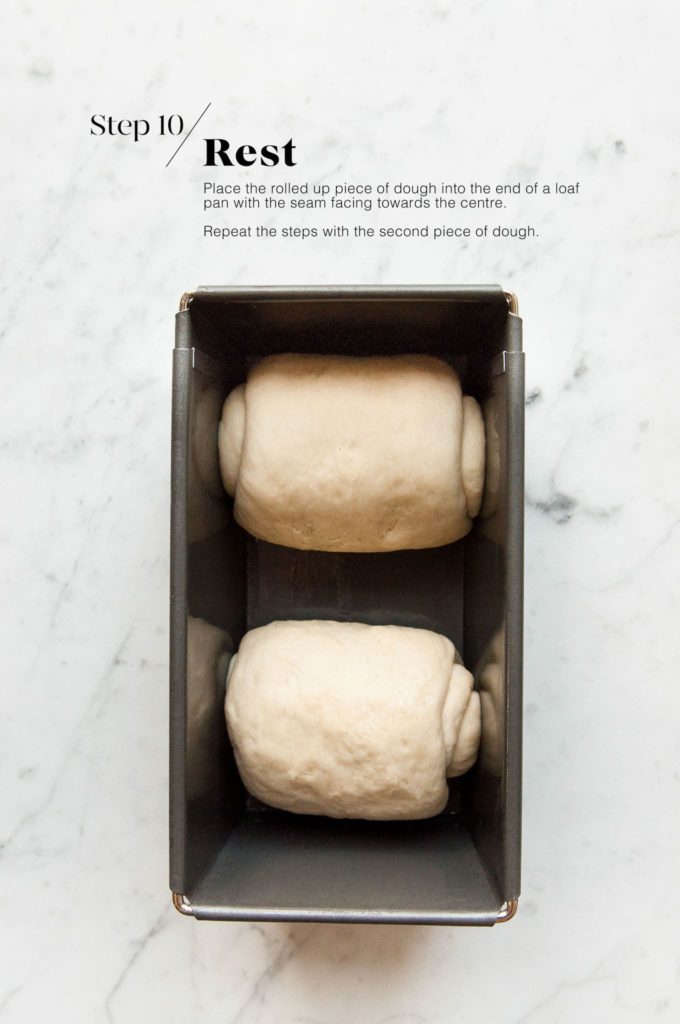
Place the dough into the end of a loaf pan with the seam facing inwards.
Repeat the above steps with the second piece of dough.
Step 11
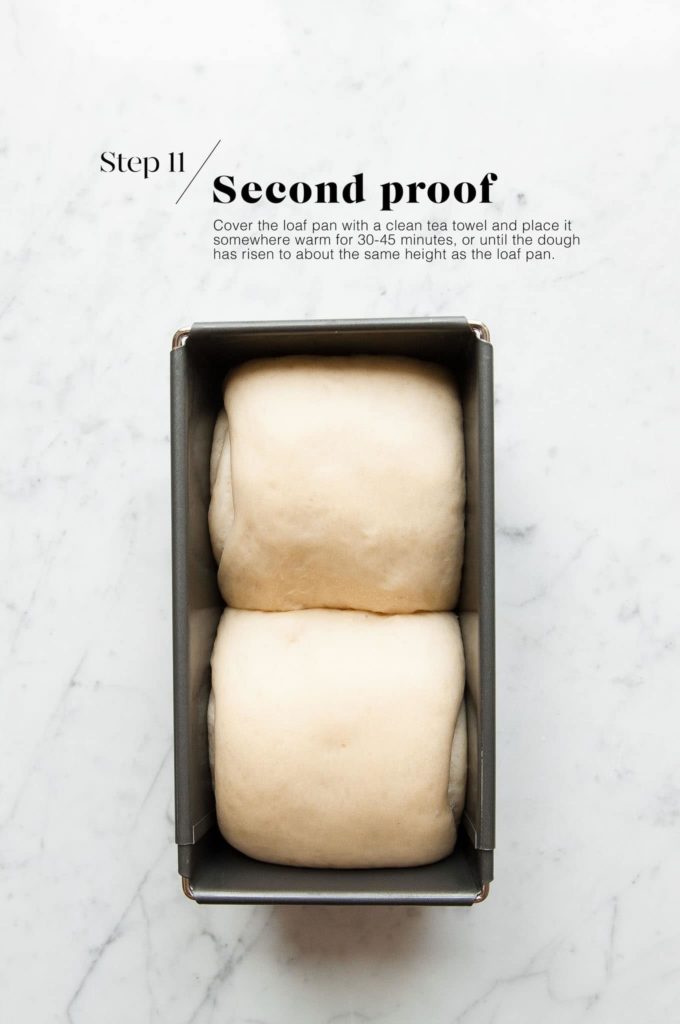
Place the loaf pan somewhere warm, covered with a clean tea towel, for 30-45 minutes or until the dough has risen to the about the same height as the pan.
Step 12
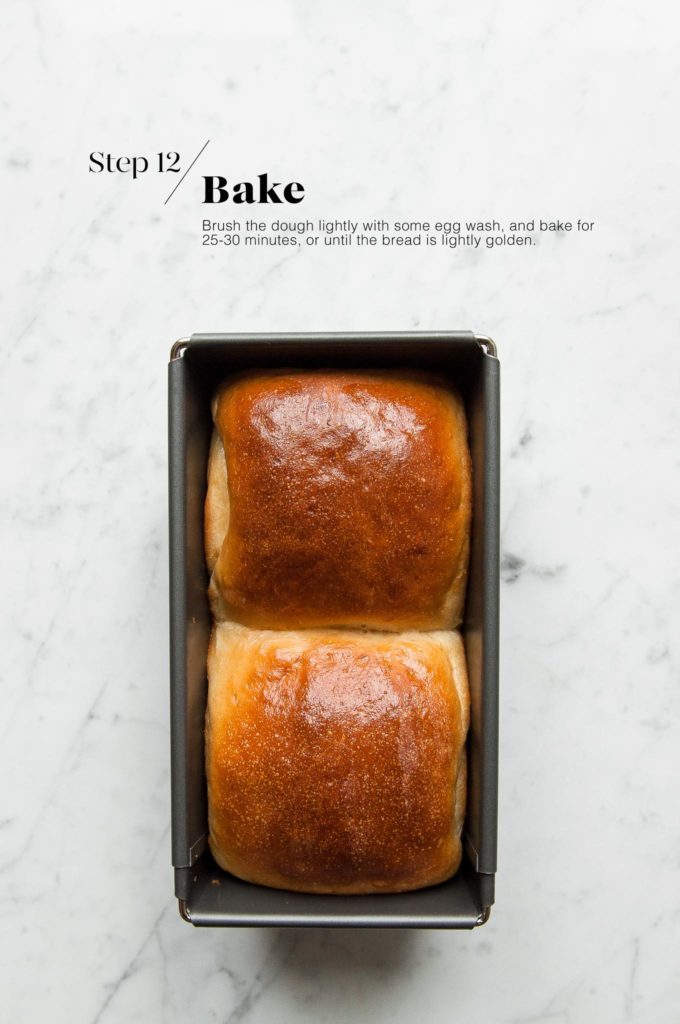
Lightly brush the dough with some egg wash. Bake the bread for 25-30 minutes, or until it is lightly golden. An internal thermometer should read about 85°C/185°F.
Tips for Making Bread Dough Ahead of Time
I love baking bread, but I don’t love getting up extra early to get started on the dough. So I typically make the dough the night before and allow it to rise slowly in the fridge overnight. The longer proofing time has the added benefit of allowing the dough to develop more flavour and a better texture. Come the morning, the dough will have at least doubled in size, and it will be ready for shaping as per the recipe.
To make the dough the night before:
- Make the dough as per the recipe.
- Place the dough into a large oiled bowl.
- Cover the bowl with plastic wrap or a reusable bowl cover.
- Place the bowl into the fridge.
- Let the dough rise overnight, or for at least 8-10 hours.
- The next morning, the dough should have at least doubled in size.
- Gently remove the dough from the bowl.
- The dough is ready for shaping and the second proof as per the recipe.
- As the dough will be cold from the fridge, the second proof may take slightly longer.
Japanese Milk Bread (Shokupan)

Ingredients
For the Tangzhong
- 14 g (2 tablespoons) white bread flour
- 100 ml (⅓ cup plus 1 tablespoon) milk
For the Japanese Milk Bread Dough
- 350 g (2 ⅓ cups) white bread flour
- 3 ½ g (1 teaspoon) instant dried yeast, see Kitchen Notes
- 6 g (1 teaspoon) fine salt
- 55 g (¼ cup) caster sugar, (superfine sugar)
- 1 egg
- 125 ml (½ cup) milk, warmed to 37°C/98°F
- 50 g (½ stick) unsalted butter, softened
For the Eggwash
- 1 egg
- 1 tablespoon milk
Instructions
For the Tangzhong
- Whisk the ingredients together in a small saucepan.
- Place the saucepan over low heat.
- Keep whisking until the ingredients form a thick paste. The consistency should be thick enough so that as you whisk the mixture, the whisk leaves lines in the mixture which remains.
- Remove the paste to a small bowl, and set it aside to cool down.
To Make the Dough
- Measure the flour, yeast, salt and sugar into the bowl of an electric stand mixer.
- Mix the dry ingredients together using a dough hook.
- Add the egg and the cooled Tangzhong.
- Slowly add the milk until the mixture comes together into a sticky dough.
- Add the butter, one tablespoon at a time. Wait for each tablespoon of butter to be fully incorporated into the dough before adding the next.
- Continue kneading the dough on medium speed for about 10-15 minutes, or until the dough passes the windowpane test. (See Kitchen Notes below). By this stage, the dough should also be coming away from the sides of the bowl.
- Lightly oil a large, clean mixing bowl.
- Roll the dough into a smooth ball and place it into the mixing bowl.
- Cover the dough with a clean tea towel or bowl cover, and place it somewhere warm for about 1.5 hours, or until it has doubled in size.
Portion the Dough
- Gently remove the dough from the bowl. The dough will deflate as you handle it.
- Divide the dough into two equal portions.
- Roll each portion of dough into smooth balls, and set them aside on the kitchen bench for about 20 minutes to puff up slightly. Cover them with a clean tea towel during this time.
Shaping the Dough
- Take one of the balls of dough and roll it out until it is about 15 cm x 20 cm.
- Make an envelope fold, i.e. fold the right end towards the centre, then the left end towards the centre.
- With the short side of the dough facing you, roll the dough tightly and away from you.
- Place the rolled-up dough into the end a loaf pan with the seam facing the centre.
- Repeat the above steps with the second piece of dough.
Proving the Shaped Dough
- Place the loaf pan somewhere warm, covered with a clean tea towel, for about 30-45 minutes, or until the dough has risen to about the same height as the loaf pan.
Baking the Japanese Milk Bread
- Preheat the oven to 180°C/356°F (without fan).
- Place a metal baking tray on the lower to middle shelf.
- Lightly brush the bread dough with some egg wash.
- Bake the bread for about 25-30 minutes, or until it is lightly golden. The bread is cooked if an internal thermometer reads 85°C/185°F.
- Leave the bread in the pan for about 5 minutes, before removing the bread to a wire rack to cool completely.
Kitchen Notes
- WINDOWPANE TEST
Pinch off a small piece of dough, roll it into a ball and use your hands to gently stretch the dough. If the dough can stretch to form a thin sheet and be almost translucent so that you can see the light through it, your dough has passed the “windowpane test”. This means that you have kneaded the dough sufficiently and that the dough is ready to be proofed. - LOAF PAN DIMENSIONS
The loaf pan I have used for this recipe measures 20 x 10 x 9 cm. If you are using a longer loaf pan, I recommend cutting the dough into 3 or 4 portions. - MAKE AHEAD TIPS
To start the Milk Bread dough the night before:
* Make the dough as per the recipe.
* Place the bowl of dough (covered) in the fridge to proof overnight, or for at least 8 to 10 hours. During this time, it should have at least doubled in size.
* The next day, proceed with the rest of the recipe. As the dough will be cold, it may require a bit more time for the second proofing period. - DIFFERENT TYPES OF FLOUR
For Swiss readers: I use Zopfmehl (or farine pour tresse) when making bread and enriched dough. - DIFFERENT TYPES OF YEAST
* Please note that there is a difference between instant yeast (also called instant dried yeast or fast-action dried yeast) and dried yeast (also called active dry yeast). If you are not sure what type of yeast you have, please check the packaging for instructions on how to use the yeast.
* With instant yeast, you can add it directly to the flour mixture without having to activate it first.
* With dried yeast, you will need to activate it first (usually in some warm liquid). - PROOFING THE DOUGH
Dough needs a warm environment for the yeast to activate and cause the dough to rise. If you don’t have a warm place in your home, try one of the following ideas:
* In the oven with the oven light switched on (works only for some ovens).
* In the oven with a tray of boiling water on the bottom shelf.
* In the oven at a low temperature of about 25-30°C (77-86°F). - OVEN TEMPERATURES
All recipes on this website state temperatures for a regular oven (i.e. a conventional oven without fan). If you have a convection oven with a fan, please consult the manufacturer’s handbook on how to adjust the temperature and baking time accordingly. - CONVERSIONS
To convert from cups to grams, and vice-versa, please see this handy Conversion Chart for Basic Ingredients.



Wonderful! The fluffiest and softest bread I’ve ever made! Thank you so much for the recipe!
Hi Apolline,
I’m so glad you enjoyed this recipe for Japanese Milk Bread! Thanks for popping by.
Was a first for me to make this bread – and oh how lovely it turned out!! Such a great technique I never tried before! My little girls (4 and 6) kept begging me to make this again – so I have in ????! Also amazing later 4 days as French Toast!
Hi Birgit,
That’s wonderful to hear that you all enjoyed this recipe 🙂
I was curious to give this milk bread a try and I am impressed by the texture! It really looks and tastes like sliced white bread from the supermarket. Amazing recipe!
Hi Thant , I made it, wow I MADE it, it was so good better than the shop. Thank you. I would like to know that if I can manage made two batches of dough, what are the baking time and temperature?
Hello,
So glad you enjoyed this recipe! You can make two batches of dough for two loaves of bread, and use the same baking time and temperature.
If you are making a bigger loaf of bread, use the same temperature, but you will need to adjust the baking time. The bread is cooked if an internal thermometer reads 85°C/185°F.
Hope this helps!
I used to live in China and had read about using tanzhong to make the bread soft but never tried until today. The bread was perfect. It’s a nice-sized loaf as well, not big but big enough. I’ll be making this again and I’ll try other Asian-style breads that are based on this method. Thank you!
Hi Deborah,
I’m so glad you enjoyed this recipe! I will be posting more recipes shortly which use tanzhong, such as milk buns and bread rolls. I’ve been running behind schedule in uploading my recipes but I hope to do so very soon 🙂
This was my first time making milk bread and it was perfect! Great recipe with easy to follow instructions. The bread is so soft and fluffy. Thank you!
This milk bread recipe was delicious! The bread was so soft and fluffy. I will be making it regularly.
Wow, this milk bread recipe is just amazing! My loaf was so soft and fluffy, better than anything I have bought before. I was so impressed! Excellent recipe – highly recommend!!