

 by
by 
Vietnamese Home Cooking
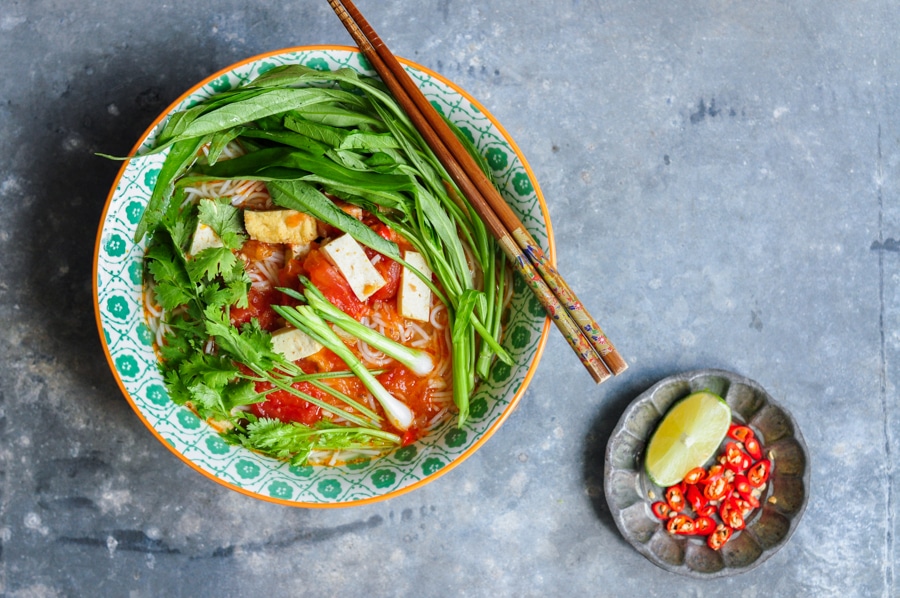
Recently in the kitchen, I have been busy rustling up various Vietnamese dishes, including one of my favourite soups called Bun Rieu – a pork broth flavoured with crab and tomatoes, and served with vermicelli noodles and a pile of aromatic herbs.
I love to make a big pot of this soup so that we can eat it over several days, even if the sun is sweltering outside and we sweat uncomfortably while enjoying the mix of vibrant flavours and textures.
Vietnamese Fish Cakes
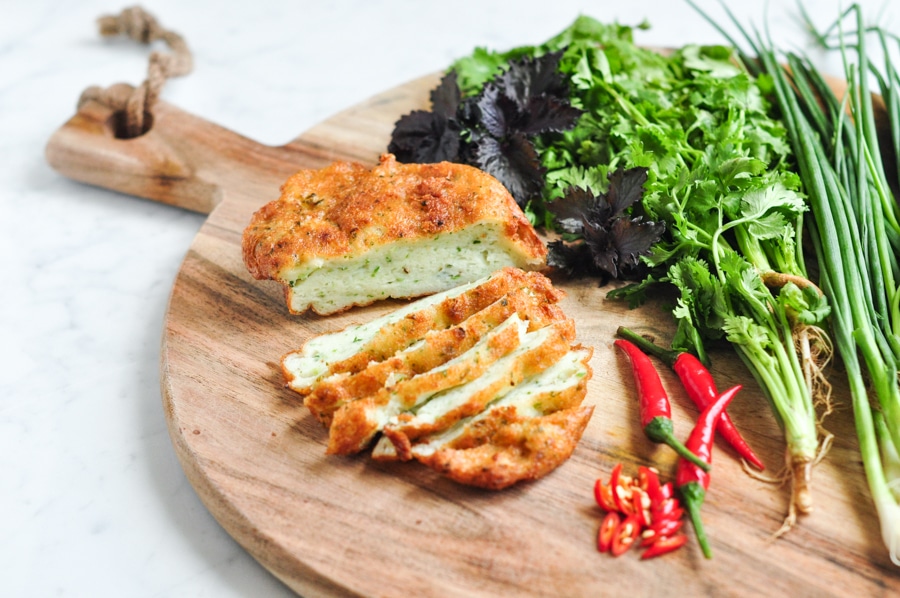
While it is traditional to serve Bun Rieu with fried tofu puffs and even stir through beaten eggs while the broth is simmering to produce ribbons of omelette in the soup, my mother always served it with a fish cake flavoured with Vietnamese seasonings.
I set about making my own version at home, winging it from taste memory; I have vivid memories of my mother buying a whole fish to make these fish cakes whenever she had friends coming over for a Chinese-style steamboat, and I would help by adding the seasonings while she worked the mixture together with her hands.
Often, she made fish balls but would also use the same mixture to fry in large pieces to make fish cakes like in the photo below. I still have to play around with the seasoning a bit, but I can’t believe it has taken me this long to try and make this myself at home.
Vietnamese Spaghetti Bolognese
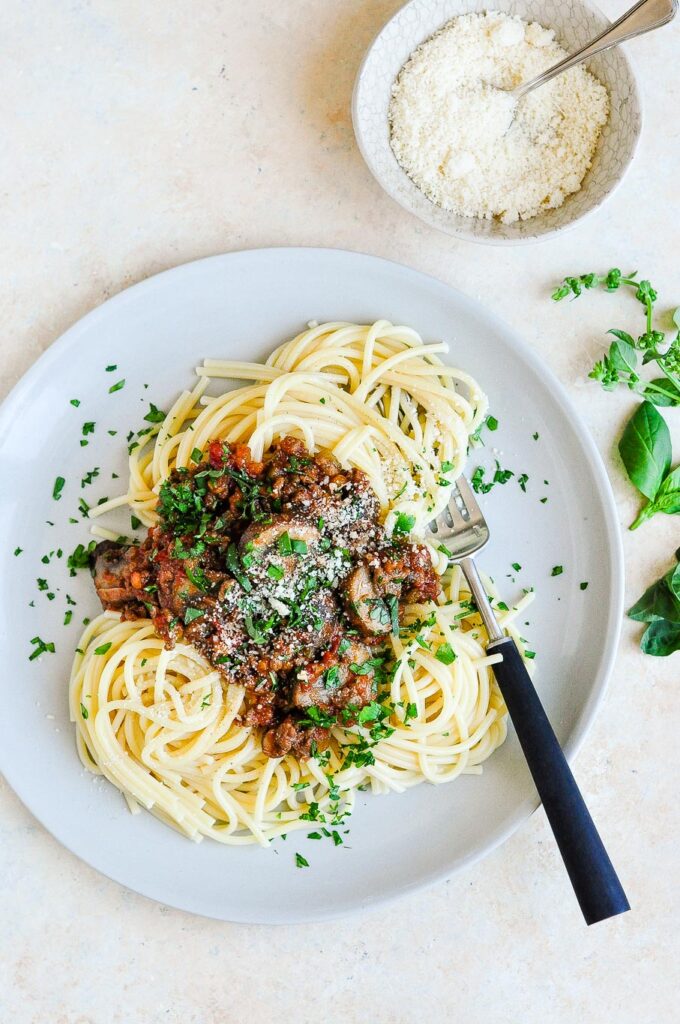
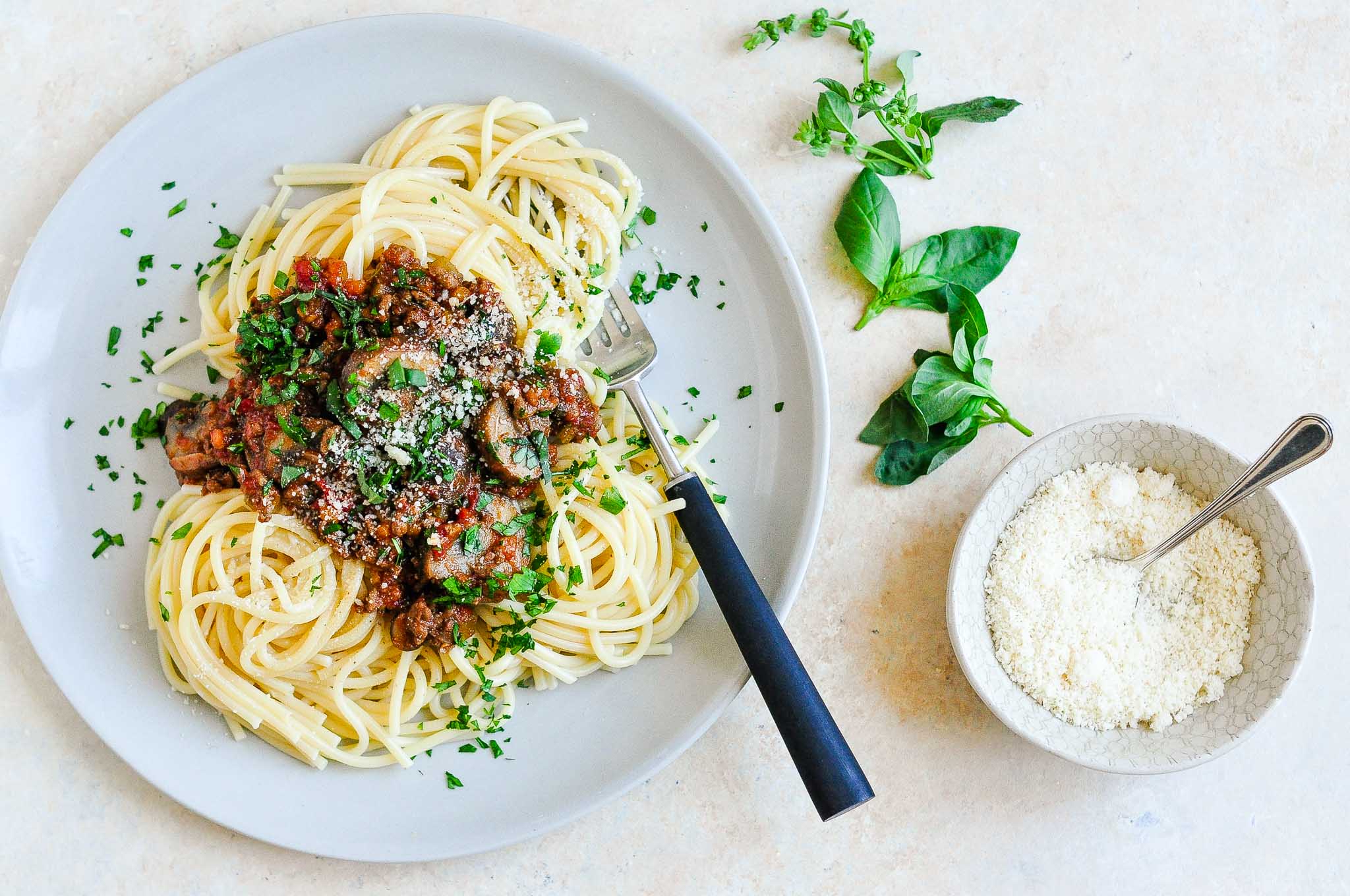
One dish which I had fun recreating recently was a spaghetti bolognese with a Vietnamese twist which was, not surprisingly, the only version I knew during my childhood until I discovered Pizza Hut in my teenage years.
Most people are surprised to learn that I have a lot of family who have lived in Switzerland for many decades, including quite a few who emigrated here in the late 1960s.
You could imagine that, back then, it would have been near impossible to find Asian ingredients in this tiny land-locked European country, so my family would cook dishes taught by the locals, but adapt most of them to suit their Asian palates.
A traditional raclette, normally consisting of grilled cheese on boiled potatoes, would be given a Vietnamese spin with grilled meats marinated in (long-haul imported and frozen) lemongrass and chillies served in place of the usual sausages or cold cuts.
Fish Sauce in a Bolognese?
But my fondest memories are of my family sitting down to a meal of spaghetti bolognese, eaten with chopsticks with the full noodle-slurping sound effects which are entirely acceptable (and expected) in Asian cultures. Often, there would be a bottle of Maggi Seasoning nearby.
I don’t know exactly how my family made their spaghetti bolognese; the version they cooked in my childhood has varied over the years and is now more aligned with the proper Italian version.
But in discussions with my aunts and uncles, they all admitted to using fish sauce in place of beef stock, and one of my younger uncles claims that a dash of soy sauce is necessary for both colour and taste.
Fish Sauce vs Anchovy Sauce
I had seen quite a few Italian recipes which use anchovy sauce as an ingredient, but specify Asian fish sauce as a substitute. So I figured that adding fish sauce to a bolognese sauce was probably not taking fusion food too far. And I was right.
The fish sauce adds a bold savouriness which you can’t get from salt alone, and you wouldn’t know this was a non-Italian version unless it was served, like in my grandfather’s home, with chopsticks.
More Umami
For a traditional Italian-style spaghetti bolognese, I always turn to this faithful recipe which is perfect served on its own with pasta or used in, say, a lasagne.
But for a more shortcut version (and Asian cooking is quite often about fast food), this Vietnamese-inspired version was devoured by my family over several meals with much enthusiasm (and little care about its origins!).
If anything, I find this Vietnamese version of spaghetti Bolognese to be more flavourful, thanks to the intense savouriness of the fish sauce, as well as more fresh-tasting from the coriander (cilantro). I also like to add extra freshly cracked black pepper upon serving for an extra kick of spice.
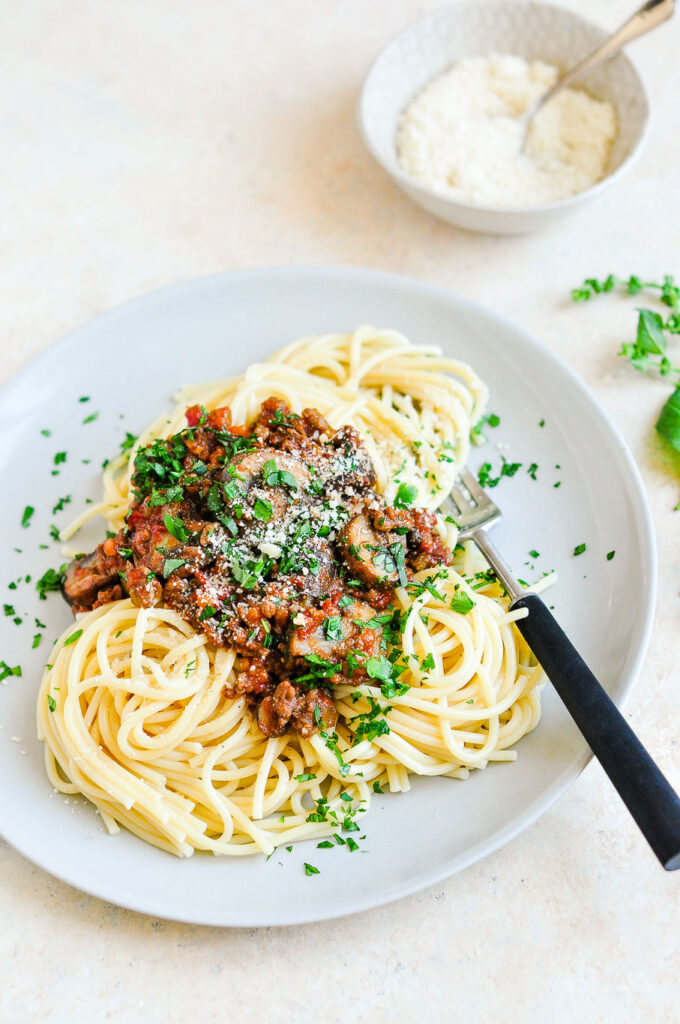
Vietnamese Spaghetti Bolognese

Ingredients
For the Vietnamese Bolognese Sauce
- 1-2 tablespoons vegetable oil
- 500 g (1 lb) minced beef, (ground beef)
- 1 red onion, finely chopped
- 2 garlic cloves, finely chopped
- 2 celery stalks, finely diced
- 2 small carrots, finely diced
- 300 g (11 oz) white mushrooms, sliced thickly
- 150 ml (½ cup plus 2 tablespoons) Noilly Prat, or white wine
- 2 tablespoons fish sauce, plus more to taste
- 500 g (1 lb) tomatoes, or 400 g (14 oz) canned diced tomatoes
- 400 g (14 oz) canned diced tomatoes
- 1-2 fresh bay leaves
- 250 ml (1 cup) beef stock
- sea salt, to taste
- black pepper, freshly cracked, to taste
To Serve
- dried spaghetti, about 100 g (3.5 oz) per person
- parmesan, freshly grated (optional)
- coriander, (cilantro) finely chopped
Instructions
To Make the Vietnamese Bolognese Sauce
- Heat the oil in a large saucepan.
- Turn up the stove up to high heat.
- Add the minced beef (ground beef) to the pan and season generously with sea salt and black pepper.
- Let the meat brown in the pan until it is golden and caramelised, before using a wooden spoon to turn the meat. Browning and caramelising the meat will add lots of flavour to the sauce later.
- Use a slotted spoon to remove the beef to a large bowl.
- Cook the onion, garlic, celery and carrots over low-medium heat for about 10 minutes until the vegetables have softened.
- Add the mushrooms and cook for a few minutes until they have softened slightly.
- Add the Noilly Prat and fish sauce and cook for about 5 minutes over medium heat until the liquid has reduced.
- Add the fresh tomatoes (if using), canned tomatoes, bay leaves, and beef stock.
- Return the cooked beef to the pan, together with any juices which have collected in the bowl.
- Turn down the stove down to low-medium heat and simmer gently for about 45 minutes. If the mixture thickens too much, add some water until you have a consistency you like.
- Taste for seasoning.
To Cook the Pasta
- Bring a large pot of water to the boil.
- Add 1 teaspoon of fine salt.
- Cook the spaghetti for 2 minutes less than the packet instructions.
- Do NOT drain the pasta.
- Reserve the pasta cooking water for the next step.
To Serve
- Use a pair of tongs to transfer the spaghetti directly from the pot of boiling water to the pan with the Vietnamese Bolognese Sauce.
- Stir the mixture so that the pasta is evenly coated.
- If the pasta sauce is too thick, add enough pasta boiling water to the sauce to get a nice consistency.
- Serve the sauce with the spaghetti and generously garnish with herbs and Parmesan.
- Chopsticks are optional.
Kitchen Notes
- INSTRUCTIONS FOR SLOW COOKER
* Follow the same instructions as for the stove top.
* Cook on low (95°C/203°F) for 3-4 hours or high (105°C/221°F) for 2-3 hours. - INSTRUCTIONS FOR THE OVEN
* Follow the same instructions as for the stove top, but make sure you use an oven-proof pan and lid, such as a cast-iron pan.
* Place the pan with the lid in the oven at 160°C/320°F, and cook for 2 hours.
* After this time, finish cooking the sauce on the stove for about 15-20 minutes on medium heat, without the lid so that the sauce can thicken. - BRANDS OF FISH SAUCE
There are lots of types and brands of fish sauce on the market, but the only one I use is Squid Brand Fish Sauce. It’s the one I grew up with, and the one which my mother faithfully cooked with when I lived at home (although she has since moved onto another brand which I find to be too strong in flavour and smell). Any good-quality fish sauce will do, but I would lean more towards the ones sold by Asian grocers than those in your usual supermarkets. - OVEN & STOVE TEMPERATURES
All recipes on this website have been tested on an induction stove and/or with a conventional oven (i.e. an oven without fan). All recipes on this website use temperatures for a conventional oven, unless otherwise mentioned. Convection ovens (i.e. fan-forced ovens) are typically 20°C/70°F hotter than conventional ovens, but please check your manufacturer’s handbook. - CONVERSIONS
To convert from cups to grams, and vice-versa, please see this handy Conversion Chart for Basic Ingredients.
Did you make this recipe?
Please leave a comment below and share your photos by tagging @eatlittlebird on social media and using #eatlittlebirdUpdate
This recipe was first published on 6 July 2016. It has been updated with new photos and more comprehensive recipe notes.


Oh this looks good Thanh! I love bolognese, we had Turkey bolognese for dinner last night!
I will definitely be trying this spin on it.
I hope you will enjoy it! I rarely cook with turkey but I often make a chicken bolognese 🙂
I love your asian twist on bolognese! I put all manner of things in mine and almost always a touch of chilli!
Oh I love to add chilli to my food too! But I tend to leave it out of my cooking these days if the children are going to eat the same dish. In which case, there is always some fresh chillies or dried chillies on the side 🙂 Actually, I love pickled chillies on my pizzas!
First of all. Please, don’t invite me to eat at home. Never. You’d lose some of your dishes. Just kidding 😛 I don’t eat fish, but those fishcakes look delicious. My mom made some similar for a soup too, but I thought they were made with bread, egg and persil, I think they don’t have fish.
Your idea for the bolognese is great, but raclete with meat marinade with lemongrass and chillie sounds even better!!!
I understand what you say. I always have seen Chinese restaurants, for example. But, when my parents visit Paris for the first time, they were surprised, because there were lots of Chinese restaurants (it seems that here it was not yet usual). And when I was a child every neighbourhood had its own Chinese restaurant, but not sushi, japanese, korean, thai, even Kebab. Now, all these are also common everywhere.
Next time, you’ll add a dash of soy sauce?? 😛
Ha ha – raclette the Vietnamese way is absolutely delicious!!!
There has been an explosion of new restaurants in Zurich in the past 5-10 years. When I first moved here 10 years ago, there were no Vietnamese restaurants at all. Now there are several to choose from, plus many other Thai, Japanese, Korean, etc. restaurants. It makes dining out more interesting, but I still can’t get over the prices sometimes. A bowl of Pho here costs around CHF 25 / EUR 23 / USD 25 / AUD 33!
A great post! A new kind of fusion for me. Such an intriguing Bolognese recipe, and I love fish sauce. I’ll just have to try it, because it’s hard for me to imagine it!
LOL!! It’s perhaps unlikely that you will be able to taste the fish sauce in the bolognese sauce, but you will be able to detect more savouriness. Let me know how it works out 🙂
Fish sauce has such great flavor – I can just imagine how wonderful your version of bolognese tastes. Looks gorgeous <3
Thank you! I’m not sure yet if this version will replace my usual recipe, but we all enjoyed it and it was also much quicker to make. In fact, I am thinking of making it for my French in-laws who we will visit soon 🙂
I tried this for my family the other night. The fish sauce is quite subtle and I loved the addition of coriander – it definitely gave this dish an Asian vibe. Will make it again for sure!
Looks amazing! Perfect! I have to try this!
This was good. I added four tablespoons fish sauce as per my taste. It made a lot, so I had lots of leftovers. I had to make a couple of substitutes because of what I had on hand: sake for the vermouth (which the Web site Gourmet Sleuth suggested as an acceptable sub), one dried bay leaf for the fresh one, and a sprinkle of dried cilantro instead of fresh cilantro on each serving. I also tweaked the order of instructions a bit, cooking the beef first, draining most of the fat, THEN cooking the veggies. A great bolognese variation that I will make again.
Thank you for your feedback and letting me know what tweaks you made! Hopefully you can find some fresh cilantro next time as I think it will make a big difference to the dish. But I’m glad that you enjoyed the recipe!
This recipe is insanely delicious! The fish sauce adds a fantastic umami flavor and the cilantro makes the bolognese taste light and fresh. I’m definitely making this again!
Delicious! I love the saltiness from the fish sauce in this recipe. I couldn’t eat the spaghetti with chopsticks though, ha ha!