

 by
by What is a Madeleine?
A madeleine (or madeleine cake) is a dainty sponge cake which is baked in individual scallop-shaped or shell-shaped moulds.
Madeleines are thought to have originated in the town of Commercy in France.
As the legend goes, a servant first baked them in real scallop shells which, at the time, were a traditional emblem for pilgrims passing through Commercy on their way to Spain. The servant’s master was so fond of these cakes that he named them after the servant, who, as it so happens, was called Madeleine.
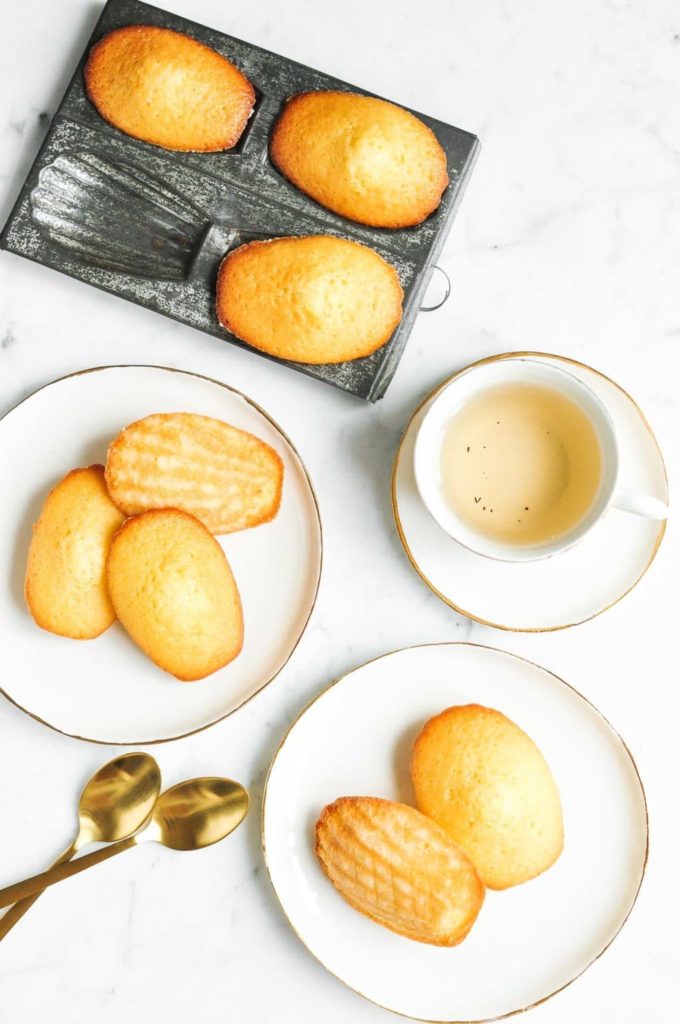
Classic French Madeleines
Something which my children and I associate with our visits to France are homemade madeleines.
I have loved eating madeleines since I was a child, and even though I bake them quite regularly at home, my son associates madeleines with his 94 year old great-great-aunt, someone he sees only once or twice a year.
But when he does see her, she is always spoiling him with her homemade madeleines and sablé cookies, even inviting him to help her make these treats, so it is no wonder that he has such nice memories when he thinks of madeleine cakes 🙂
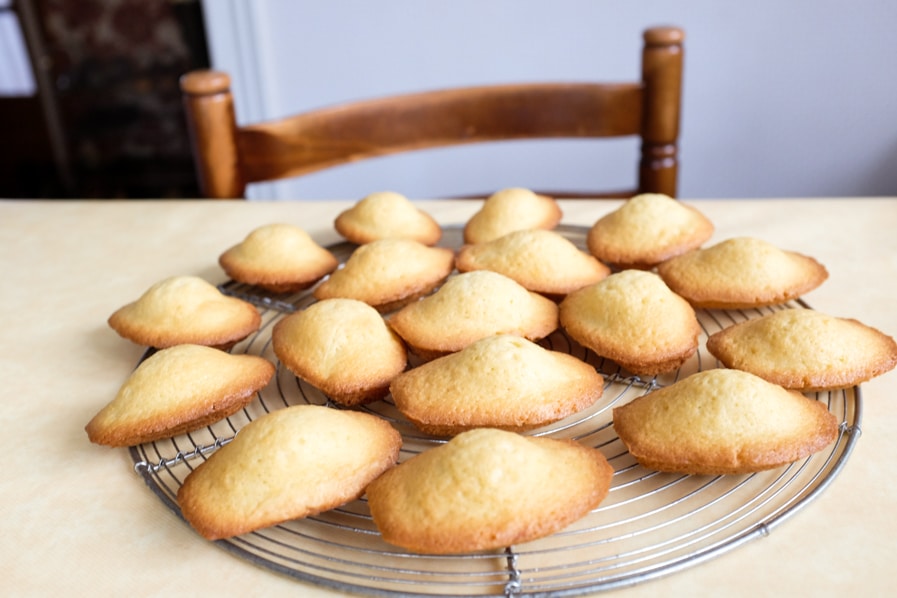
Why This Recipe Works
- This madeleine recipe takes only about 5-10 minutes to prepare!
- To produce light and fluffy madeleines, the batter should be left to rest in the fridge for at least 1 hour.
- You can make this madeleine recipe up to several days in advance by simply keeping the batter in the fridge.
- This is an easy and classic recipe for French madeleines. You can easily replace the lemon zest in the recipe with other flavourings, such as with vanilla, honey or chocolate chips. Please see the Kitchen Notes below.
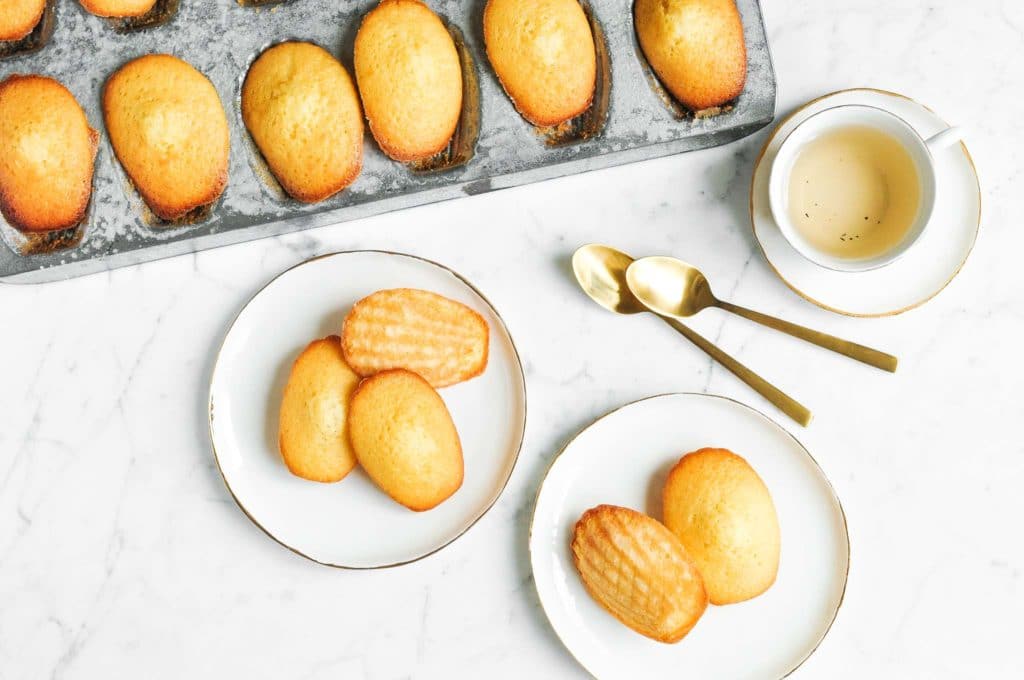
How to Make Madeleines
There are many recipes for madeleines, and the madeleine recipe below is one which I have been faithful to for many years because, well, it produces the best madeleines.
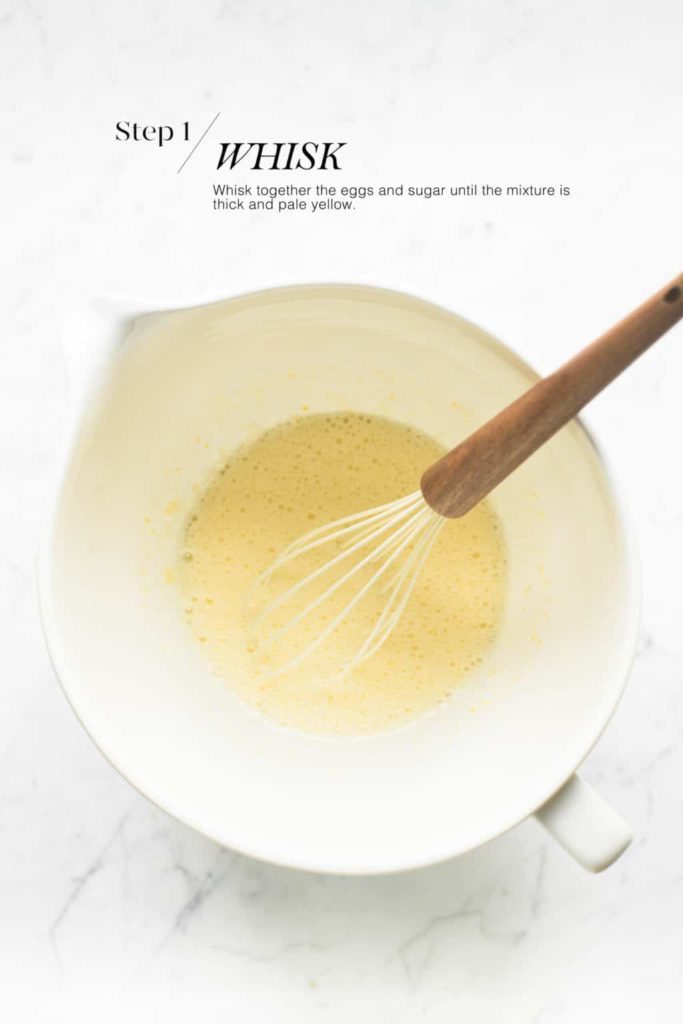
Step 1
Whisk together the eggs and sugar until the mixture is thick and pale yellow in colour.
This step takes about 1-2 minutes using an electric stand-mixer, or longer if you are whisking by hand.
Step 2
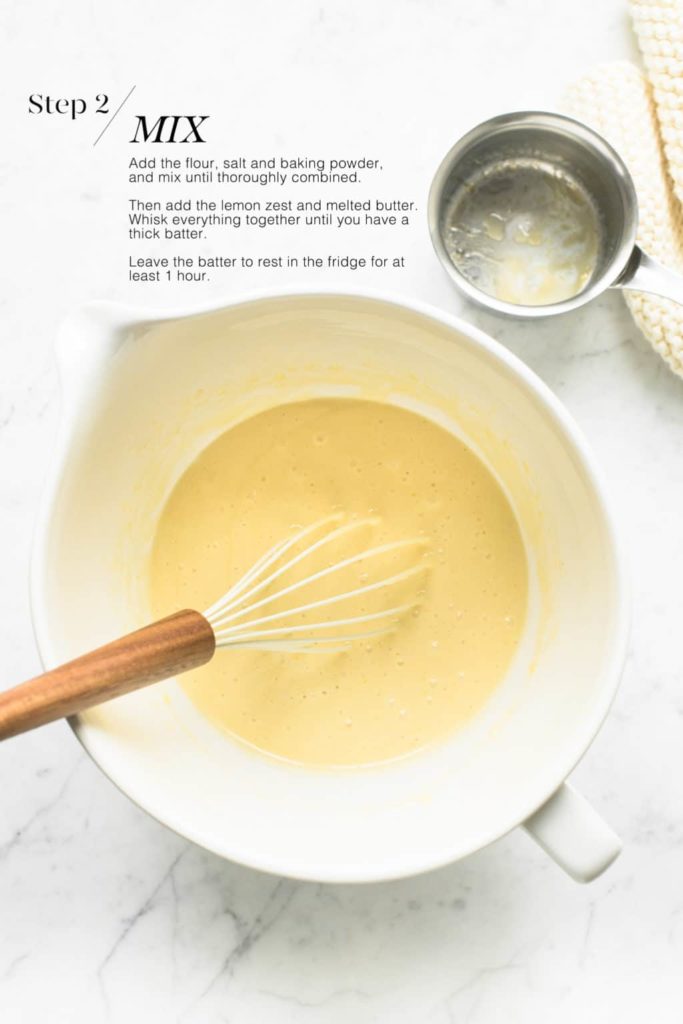
Add the dry ingredients – flour, salt and baking powder. Mix until thoroughly combined.
Then add the wet ingredients, namely the lemon zest and butter. Mix again until you have a smooth and thick batter. (For variations to this base recipe, please see the Kitchen Notes below in the recipe card.)
Leave the batter to rest for at least 1 hour in the fridge, and up to 2 days.
Step 3
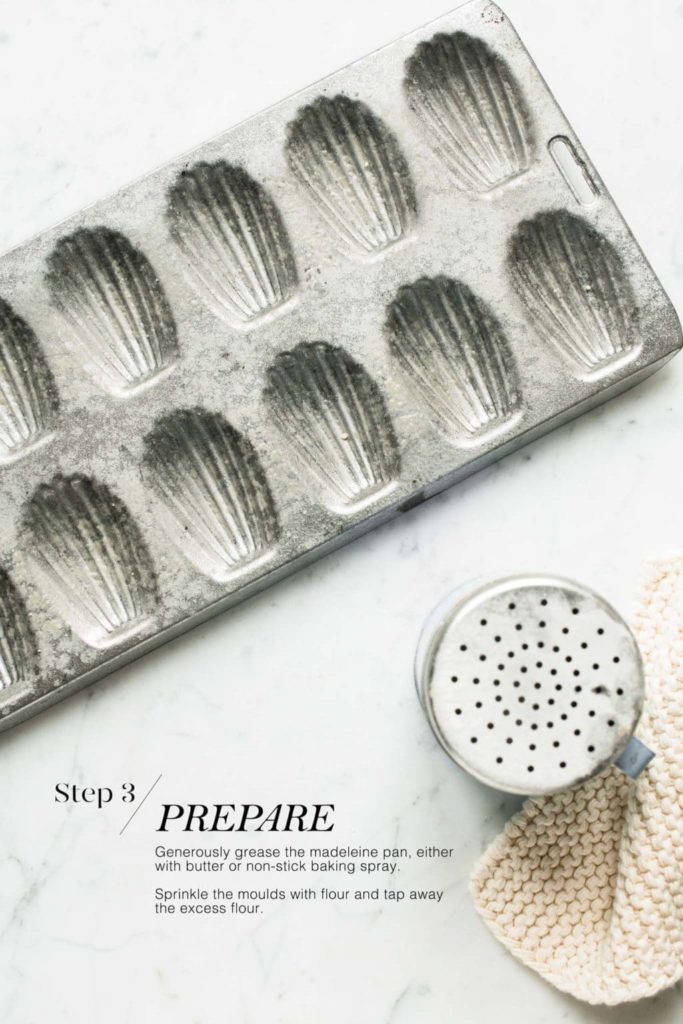
Prepare the madeleine pan by greasing it with butter or non-stick baking spray.
Sprinkle the moulds with flour and tap away any excess flour over the kitchen sink.
I grease and flour the madeleine pans even if they are non-stick, just to make sure that the cakes slip out of the moulds easily.
Step 4
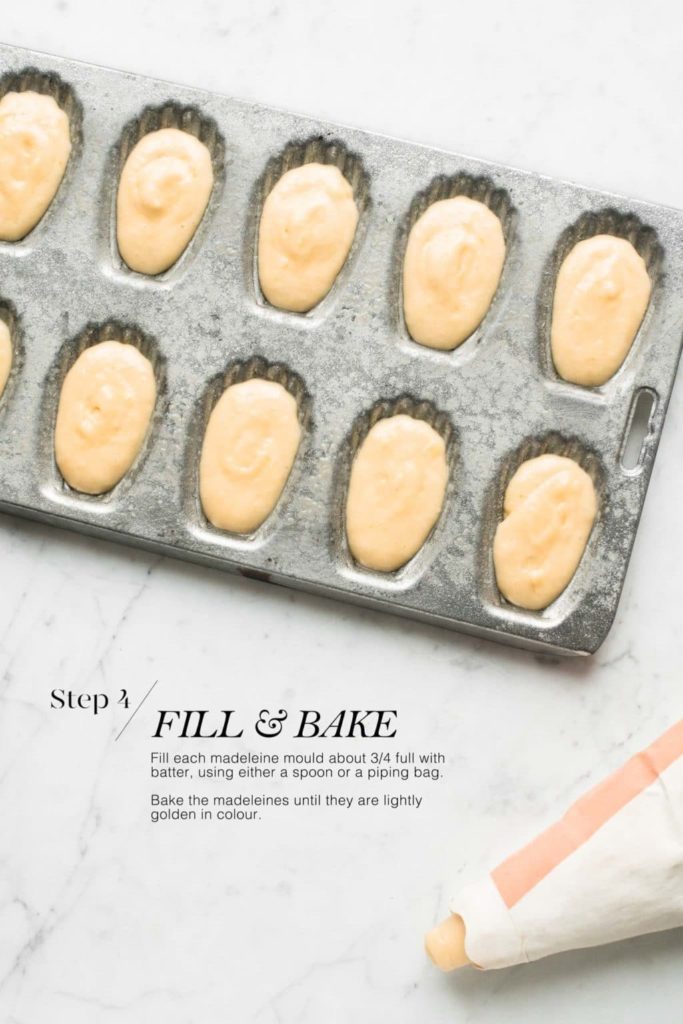
Fill each madeleine mould with some batter. For this step, you can either use a large spoon or fill a piping bag with the batter.
Bake the madeleines in a very hot oven at 270°C (518°F) (without fan), and immediately turn the temperature down to 210°C (410°C).
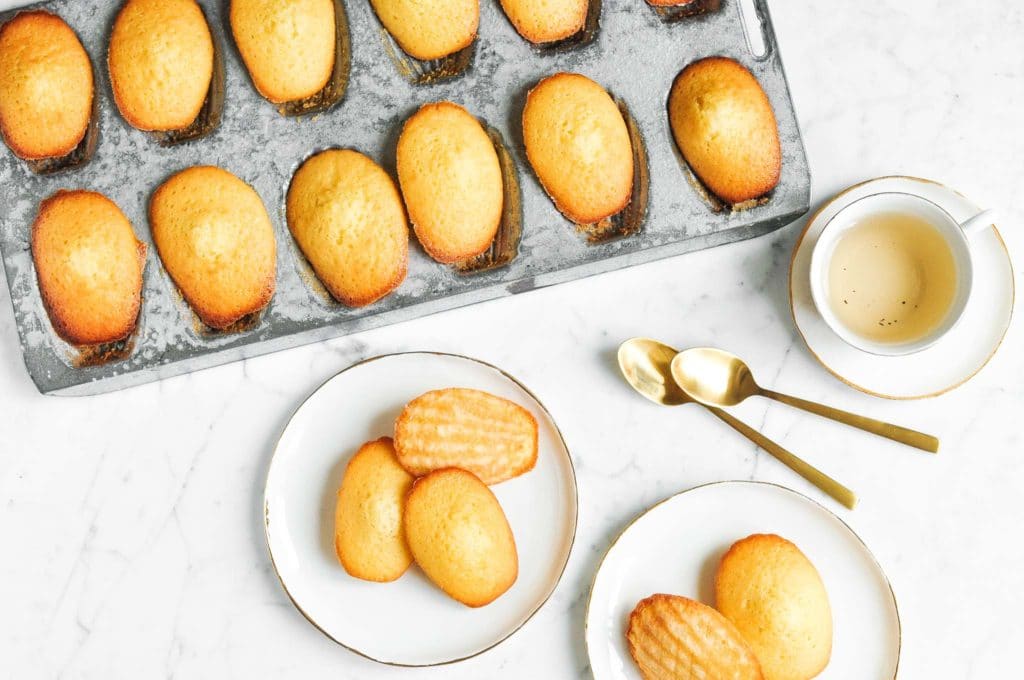
The shock of the hot oven, together with the coldness of the madeleine batter, helps to create the rounded bumps on the madeleines as they bake.
In my husband’s family, the success of a batch of madeleines depends mostly on how large the bumps are!
What are Madeleine Pans?
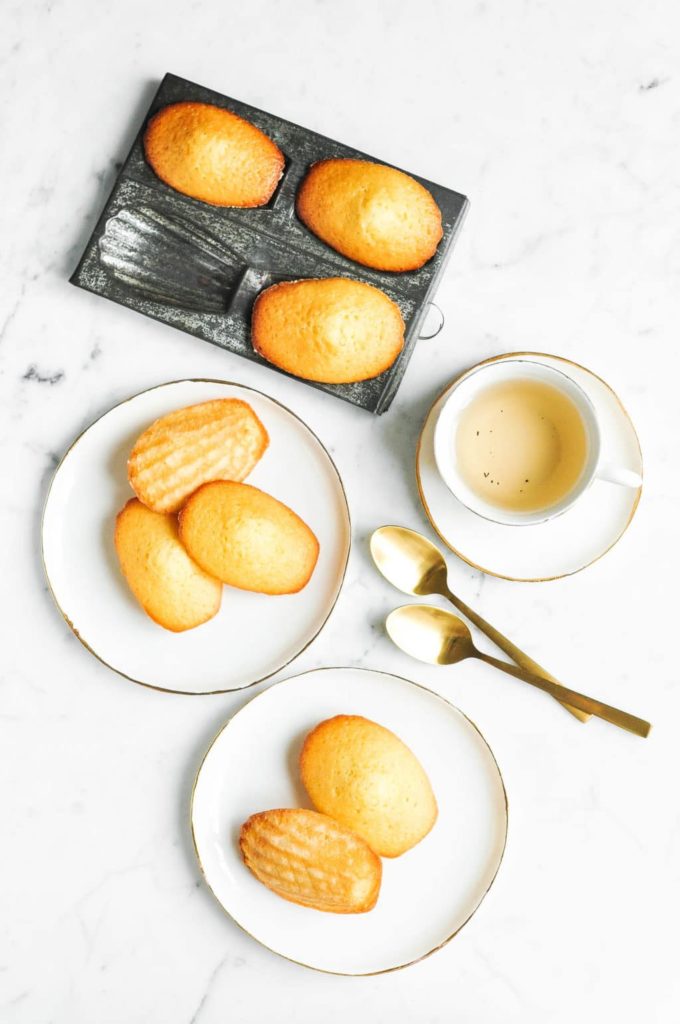
Madeleines are baked in scallop-shaped moulds. These days, they are sold as trays with multiple moulds (usually 6 to 12). However, if you are lucky, you may also be able to find individual vintage madeleine moulds.
I have one large aluminium madeleine pan which produces 12 large madeleines, plus an assortment of vintage moulds with a similar capacity.
I also have a non-stick mini madeleine pan but, despite it being non-stick, I find I still have to grease and flour it like I would for my aluminium mould. That said, it is much easier to remove the cakes from a non-stick mould than an aluminium mould.
I recently purchased a silicone madeleine mould as I was curious to see if they were easier and better to use than aluminium. Whilst they were certainly easier to clean and the cakes popped out of the moulds very easily, I found the colouring on the cakes to be uneven. Moreover, the madeleine cakes didn’t have the same caramelisation that you can achieve with a metal mould.
Tips For Making Madeleines
- Whisk the eggs and sugar until they the mixture is pale yellow and thick. This step helps to aerate the mixture to produce light and fluffy madeleine cakes.
- I like to use an electric stand-mixer when making madeleines, but you could simply use a bowl and whisk, with a bit of upper-arm energy!
- Madeleines are best when the batter is left to rest in the fridge for at least 1 hour and up to several days. This resting period allows the gluten in the flour to develop, which helps to make light and fluffy madeleine cakes.
- The batter needs to be fridge-cold before you fill the madeleine moulds and bake them, because it is the combination of cold batter and the shock of the hot oven which helps the madeleines to achieve their characteristic bumps.
- I recommend using either non-stick or aluminium madeleine pans which conduct heat better to produce a nicer crust on the madeleine cakes.
- If you don’t have a madeleine pan, you can also use a muffin pan and adjust the baking time accordingly.
French Madeleines

Ingredients
- 3 eggs
- 150 g (½ cup plus 3 tablespoons) caster sugar, (superfine sugar)
- 150 g (1 cup) plain flour, (all-purpose flour)
- 1 pinch fine salt
- 5 g (1 teaspoon) baking powder
- 1 lemon, zested
- 150 g (1 ½ stick) unsalted butter, melted and cooled slightly
Instructions
- In a large bowl, or the bowl of an electric stand mixer, whisk together the eggs and sugar until the mixture is thick and pale yellow. This step should take 1-2 minutes using an electric stand-mixer, or a bit longer if you are whisking by hand.
- Add the flour, salt and baking powder. Mix until everything is thoroughly combined.
- Next add the lemon zest (or see variations below in Kitchen Notes) and melted butter.
- Continue whisking until you have a thick and smooth batter.
- Leave the batter to rest in the fridge for at least 1 hour.
- Preheat the oven to 270°C/518°F (without fan).
- Generously grease the madeleine mould with butter and flour, even if it is non-stick. Another option is to use a non-stick baking spray.
- Fill each madeleine mould until about 3/4 full, either with a spoon or with a piping bag filled with the batter.
- Place the madeleine pan in the oven, and immediately turn down the temperature to 210°C/410°F.
- Bake until the madeleine cakes have risen and are lightly golden on top. For large madeleine moulds similar to that pictured, this should take about 7-10 minutes, depending on your oven.
- Remove the madeleine pan from the oven, and wait a few minutes before carefully removing the cakes from the moulds.
- Leave the cakes to cool on a wire rack (the ridge-side facing down), and serve them warm or cold.
Kitchen Notes
- VARIATIONS
Substitute the lemon zest with:
* 1 teaspoon vanilla extract
* 1 tablespoon honey and/or 1 tablespoon orange blossom water
* 1 cup chocolate chips - MAKE-AHEAD TIPS
The batter can be made several days ahead of time and left in the fridge to rest. I have kept batter in the fridge for up to 5 days with no problems. - STORAGE TIPS
The madeleines are best eaten on the same day they are baked, and preferably when they are still warm. - OVEN TEMPERATURES
All recipes on this website state temperatures for a regular oven (i.e. a conventional oven without fan). If you have a convection oven with a fan, please consult the manufacturer’s handbook on how to adjust the temperature and baking time accordingly. - CONVERSIONS
To convert from cups to grams, and vice-versa, please see this handy Conversion Chart for Basic Ingredients.
Did you make this recipe?
Please leave a comment below and share your photos by tagging @eatlittlebird on social media and using #eatlittlebirdUpdate
This recipe was first published on 26 July 2016, and has been updated with new photos and more comprehensive recipe notes.
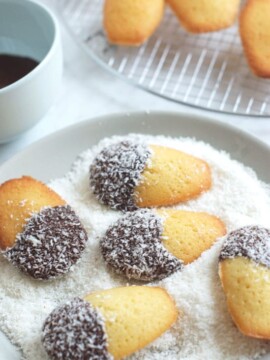

I love Madeleine’s but have never made them myself, this is partly due to the fact that I don’t actually own a Madeleine tin!
Your Madeleines look beautiful and has given me the push to buy a tin and get baking : )
Thank you for the extra tips on the batter, it’s information like that that gives us ameature bakers a fighting chance lol : )
A madeleine tin is definitely worth owning if you plan to make these cakes often ? If you can manage to make the batter ahead of time, this recipe is pretty foolproof. Please let me know how you get on!
Absolutely stunning, Thanh! I will be sharing this post with my FB followers as I am sure they will love it as much as I did! <3
Thanks so much, Beeta! Hope you have been well ?
Yum … I just bought a little madeleine pan and now I have the perfect recipe to try! Thank you for another great post and recipe
Thanks, Bryonna! Enjoy using your new madeleine pan and I hope you will also enjoy this recipe 🙂
Your photos are stunning, as always! I bake madeleines all the time and have to agree with your son that those made in a silicone mould are really not as good 😉
Thank you for your lovely words 🙂 My son will be happy to know that he is not alone with his thoughts! I made madeleines again the other day and he reminded me that he liked them “a bit crunchy on the outside”, LOL!
Beautiful photos! I’ve only ever made madeleines once. I really need to make better use of that pan!
It’s easy to forget the madeleine pan but these cakes are really easy to make 🙂
I really enjoyed looking at the beautiful photos. Believe it or not I’ve never had madeleines but they sound wonderful 🙂
Thanks, Stephanie! I hope you will get a chance to try madeleines one day. They are lovely dainty cakes!
I have a madeleine pan that I have used only once and I have been wanting to make them again. I am so glad I saw your recipe because I am definitely going to try it. They look delicious and like everything a madeleine should be! Thanks so much for sharing!
You’re welcome! Hope you will soon get more use from your madeleine pan 🙂 I use mine about once a week or once a fortnight!
I’ve got 2 madeleine pans that were wedding gifts, but the only time I tried to make them I did a terrible job! I’ll try again- thanks for the reminder and tips! I love your Paris photos- I want to go back and eat my way through Paris again 😀 Oh and I’ve wondered about silicon molds too.. I’ve got a muffin pan one but I don’t love it.
Hope you will give baking madeleines another try! And yes, I’m not the biggest fan of silicone moulds. For some cakes, they work great. But overall, I prefer the conventional cake pans.
I always see these pans when I’m looking for other things in the baking aisles at many stores! It’s nice to finally have a recipe to go with those pans and it gives me an excuse to pick one up next time I see one!!
Another cake tin to add to your collection 😉 But in my view, it’s one worth having.
Your photos are so beautiful and full of emotion, I feel like I just took a short trip to France! There are a number of European cookies, cakes, and pastries on my “to do” list. Madeleines are one of them. I have yet to purchase a Madeleine pan, not because I think I won’t use it. Exactly the opposite. I think I will use it too much! These lovely little cakes would be so wonderful with a cup of tea!
Thank you, Wendy! I always have my camera with me wherever I go, so it’s hard not to take a few snaps here and there. I highly recommend a madeleine pan – there are so many different ways to flavour these cakes. You will love them 🙂
Beautiful photos — thank you for sharing your trip. I love collecting kitchen items. I don’t have a Madeleine pan it would be nice to have. Your Madeleines are gorgeous and I bet they taste even better. I’d love to share one or two with you.
Thanks, Marisa! My madeleine tin is nearly 20 years old and it’s still going strong. When I first bought it, I thought it would be one of those pans I would use only once or twice a year. But I’m happy to have proven myself wrong 🙂
Such wonderful photos of Paris – thanks for sharing! The Madeleines look lovely – I definitely need to try making them!!
Thanks, Kathryn! Hope you will give this recipe a try soon!
Such a beautifully written post! France is on my bucket list, but to be quite honest, I don’t see it happening any time soon. 🙂 I keep telling myself that as soon as my daughter’s education is finished, it will be my time. Until then, I’ll settle for these gorgeous Honey Madeeines – beautiful!
Thanks, Byron! You will have a lot to look forward to when your daughter finishes studying then 🙂 In the meantime, we can always travel via the foods we eat and make at home 🙂
Wow, photos are just beautiful, and these madeleines sound like a dream.. sweet, buttery and just delicious. My mom makes fantastic madeleines, but I’ve never tried make them. Maybe I will borrow her madeleine pan and surprise her 😉
Thanks, Natalie! My father-in-law claims to make *the best* madeleines, so it was with some trepidation that I started to bake them for my husband. But then I found out that my father-in-law had only ever made them once (some many decades ago!), and they rose so beautifully and looked so perfect that he decided that that would be his one and only attempt!
Your delicious Madeleines made me want to go back and stroll around the streets of Paris again! Well, we won’t be back until summer of 2017, Lord-willing, so in the meantime I will enjoy eating these yummy cakes with a cup of tea!! Totally fabulous!
Summer is not to far away! We pass through Paris once or twice a year, and I always look forward to it. I’m also always looking for new places to see and visit, so if you have any suggestions, I would love to hear from you!
I have yet to get a madeline pan. These look delicious. I had some sent to me one Christmas, and have had them on my “to make” list ever since. I will have to go and get the pans!!
Hope you will get to try this recipe one day 🙂
I have loved madelines ever since my days of working as a barista. They’re so light and perfectly delicious with a cup of coffee or tea. I recently purchased a madeleine pan but am yet to use it! These honey madeleines are my perfect excuse to break it in!
I hope you will enjoy this recipe! You won’t regret buying the madeleine tin 🙂
Beautiful photographs, Love to visit pairs once at least. These honey Madeleine are perfect I need to get madeleine pan to make it.
Thank you! Hope you will get a chance to visit Paris one day. It’s such a beautiful city, especially for foodies 🙂
I have only seen the Madeleines in pictures and I am excited to see how simple they are to make. I am clipping off some coupon to local craft stores and buying a madeleine pan soon. I was mesmerized by the gorgeous pictures you have and this is one place I really want to travel in my life time.
I hope you will have a chance to visit Paris one day soon! I pinch myself everytime we go 🙂 And we are lucky to go often because we have family living in the area. Madeleines are one of my favourite cakes and you won’t regret buying a madeleine pan!
These Madeleines look fantastic and such a treat! I love the pictures of your trip as well, so lovely!
Thank you!
We are thinking about taking a bit of a last minute trip to Paris in March, and your post made me so excited! I can’t wait to sample everything from all the bakeries. I love that the size of the ridges is how your husband’s family determines the success of a batch of madelines – these are the little things your son will remember and strive for when he is an adult!
Indeed, every time I bake a batch of madeleines, the first thing my husband inspects is the size of the “bump”! How exciting to plan a last-minute trip to Paris. If you need tips on where to eat and shop, you can find some ideas here: https://eatlittlebird.com/best-cafes-restaurants-paris/ Bon voyage!
OMG, your pictures are absolutely stunning! I’ve spent time in France, but never long enough to develop a favorite place to eat brunch! The icecream shop sounds fantastic, and despite your son choosing plain vanilla, I bet it was the best vanilla icecream POSSIBLE!
I love your madeleine pans – I have a pan, but haven’t used it yet – looks like I’ll be starting right here!
Thank you, Kylee! I know some people think vanilla is boring, but when made well, it’s also one of the first flavours I choose. So it makes me smile when my son chooses vanilla 🙂 I hope you will get a chance to christen your madeleine pan soon!
First off, your photos are seriously stunning! Also, I’ve always wanted to give madelines a try but never got around to buying a pan. Definitely gonna rectify that ASAP.
Thank you, Giselle 🙂 These cakes are not hard to bake at all. Hope you will try them soon!
These madeleines turn out perfect every time! Thanks for the recipe.
This is a great idea, even for picky eaters! Looks amazing! I want to try it out!
I have never made madeleines before, but I recently purchased my first madeleine pan. If I use non-stick baking spray on the pans, do I still need to flour them?
Hi Benita,
For non-stick baking pans, I don’t think you need to use non-stick baking spray AND flour them. However, I do it out of habit 😉 I would definitely do both for mini madeleine pans (mine are non-stick but the madeleines still sometimes take a bit of encouragement to get out), but I think you could skip the flour for normal-sized madeleine pans. Good luck and happy baking!
Definitely excited for this recipe! I wanted to mention the first link for the madeleine pans, the large aluminum one you said you use does not work. When I click it takes me to a site and when you click the “buy now” button it says “bad merchant.
Hi Jennifer,
Many thanks for pointing that out to me! I have fixed the links, so they should work now 🙂 Hope you will enjoy this recipe.
Is it common for Madeleines to turn wet & sticky once it is collet down?
Hi Tulip,
No. You should let the madeleines cool completely on a wire rack so they can both cool and dry. If you leave them to cool on a plate after you have taken them out of the oven, condensation might form.
Made this and they are delicious! First time madeleine maker. So good they disappeared quickly so I am making another batch today. I didn’t have lemon zest so I substitutes with 1tsp pineapple extract. Instant favorite!
Hi Linda,
So glad you enjoyed this madeleine recipe! I love the additional of pineapple extract – sounds so delicious!
I tried your recipe and the madeleines turned out wonderfully! They were delicious warm and so light and fluffy. I kept the leftover batter in the fridge and made a second batch the next day, and those madeleines had an even more beautiful texture. Thank you for the recipe.
I have tried many madeleine recipes and this one is by far the best. It’s the only recipe I’ve tried which produces light and fluffy madeleines with the lovely bump. The taste is delicious too!
I just received two Madeline pans, one shallow and one deep. Should I add more baking time when I use the deeper pan?
Hi Catherine,
The deeper pans would require more batter, so they would generally require a bit more time. I would still recommend filling each mould to about 3/4 full and baking until the tops are lightly golden. Just keep an eye on them as they don’t take a lot of time to cook. Hope you will enjoy this recipe!
Delicious recipe. My madeleines rose beautifully and they were light and fluffy on the inside. Best eaten on the same day but we had no problems doing that!
I made these today and they were nice and caramelised on the outside, soft and cakey within. The best madeleines I have ever tasted!
This recipe is superb! The best looking madeleines ever!
Just so amazing! My madeleines turned out perfectly and they tasted so great.
I had no idea that madeleines were supposed to have a large bump! But they definitely taste much better! I followed your recipe exactly and actually left the batter to rest overnight because I forgot about them. But the cakes turned out wonderfully. So good!
Yes! I agree that madeleines have to have a large bump! Every time I see flat madeleines in magazines and on other websites, I just cringe. Your madeleines look perfect.
I’ve had a madeleine tin for years but rarely ever use it. I used your recipe today and the madeleines were simply delightful! I don’t think I have tasted such delicious madeleines before. I will definitely use your recipe again.
Thank you for a great recipe! My madeleines rose beautifully.
This is a great recipe for madeleines. I think resting the batter makes a big difference – my madeleines rose beautifully. The taste is wonderful too.
I first tasted madeleines in Germany, of all places! I instantly fell in love with them but had never been able to find the right recipe to make them at home. But your recipe is a game changer! The madeleines tasted like the first time I tried them – it was heaven! Thank you so much for your recipe.
I made this recipe using a muffin tin. The cakes were absolutely delicious. I’m going to buy a proper madeleine pan and try this recipe again soon.
Absolutely delicious!!! Such clear instructions, so easy to follow, fantastic recipe! Family favourite now for certain!
Beautiful recipe. Very tasty madeleines !
Great recipe and very clear instructions. My cakes came out looking just perfect!
I followed the recipe exactly and my madeleines turned out amazingly! They all rose beautifully and the sponge was the best I have ever tasted. I am absolutely making these again!
Hi.
Can I use granulated sugar instead of caster sugar?
Hi Tina,
Yes, you can use granulated sugar. However, it may take a little bit longer for the sugar to dissolve into the eggs. You can check if the sugar has dissolved by putting a bit of the mixture in between your fingertips. If it feels gritty, you will need to whisk for a bit longer. Hope you will enjoy this recipe!
Hi, how do you store the batter in the fridge ?
You can simply store the batter in the mixing bowl or transfer it to another bowl. Cover the bowl with plastic wrap or a reusable cover while it is in the fridge. For this madeleine recipe, I often use a piping bag to pipe out the batter, so I like to store the batter directly in a large piping bag fitted with a large nozzle. Hope you will enjoy this recipe!
Hi! I am planning to use this recipe this weekend and was wondering what kind of butter you use. Would it be okay to use European butter?
Hi Tina,
I recommend using any good quality unsalted butter for this recipe. Hope you will enjoy this recipe!
Easy to follow recipe with great results!
Hi Bridgette,
Thank you so much! So glad you enjoyed this recipe 🙂