

 by
by 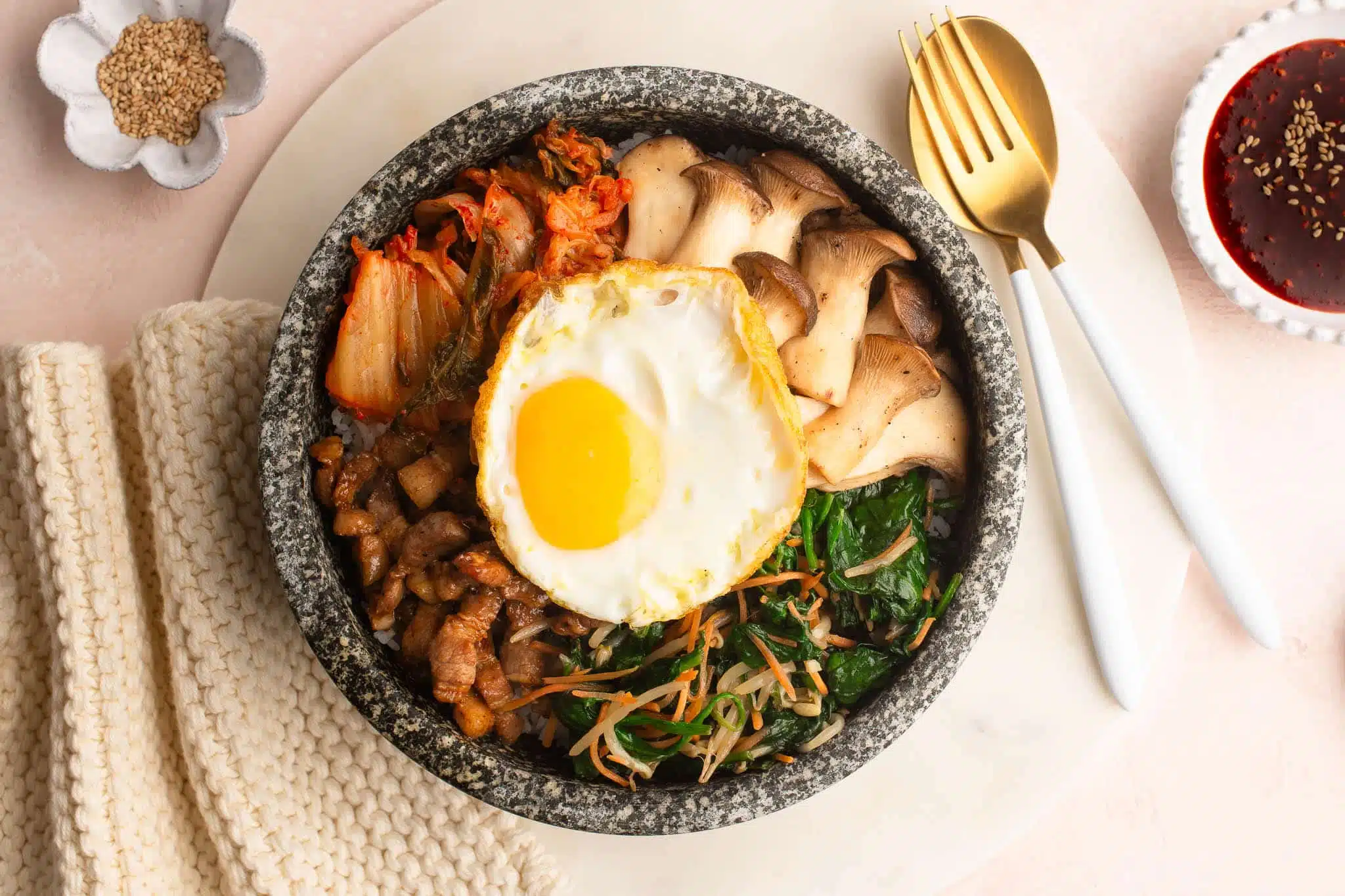
Bibimbap
One of my favourite Korean dishes might just be Bibimbap. And not just any old Bibimbap, but one served in a dolsot, or a Korean stone bowl, which is preheated in the oven and so it keeps your dish sizzling hot right until the last spoonful! I think it might just be the perfect winter dish.
What is Bibimbap?
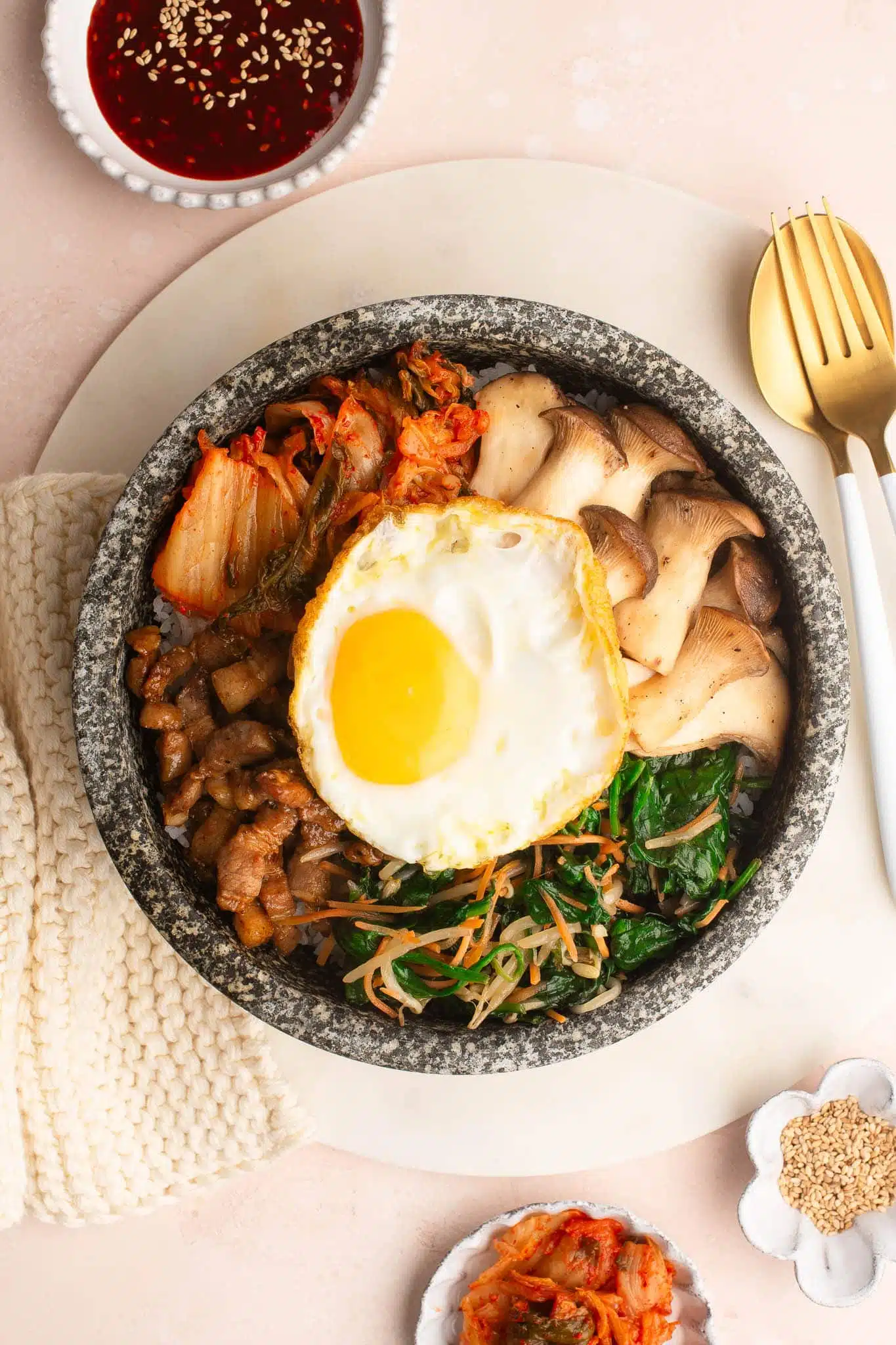
Bibimbap is a Korean dish which loosely means “mixed rice”. Rice is served in a large bowl with various vegetable dishes which have been cooked separately, together with some grilled meat, and topped with an egg yolk or a fried egg. To eat, you simply use a spoon to mix everything together, so that every spoonful contains a bit of everything.
Bibimbap Bowl
Bibimbap can be served in normal ceramic bowls, stainless steel bowls, earthenware bowls, or a heated stone bowl (called a “dolsot”) such as one in the accompanying photos. Take my word that, once you have tried Bibimbap served in a dolsot, you will not want to eat it from any other bowl 😉
If you don’t have a stone bowl, a similar-sized cast iron pan (such as a Staub Wanabe) would produce almost the same results.

Bibimbap in France
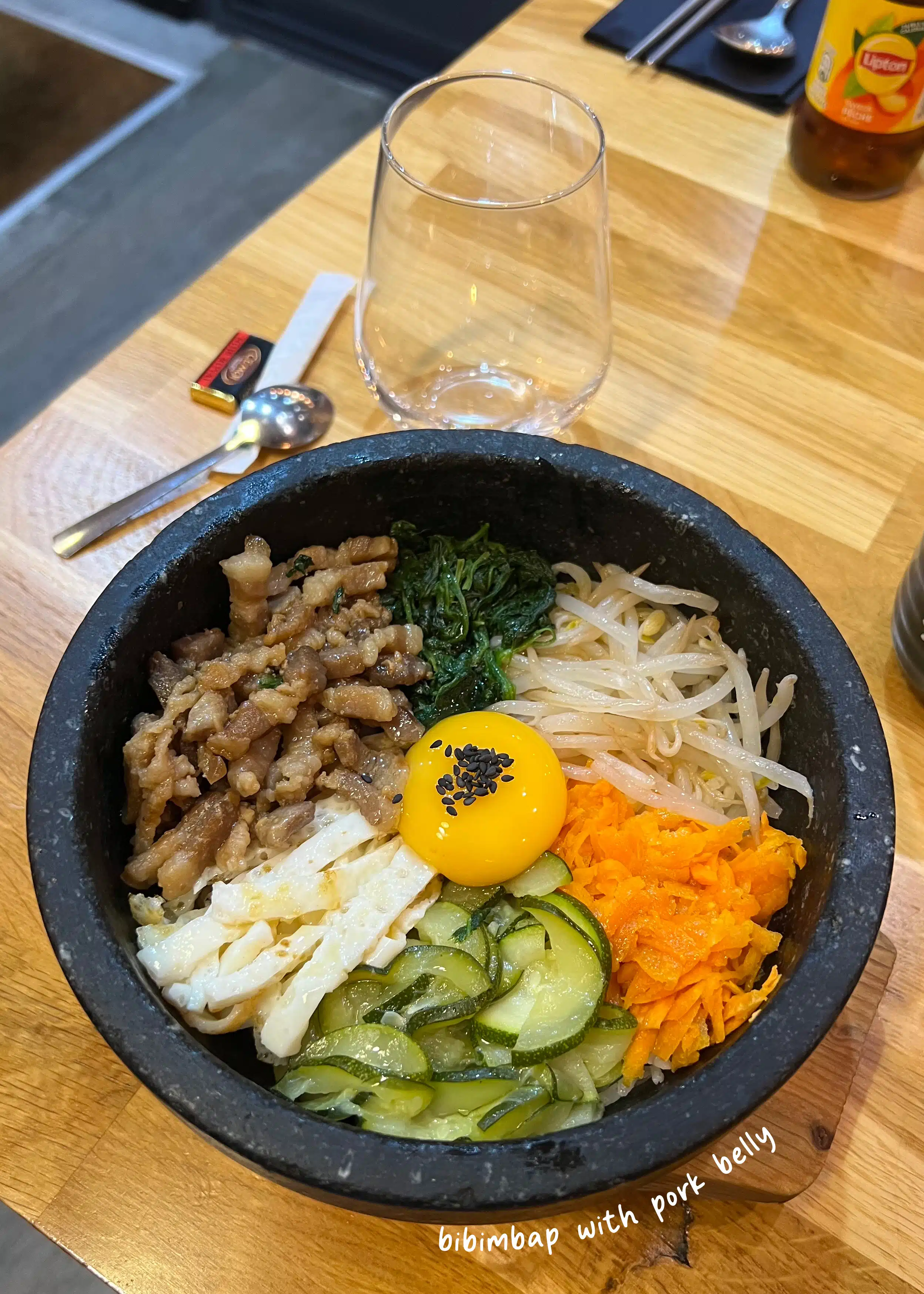
On a recent trip to Le Havre in France to visit my husband’s family, we had dinner one evening at the local Korean restaurant. Whenever we are in France, I always enjoy eating the local fare for the first few days. But after getting my fix of creamy and cheesy dishes, I tend to start seeking out Asian restaurants in the neighbourhood ????
I ordered a Bibimbap with pork belly which was served in a stone bowl, and I was instantly transported back to my very first Bibimbap. It had been almost two decades since the last time I had had a Dolsot Bibimbap, and I almost cried with joy at rediscovering this dish from my student days. Every spoonful was delightfully piping hot and utterly delicious. I vowed to buy a stone bowl the moment I got home so that I could recreate this delicious experience, and I couldn’t wait!
Bibimbap Recipe
Bibimbap is traditionally comprised of many different components, each cooked separately. None of the individual components are difficult to cook, but it can be time-consuming.
My recipe for Bibimbap has been simplified so that all of the vegetables are cooked together as a simple stir-fry, which cuts down on the cooking time, thereby making the recipe doable on a weeknight.
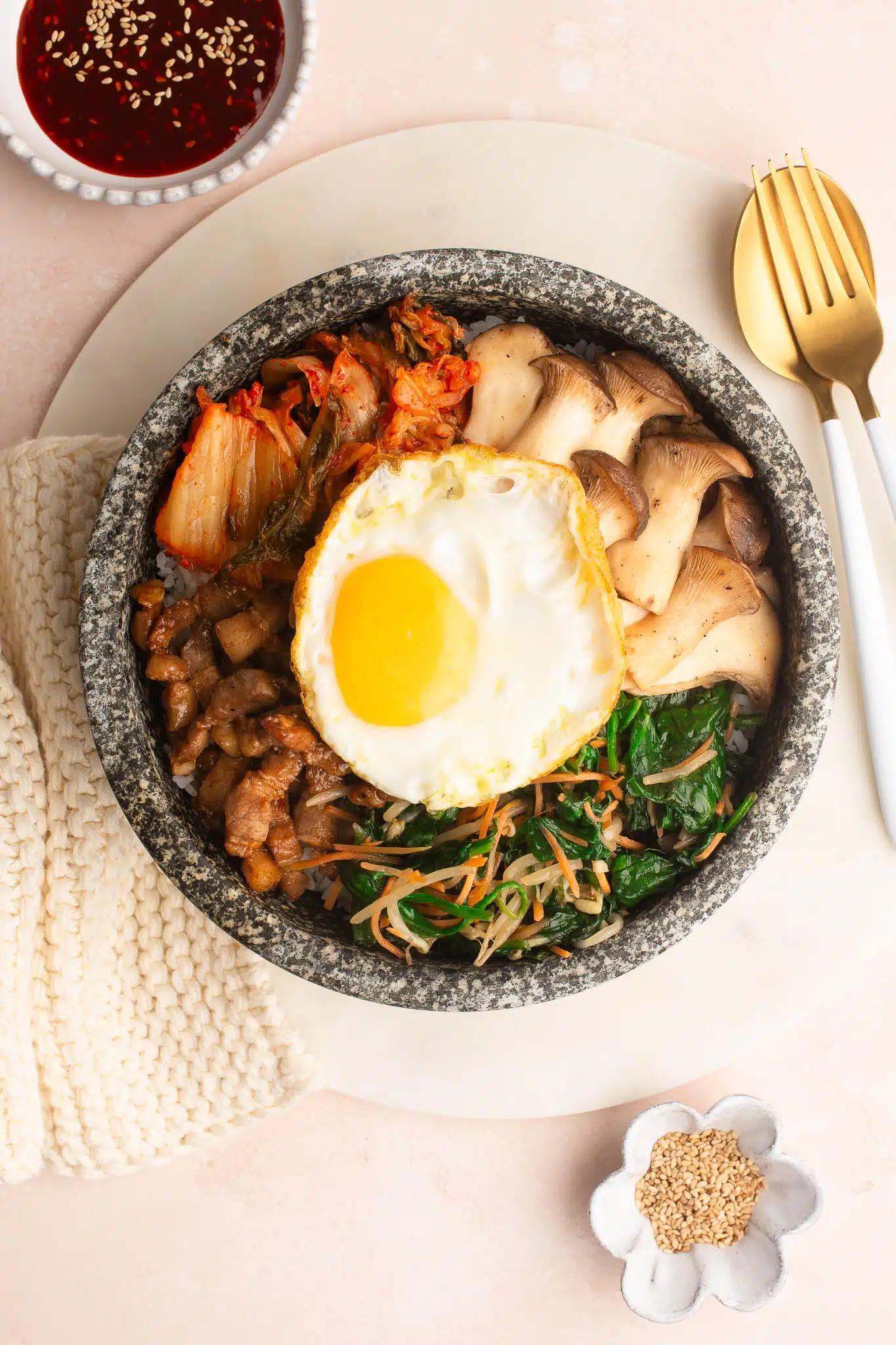
In the accompanying photos, I have cooked the mushrooms separately, but you can just as easily cook them together with the other vegetables. I happen to LOVE mushrooms, so I add a lot more to my bowl, and with less meat.
For my kids, a Bibimbap is essentially what many people now call a “rice bowl“, i.e. rice served with various accompaniments in the same bowl. But for adults, a Korean-style Bibimbap requires the necessary spicy sauce made with gochujang (a Korean chilli paste), which adds loads of punch and flavour to the dish, transforming it from a plain “rice bowl” to a Korean Bibimbap.
Bibimbap Variations
My recipe for Bibimbap below uses pork belly (to recreate what I had eaten at the Korean restaurant in France), but it is more traditionally made with beef. However, there are so many variations of Bibimbap that you can create. The perfect Bibimbap is one made with all of your favourite ingredients!
Once you have made Bibimbap a few times, you will discover how easy it is to make using any leftover vegetables and salads in your fridge, as well as changing the protein to suit your mood. My preference is actually a vegetarian Bibimbap made with tofu and lots of mushrooms, especially King Oyster mushrooms which are firm and substantial in taste.
- Beef. Thinly slice beef fillet or rump steak, and use it in place of the pork belly in the recipe below. My family also loves steak cubes, like how I make for Vietnamese Shaking Beef.
- Chicken. Thinly slice chicken breast fillets or chicken thighs, and use it in place of the pork belly in the recipe below.
- Tofu. Cut slices of firm tofu into bite-sized pieces, and lightly sauté them in oil to crisp up the outside. You can also use marinated tofu.
- Eggs. Beat 2 eggs to cook a thin omelette, roll up the omelette and slice into strips.
- Bok Choy. Separate the stems from the leaves, and slice the stems into bite-sized pieces. Cook as per the recipe below, but add the leaves towards the end (like you would with spinach).
- Broccoli. Cut into small florets and boil until tender but still crisp.
- Corn Kernels. Cook fresh or frozen corn until tender, and slice off the kernels.
- Courgette/Zucchini. Slice a large courgette into thick pieces, and cut these pieces into long batons. Cook as per the recipe below.
- Edamame Beans. Boil until tender.
- Peas. Cook fresh or frozen peas until tender.
How to Make Bibimbap
Step 1
Cook the rice by following this recipe, How to Cook Jasmine Rice, or your preferred method.
While the rice is cooking, prepare the accompaniments.
If you are using a dolsot stone bowl, place it on a metal tray in the middle of the oven. Turn the oven to 220°C/428°F (without fan) and heat the stone bowl for at least 30 minutes.
Step 2
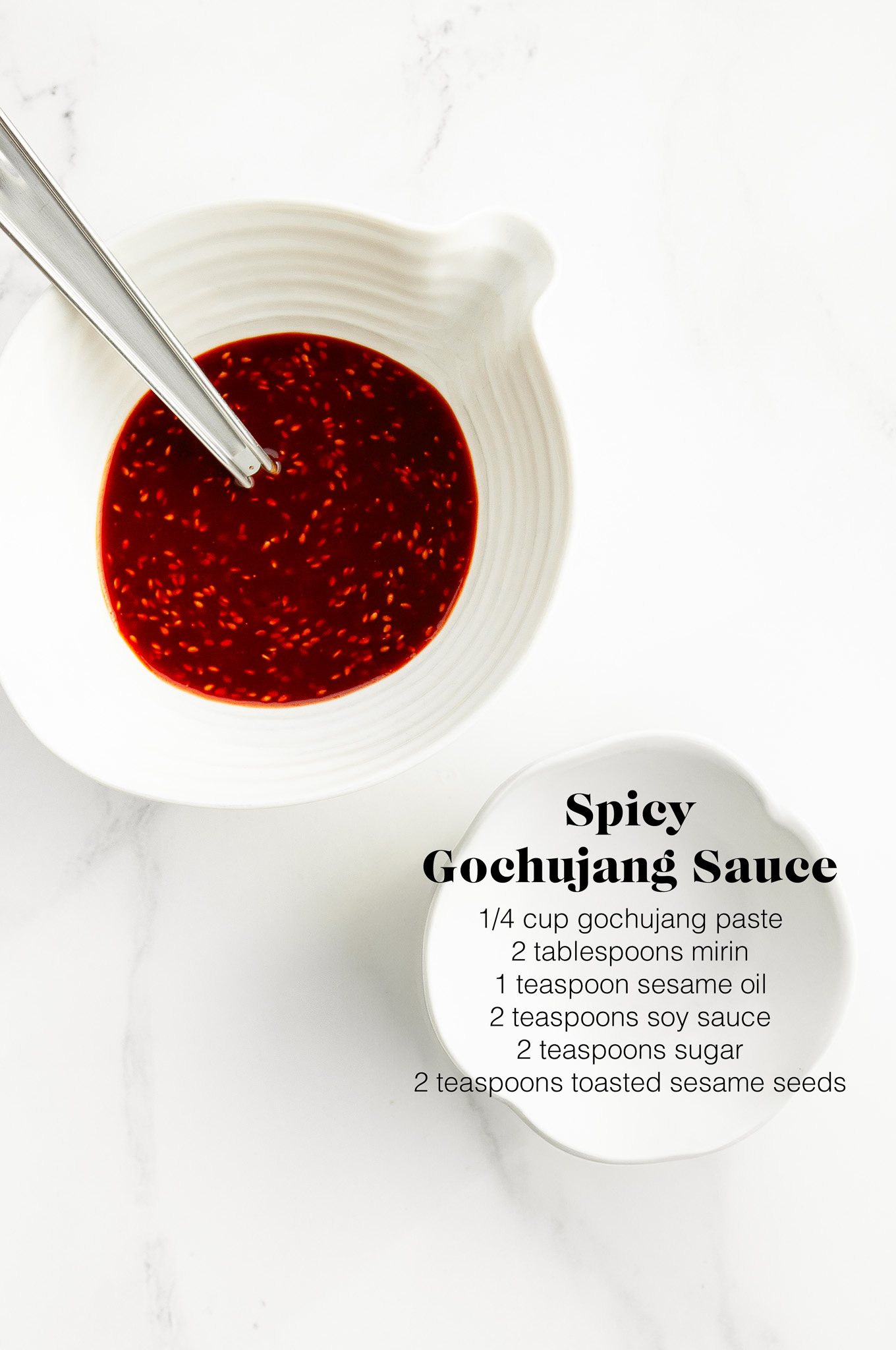
Whisk together the ingredients for the Spicy Gochujang Sauce.
Step 3
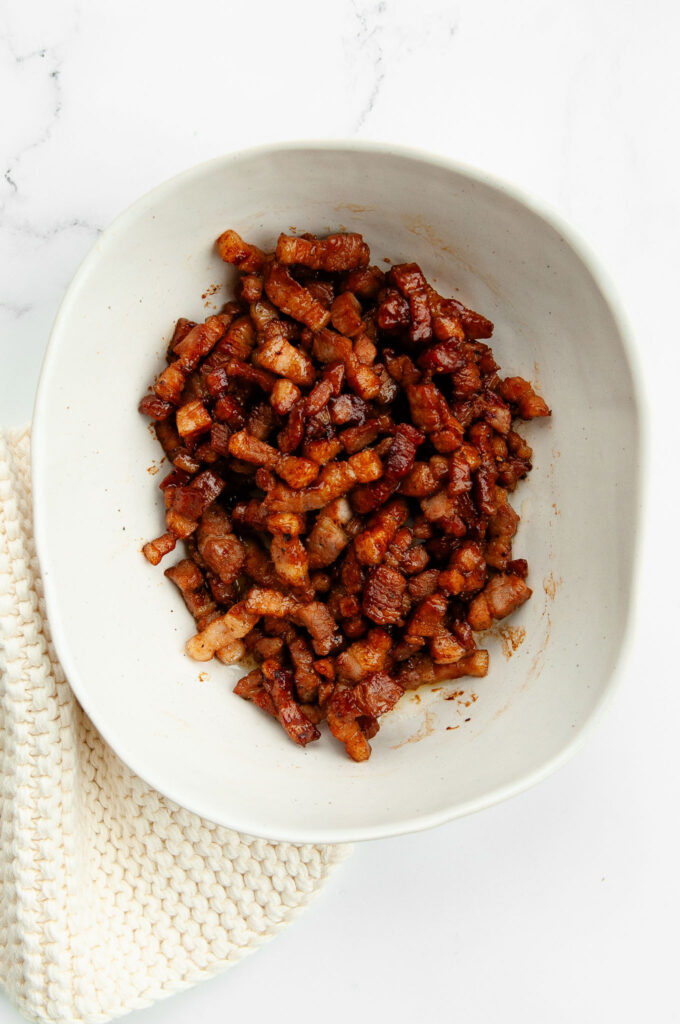
Slice the pork into batons and place them in a bowl. Season generously with salt and freshly cracked black pepper.
To cook the pork, heat some vegetable oil in a large pan or wok. Stir-fry the pork in batches until they are crispy and caramelised. Use a slotted spoon to transfer the cooked pork to a bowl.
Remove most of the oil from the pan (reserve it in a jug), leaving 1-2 tablespoons of oil in the pan to cook the vegetables. The rendered pork fat in the oil will flavour the vegetables you are about to cook.
Step 4
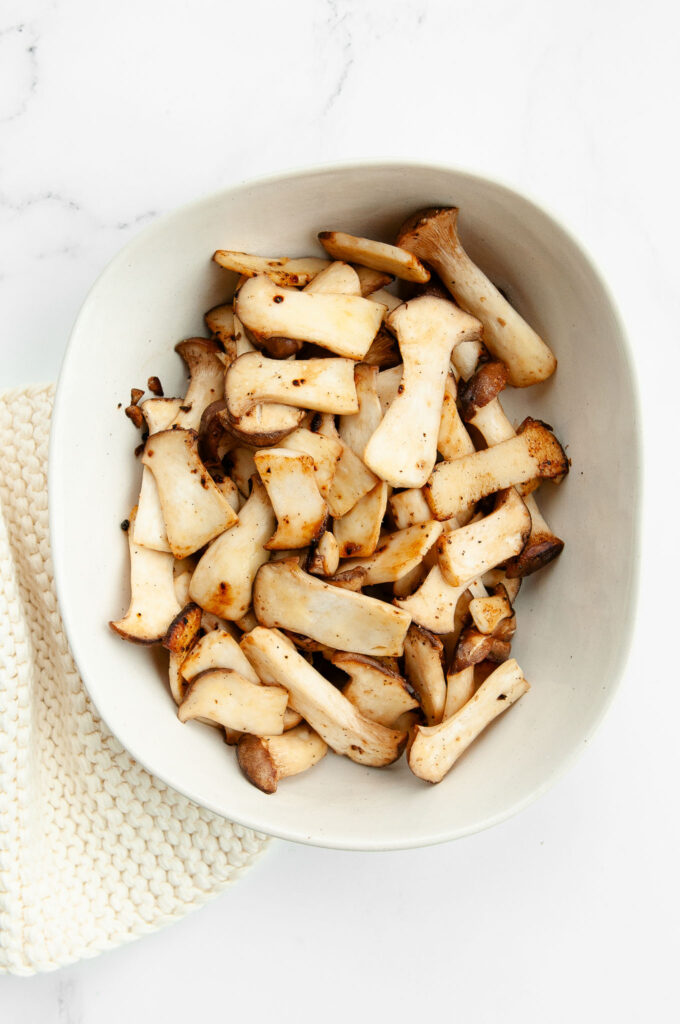
In the same pan, cook the mushrooms. Add some more oil if necessary. Season with salt, pepper and soy sauce. Remove the mushrooms to a bowl, or continue to the next step and cook all of the vegetables together.
Step 5
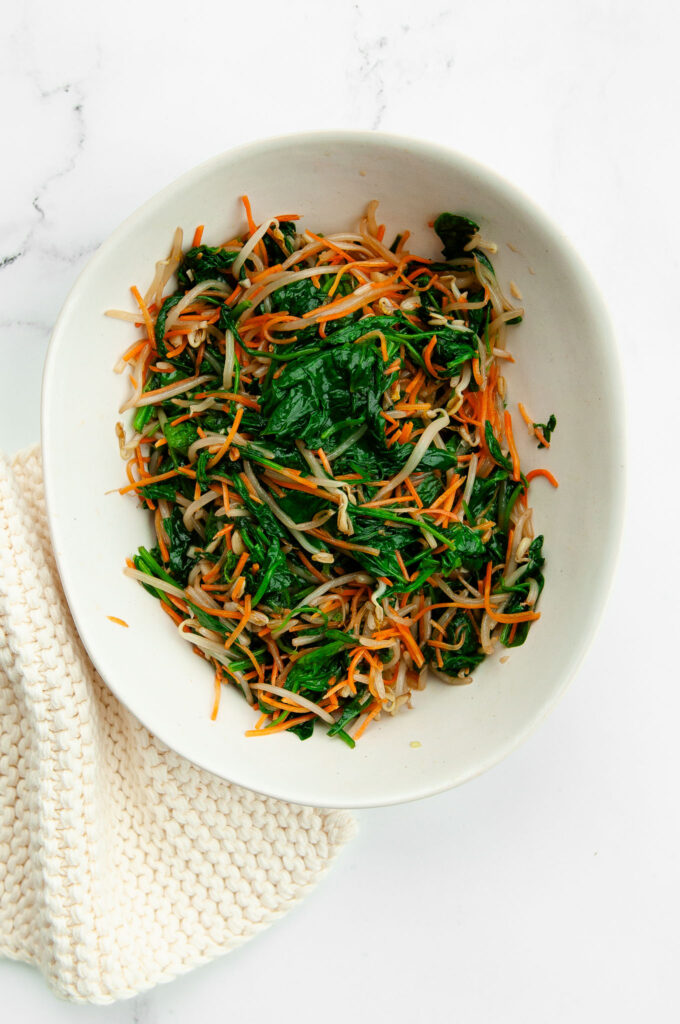
In the same pan, add the bean sprouts and shredded carrots. Once they have started to soften, add the spinach leaves. Toss everything together until the spinach has wilted. Remove the vegetables to a bowl.
Step 6
Fill the bowls with steamed rice. If you are using a dolsot stone bowl, carefully remove it from the oven and place it onto a thick wooden tray or similar. Add a good dash of sesame oil to the hot stone bowl before adding the rice. This will help the rice to crisp up, as well as add flavour to the rice.
Arrange the toppings on top of the rice. Add some kimchi.
Fry some eggs at the last minute. I like to cook them the “Asian way”, i.e. with lots of vegetable oil to get the edges extra crispy, but with a runny yolk.
Alternatively, if you have some very fresh eggs, you can add just the yolk to the centre of the dish.
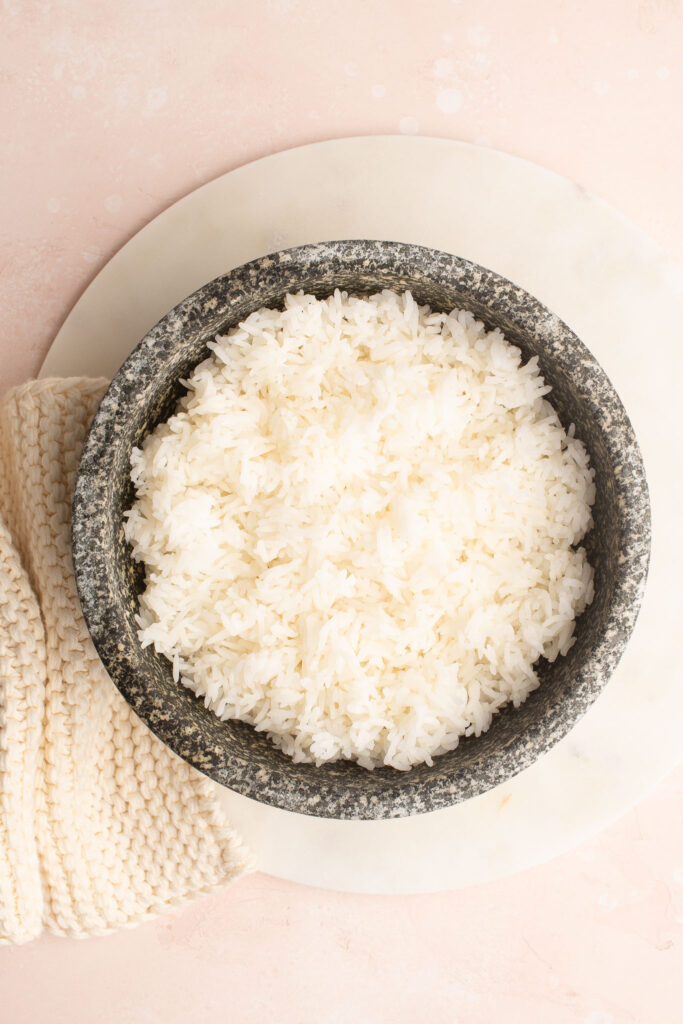
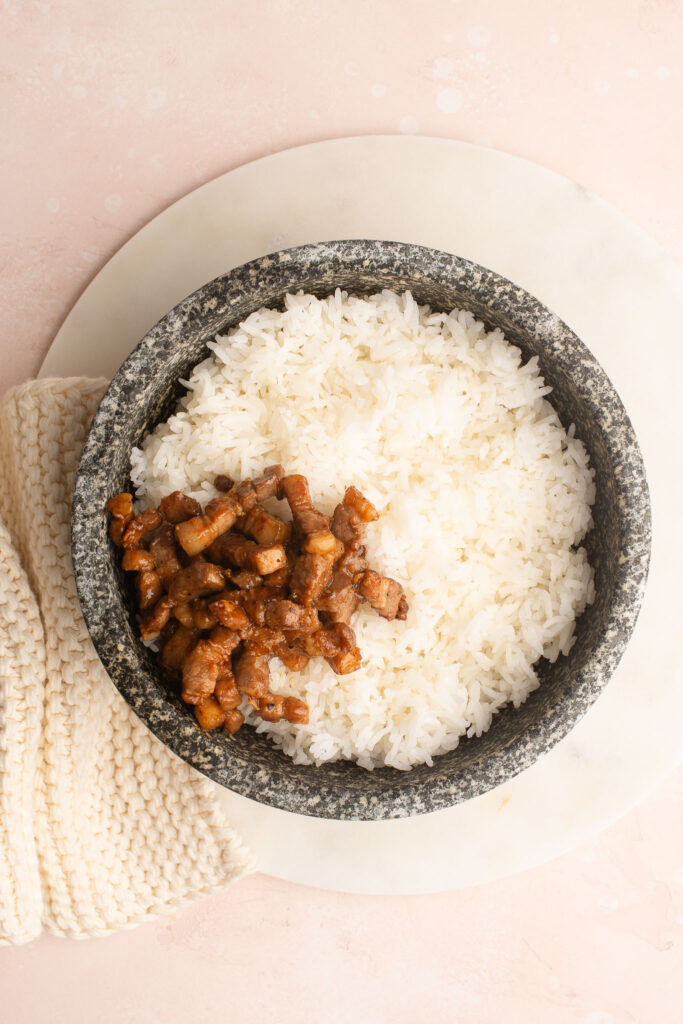

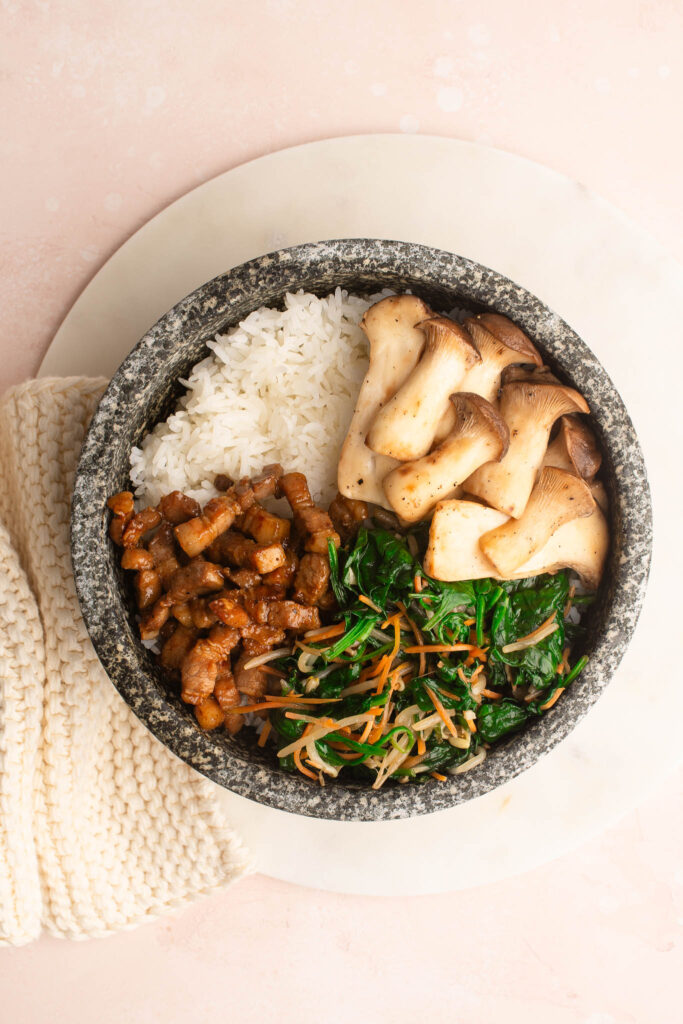
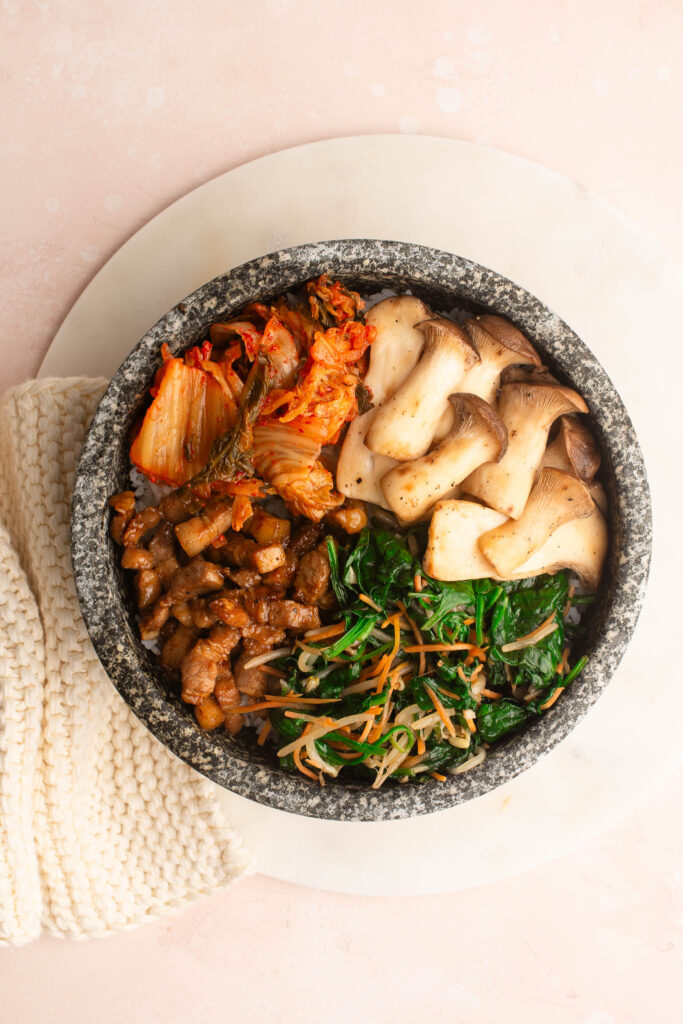

How to Serve Bibimbap
In restaurants, Bibimbap is generally served with all of the components arranged separately and uniformly in the bowl.
At home, I think it is nice for each person to be able to customise their own bowl. Hence, I like to serve the bowls filled with rice, with each component in separate dishes on the table. That way, each person can add as much, or as little, of each component as they like.
I think it is a treat for adults to use stone bowls, but it is safer for kids to eat Bibimbap from a normal ceramic bowl.
How to Eat Bibimbap
Once you have carefully arranged the toppings on top of the rice and added some Spicy Gochujang Sauce, use a large spoon to simply mix everything together. This includes breaking up the yolk which will add some creaminess to the rice. Each spoonful should have a bit of everything!
If you are using a Korean stone bowl, the bowl should sizzle as you add the rice and other ingredients. Keep pressing the rice against the bowl as you eat, allowing the rice to crisp up between bites.

Dolsot Stone Bowl
For the ultimate Bibimbap eating experience, I recommend buying a dolsot stone bowl which you can find at most Korean or Asian grocers. They come in a few sizes and vary slightly in quality. Dolsots are not cheap, so I recommend buying the best quality you can afford.
The stone bowl is preheated in a very hot oven, and it will keep your dish piping hot for a good 20-30 minutes. They are especially useful in winter as they can keep your dish nice and warm for almost as long as you need to eat your meal.
An alternative to a stone bowl is a cast iron pan in a similar size (such as a Staub Wanabe), i.e. it should be deep enough to have a bowl shape. I would heat it up in the same way as specified for a stone bowl below.
How to Season a Dolsot Stone Bowl
To season a dolsot stone bowl for the first time, wash it in warm water with soap, then half fill it with water. Place it on a suitable cooktop (I used a gas stove) and simmer over medium heat until all of the water has evaporated. Meanwhile, preheat the oven to 180°C/356°F (without fan). Brush the inside of the bowl with vegetable oil, and carefully transfer it to the oven and bake for 30 minutes. You only need to do this once.
How to Preheat a Dolsot Stone Bowl
To preheat a dolsot stone bowl, place it on a metal tray in the middle of the oven, set the oven to 220°C/428°F (without fan), and heat the bowl for at least 30 minutes.
Dolsot stone bowls are extremely hot, so buy the accompanying wooden board to protect your dining table. I take extra precautions and use a pot holder underneath the wooden board.
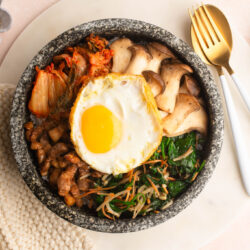
Bibimbap

Ingredients
For the Steamed Jasmine Rice
- 350 g (1 ½ cup) Jasmine rice
- 500 ml (2 cups) cold water
For the Spicy Gochujang Sauce
- 4 tablespoons (¼ cup) gochujang paste
- 2 tablespoons mirin
- 2 teaspoons sugar
- 2 teaspoons toasted sesame seeds
- 2 teaspoons soy sauce
- 1 teaspoon sesame oil
For the Stir-Fried Pork Belly
- 1 tablespoon vegetable oil
- 500 g (½ lb) pork belly, sliced into batons
- 1 teaspoon sea salt
- black pepper, freshly cracked
For the Stir-Fried Vegetables
- 1 tablespoon vegetable oil
- 500 g (½ lb) King Oyster mushrooms, or other mushrooms, sliced
- 1 teaspoon sea salt
- black pepper, freshly cracked
- 1 teaspoon soy sauce
- 125 g bean sprouts
- 1-2 carrots, grated or shredded
- 150 g spinach leaves
To Serve
- sesame oil
- kimchi
- 1 fried egg, per person
Instructions
For the Steamed Jasmine Rice
- Please see my recipe with step-by-step photos for How to Cook Jasmine Rice.
- The rice takes about 30 minutes to cook, which is enough time for you to prepare the toppings for the Bibimbap.
To Pre-Heat a Dolsot Stone Bowl
- To season a dolsot stone bowl for the first time, please see the Kitchen Notes below.
- Place the bowl on a metal tray in the middle of the oven.
- Turn the oven to 220°C/428°F (without fan).
- Heat the bowl for at least 30 minutes.
For the Spicy Gochujang Sauce
- Whisk all of the ingredients together.
For the Stir-Fried Pork Belly
- Season the pork generously with sea salt and freshly cracked black pepper.
- Heat some vegetable oil in a large pan or wok.
- Stir-fry the pork in batches until they are crispy and caramelised.
- Use a slotted spoon to remove the meat to a bowl.
- There should be a lot of oil in the pan from the rendered pork fat. Remove some of the oil to a small jug and set aside. You should have about 1-2 tablespoons of oil left in the pan to cook the vegetables.
For the Stir-Fried Vegetables
- Add the mushrooms.
- Season with the salt, pepper and soy sauce.
- Cook the mushrooms until they have softened.
- If needed, add some more of the reserved oil.
- If you wish to cook the vegetables separately, remove the mushrooms with a slotted spoon to a bowl. Otherwise, proceed with the next step to cook the vegetables together.
- Add the bean sprouts and carrots.
- Cook for a few minutes until the bean sprouts and carrots have softened.
- Stir through the spinach leaves until they start to wilt.
- Use a slotted spoon to remove the vegetables to a bowl.
To Serve
- If you are using a dolsot stone bowl, carefully transfer it to a thick wooden tray or similar.
- Add a few dashes of sesame oil to the hot stone bowl.
- Fill up the bowl (ceramic or stone bowl) with Steamed Jasmine Rice.
- Arrange the toppings on top of the rice.
- Add some kimchi.
- Top with a fried egg.
- Add 1-2 tablespoons of the Spicy Gochujang Sauce to taste.
- Use a large spoon to give everything in the bowl a good mix. If you are using a stone bowl, press the rice against the bowl to let it crisp up.
- Enjoy!
Kitchen Notes
- HOW TO SEASON A DOLSOT STONE BOWL
Wash the bowl in warm water with soap, then half fill it with water. Place it on a suitable cooktop (I used a gas stove) and simmer over medium heat until all of the water has evaporated. Meanwhile, preheat the oven to 180°C/356°F (without fan). Brush the inside of the bowl with vegetable oil, and carefully transfer it to the oven and bake for 30 minutes. You only need to do this once. - OVEN & STOVE TEMPERATURES
All recipes on this website have been tested on an induction stove and/or with a conventional oven (i.e. an oven without fan). All recipes on this website use temperatures for a conventional oven, unless otherwise mentioned. Convection ovens (i.e. fan-forced ovens) are typically 20°C/70°F hotter than conventional ovens, but please check your manufacturer’s handbook. - CONVERSIONS
To convert from cups to grams, and vice-versa, please see this handy Conversion Chart for Basic Ingredients.

Bibimbap is one of my favourite Korean recipes. You inspired me to buy a dolsot and I couldn’t wait to use it! Thanks for the instructions and the great recipe 🙂
Hi Nina,
Enjoy using your dolsot! I love using mine, which means I make Bibimbap quite often 🙂
I was looking for instructions on Google on how to season my new dolsot and I ended up using your recipe for bibimbap too! I love your version and the sauce was very tasty. Thanks for all of your tips 🙂
Hi Susan,
Oh that’s great to hear! So glad you found this recipe helpful 🙂