

 by
by 
Ham and Cheese Rolls
On a recent trip to Australia, I was looking forward to snacking on the ham and cheese rolls of my childhood from the local bakeries. I searched high and low at various bakeries for these yeasted buns but, alas, it appears that whilst my memories of Australian baked goods has been stuck in the 1990’s, times have changed and Australian bakeries have since gone upmarket. In fact, many traditional cakes and breads have been given a modern makeover, and the humble Ham and Cheese Roll has been one such “victim”.
I am not exactly complaining … many of my favourite cakes and bakes have been given a French makeover, and considering that I love French pâtisseries, I found some of the ideas to be rather clever.

Whilst grabbing breakfast one morning from Sprout in New Farm, Brisbane, I spied a Ham and Cheese Scroll which looked really delicious. Upon tasting it, the dough was actually a buttery croissant dough with layers of ham and cheese throughout, with what tasted like a Béchamel sauce at the base. It was the ultimate calorie bomb but it tasted heavenly!
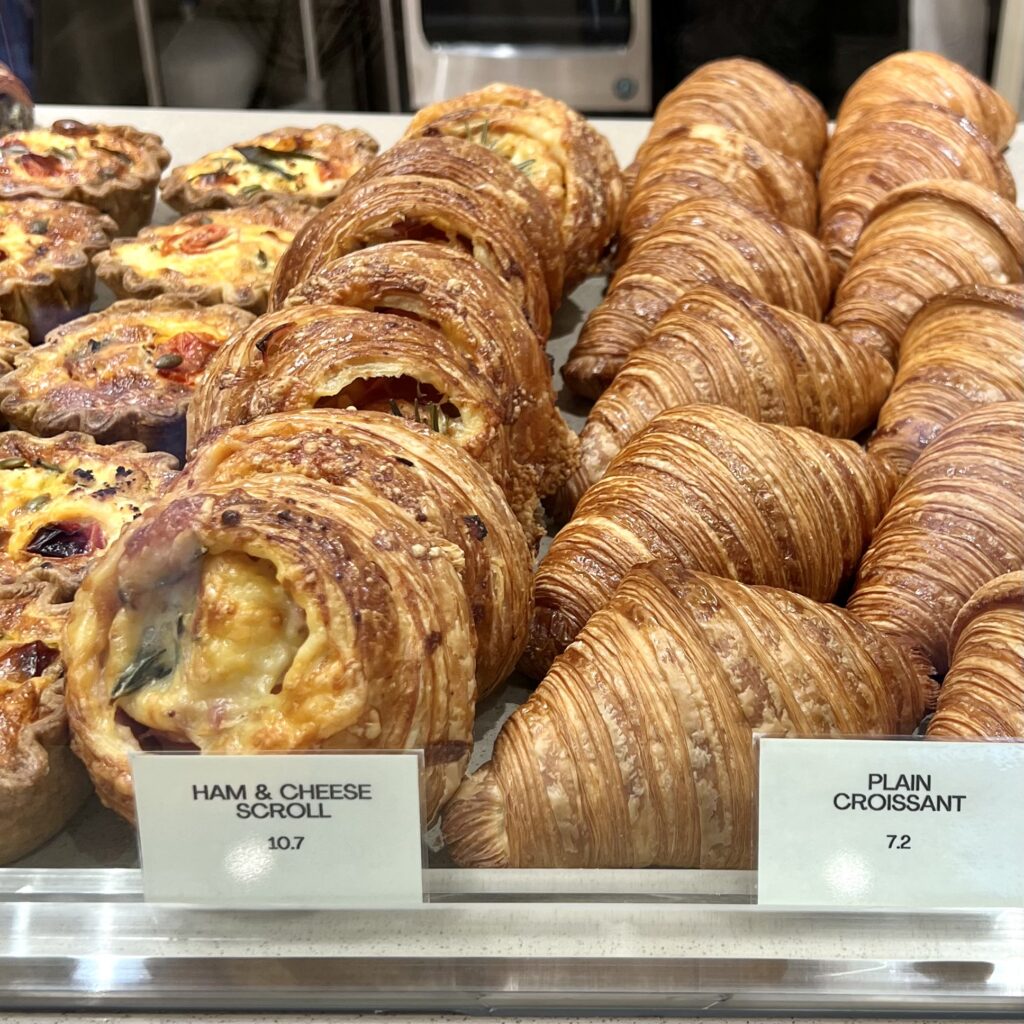
Once I arrived home in Zurich and the homesickness started to creep in, I thought of recreating the Ham and Cheese Scroll from Sprout, but as I am not quite into making my own laminated croissant dough at home, I thought I would try a version with a simple bread dough, i.e., like an old-fashioned ham and cheese roll. The results were better than I imagined!
What are Ham and Cheese Rolls?
Ham and Cheese Rolls are small bread buns baked with a topping of chopped ham and grated cheese. My recipe below is an updated version with a filling of Béchamel sauce and grainy mustard, topped with slices of ham and cheese.

Ham and Cheese Rolls Recipe
These Ham and Cheese Rolls use my Soft Bread Rolls recipe as a base for that lovely soft bread texture, and are filled with a Béchamel sauce and a touch of grainy mustard for a smooth and cream-like centre, and finally topped with smoky ham and cheddar cheese.
It is the elevated version of the simple ham and cheese rolls which my parents used to sell in their bakery during my childhood in Australia, perfect to make for friends at brunch or to serve at afternoon tea. They are also delicious served alongside a bowl of Pumpkin Soup for a light lunch or dinner.
I recommend serving them warm when the Béchamel sauce is still soft and oozing 🙂

How to Make Ham and Cheese Rolls
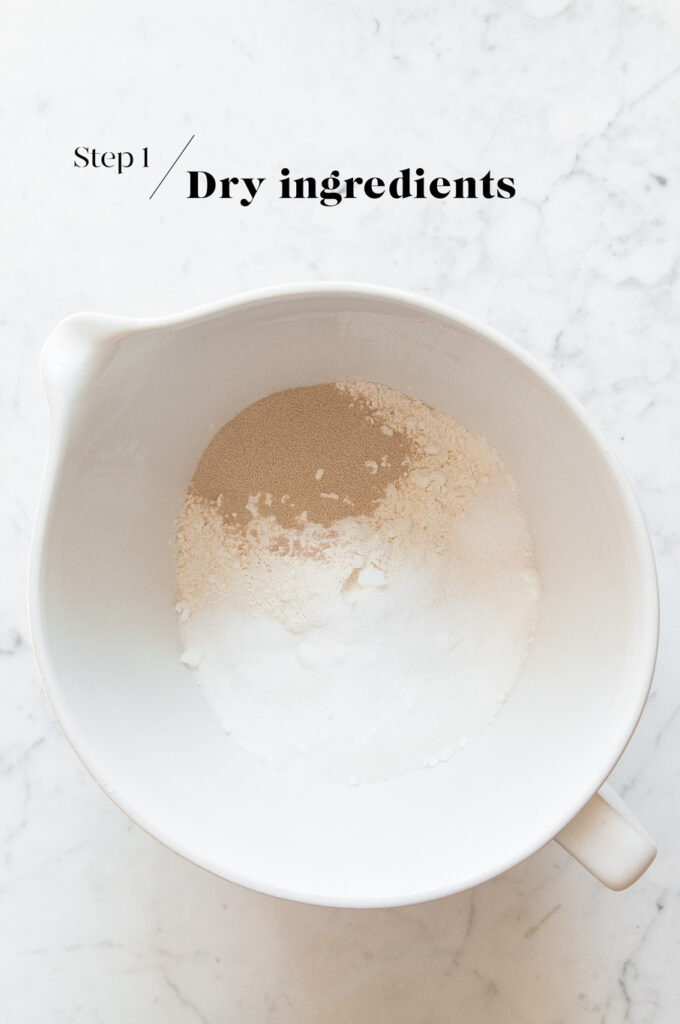
Step 1
Measure the flour, sugar, yeast and salt into the bowl of an electric stand mixer. Lightly mix the ingredients together.
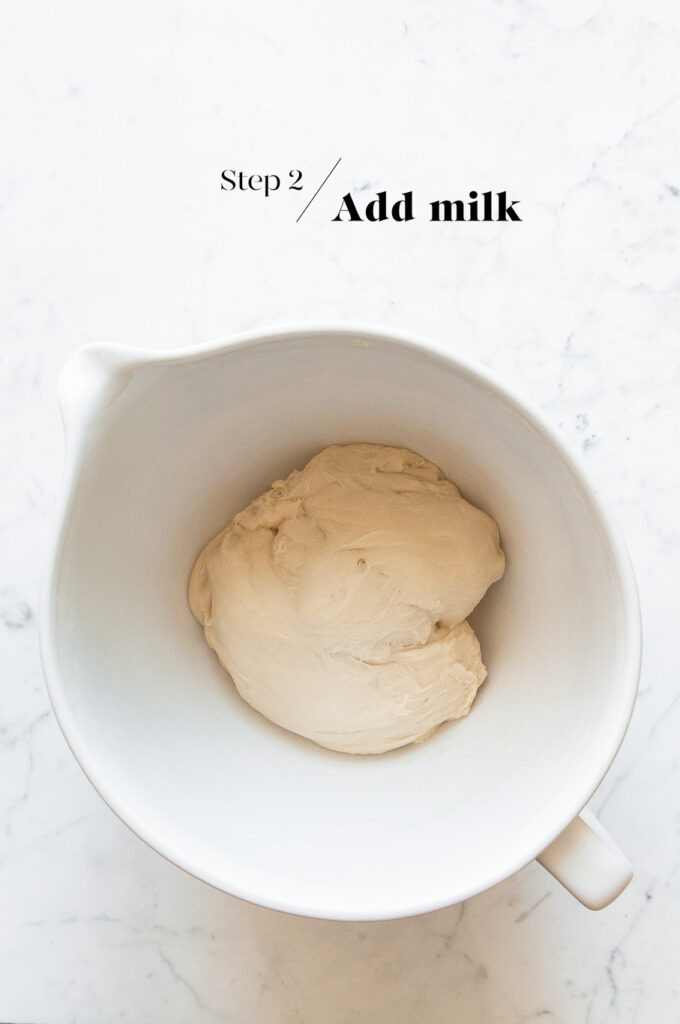
Step 2
Slowly add the warm milk (you may not need all of it), and lightly beat everything with the dough hook until it comes together into a large ball of dough. Only add as much milk as you need to bring the ingredients together into a dough.
Step 3
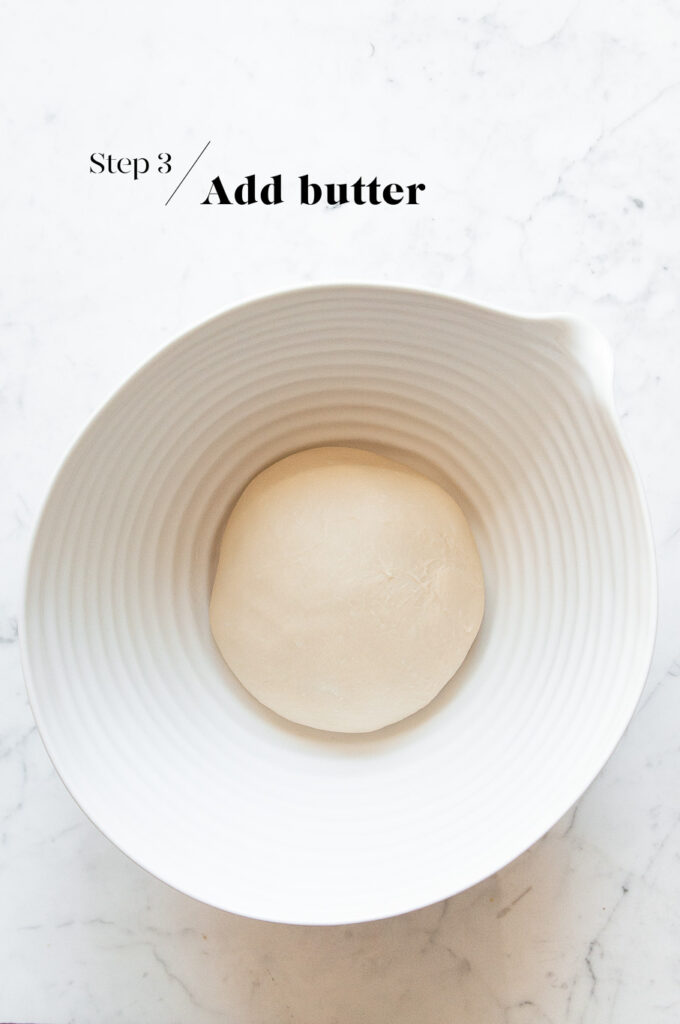
Slowly incorporate the butter, one tablespoon at a time, until all of the butter has been used.
Then increase the speed to medium and continue kneading with the dough hook for 15 to 20 minutes, or until the dough is smooth and elastic.
Step 4
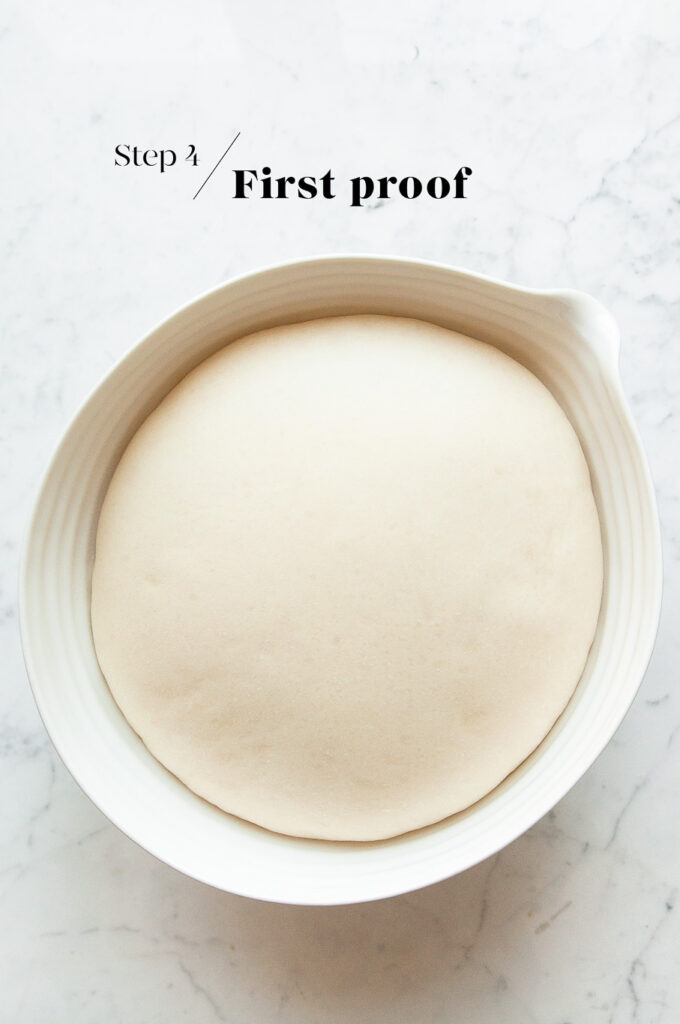
Lightly oil a large mixing bowl, and place the dough into the bowl. Cover the bowl with a clean tea towel and leave it somewhere warm for 1 to 1.5 hours, or until the dough has doubled in size.
Step 5
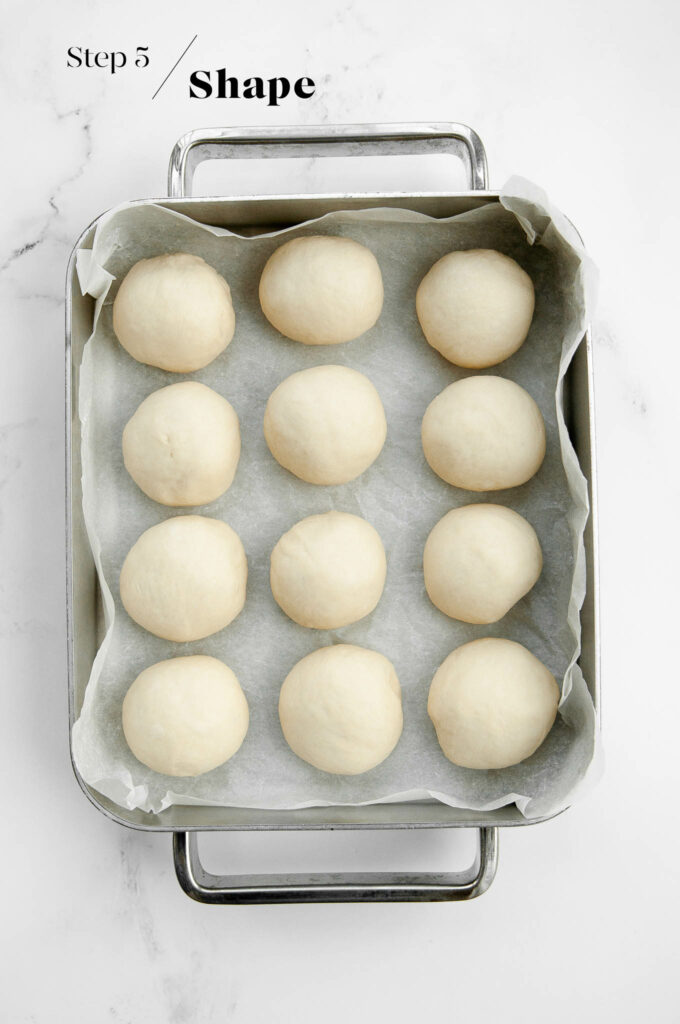
Once the dough has doubled in size, gently remove the dough from the bowl. The dough will deflate as you handle it.
Cut the dough into 12 equal portions. I like to do this by weighing the dough, and then dividing this number by 12 to get the weight for each ball of dough.
Roll each piece of dough into a smooth ball by pulling the edges together to form a ball, pinch the edges together, and roll gently until you have a smooth ball.
Place the balls of dough onto a lined baking tray, spaced apart so that they are not touching.
Place the tray of buns somewhere warm for about 30 minutes to puff up slightly. Note that, during baking, the buns will rise and expand even more.
Step 6
Once the buns have puffed up slightly, start filling the buns.
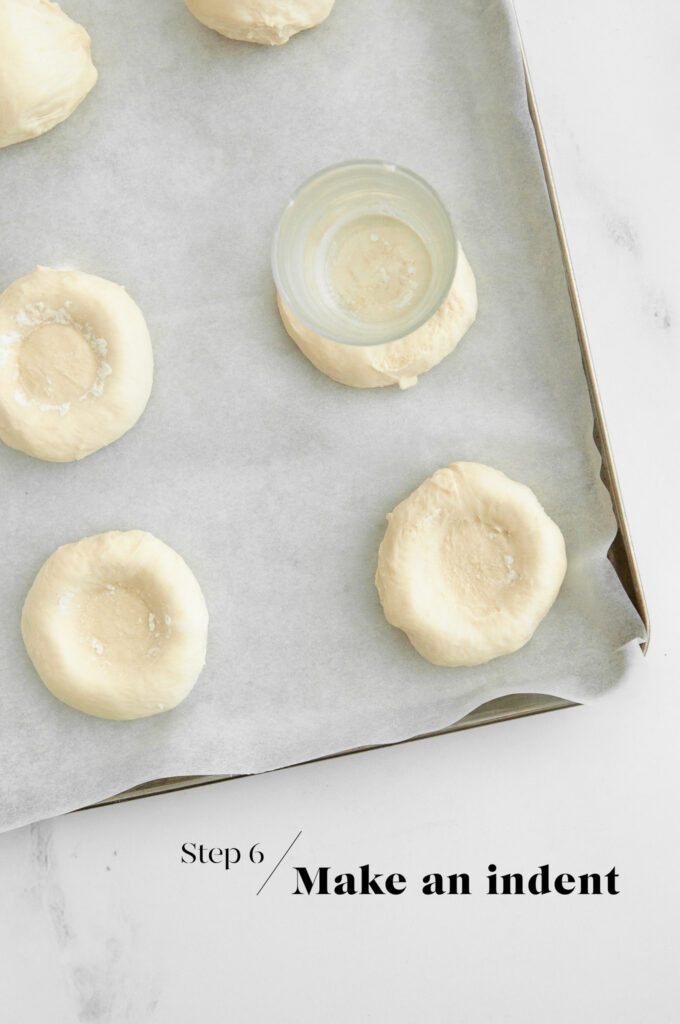
Use a round glass to create a dent in the middle of each bun. Choose a glass which is wide enough to produce a thin rim of dough (which will later rise and puff up as it bakes). If your dough is on the sticky side, dip the glass in some flour. You may need to push the glass down quite firmly if the dough is bouncing back.
Step 7
Brush the edges of the dough with some milk.
Step 8
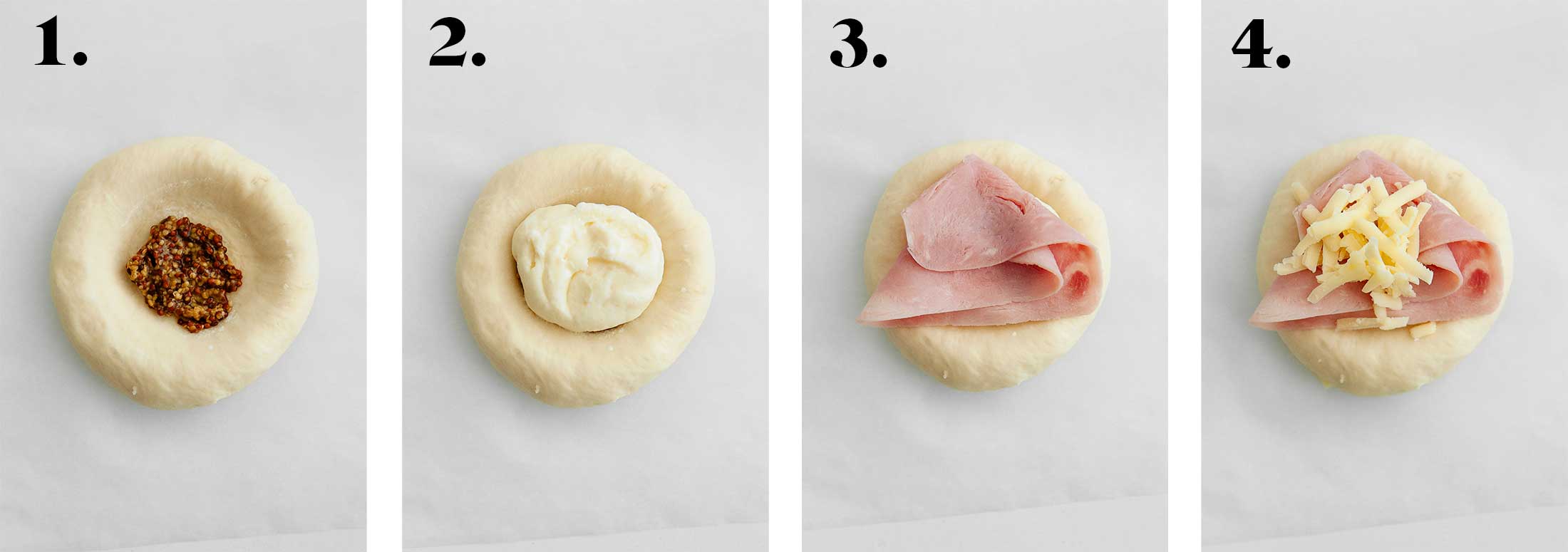
Fill each bun as follows:
- Place a teaspoon of grainy mustard in the centre of each bun.
- Place 1-2 tablespoons of Béchamel sauce on top of the mustard. I find it easiest to use a large piping bag for this task.
- Place 1-2 pieces of thinly sliced ham on top of the Béchamel sauce.
- Sprinkle each bun generously with grated cheese.
Step 10
Preheat the oven to 200°C/390°F (without fan). Place a metal baking tray in the middle of the oven.
Place the filled buns on a large baking sheet lined with baking paper. I like to bake 6 buns per tray so that they have enough room to rise and expand during baking.
Bake the buns for about 20 minutes, or until the bread rolls are nice and golden.
If the bread rolls are browning too quickly, loosely cover them with the a sheet of aluminium foil for the rest of the baking time. I generally find that I have to cover the buns with foil after 10-12 minutes of baking (from the start).
Variations
- Use a Brioche dough. This recipe uses a soft bread as a base, but you could go the French route and replace it with a Brioche dough for a softer and more buttery base. You would need to double the Brioche recipe, and follow the steps below for shaping the dough.
- Omit the mustard. This recipe uses a grainy mustard which is actually not very strong in comparison to most other types of mustard. But you can simply omit the mustard, especially if you want to make these for small kids (my older child loves mustard).
- Use bacon. It goes without saying that bacon also works great in this recipe. Use very thin cut bacon so that it can crisp up nicely during the baking time.
- Use chopped ham or bacon. Much like an old-fashioned ham and cheese roll, you can also use ready-chopped ham or bacon in this recipe.

Ham and Cheese Rolls

Ingredients
For the Dough
- 500 g (3 ⅓ cup) white bread flour
- 1 ½ teaspoons fine salt
- 24 g (2 tablespoons) caster sugar, (superfine sugar)
- 7 g (2 teaspoons) instant dried yeast, see Kitchen Notes
- 300 ml (1 cup plus 3 tablespoons) milk, warmed to about 37°C/98°F
- 30 g (2 tablespoons) unsalted butter, softened
For the Béchamel Sauce
- 30 g (2 tablespoons) unsalted butter
- 20 g (3 tablespoons) plain flour, (all-purpose flour)
- ½ chicken stock cube, or ½ teaspoon chicken stock powder
- 250 ml (1 cup) milk
- 1 bay leaf, fresh or dried
- sea salt
- white pepper, freshly cracked
For the Ham & Cheese Rolls
- 1-2 tablespoons milk
- 12 teaspoons grainy mustard
- 12 to 24 thin slices of ham
- 100 g (1 cup) cheddar, or Gruyère, coarsely grated
- chives, finely chopped (optional)
Instructions
To Make the Dough
- Measure the flour, salt, sugar and yeast into the bowl of an electric stand mixer, fitted with a dough hook.
- Lightly mix the ingredients together.
- With the speed on low, slowly add the warmed milk.
- Keep mixing on low speed until the ingredients come together into a sticky dough.
- Add the butter, about a tablespoon at a time, waiting for it to be completely incorporated before adding the next tablespoon.
- Once all of the dough ingredients have been added, mix the dough on a low-medium speed for about 15-20 minutes, or until you have a soft and smooth ball of dough. When you poke the dough gently, it should bounce back immediately.
- Lightly oil a large bowl.
- Place the dough into the bowl, and cover with some plastic wrap or a reusable bowl cover.
- Leave the dough somewhere warm for 1 to 1.5 hours, or until the dough has doubled in size (see Kitchen Notes below).
To Make the Béchamel Sauce
(Please see my recipe for Béchamel Sauce)
- While the dough is proofing, make the Béchamel sauce. You can also make the sauce 1-2 days in advance and keep it in the fridge.
- Melt the butter in a medium-sized saucepan.
- Sprinkle in the flour and chicken stock cube.
- Stir the mixture with a wooden spoon and cook for 1-2 minutes until it browns a little in colour.
- Slowly whisk in the milk and keep whisking until there are no lumps.
- Add the bay leaf.
- Use a wooden spoon to stir the sauce frequently over medium-high heat until the sauce is thick and smooth.
- Take the sauce of the heat.
- Taste for seasoning.
- The sauce will continue to thicken as it cools.
- Allow the Béchamel sauce to cool completely.
- If you wish, transfer the Béchamel sauce to a large piping bag fitted with a large round nozzle (I use a disposable piping bag and snip off the end).
To Portion the Bread Rolls
- Remove the dough gently from the bowl.
- Weigh the dough and divide this number by 12 to get the weight for each bun.
- Divide the dough into 12 equal portions.
To Shape the Bread Rolls
- Line a large, high-sided baking tray with baking paper.
- Roll each piece of dough into a smooth ball by pulling the edges together to form a ball, pinch the edges together, and roll gently until you have a smooth ball.
- Place the buns on a large baking tray lined with baking paper, spaced apart so they are not touching.
- Place the tray of buns somewhere warm for about 30 minutes to puff up slightly.
To Fill the Bread Rolls
- Use a glass to push an indent in the middle of each bun. The glass should be wide enough to create a rim of about 1 cm.
- If the dough is on the sticky side, dip the glass in some flour before pressing into each bun.
- Place the flattened buns on two large baking sheets lined with baking paper. I like to bake 6 buns per baking sheet so that each bun has enough room to expand and rise during baking.
- Brush the sides of each bun with some milk.
- Place a teaspoon of grainy mustard in the centre of each bun.
- Place 1-2 tablespoons of Béchamel sauce on top of the mustard. I find it easiest to pipe the sauce.
- Arrange 1-2 slices of ham on top of the sauce.
- Sprinkle each bun generously with grated cheese.
To Bake
- Preheat the oven to 200°C/390°F (without fan).
- Place a metal tray on the middle rack of the oven.
- Place the tray of buns on the preheated metal tray. I like to bake one tray of buns at a time.
- Bake the bread rolls for 20 minutes, or until the buns are nice and golden.
- Check the buns at the 12-15 minute mark. If the bread rolls are browning too quickly, cover them loosely with a sheet of aluminium foil for the remainder of the baking time.
- The bread rolls are cooked if an internal thermometer reads 85°C/185°F.
- Carefully remove the bread rolls from the tray.
- Let the bread rolls cool on a wire rack. If you leave them on the baking tray or baking paper, the buns will steam on the bottom and get a little soggy.
- Garnish each bun with finely chopped chives (optional).
- Serve warm.
Kitchen Notes
- MAKE AHEAD TIPS
To start the dough the night before:
* Make the dough as per the recipe.
* Place the bowl of dough (covered) in the fridge to proof overnight, or for at least 8 to 10 hours. During this time, it should have at least doubled in size.
* The next day, proceed with the rest of the recipe. As the dough will be cold, it may require a bit more time for the second proofing period. - DIFFERENT TYPES OF FLOUR
For Swiss readers: I use Zopfmehl (or farine pour tresse) when making bread and enriched dough. - DIFFERENT TYPES OF YEAST
* Please note that there is a difference between instant yeast (also called instant dried yeast or fast-action dried yeast) and dried yeast (also called active dry yeast). If you are not sure what type of yeast you have, please check the packaging for instructions on how to use the yeast.
* With instant yeast, you can add it directly to the flour mixture without having to activate it first.
* With dried yeast, you will need to activate it first (usually in some warm liquid).
* If you are using fresh yeast, you will need about half a block (20 g fresh yeast = 7 g instant yeast). Crumble the fresh yeast into the warm milk, and stir to dissolve the yeast. - PROOFING THE DOUGH
Dough needs a warm environment for the yeast to activate and cause the dough to rise. If you don’t have a warm place in your home, try one of the following ideas:
* In the oven with the oven light switched on (works only for some ovens).
* In the oven with a tray of boiling water on the bottom shelf.
* In the oven or a steamer oven at a low temperature of about 25-40°C (77-104°F). - OVEN & STOVE TEMPERATURES
All recipes on this website have been tested on an induction stove and/or with a conventional oven (i.e. an oven without fan). All recipes on this website use temperatures for a conventional oven, unless otherwise mentioned. Convection ovens (i.e. fan-forced ovens) are typically 20°C/70°F hotter than conventional ovens, but please check your manufacturer’s handbook. - CONVERSIONS
To convert from cups to grams, and vice-versa, please see this handy Conversion Chart for Basic Ingredients.

I baked these rolls for brunch today and started on the dough the night before. Very delicious!