

 by
by 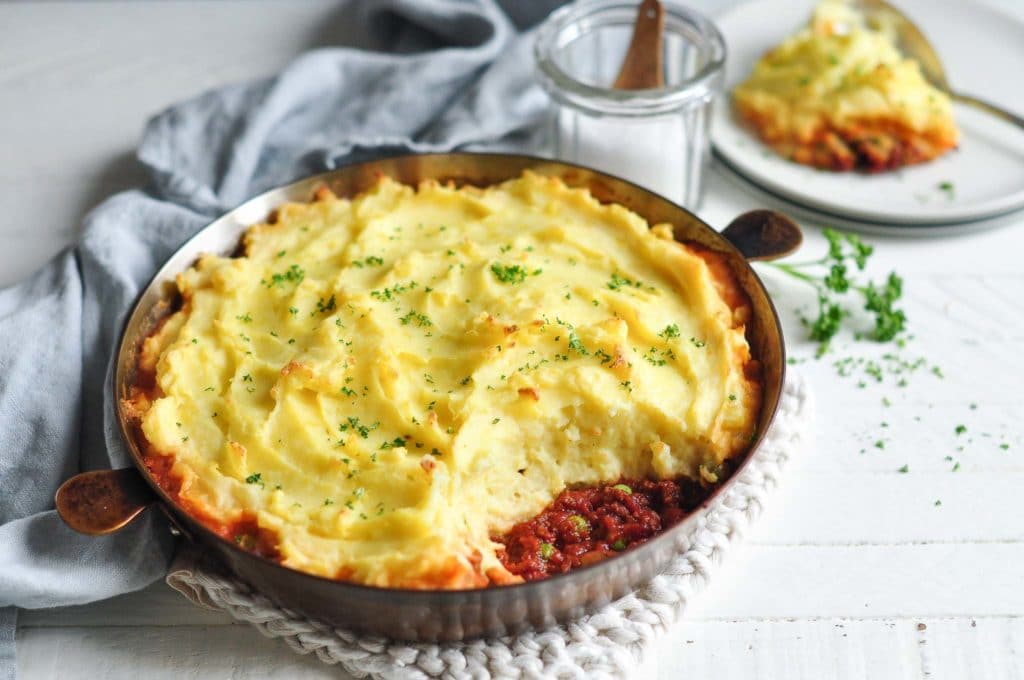
Difference between Cottage Pie and Shepherd’s Pie
One of my winter favourites is this traditional Cottage Pie which I have, confusingly, wrongly called a Shepherd’s Pie for most of my life.
It appears that a Cottage Pie is made with beef, whilst a Shepherd’s Pie is made with lamb; the latter is also usually (and traditionally) made with leftover roast meat. I’ve had it so wrong all of these years!
Hachis Parmentier
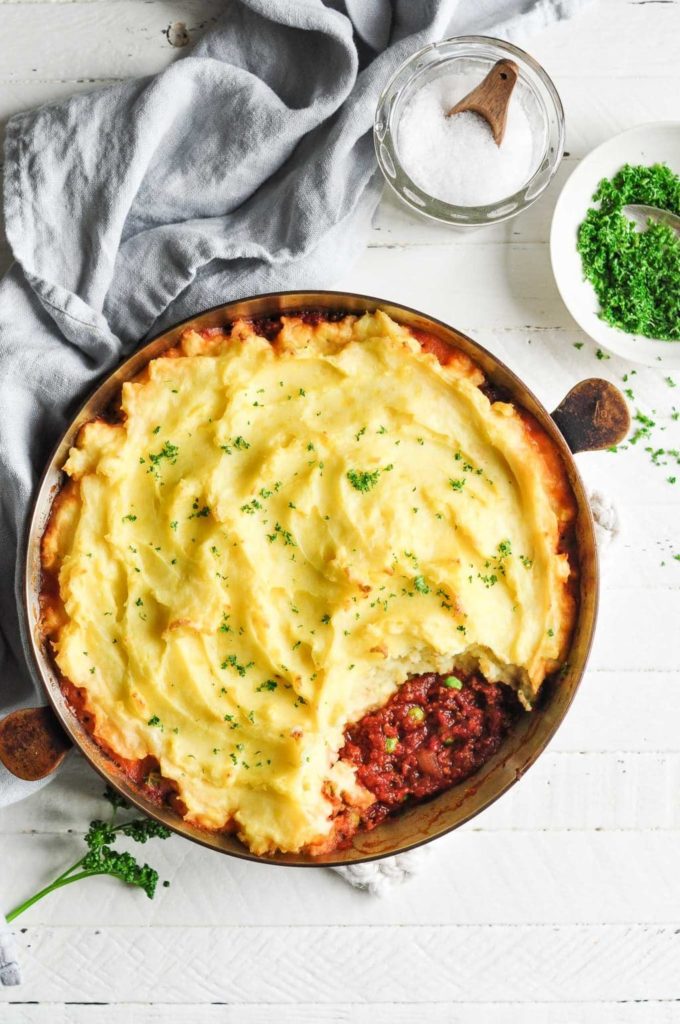
Perhaps it would be easier to call this dish by the French name, a Hachis Parmentier, which is named after the Frenchman who persuaded the French to eat potatoes and which doesn’t differentiate on the type of filling.
But whatever you call it, cottage pie is undoubtedly comfort food to many.
This is what I love to rustle up for the family when the weather is arctic cold outside (it is currently -9°C in Zurich), and it helps that my children love anything with mashed potatoes.
Cottage Pie Recipe
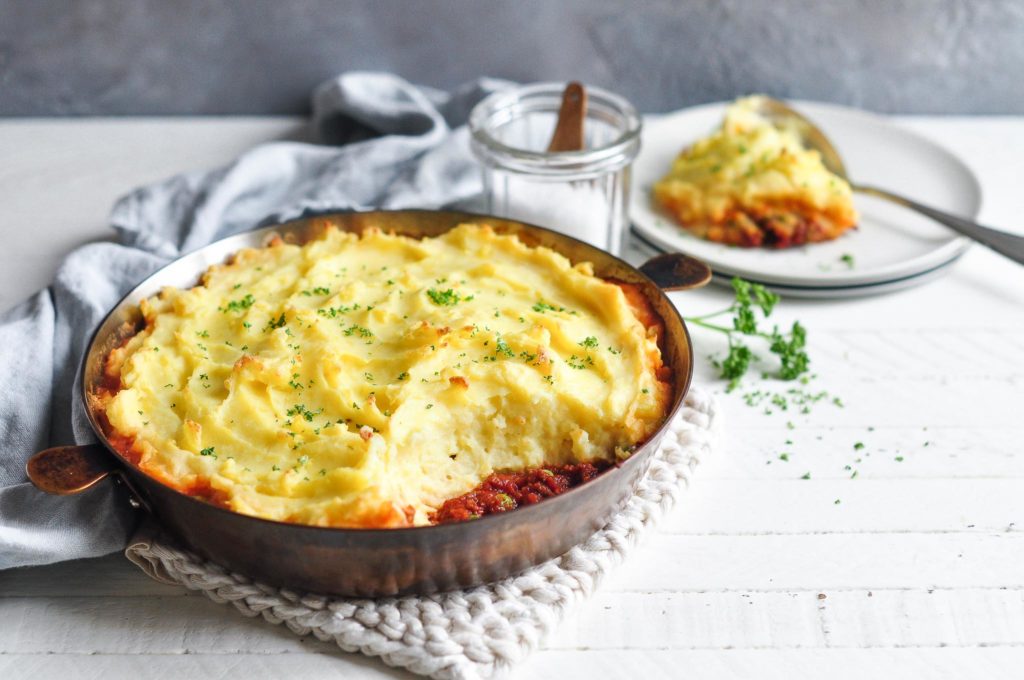
There are many recipes for Cottage Pie, and my recipe relies on a hearty meat sauce topped with creamy mashed potatoes.
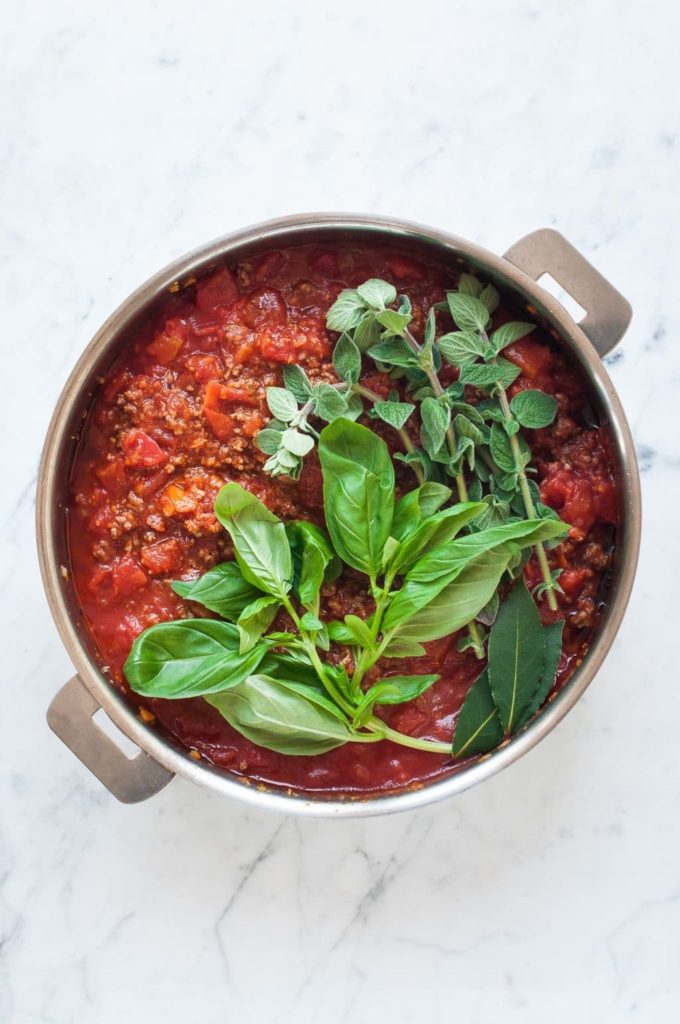
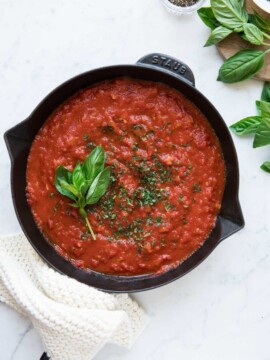
In particular, I use my Bolognese Sauce as a base for a Cottage Pie; it is a recipe which I typically double or triple so that I always have a stash in the freezer. And when I don’t feel like serving my Bolognese Sauce with pasta, turning it into a Cottage Pie with some mashed potatoes is always a wonderful alternative.
Using Bolognese Sauce
Given the versatility of Bolognese Sauce, and the fact that it takes a few hours to cook, I would highly recommend making a double or triple batch and freezing it in portions for later use.
The reason why I prefer to use my Bolognese Sauce in this Cottage Pie recipe is quite simple: the slow-cooking produces a rich, meaty and flavoursome sauce which you can’t replicate by taking short cuts. Although the sauce takes a few hours to cook, it hardly takes any time to prepare.
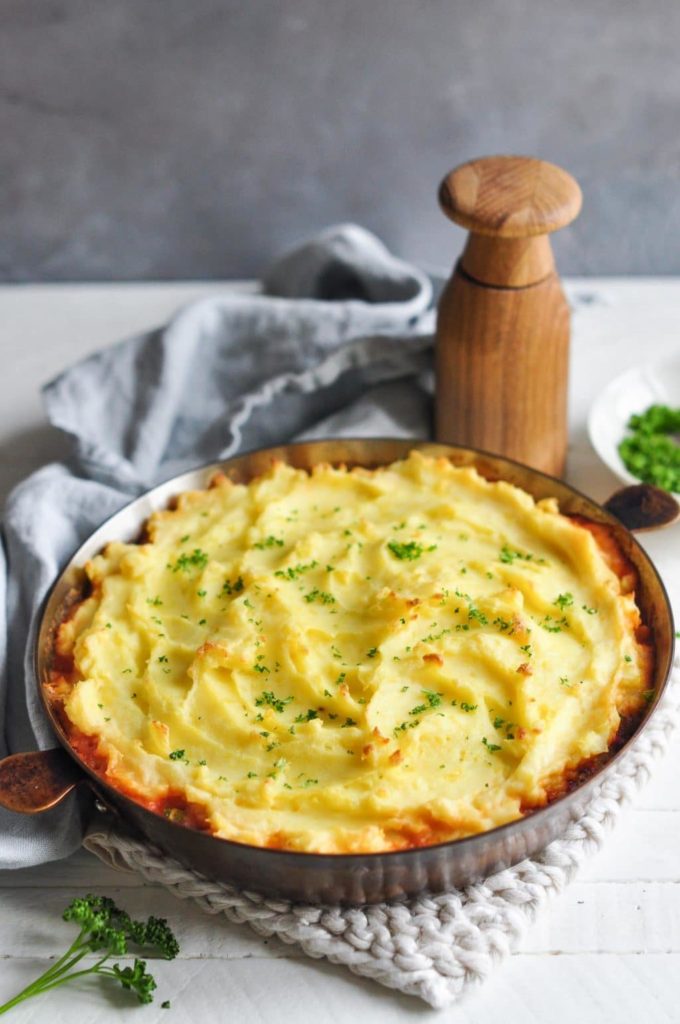
Cottage Pie Variations
To bulk up the sauce for this easy Cottage Pie, I like to add some vegetables to the sauce, often just frozen peas but sometimes also frozen carrots, or maybe even some sautéed mushrooms. Just go with what you have to hand and improvise!
A traditional Cottage Pie looks most welcoming when it is served family-style in a large baking dish, but I sometimes make them in individual ramekins for the children – something about the little pots seem to make them eat more 🙂
And, of course, if you want to make a Shepherd’s Pie, simply substitute the beef for ground lamb (minced lamb) instead.
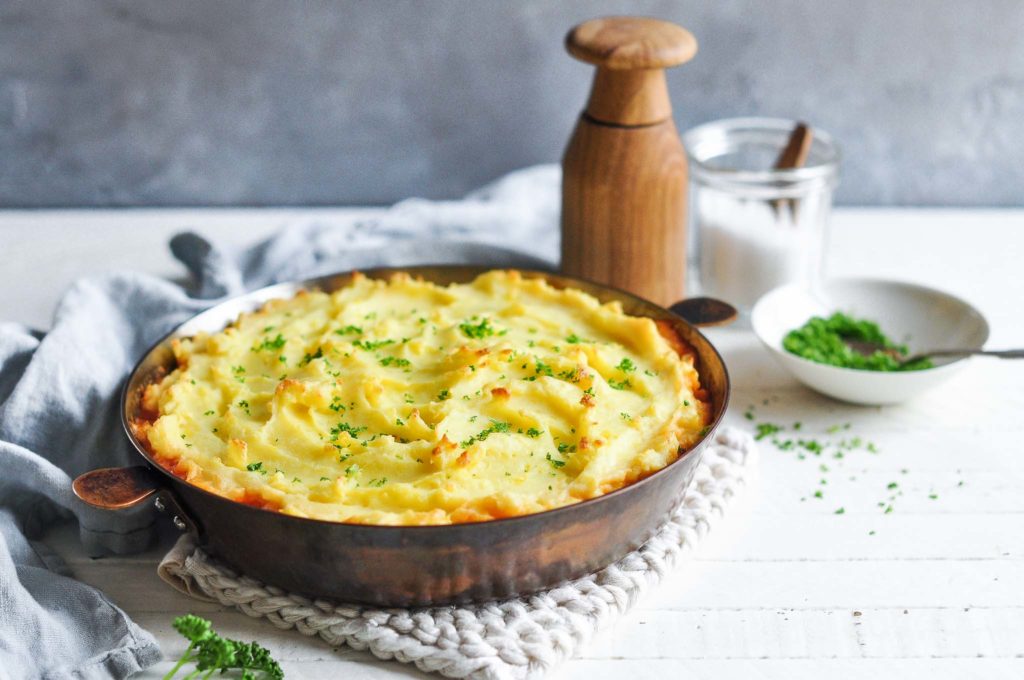
Cottage Pie

Ingredients
For the Cottage Pie Filling
- 1 quantity Bolognese Sauce
- 1-2 tablespoons Worcestershire sauce, optional, or to taste
- 1 cup frozen peas, optional
- parsley, finely chopped
For the Mashed Potato Topping
- 1 kg potatoes
- sea salt
- 2 tablespoons unsalted butter
- 250 ml milk, you may not need all of it
- 3 tablespoons parmesan, finely grated
- white pepper, freshly cracked
Instructions
To Make the Cottage Pie Filling
- Follow my recipe for Bolognese Sauce with step-by-step photos for instructions on how to make the sauce. The sauce takes approx. 2 ½ hours to make.
- Once the Bolognese Sauce is ready, add the Worcestershire sauce, if using.
- Stir the peas and chopped parsley through the sauce.
- Half fill a baking dish with the sauce. Depending on how many people you are serving, you may not need all of the sauce.
- Set the dish aside to cool while you prepare the potatoes (see Kitchen Notes below).
To Make the Mashed Potato Topping
- Peel and chop the potatoes.
- Place the potatoes in a big saucepan filled with cold water.
- Once the water comes to the boil, add a few teaspoons of coarse sea salt.
- Cook until the potatoes are tender.
- Drain the potatoes.
- Using the same saucepan that you used to boil the potatoes, return it to the stove on low heat.
- Add about half of the milk.
- Once the milk has warmed through a bit, return the boiled potatoes to the pan, together with the butter and a good pinch of sea salt.
- Use a potato masher to mash the potatoes into a purée.
- Keep adding more milk until you have a smooth and spreadable consistency.
- Taste the mashed potatoes for seasoning.
- Dollop the mashed potatoes on top of the sauce in the baking dish, and use the back of a spoon (or the tines of a fork) to create uneven ridges in the mashed potatoes. This will help the mashed potatoes to crisp up on top.
- Sprinkle the mashed potatoes with the grated parmesan.
To Bake the Cottage Pie
- Preheat the oven to 200°C (390°F) (without fan).
- Bake for 30-40 minutes, or until the mashed potatoes are golden brown and the sauce underneath is bubbling.
Kitchen Notes
- HOW MUCH BOLOGNESE SAUCE TO USE
How much sauce and/or mashed potatoes you need depends on how many people you are feeding and how large your baking dish is. For the quantity specified in this recipe, I think it would serve 3-4 people generously. - MAKE AHEAD TIPS
If you make the Bolognese Sauce ahead of time, making this Cottage Pie only requires you to make the mashed potato before baking. I like to make a double or triple batch of this Bolognese Sauce and to freeze the sauce in portions, ready to defrost to use in dishes such as this Cottage Pie. - TIPS FOR MAKING THE BOLOGNESE SAUCE FOR A COTTAGE PIE
* Make the sauce on the slightly runny side. Once you have topped it with mashed potatoes, the potatoes will soak up some of the liquid. But if you make the sauce too thin and runny, the mashed potato topping will sink into the sauce.
* When adding the mashed potato topping, the sauce underneath should be cool or even fridge cold, so that the mashed potatoes will sit on top of the sauce as a separate layer. If the sauce is warm or hot, the mashed potatoes might sink into the sauce. - OVEN & STOVE TEMPERATURES
All recipes on this website have been tested on an induction stove and/or with a conventional oven (i.e. an oven without fan). All recipes on this website use temperatures for a conventional oven, unless otherwise mentioned. Convection ovens (i.e. fan-forced ovens) are typically 20°C/70°F hotter than conventional ovens, but please check your manufacturer’s handbook. - CONVERSIONS
To convert from cups to grams, and vice-versa, please see this handy Conversion Chart for Basic Ingredients.
Did you make this recipe?
Please leave a comment below and share your photos by tagging @eatlittlebird on social media and using #eatlittlebirdUpdate
This recipe was first published on 27 February 2018. It has been updated with new photos and more comprehensive recipe notes.


This is such a classic comfort dish and yours looks amazing! I just realized recently also the difference between cottage pie & shepherd’s pie. I make a vegetarian version and have always referred to it as a shepherd’s pie 🙂
I used to always call this a Shepherd’s Pie! Now we know 😉 But I wouldn’t be surprised if no one had heard of a Cottage Pie, ha ha!
Oh my word…this sounds amazing and looks delicious! I love anything with mashed potatoes!
Thanks, Lois! Yes, you can’t go wrong with mashed potatoes 😉
I love cottage pies and yes this is total comfort food. Your looks absolutely delicious.
Thank you! I think the mere sight of a cottage pie is comforting 🙂
This is amazing comfort food! What a great dinner for the family!
Thank you! They always love it when I make this 🙂
This is one of my favorite recipes and I find it very comforting. I can’t wait to try your recipe!
Hope you will enjoy the recipe!
Oh my… thanks for enlightening us all. I’ve never even heard the term “cottage pie” instead of shepherd’s pie. Looks delicious!
Ha ha! I think “cottage pie” is definitely less known, especially outside of the UK. But there’s something cosy about the a “cottage pie” 🙂
Comfort food at its best! I love that thick layer of creamy mashed potatoes on top! love your version of this classic dish 🙂
Thank you! I like to have a good ratio of mashed potatoes to meat 🙂
oh it’s amazing! good taste! I really like it! That looks so tender. Ultimate comfort food! YUM!