

 by
by 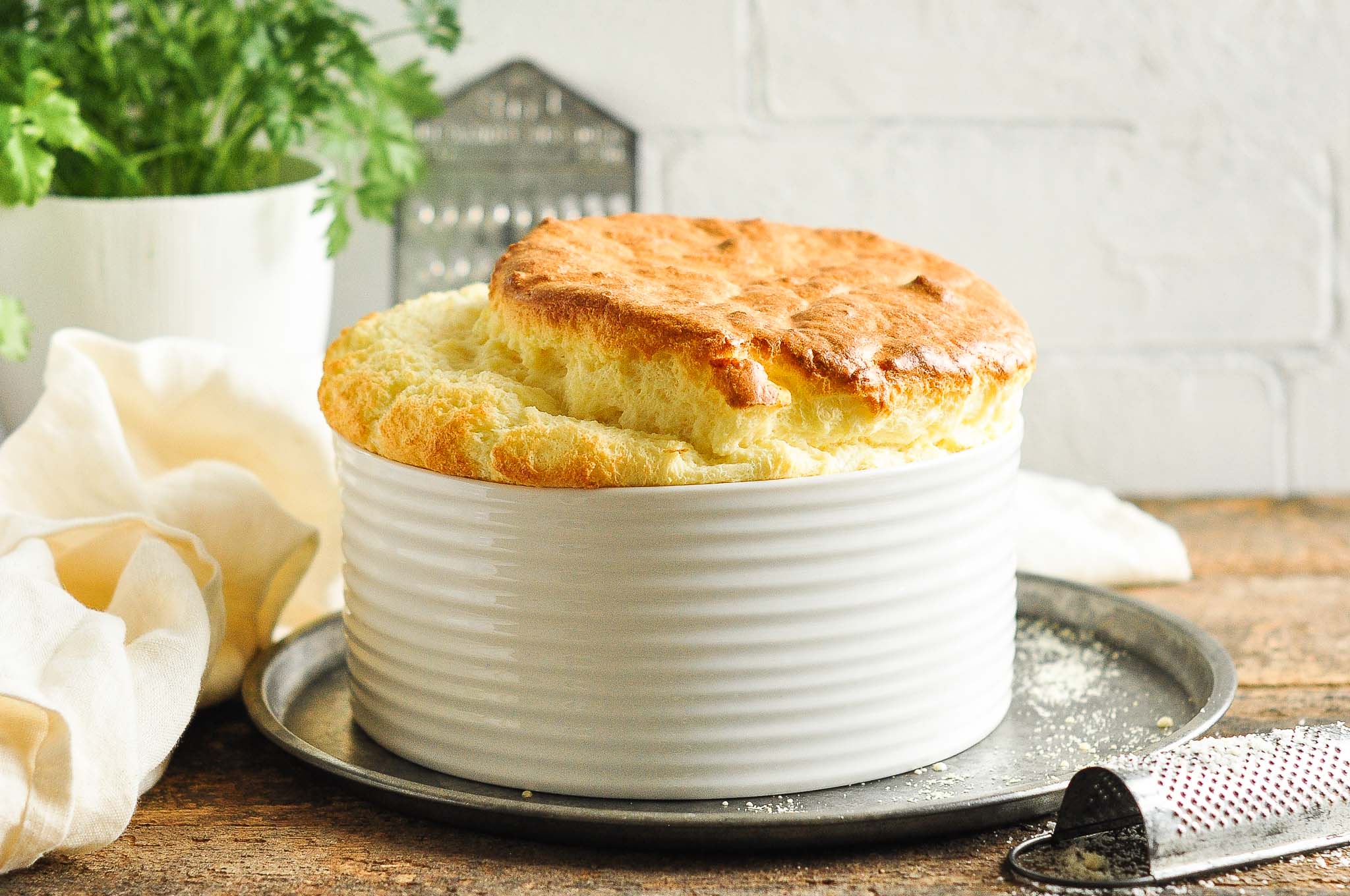
Cheese Soufflé Recipe
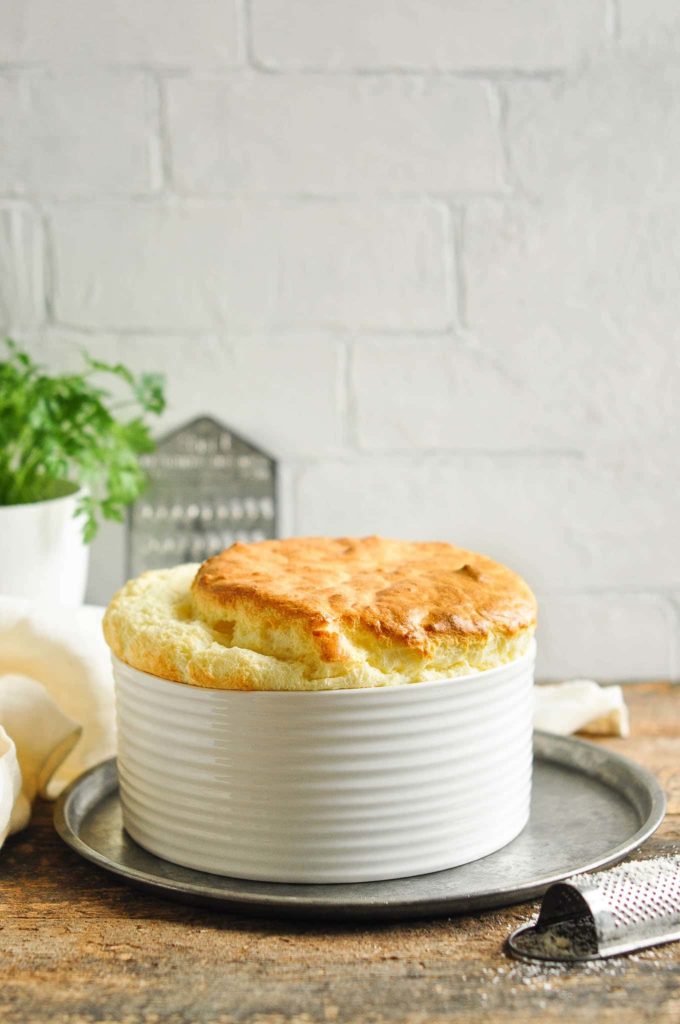
My husband’s great-aunt, whom we call Marraine, is a spritely 93 years old who still loves to cook and bake for the family. At the top of her list is a Cheese Soufflé which, to most ordinary people, is a rather frightening and panic-inducing dinner suggestion. Yet, this is what Marraine makes on a regular weeknight for dinner!
Easy Soufflé Recipe
I recall one occasion when she had not been expecting us for dinner that evening. I panicked because I suddenly had to whip up something for the children to eat, but the fridge looked almost bare. Marraine hopped up from her chair and promptly announced, “No problem! I will make a soufflé!”
And just like that, using only butter, flour, eggs, cheese and milk, she managed to create a truly impressive dinner from the simplest of ingredients.
How to Make Cheese Soufflé
On a recent visit to France, Marraine me once more how she made her delicious cheese soufflés.
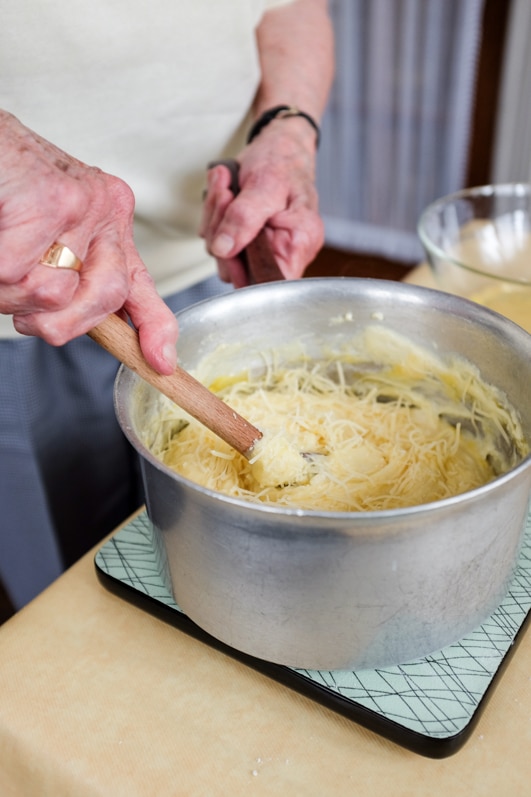
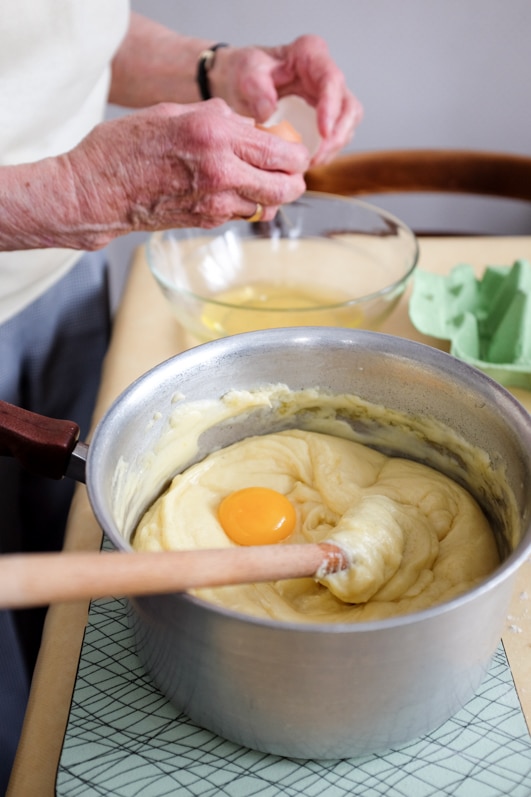
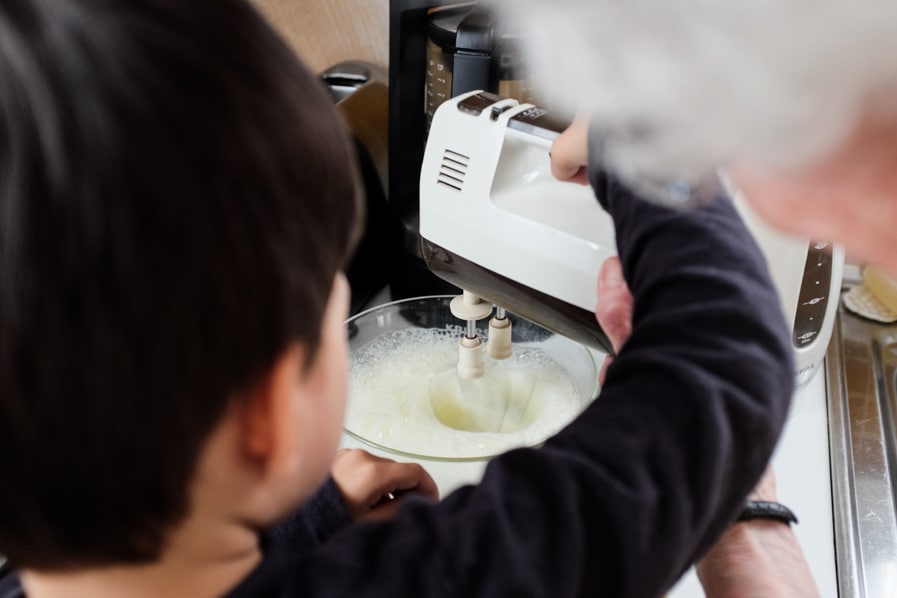
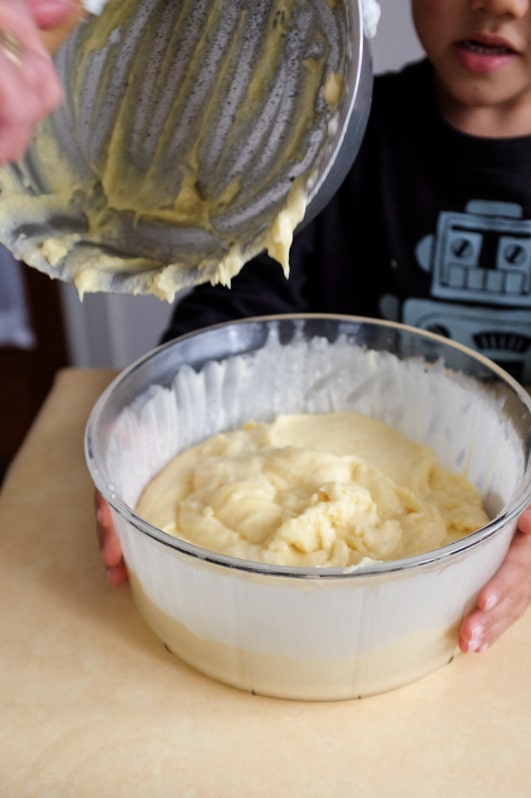
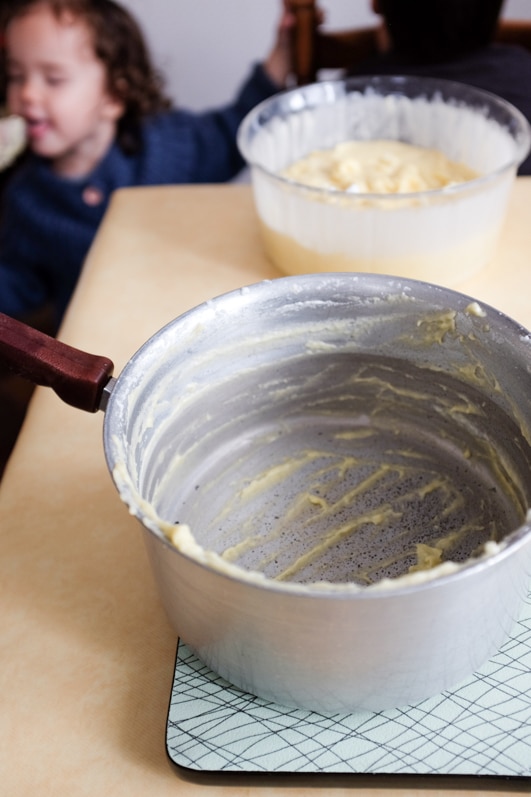
This time, she had our children as eager volunteers; my son was very hands-on with the stirring, grating and whisking, whilst my daughter was mostly there to sample the cheese and lick the spoon at the end!

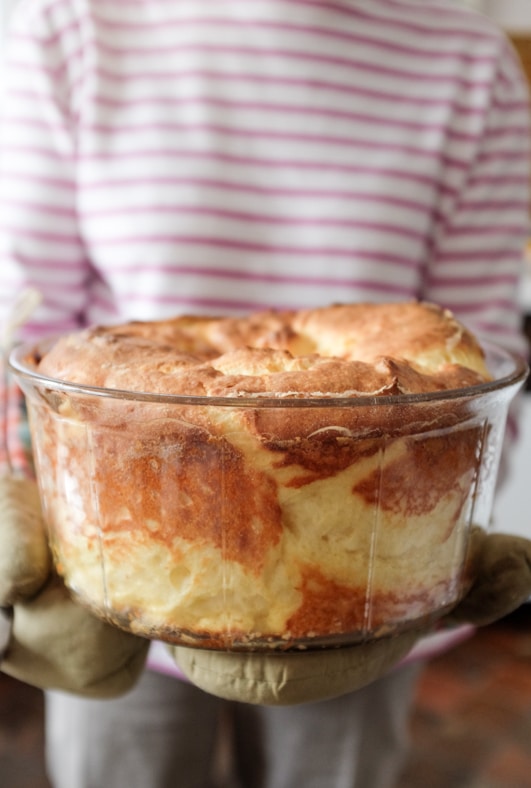
Soufflé Recipe
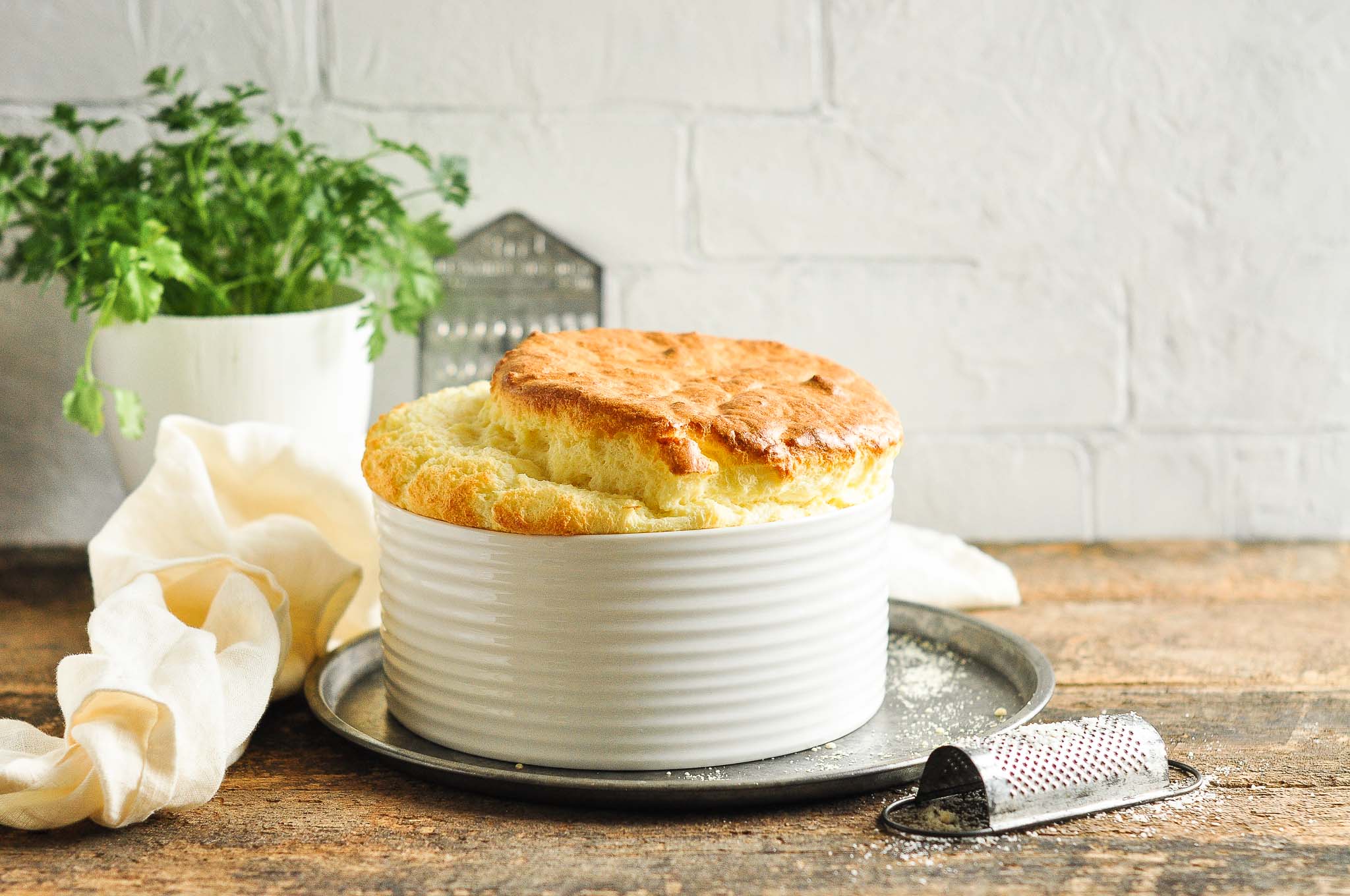
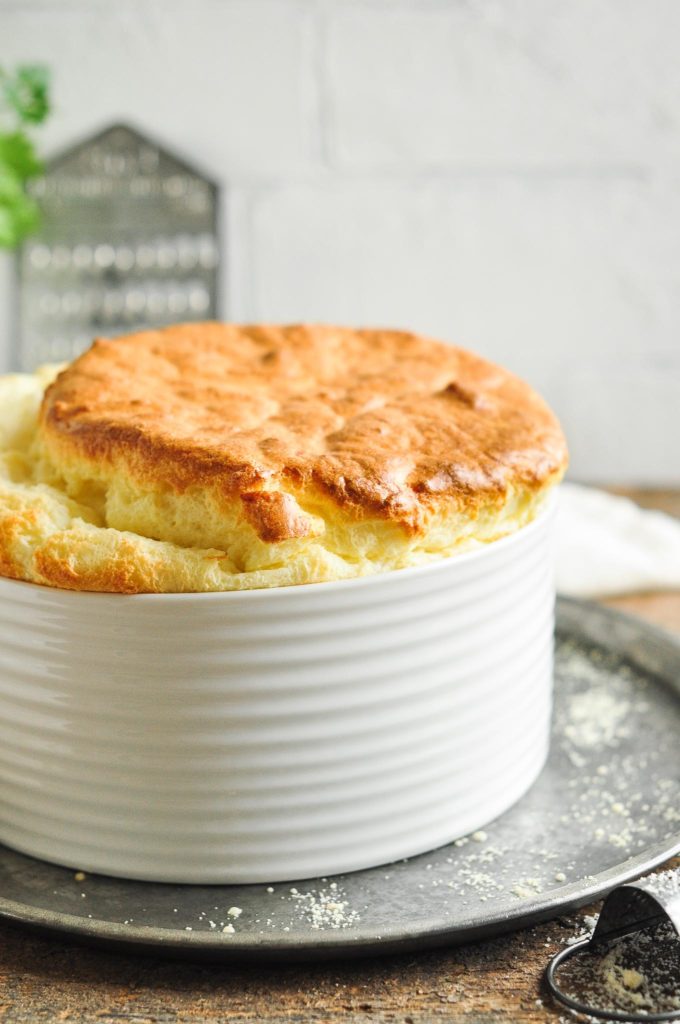
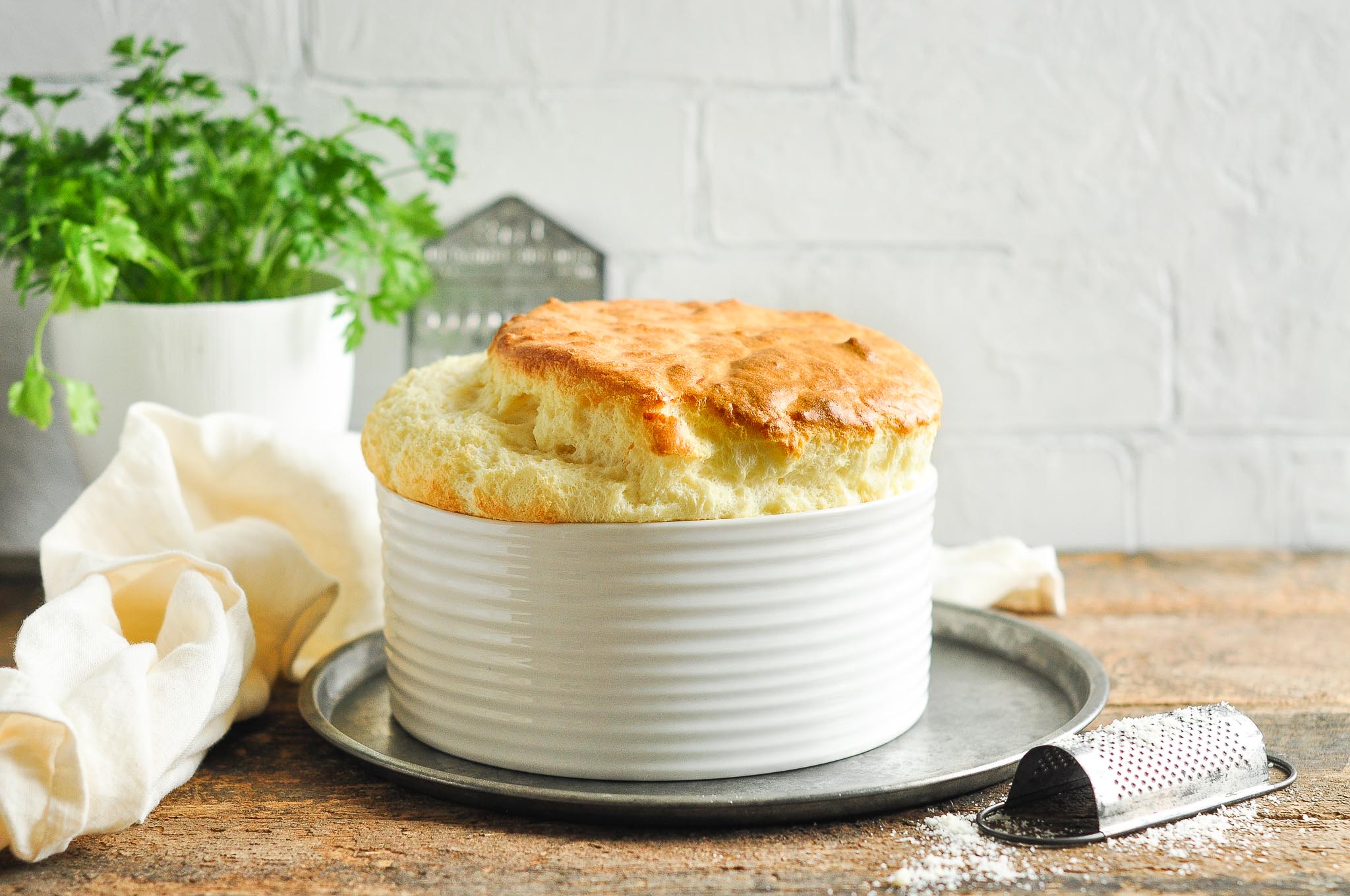
I made a large cheese soufflé, similar to Marraine’s recipe, and it rose magnificently and remained so whilst I proudly brought it to the table to many oohs and aahs.
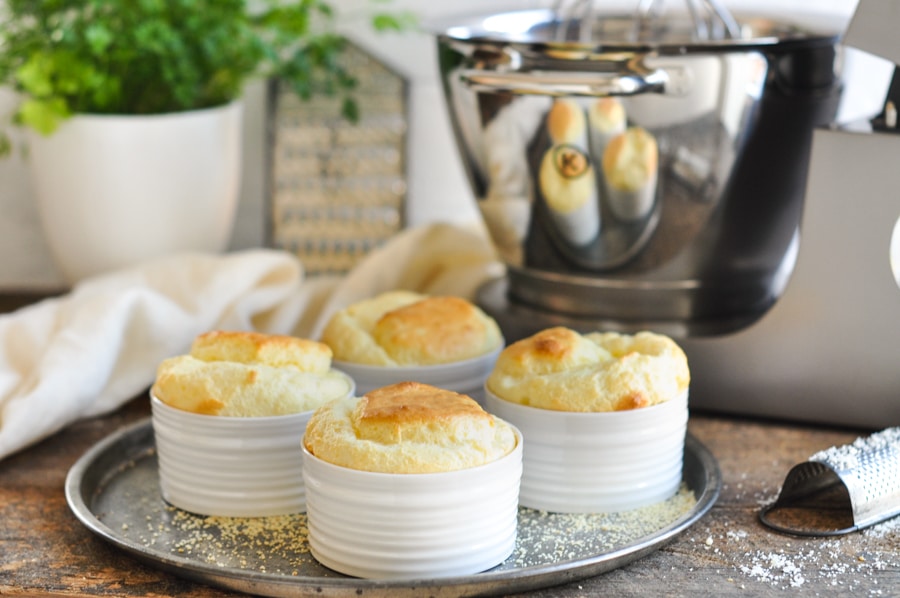
Making Mini Soufflés
A few nights later, keen to recreate some theatre at dinner time, I made mini cheese soufflés which, although were not as grand or majestic, were a massive hit with the children. Despite all of our efforts to teach them how to share, they relished having their own individual pots!
I also found that I preferred the texture of the mini soufflés, plus they took only half the time to bake (about 20 minutes), which pretty much qualifies them as fast food!
I never thought I would say this, but I think soufflés will start making a regular appearance at our dinner table during the busy week.
Tips for Making Cheese Soufflés
What causes a soufflé to rise are the air bubbles in the whisked egg whites. The heat of the oven causes the air bubbles to expand and, thereby, cause the soufflé to rise.
I have found (from making many, many soufflés over the years) is that a thick soufflé mixture will hold its shape for longer. That is why, in my recipe below, I have given instructions to make a very thick white sauce. However, a thick soufflé mixture may not always rise as easily or magnificently; it will nevertheless rise, as you can see from my photos above.
The taste and texture of a cheese soufflé is similar to an omelette, whilst the centre of the soufflé should be light, airy and fluffy. While it is hard to check if the soufflé is properly cooked, a gentle wobble of the soufflé should give you an indication of whether the centre has set or not.
If, for any reason, you need to reheat your soufflé (whether to cook further or to reheat leftovers), know that a fallen soufflé will rise again when you put it back in the oven. It won’t rise as high as the first time, though.
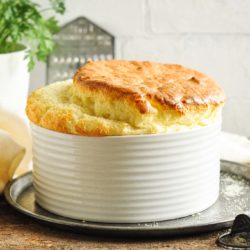
Cheese Soufflé

Ingredients
- 15 g (1 tablespoon) unsalted butter, melted, for greasing
- 45 g (3 tablespoons) unsalted butter
- 60 g (⅓ cup plus 1 tablespoon) plain flour, (all-purpose flour)
- 450 ml (1 ¾ cup plus 2 teaspoons) milk
- 240 g (8 oz) Gruyère, grated
- 3 teaspoons Dijon mustard
- sea salt
- white pepper, freshly cracked
- 6 eggs, separated
Instructions
- Preheat the oven to 200°C/390°F (without fan) and place a baking tray in the oven. Make sure you use a shelf which will give the soufflé enough room to rise, which could be 5-8 cm (2-3 inches) higher than the dish.
- Brush the soufflé dish generously with the melted butter. (See Notes)
- In a large saucepan which will later hold all of the ingredients, melt the butter over medium-high heat.
- Add the flour, and use a wooden spoon to mix the flour into the butter. The mixture will clump into a ball. Keep stirring the mixture over the heat for about 2-3 minutes to cook off the flour.
- Slowly add the milk and gently incorporate it into the mixture. I tend to start with a wooden spoon to mix everything together, and then change to a whisk to make sure the mixture is smooth with no lumps.
- Once all of the milk has been added, you should have a very thick white sauce. Although the sauce should be thick, when you lift up the spoon, the sauce should still be able to fall off the spoon by itself.
- Remove the pan from the heat and let it cool slightly (about 5 minutes), giving it a stir from time to time to help it cool down.
- Add the cheese and mustard.
- Season with salt and pepper.
- Next, separate the eggs.
- Add the egg yolks to the saucepan and beat them in well with a wooden spoon.
- Whisk the egg whites until they have tripled in volume and stiff peaks form. I like to start on a slow speed until the egg whites become foamy, and then I increase the speed gradually until stiff peaks form, finishing at a medium to high speed.
- Gently fold the egg whites into the mixture, 1/3 at a time. Take care not to over mix as you want to keep as much air as possible to help the soufflé rise.
- Pour the mixture into the dish, making sure there is at least a 2 cm (1 inch) gap from the top.
- Bake the soufflé for 30-40 minutes, or until it has risen magnificently and is golden in colour.
- Serve immediately.
Kitchen Notes
- MAKING A LARGE SOUFFLÉ
For a large soufflé, I use a soufflé dish which measures 20 cm (8 inches) wide and 8.5 cm (3 inches) high with a 2 litre (8 cup) capacity. - MAKING INDIVIDUAL SOUFFLÉS
To make individual soufflés, this mixture will fill about 6 ramekins with 375 ml (1 1/2 cup) capacity. You will need to bake them for 20-25 minutes, or until they are golden and risen. - VARIATIONS
For an extra cheesy crust, I like to sprinkle finely grated parmesan on top of the soufflé mixture before baking it. - TIPS TO HELP THE SOUFFLÉ RISE
* When greasing the soufflé dish, I use upward strokes around the sides of the soufflé dish which is meant to encourage the soufflé to rise. But I have read that this technique doesn’t really play a role. However, this is what my husband’s great-aunt does, and I do as I am told.
* Some recipes suggest lining the soufflé dish with breadcrumbs to help the soufflé rise. The breadcrumbs add a nice crunchy texture to the outside of the soufflé, but they also make it a bit more difficult to serve the soufflé as the mixture tends to stick to the dish. - WHAT IS THE TEXTURE OF A CHEESE SOUFFLÉ?
The texture of the soufflé on the outside should be similar to an omelette, while the centre should be light and fluffy. If the centre is wet and runny, it means it is still raw. - IS MY CHEESE SOUFFLÉ COOKED?
While it is hard to check if the soufflé is properly cooked, a gentle wobble of the soufflé should give you an indication of whether the centre has set or not. - HOW LONG WILL MY SOUFFLÉ STAY RISEN?
Once you have taken the soufflé out of the oven, it should remain risen for a good 3-5 minutes, but don’t be disappointed if it starts to deflate right away. Any change in room temperature, such as bringing the soufflé from your warm kitchen into a cooler dining room, will cause the soufflé to collapse. - CAN I REHEAT THE SOUFFLÉ?
You can reheat soufflés in the oven (or return it to the oven for further cooking), and it should still rise again after 3-5 minutes, but it won’t rise as high as the first time. - OVEN TEMPERATURES
All recipes on this website state temperatures for a regular oven (i.e. a conventional oven without fan). If you have a convection oven with a fan, please consult the manufacturer’s handbook on how to adjust the temperature and baking time accordingly. - CONVERSIONS
To convert from cups to grams, and vice-versa, please see this handy Conversion Chart for Basic Ingredients.
Did you make this recipe?
Please leave a comment below and share your photos by tagging @eatlittlebird on social media and using #eatlittlebirdUpdate
This recipe was first published on 1 November 2017 and has been updated with new photos and more comprehensive recipe notes.


I love French food. This looks incredible, and I would LOVE to dig right in. I will have to try this on the weekend and see if I can make it look 1/2 as good as yours. Nicely done.
Thanks, Gloria! It’s much easier to make than it looks 😉 And that’s part of the joy of making soufflés!
Souffles are so hard to get right but you have all those step by step photos to help. I love that you have your family helping you in the kitchen!
Thanks, Karen!
I’ve heard souffles are hard to make but this one looks like I miiiight be able to tackle it! Plus it sounds delicious!
It’s much easier than you think! And honestly, if I can make a soufflé, anyone can 😉
I love making souffles, and I agree, a mixer is a must! Definitely the perfect dish to try out a new mixer on. These look so good, and kudos to you for shooting MULTIPLE (beautiful) souffles, something I always find extremely stressful. 😉
Thanks, Tracy! I have to admit that the thought of making multiple soufflés for this post did induce a bit of stress, but they all turned out beautifully!! I made one again the other night and I think the children are going to expect a soufflé each week now!
That sounds so delicious. Love the pictures and clear directions.
Thanks, Roxana!
😉 I really appreciate the step by step pictures to see what the texture is supposed to be at each stage! Pinned this!
Thanks, Michele!
My grandmother used to make cheese soufflé and I remember how tensed she was everytime she took it out of the oven because she didn’t want it to collapse. That’s probably why I never even dared trying them. But you make it look so easy I’ll give it a try!
Hi Amelie,
I know what you mean – my great aunt was very hesitant for me to take a photo of the soufflé once she took it out of the oven because she wanted to take it to the table right away. As I was taking the one and only shot (which is posted above), she was saying in French, “A soufflé waits for no one!!”.
A soufflé will collapse quickly if there is a big change in room temperature. I find the large soufflés to keep their rise for a bit longer (about 5 minutes), but the small ones deflate rather quickly.
I love that you used Gruyere cheese in this. That stuff is so delicious. I’ve never had a souffle before and was told that they are hard to make – but you make is seem easy enough – and it’s just beautiful!
I actually use really strong Gruyère cheese too! I love the flavour and I think the stronger variety gives more punch in dishes like a soufflé. They are definitely not hard to make – if I can make them, anyone can!
Oh wow, this sounds absolutely amazing. I have always wanted to try making my own souffle, but it always seemed so complicated. This looks totally do-able, and delicious!! Thanks for sharing
Thanks, Donna! Soufflé is an impressive dish but it’s definitely not hard to make!
How lucky to have a “Marraine”!!!
OH cheese souffle.. I have not made a cheese souffle in years.!! Long ago my best friend use to be a big fan of cheese souffle so we’d go to this special restaurant just to have the souffle. This looks perfect and love the step by step. Brings back fond memories.
Sounds like a lovely memory! My husband and I ate a delicious soufflé on our honeymoon. I loved the whole ceremony at the restaurant when they served it!
Oh, I just love this post, especially all the lovely photos of making the souffle with Marianne’s beautiful, experienced hands and your kids helping. What a fantastic family recipe!
Thanks, Monica! Our children are so lucky that Marraine is so patient with them in the kitchen. They love cooking together and my son especially cherishes these moments 🙂
What a beauty!! I love the idea of eating a cheese-flavored cloud like this! <3
Thank you!
Love cheese souffle sooo much. And these ones look like they were made by a master. Absolutely lovely recipe and lovely photos!
Thanks for your lovely words, Debs! I’m definitely not a master but I was pretty chuffed with how these soufflés turned out 🙂
I’ve never been brave enough to try to make a souffle, but the fact that you use gruyere makes me want to give them a shot. I can’t believe Marraine makes them every week!! Super impressive.
Soufflés are so much easier than they look! I ought to make them a regular in our home too, especially since our children love them.
So beautiful! I have always wanted to make a cheese souffle! This is giving me the incentive to do it!
Thanks, Carol! If I can make a soufflé, anyone can 😉
It’s just so darn cute. I want it now!
Thank you!
What are G’s and Ml? I love cheese souffle but can’t figure the amounts out here?
This sounds fantastic! Yup this looks pretty darn perfect to me!
Excellent recipe! This is the first time I’ve tried to make soufflés and because of your step-by-step directions it was easy. This made 4 small soufflés and one larger that turned out beautifully. Next time I’ll add a little spinach and bacon.Thank you!
Hi Joan,
That’s great to hear that you enjoyed this soufflé recipe! I’ve also made it with spinach, with bacon, and with both spinach and bacon 🙂 All the variations are lovely!
Great recipe! I made one large soufflé which was slightly undercooked in the center, or maybe that’s how it was supposed to be? In any event, I put it back into the oven for another 5 minutes and the soufflé continued to rise. It looked beautiful and tasted wonderful.
This is a wonderful recipe! My soufflé rose magnificently and the taste was perfect. This was my first attempt at a soufflé and I will for sure make it again soon!
I made this recipe and at 390 it browned way too quick and was raw in the middle at 30 minutes. Next time I will bake at 375 F as other recipes suggest.
Hi Tricia,
Sorry to hear that your soufflé did not work out. Did you bake at 390°F with or without fan? Please note that the recipe is for a conventional oven, i.e. an oven without fan. If your oven has a fan, you will need to reduce the temperature according to the manufacturer’s instructions (about 20°C/50°F).