

 by
by When I think of lemon tarts, I think of the French classic, tarte au citron. However, the following recipe happens to be inspired by the lemon curd of the English kitchen.
A lemon tart is traditionally made with a shortcrust pastry base and filled with a tart lemon custard, and which is then baked in the oven until the filling is just set but still tender.

The best lemon tart I had ever eaten was actually a lemon meringue pie at Eleven Madison Park in New York, a few years ago over a business lunch. At the time, I was not aware of the culinary status of the restaurant, probably because I was a nobody within the company whose business lunches were often restricted to the work canteen (at my own cost). So when my colleagues suggested a restaurant in the vicinity of the office, I was expecting a make-your-own-sandwich kind of place. Once seated with the menu in front of me, I began to see how the other half lived.
The pastry was light and buttery, the lemon filling was sweet but with an edge of tartness, and the meringue topping was crisp and sweet. It was a simple dessert, but beautifully executed. Sadly, no attempt of mine could ever recreate the same experience at home. Every lemon tart or lemon meringue pie I tried to make failed to meet my taste memory of that particular dessert at Eleven Madison Park. And like my troubles with baked cheesecakes, I could never produce a lemon tart which would set with the right amount of wobble.
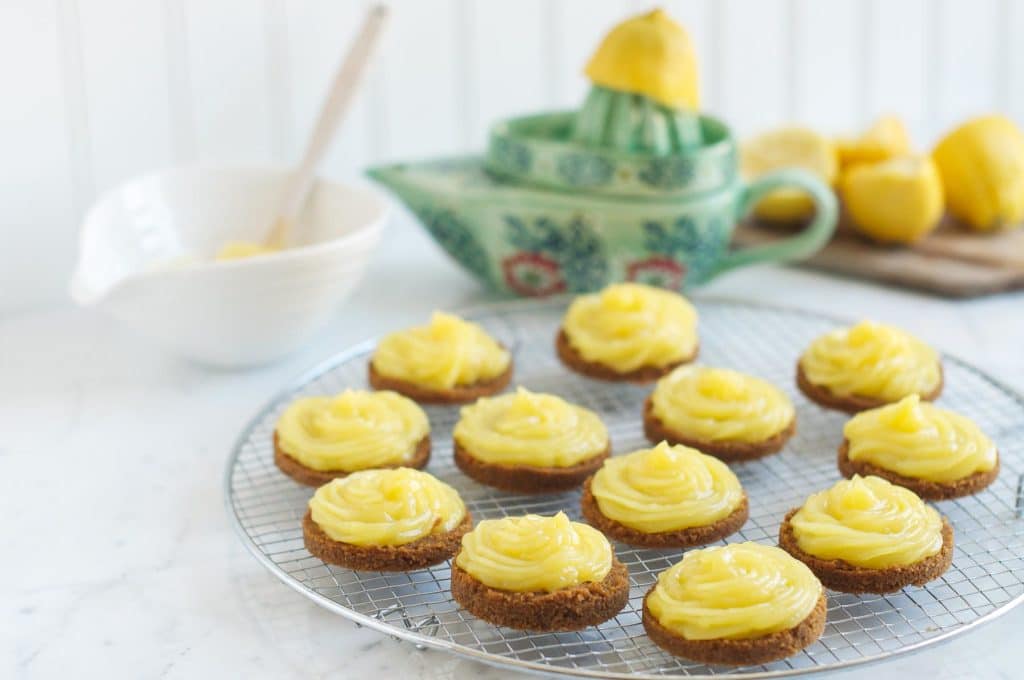
Which is why this particular recipe is such a blessing. This low fuss, no-bake lemon tart oozes homemade, rustic charm such that one need not worry about competing with a Michelin-starred dessert.
I found this recipe in a recent edition of Saveurs magazine, a popular glossy French food magazine which I love to pick up whenever I am in France (and not to be confused with the American food magazine of a similar name, Saveur). The simplicity of this recipe struck a chord with me and I was pleased to find that it was quite a forgiving recipe, that my clumsy piping skills were rather suited to the homespun look of these tartelettes. But despite the rough edges of these little beauties, they taste like something you might find in a fancy pâtisserie shop.
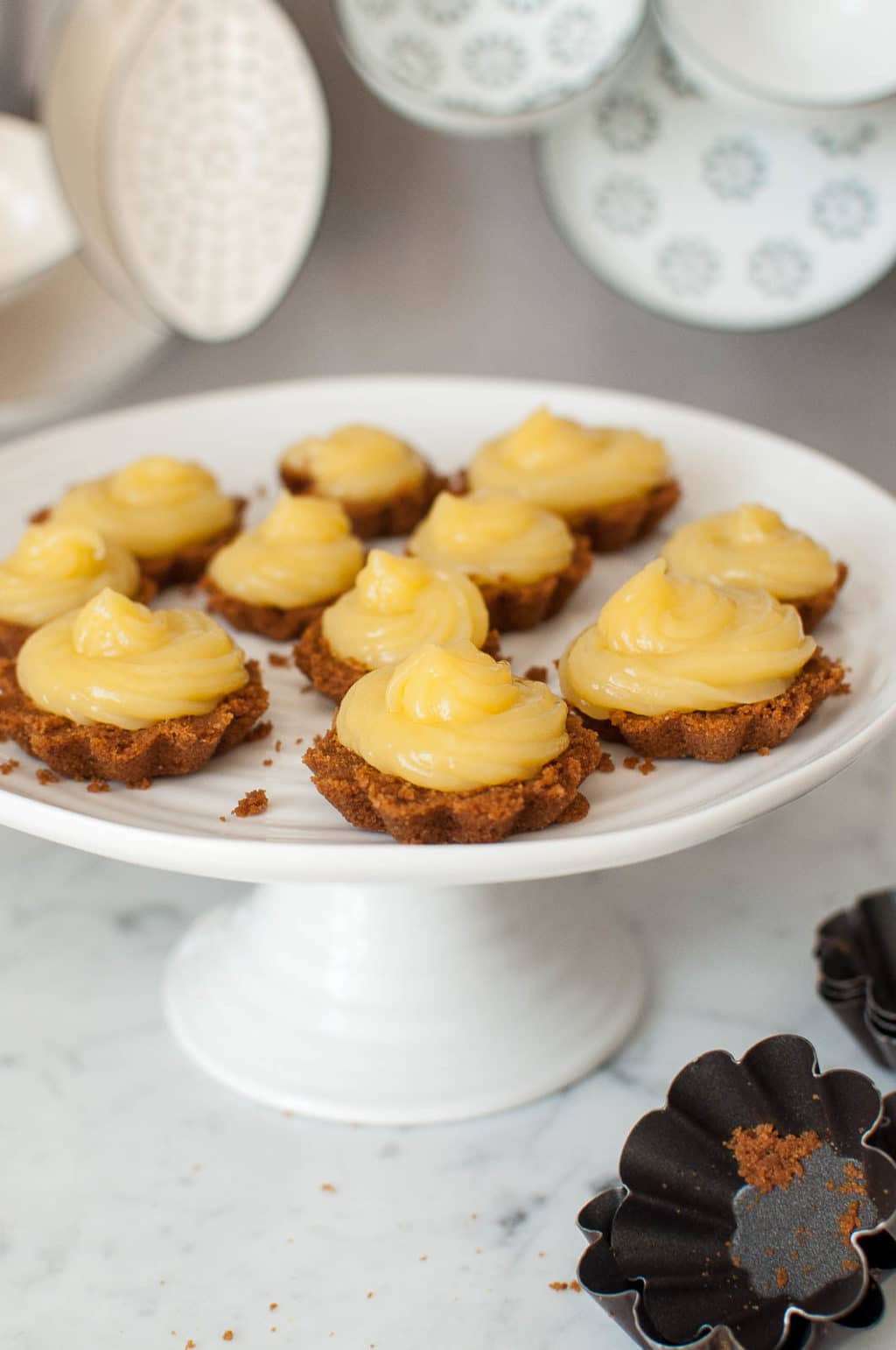
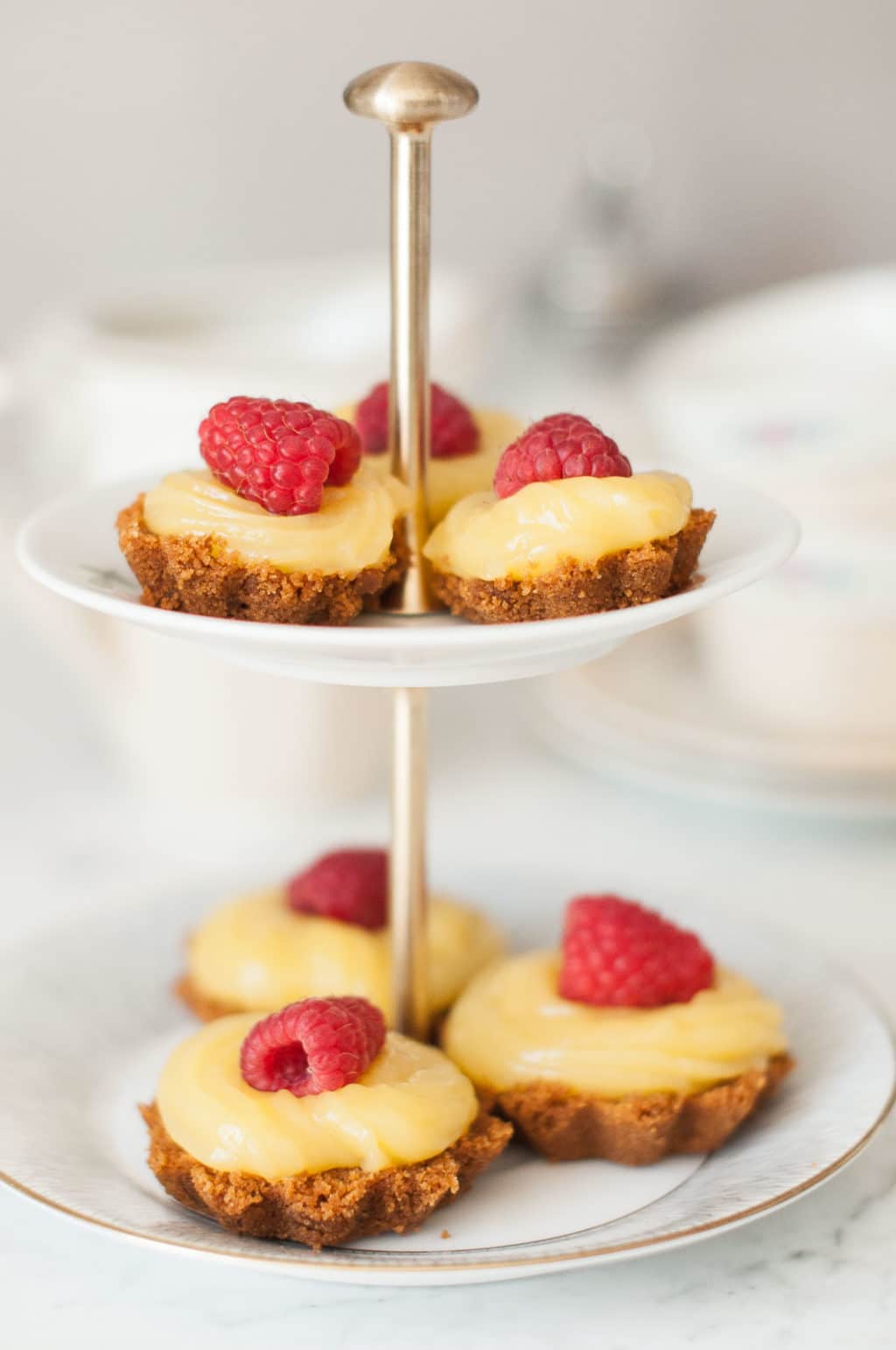
These lemon curd tarts are simply comprised of a base made with crushed biscuits and topped with a thickened lemon curd.
Use whichever moulds you like for these lemon curd tarts, and make them as big or as small as you wish. Non-stick tins will obviously provide for easier unmoulding.
The first time I made these lemon curd tarts, I used small brioche tins to produce dainty little tartelettes for an afternoon tea party. Once the biscuit base had set, I simply turned the tin upside down on the kitchen bench and gave it a light tap to release the base. However, this method was prone to crumbling the edges of the base a little (I was also in a bit of a hurry).
But a much easier (and less fiddly) method is to use a round biscuit or scone cutter and to place it directly on a sheet of baking paper on a baking tray which will fit in the fridge. Press some of the biscuit mixture into the cutter, about 1 cm high, and then carefully remove the cutter to leave behind a nice, round base. Repeat until all of the biscuit mixture is used. Then place the baking tray into the fridge for an hour or more to let the biscuit bases firm up.
An even more fuss-free option would be to make one large tart in a loose-bottomed flan tin, spread the lemon curd over the base and serve as is or decorated with fresh berries.
From one recipe, so many options.
Lemon Curd Tarts

Ingredients
- 80 g (⅔ stick) unsalted butter
- 200 g (7 oz) speculoos biscuits
- 4 lemons
- 100 g (½ cup) caster sugar, (superfine sugar)
- 1 egg
- 3 egg yolks
- 2 tablespoons cornflour, (US: cornstarch)
Instructions
To Make the Tart Base
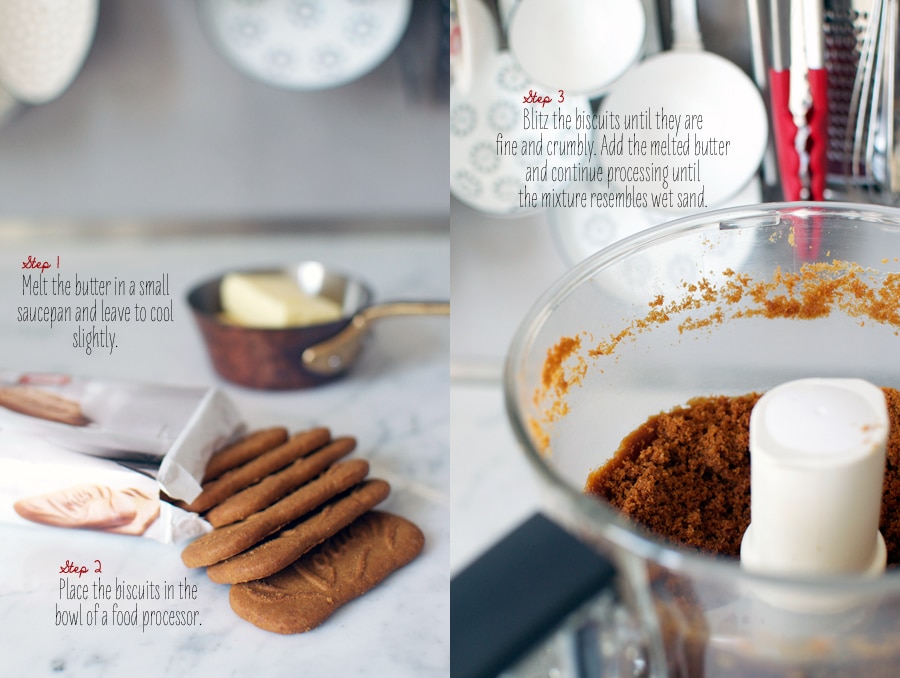
- Melt the butter in a small saucepan and leave to cool slightly.
- Place the speculoos biscuits in the bowl of a food processor.
- Blitz the biscuits until they are fine and crumbly.
- Add the melted butter and continue processing until the mixture resembles wet sand.
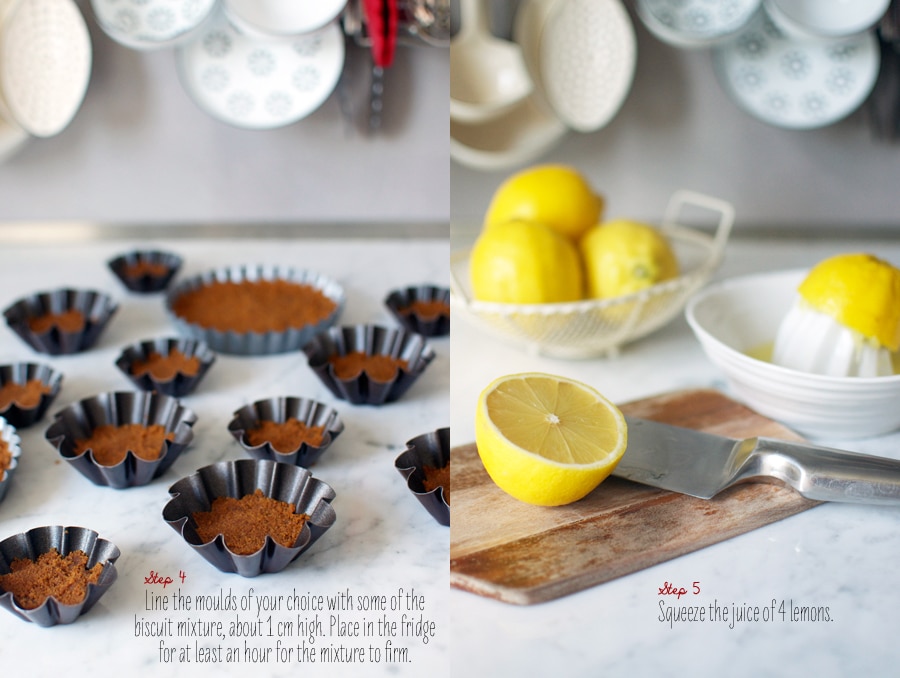
- Line the moulds of your choice with some of the biscuit mixture, about 1 cm high. Alternatively, place a round biscuit or scone cutter directly onto a tray lined with baking paper. Press some biscuit mixture into the cutter, about 1 cm high, and then carefully remove the cutter to leave behind a nice, round base. Repeat until all of the biscuit mixture has been used.
- Place the lined moulds in the fridge for at least 1 hour for the mixture to firm.
To Make the Lemon Curd
- Squeeze the juice of the lemons.
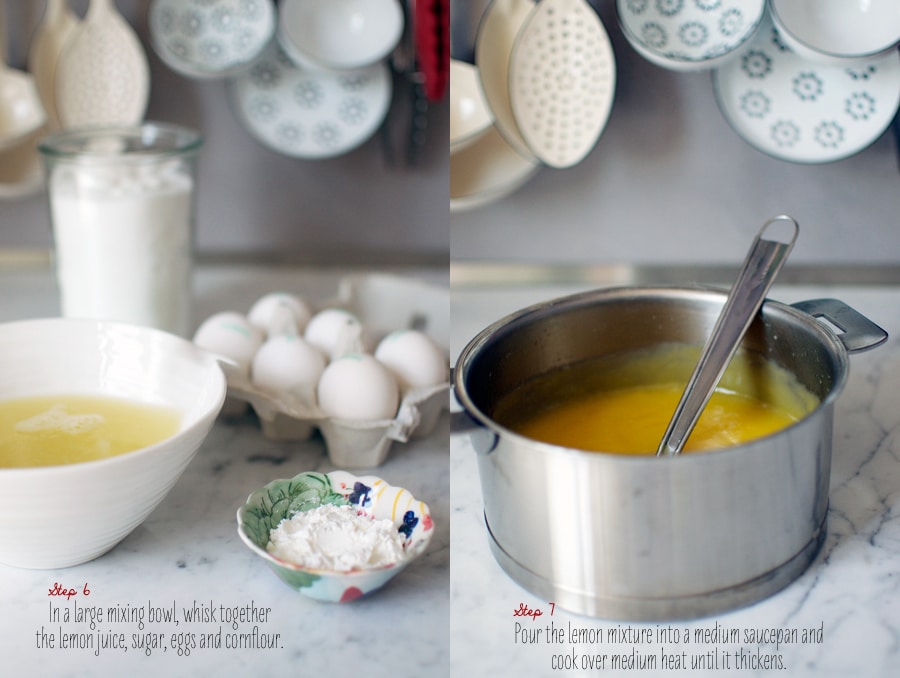
- In a large mixing bowl, whisk together the lemon juice, sugar, eggs and cornflour (cornstarch).
- Pour the lemon mixture into a medium saucepan and cook over medium heat until it thickens.
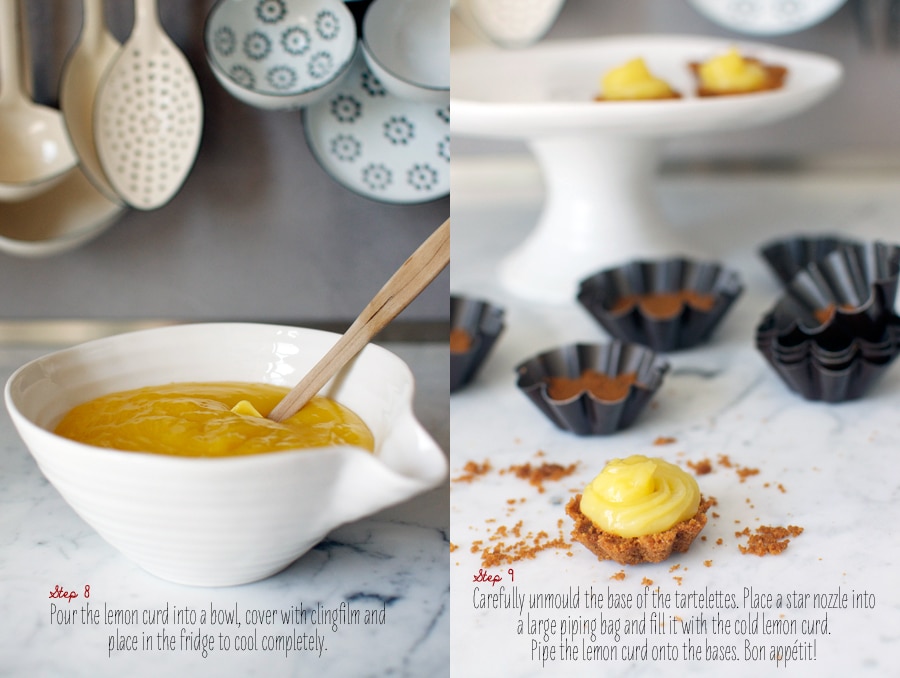
- Pour the lemon curd into a clean bowl, cover with plastic wrap in direct contact with the curd, and place in the fridge to cool completely.
To Assemble the Tarts
- Carefully unmould the bases.
- Place a star nozzle into a large piping bag and fill it with the cold lemon curd.
- Pipe the lemon curd onto the biscuit bases.
Kitchen Notes
- If you cannot find speculoos biscuits, a good alternative would be gingernut biscuits, plain chocolate biscuits or even digestive biscuits.
- You can make these tarts as big or as small as you like. For larger tarts, I recommend using small non-stick tart tins with a loose bottom.
- MAKE-AHEAD TIPS
The lemon curd and the biscuit base keeps well in the fridge for 1-2 days. The tarts can be made a few hours ahead of time and kept in the fridge before serving. Any longer and the lemon curd won’t look so fresh and the biscuit base will go a bit soggy. - OVEN & STOVE TEMPERATURES
All recipes on this website have been tested on an induction stove and/or with a conventional oven (i.e. an oven without fan). All recipes on this website use temperatures for a conventional oven, unless otherwise mentioned. Convection ovens (i.e. fan-forced ovens) are typically 20°C/70°F hotter than conventional ovens, but please check your manufacturer’s handbook. - CONVERSIONS
To convert from cups to grams, and vice-versa, please see this handy Conversion Chart for Basic Ingredients.

I love the freshness of lemon and the taste of home made curd doesn’t even compare to store bought. Your little tarts look delicious. I like your blogs new layout, it looks lovely.
Thanks, Laura! I absolutely agree – when home made lemon curd is this easy to make and tastes so wonderful, there is no need for the shop-bought variety. And I’m glad you like the new look … it has been hard work! 🙂
Beautiful tarts and beautiful pictures, Thanh!! Lemon tarts are my daughter’s favorite! But the elements of raw eggs in the lemon curd always discourages me from making them.. But your seems pretty cooked. You have presented the whole thing in such an easy, no -fuss manner ,I must give this recipe a shot !!
Thank you! I hope you and your daughter will give this recipe a try. The lemon curd is cooked on the stove so there is no need to worry about raw eggs in this recipe. Aside from thickening the curd on the stove (which takes only a few minutes), the recipe is child’s play 🙂
Thanh, I love the new makeover you gave to your blog, it’s very chic 🙂 I love the French tarte au citron, so tangy and luscious 🙂 I used to be terrified of making my own lemon curd but it’s such a doddle to make. Your mini tarts look as if they belong in a glossy cookbook, you have a way with the camera.
Where did you get those mini tart tins? I’m hoping to head to E.Dehillerin next month to have a looksee, hopefully I’ll find what I’m looking for.
I’m glad you like the makeover! 🙂 I thought it was time for a more grown-up look but I like that you call it “chic” 😉
I bought the mini brioche tins in Zurich, and the mini tart tins (you can see it in the background of the photo for step 4) when I lived in Australia. You can find the mini brioche tins at E. Dehillerin and I think the mini tart tins are quite widely available in most kitchenware stores.
Have fun browsing at E. Dehillerin. It’s best to go there with something in mind because you can get overwhelmed with what they have on offer!
Thanh, you’re food and photos are also so cute!!
I love tartelettes, and with lemon curd, so easy and great!! If you’ve time you add some meringue and wow, that can’t be better!!
Too bad I won’t get such pretty tartalettes!!
I’ve made a recipe for baked lemon tart, I got it from a Pierre Hermé book, and was perfect!! I’ll search for you… if you want!!!
And, in return 😛 I’ll take one of the raspberries one, OK? Must be sooooo good 🙂
Have you seen about new Rachel Khoo’s book?? I always “associate” you with her, I don’t know why!! I knewy you with the Bee sting cake, or with a Rachel recipe, if I remember well, perhaps is that!
Thanks, Paula!
I love your idea about adding some meringue to these tarts … why didn’t I think of that?! I’m definitely doing that next time.
I might know the Pierre Hermé recipe you are talking about as I have most of his books. If you say it was perfect, then I might have to give it a try 🙂
And yes, I can’t wait for Rachel Khoo’s new book to be released. That’s sweet that you associate me with her recipes, although I wish I was just half as successful as her 😉 I still love cooking from The Little Paris Kitchen so I look forward to trying more of her recipes soon.
These are gorgeous! Lemon curd is such a fabulous treat…love this!
I love these!!! and love your little molds! I seriously can’t wait to try this recipe! and love the new design/logo on the blog! so pretty and stylish! Love it!
I’m glad you like the makeover for my website! Thank you!
Can’t say I’m fond of lemon curd but these look delicious
Maybe these will change your mind about lemon curd?? 😉
I stopped by because it is lemon. These look gorgeous.
Ha ha! I hope you enjoyed your visit.
they look yummy!
Simply gorgeous! A perfect addition to any spring tea party 🙂
Hello!!
I have my own recipe but yours looks deli!
Love the whole new look of your blog. Stunning. The recipes by section is smashing!
The lemon curd tartlette looks luscious and inviting.
Thanks, Anita! I’m glad you like the new look 🙂
Made these tarts using limes instead of lemons. They turned out wonderful! Thanks for the help in impressing my company 🙂
That’s great to hear that these tasted lovely with limes. I must try that next time!
Such pretty photos – that is a beautiful lemon squeezer in the background! May I ask where you got it from?
Thank you! I bought the lemon juicer quite some years ago from Anthropologie. I don’t think they sell it anymore but you might find something similar. Hope this helps!
This recipe turned out great! I was impressed by how simple it was and everyone loved the tarts! I still have some leftover lemon curd so I might make some more tomorrow.
I have to try this! Looks amazing! Perfect!