

 by
by 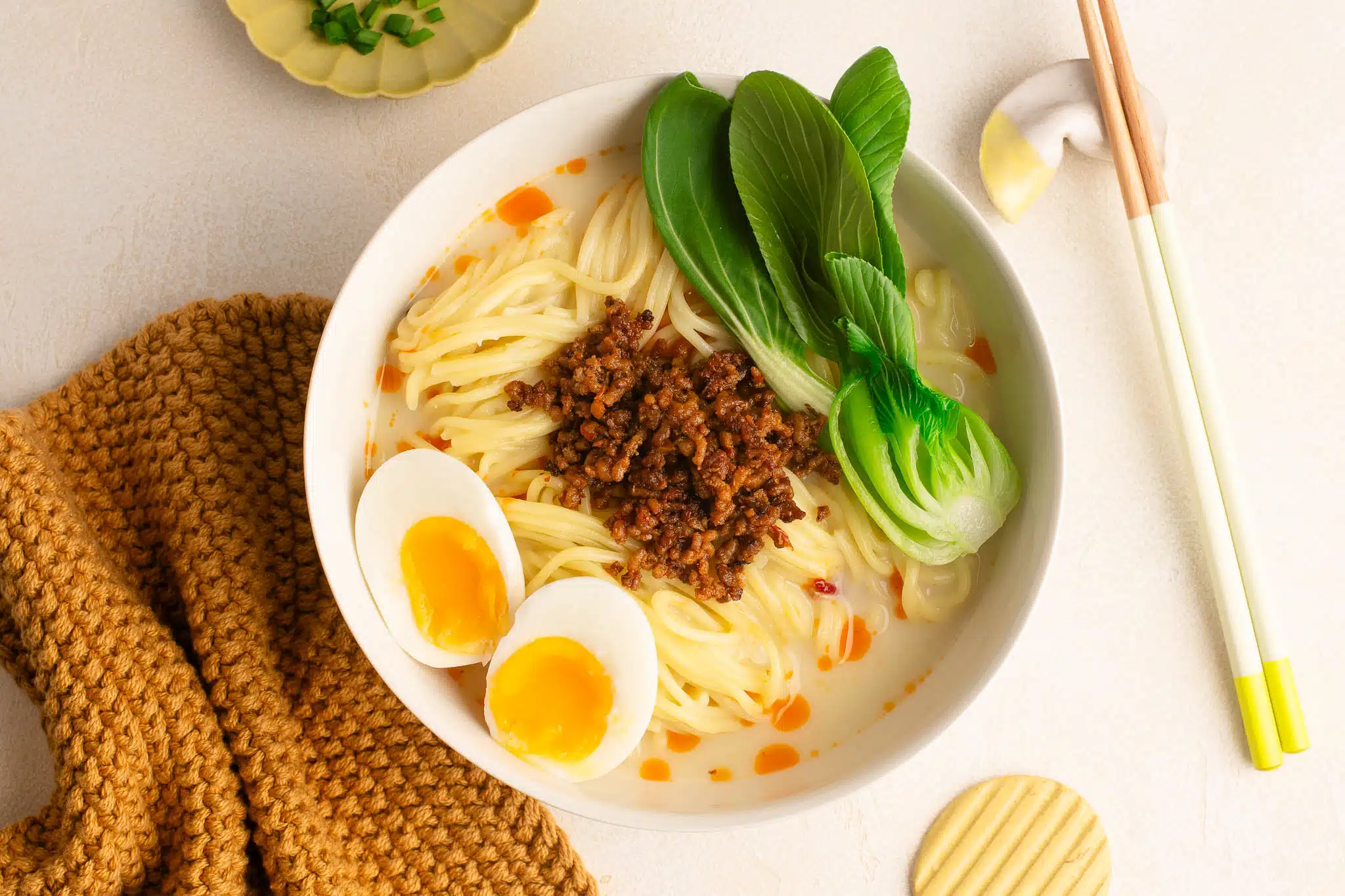
Tantanmen Ramen
My family and I travelled to Japan for the first time in spring 2024, and one dish I was determined to try while there was Tantanmen Ramen. Japanese cuisine is not known for being spicy, but every Japanese cookbook I had read described this ramen dish as one for the chilli lovers. And as I had never seen this dish on the menu at any of the Japanese restaurants in Zurich, I was eager to try it in Japan itself.
Tantanmen is a comforting noodle soup which is nutty and spicy, with layers of textures from the fresh vegetables, runny soft-boiled eggs, and crunchy meat topping. After my first taste of Tantanmen, I was instantly addicted and knew that I wanted to recreate it the moment I got home.
What is Tantanmen Ramen?
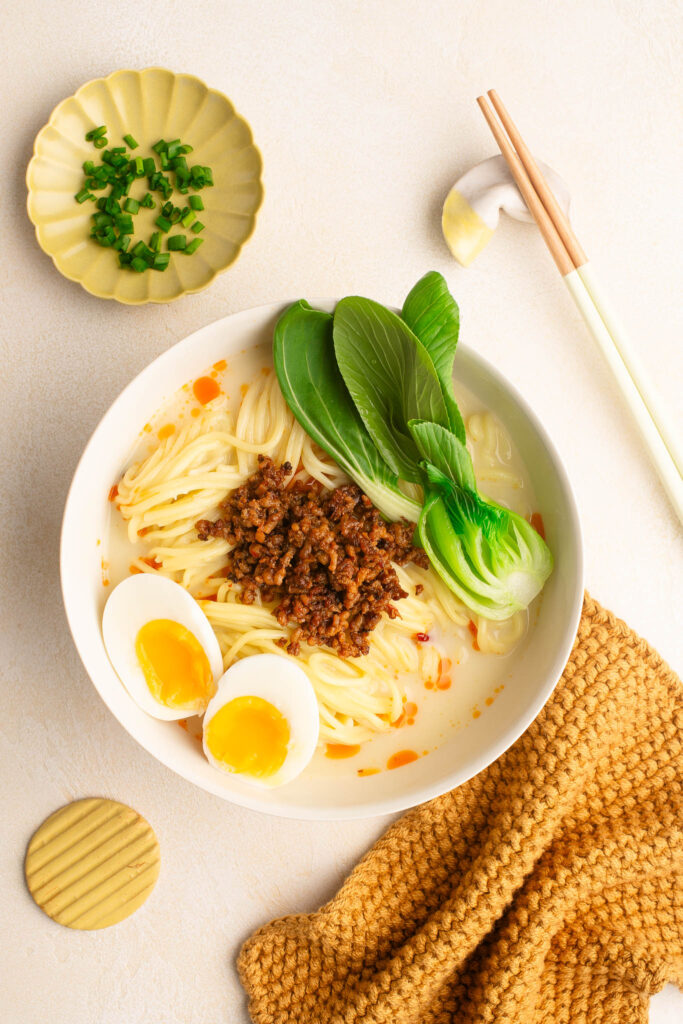
Tantanmen Ramen is a Japanese noodle soup which has a creamy soup base due to the use of sesame paste and soy milk, with a spicy and aromatic topping of minced pork or chicken. It is adapted from a Chinese Sichuan dish called Dan Dan Noodles, which is a dry noodle dish but has a similar fried minced meat topping, and which carries most of the spice and flavours for the dish.
Although Tantanmen is often advertised as “spicy”, I find the spice levels to be somewhat mild in comparison to other Asian noodle soups. Having said that, you can easily customise the level of heat by adding more chilli oil to taste.

Tantanmen Recipe
My recipe for Tantanmen Ramen is a quick and easy one for when you want a noodle soup during the busy week. In fact, I keep most of the ingredients on hand in my pantry and freezer so that I can make Tantanmen whenever the craving calls!
This recipe for Tantanmen is also much quicker than a Shoyu Ramen which relies on a meat broth which has been simmering for several hours. In fact, it’s one of the few soup recipes where I happily use chicken stock cubes, which means I can make this dish at short notice.
Asian recipes rarely use dairy, so the creaminess in the soup base is due to the use of unsweetened soy milk. Unsweetened almond milk also works equally well, if that is more readily available to you.
You can use either minced pork or minced chicken in this recipe, or even crumbled firm tofu for a vegetarian version.
I usually always have some Chinese greens in my fridge, but other vegetables which you could also use include:
- asparagus
- bamboo shoots, sliced
- bean sprouts
- broccoli, cut into florets
- carrots, grated or sliced into thin batons
- corn kernels
- green beans
- mushrooms, thickly sliced
- rocket leaves (arugula)
- spinach
How to Make Tantanmen Ramen
Step 1
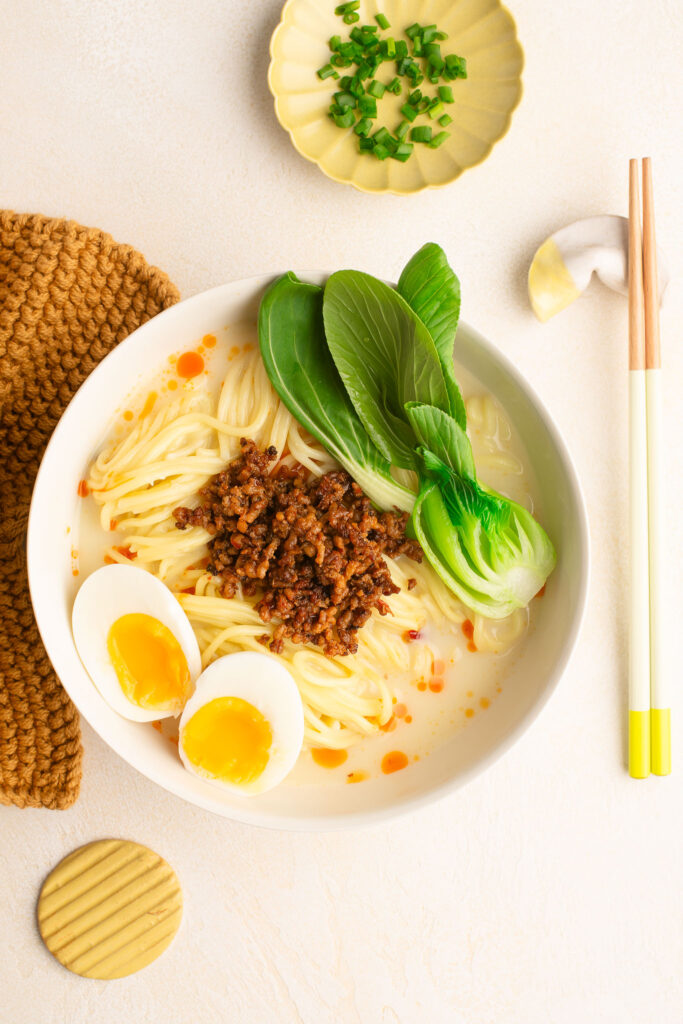
Start by making the spicy meat topping. Heat some oil in a medium-sized pan, and cook the meat until it is golden and slightly caramelised. Add the garlic and ginger, and cook for a few seconds until fragrant. Add the remaining ingredients, and simmer gently for about 5 minutes for the flavours to incorporate.
Step 2
Make the soup paste by whisking together all of the ingredients. Divide the mixture between 4 noodle soup bowls.
Step 3
Make the soup broth by mixing together the stock and soy milk in a large pan. Bring to the boil, and then let it simmer gently.
Step 4
Cook the noodles according to the packet instructions. Rinse well under cold water to remove the starch.
Step 5
Bring a pot of water to the boil and cook the vegetables until tender but still crisp. I like to use baby bok choy which you can halve or leave whole. To cook baby bok choy, I like to use a noodle strainer to cook just the stems, and allow the leaves to wilt in the soup broth later. If you have very big bok choy, you can chop the stems and leaves into large pieces.
I like to reheat the noodles by plunging them briefly into the same boiling water used to cook the vegetables. I use a noodle strainer to portion the noodles and to easily remove the noodles from the water.
Step 6
Divide the warm noodles among the soup bowls.
Ladle the hot soup broth over the noodles.
Add the vegetables, soft-boiled eggs, and a generous scoop of spicy meat topping.
Just before eating, use your chopsticks to dissolve the paste into the broth. Enjoy!
Tips For Making Tantanmen Ramen
- Use fresh noodles. As the noodles are the hero of the dish, I recommend buying fresh or frozen Japanese ramen noodles or Chinese wheat noodles (both are essentially the same) which have the best flavour and texture for this dish. I would only use dried or vacuum-sealed noodles as a last resort.
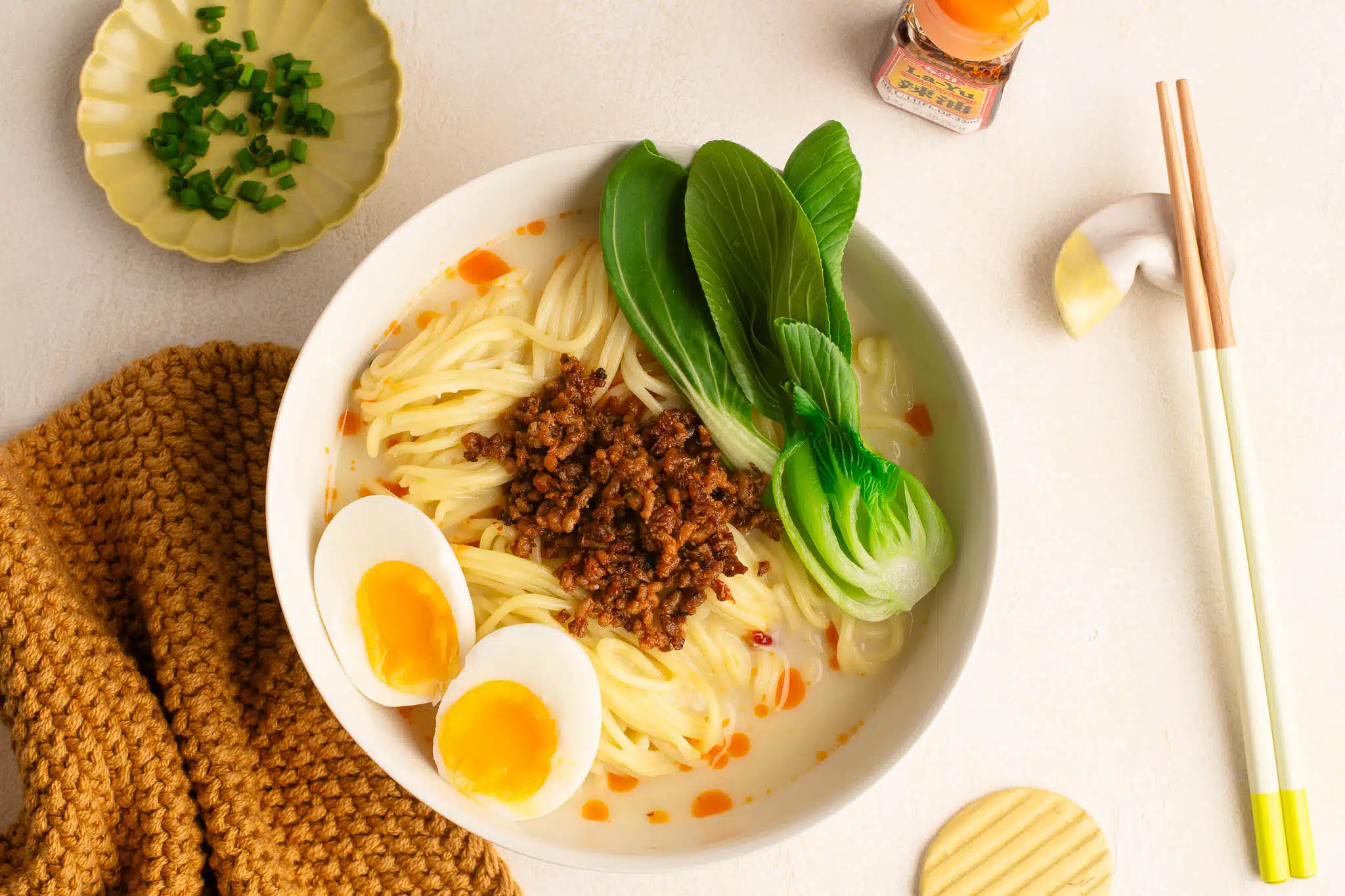
- Use your favourite chilli oil. My Homemade Chilli Oil uses Sichuan pepper for that tingling and numbing heat, and which works great in a Tantanmen which is Sichuan-inspired. But any Asian chilli oil will work, and you can adjust the spice levels to your liking.
- Use Japanese or Chinese sesame paste. You can find sesame paste at most Asian grocers. The paste is often separated from the oil, so you will need to mix or whisk the mixture first until it forms a cohesive paste before using. The closest substitute to sesame paste is tahini, which has a milder flavour. The next best thing is smooth peanut butter, but note that it will have a different flavour to sesame paste (it’s still delicious!).
Make-Ahead Tips for Tantanmen
- Freeze soy milk. I can only buy unsweetened soy milk where I live in large cartons, but any leftover soy milk can be frozen. I like to freeze them in batches of 250 ml (1 cup) in ziplock freezer bags.
- Freeze minced meat. I freeze minced meat in batches of 100 g in ziplock freezer bags or vacuum-sealed bags. This allows for quick and easy thawing.
- Freeze the spicy meat topping. You can cook the spicy meat topping ahead of time and freeze them in batches. Thaw and reheat the cooked meat in a pan with some oil until warmed through.
- Meal-prep in the fridge. Each of the components can be stored separately in the fridge for up to 3-4 days. Use whatever leftover vegetables you may have, such as steamed broccoli, carrots, corn, etc.
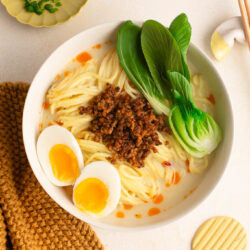
Tantanmen Ramen

Ingredients
For the Spicy Meat Topping
- 1 tablespoon vegetable oil
- 300 g (11 oz) minced pork, or minced chicken (ground pork or ground chicken)
- sea salt
- black peppercorns
- 3 garlic cloves, finely chopped
- 1 teaspoon ginger, finely grated
- ½ teaspoon sugar
- 2 tablespoons doubenjiang
- 1 tablespoon soy sauce
- 1 tablespoon sake, or Chinese cooking wine
- spring onions, (scallions) finely chopped
For the Soup Paste
- 4 tablespoons (¼ cup) sesame paste, tahini or smooth peanut butter
- 2 tablespoons soy sauce
- 2 tablespoons rice vinegar, or white vinegar
- 1-2 tablespoons chilli oil, or to taste (optional)
For the Soup Broth
- 1.5 litre (6 cups) chicken stock, or vegetable stock
- 500 ml (2 cups) unsweetened soy milk
For the Toppings
- 400-500 g (1 lb) fresh Japanese ramen noodles, or Chinese noodles
- bok choy, or other green vegetables
- soft-boiled eggs, peeled and halved
- spring onions, (scallions) finely sliced
- chilli oil
Instructions
For the Spicy Meat Topping
- Heat the oil in a medium-sized pan.
- Season the meat with salt and pepper.
- Cook the meat until it starts to brown and is slightly caramelised.
- Add the garlic and ginger, and cook until fragrant.
- Add the remaining ingredients.
- Simmer gently for about 5 minutes.
For the Soup Paste
- Whisk all of the ingredients together.
- Divide the paste evenly between 4 soup bowls.
For the Soup Broth
- Pour the stock and soy milk into a large pot.
- Bring to the boil and then let it simmer gently.
To Serve
- Cook the noodles according to the packet instructions, and then rinse under cold water.
- Cook the bok choy in boiling water for a few minutes (depending on size).
- Ideally, the noodles should be warm before serving, so I typically plunge them with a noodle strainer into the same boiling water used to cook the vegetables.
- Divide the noodles between the soup bowls.
- Ladle some hot soup broth over the noodles.
- Place some bok choy and soft-boiled eggs into each soup bowl.
- Place a generous spoonful of spicy meat topping on top of the noodles.
- Garnish with spring onions (scallions).
- Add more chilli oil to taste.
- Just before eating, use your chopsticks to gently dissolve the soup paste into the broth.
Kitchen Notes
- MAKE IT VEGETARIAN
Substitute the meat for crumbled firm tofu or sliced mushrooms (I like king oyster mushrooms or shitake mushrooms), and use a vegetable stock. - MAKE IT KID-FRIENDLY
When I make this dish, I cook half of the meat without the doubanjiang for the kids, or I only use a teaspoon of doubanjiang for just a bit of spicy kick. - MAKE IT AHEAD OF TIME
This dish lends itself well to meal-prepping. Store each of the components separately in the fridge for up to 3-4 days. - OVEN & STOVE TEMPERATURES
All recipes on this website have been tested on an induction stove and/or with a conventional oven (i.e. an oven without fan). All recipes on this website use temperatures for a conventional oven, unless otherwise mentioned. Convection ovens (i.e. fan-forced ovens) are typically 20°C/70°F hotter than conventional ovens, but please check your manufacturer’s handbook. - CONVERSIONS
To convert from cups to grams, and vice-versa, please see this handy Conversion Chart for Basic Ingredients.

Amazing recipe! So simple and so delicious. I am definitely making this again and again!
Hi Emma,
So glad you enjoyed this recipe!