

 by
by Vasilopita
We love celebrating New Year’s Day with our Greek friends – a somewhat cosy affair which doubles as a belated Christmas celebration for the little ones but without the stress of Christmas Day itself.
In the spirit of Greek family gatherings, there is always an abundance of deliciously-prepared food on offer, and always a Vasilopita – a Greek New Year’s Cake – to celebrate the first day of the year.
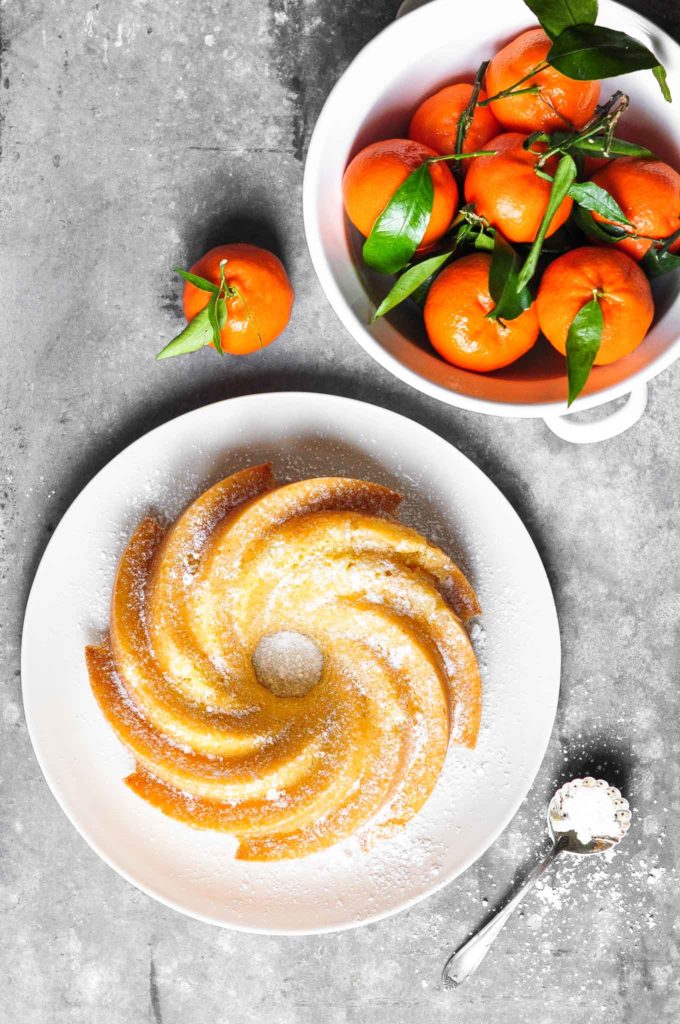
What is a Vasilopita?
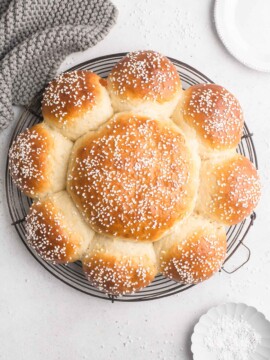
There are many different Vasilopita recipes, ranging from a cake in plain form to a yeasted bread with spices.
Much like a King’s Cake or Galette des Rois, a coin is hidden inside this cake and the person who finds the coin is said to be granted luck for the entire year!
How to Serve Vasilopita
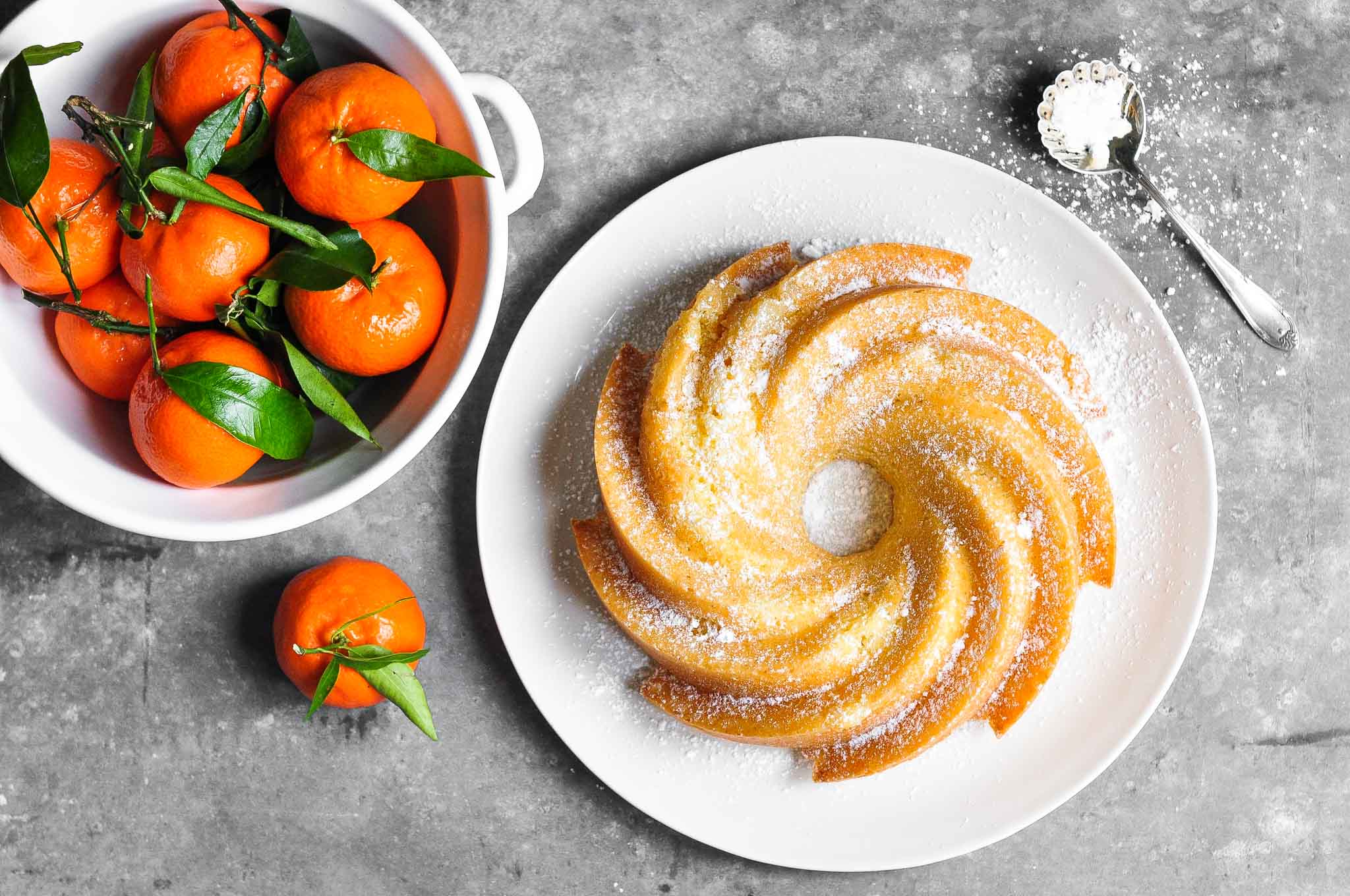
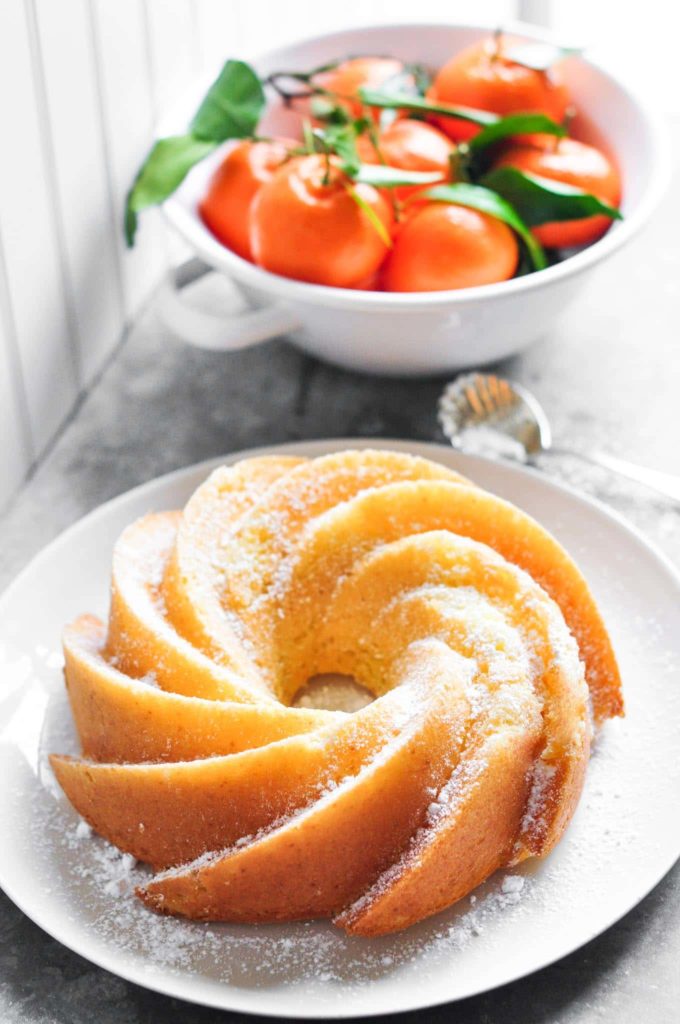
I think this Vasilopita cake is traditionally eaten at midnight on New Year’s Eve, but I couldn’t wait another year before eating it again, so I baked it in a fancy cake pan instead of the usual round cake pan.
You could slice the Vasilopita as per normal and serve them to guests at random, but our friends follow the tradition of serving the cake from oldest to youngest in the room.
Vasilopita Recipe
This year, our friend produced the most delightfully moist and fluffy Vasilopita that I swiftly begged her for the recipe.
To start the year on such a delicious and sweet note can only be a good omen, even if I wasn’t the recipient of the lucky coin.
How do you celebrate New Year’s Day?

Vasilopita – Greek New Year’s Cake

Ingredients
- 300 g (2 cups) plain flour, (all-purpose flour)
- 15 g (3 teaspoons) baking powder
- ¼ teaspoon fine salt
- 110 g (1 stick) unsalted butter, softened
- 220 g (1 cup) caster sugar, (superfine sugar)
- 2 eggs
- 180 ml (¾ cup) milk
- 150 g (5 oz) plain Greek yoghurt
- 1 lemon, zested
- icing sugar, (powdered sugar) for dusting
Instructions
- Preheat the oven to 180°C (350°F) (without fan).
- Butter and flour a 23cm (9 inch) bundt pan or round cake pan.
- Measure the flour, baking powder and salt into a bowl.
- Cream the butter with sugar until it is light and fluffy.
- Add one egg at a time, beating well after each egg and with a spoonful of the flour mixture to stop the mixture from curdling.
- Slowly beat in all of the flour mixture.
- Add the milk, Greek yoghurt and lemon zest.
- Mix until all of the ingredients are well incorporated.
- Pour the mixture into the prepared cake pan.
- Wrap a coin (preferably a large one to avoid the risk of choking) in aluminium foil and drop it into the batter.
- Bake for about 40 minutes, or until the cake is lightly golden and a skewer inserted in the middle comes out clean.
- Leave the cake to cool on a wire rack for about 15 minutes, before turning the cake out of the cake pan to cool completely.
- Dust with icing sugar (powdered sugar) before serving.
Kitchen Notes
- VARIATIONS
To serve a larger crowd, you can double this recipe and bake it in a 12 inch cake tin. You will need to bake the cake for a bit longer. - RECIPE CREDIT
This recipe is adapted from Whipped The Blog - OVEN TEMPERATURES
All recipes on this website state temperatures for a regular oven (i.e. a conventional oven without fan). If you have a convection oven with a fan, please consult the manufacturer’s handbook on how to adjust the temperature and baking time accordingly. - CONVERSIONS
To convert from cups to grams, and vice-versa, please see this handy Conversion Chart for Basic Ingredients.
Did you make this recipe?
Please leave a comment below and share your photos by tagging @eatlittlebird on social media and using #eatlittlebirdUpdate
This recipe was first published on 14 January 2016. It has been updated with new photos and more comprehensive recipe notes.

A cake like this with a coin in it sounds like the perfect way to begin the year! I haven’t hear of anything like this before. It looks lovely!
Thanks, Katrina! I hadn’t heard of this cake until we started celebrating New Year’s Day with our Greek friends. It’s pretty much a lemon sponge cake with a bit of fun added 🙂
Happy New Year! I’ve never heard of this cake but it looks wonderful! I’ve made galette des Rois, and like that, it seems such a shame to eat things like this once a year!
Oh I agree – I wish I could eat Galette des Rois throughout the year! I tend to binge on these sorts of cakes in the lead up to the actual day as I know it will be another year before the shops will sell them again. Happy New Year!
sounds absolutely lovely
My favourite bundt shape, this cake is so pretty, Thanh! Thank you for sharing this traditional recipe, it looks too lovely to only have once a year. x
Glad you like this shape! I was a bit hesitant about it at first because it seemed awkward to cut, but I love that it’s a bit different 🙂
Oh, they’re cute those oranges!!! I thought the cake would have orange, but it same as great without them!
I always find so pretty the names for Greek dishes, and this cake has to be delicious.
I forgot to tell you! I made your (and Rachel’s) Galette des Rois this year, instead of our Roscón de Reyes (next year I should prepare both them). It was great your recipe. Buuuuuut, well, I couldn’t have the crown!!! It was OK, I was looking everyminute the oven, and so proud of me. And then, when 20 minutes of baking have passed and I thought I deserve a prize… well, som of the “triangles” went down!!! I tried to give a solution, but finally, it was better to lower all them before creating a churro. Perhaps it wasn’t enough cold. I’ll try again, I promise!
Have a nice weekend, Thanh!
What a beautiful looking cake, perfect to start the New Year off with!
Thank you! I do feel like we started the year on a good note 🙂
Such a delicious and beautiful cake to start the year with!
Wow, this Cake so cute! I would love to eat this for breakfast, lunch and dinner! Thank you for sharing this great recipe!
Where I come from there is cream and there is milk, both available in a variety of milk fat percentages. Milk is usually skim, 2%, and whole milk, 3%. Cream is usually 5%,10%,15% and 35%.What is “full cream milk”? Thanx.
Hi Julian,
“Full cream milk” is an Australian term and would equate to “whole milk” where you live, i.e. milk with 3% to 4% fat content. Hope this helps!
Can I use sour cream instead of yogurt?
Hi Louiza,
Sorry for my late reply. But yes, you can use sour cream instead of yoghurt in this recipe. Happy New Year!
I made this for New Years Day for my family. The cake was delicious and very moist but question. When I took it out of oven. It was all puffy but slowly it started to sink in pan. Not sure why?
Hi Linda,
It sounds like you may have taken the cake out of the oven a bit too soon. It’s hard to tell when this will happen because ovens vary so much, but a sinking cake generally happens when the oven door is opened during the baking time, or when the cake is taken out of the oven too early. If the cake is even a bit underbaked, it won’t have set properly and, hence, will sink in the middle. It could be that your cake needed maybe another 5 minutes? I hope you could all still enjoy this cake 🙂
I made this cake last year and it was delicious. I bought a similar bundt tin to yours which I will use this year. I can’t wait!
Delicious recipe. I used your recipe last year and plan to make it again this weekend. In my family, we use a large ring cake pan for this recipe but I will try a bundt pan for something a bit different. Happy New Year!
Wonderful recipe!
I made vasilopita today using your recipe and it was amazing! So moist and super tasty! Thank you 🙂
Hi Despoina,
So glad you enjoyed this recipe! Happy New Year!
Id like to try this recipe but 2 cups of flour generally would be 240 grams for flour this states 300 grams.
Hi Robert,
The original recipe calls for 4 cups of flour. I have halved the original recipe to use the bundt pan pictured, hence 2 cups of flour. By my measure, 1 cup of flour is 150 g. This can vary depending on the flour, the cup, the scales, how the cup is packed with flour … But I can assure you that this recipe works well with 300 g of flour. Hope you will enjoy this recipe 🙂